
Soups & Stews
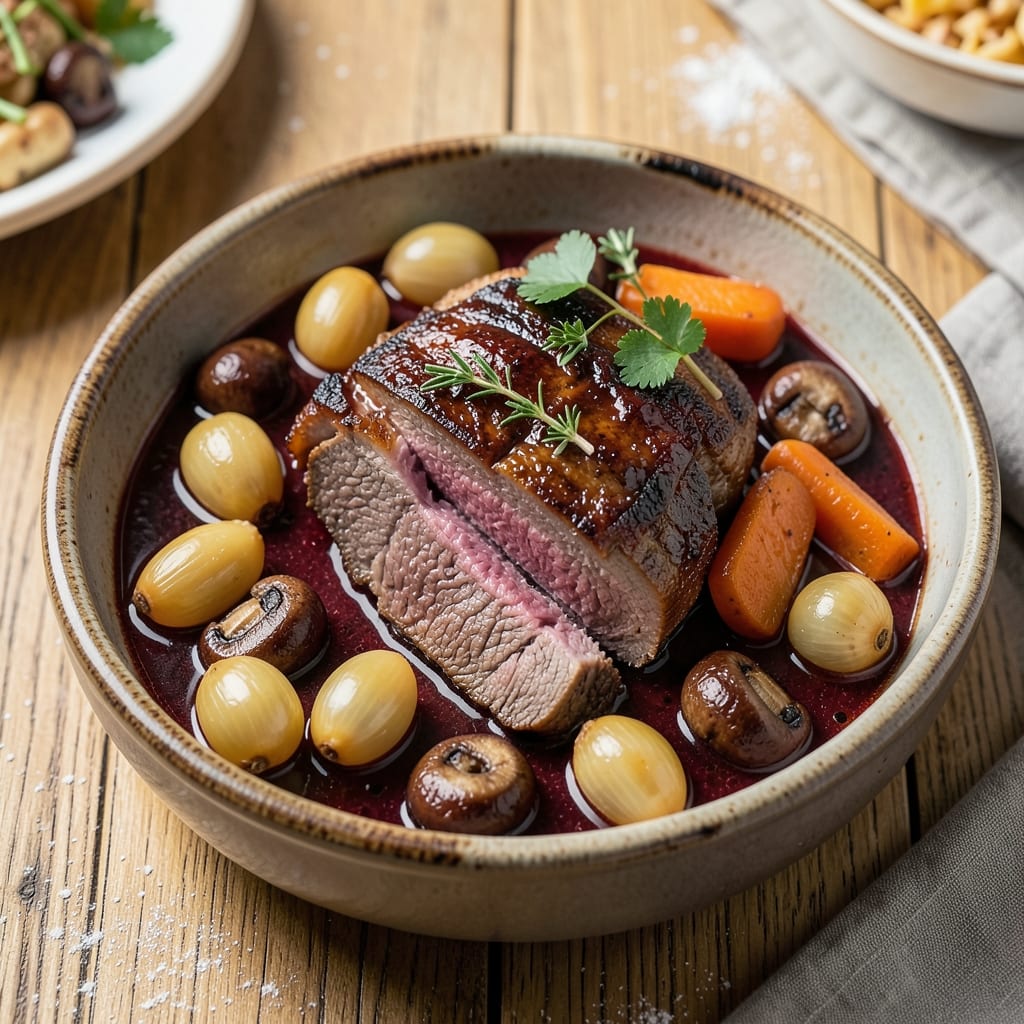
The 5-star beef bourguignon recipe transforms tough beef into melt-in-your-mouth perfection with a deep, wine-infused sauce that tastes like a Parisian bistro. This one-pot masterpiece combines classic French technique with restaurant-quality results—no shortcuts, just layers of flavor built through slow braising and careful wine reduction.
What sets this apart is the foolproof method for tender beef: searing the meat in batches ensures a rich, caramelized crust, while a long, slow simmer in red wine and herbs transforms tough cuts into fork-tender pieces. The sauce thickens into a velvety, umami-packed reduction that clings to every bite, balancing acidity and richness perfectly.
By the time you serve it, you'll have a dish that looks as impressive as it tastes—deep ruby sauce pooling around golden-brown beef, studded with earthy mushrooms and aromatic herbs. The aroma alone will have everyone gathering at the table, and the first bite delivers that restaurant-quality experience at home.
Serve it over buttery mashed potatoes or crusty bread to soak up every last drop of that luxurious sauce. The best part? This recipe scales beautifully, making it perfect for special dinners or feeding a crowd. Let's get cooking—your taste buds will thank you.
Ingredients for 5 star beef bourguignon
Here's what transforms ordinary beef into restaurant-worthy bourguignon—rich wine, aromatic herbs, and slow-braised tenderness.
| Ingredient | Amount | Notes |
|---|---|---|
| Chuck Roast 🥩 | 2 lb | Cut into 1.5-inch cubes, trimmed of fat |
| Dry Red Wine 🍷 | 2 cups | Bold Cabernet Sauvignon or Merlot |
| Beef Broth 💧 | 2 cups | Low-sodium preferred |
| Yellow Onion 🧅 | 1 whole | Diced, about 1.5 cups |
| Garlic Cloves 🧄 | 4 cloves | Minced, about 1 tbsp |
| Carrots 🥕 | 4 whole | Sliced into 1/4-inch rounds |
| Pearl Onions 🧅 | 12 whole | Peeled, halved lengthwise |
| Mushrooms 🍄 | 8 oz | Cremini or button, sliced |
| Tomato Paste 🍅 | 2 tbsp | Squeeze tube preferred |
| Fresh Thyme 🌿 | 2 sprigs | Or 1 tsp dried thyme |
| Fresh Rosemary 🌿 | 1 sprig | Or 0.5 tsp dried rosemary |
| All-Purpose Flour 🌾 | 2 tbsp | For sauce thickening |
| Unsalted Butter 🧈 | 2 tbsp | Cold, for searing |
| Olive Oil 🫒 | 2 tbsp | For initial searing |
| Kosher Salt 🧂 | 1 ½ tsp | Diamond Crystal preferred |
| Freshly Ground Black Pepper 🌶️ | ½ tsp | Coarsely cracked |
The beef is non-negotiable here—chuck roast with good marbling is your best bet. Costco or Whole Foods carry excellent cuts, or ask your butcher for bone-in pieces if you want extra flavor. The wine should be dry and bold—Cabernet Sauvignon or Merlot work perfectly, but whatever's open in your cabinet will do. Just avoid sweet wines. For the mushrooms, cremini or button are ideal, but don't skip them—they add that earthy depth. If you're using pearl onions, Trader Joe's sells them pre-peeled for convenience, though they're worth peeling yourself for better texture.
No red wine? Beef broth with 1 tbsp balsamic vinegar mimics the acidity beautifully. Fresh thyme and rosemary are ideal, but dried works at one-third the amount. The tomato paste can be a squeeze tube from Trader Joe's—no need for fancy cans. For the flour, King Arthur all-purpose is my go-to, but any good brand works. If you're short on butter, extra olive oil will get you through, though the butter adds richness. The salt should be Diamond Crystal kosher if you've got it—it dissolves better than table salt. And for the pepper, freshly cracked makes all the difference in flavor.
This dish tastes even better the next day—plan ahead. The sauce will thicken further as it rests, so don't worry if it looks loose right after cooking. Store it in an airtight container in the fridge for up to 5 days, or freeze portions for 3 months. I like to portion it into individual containers so I can reheat just what I need. When reheating, add a splash of water or broth to loosen the sauce. And trust me, the aroma alone will have everyone gathering at the table—worth every minute.
Why You'll Love This Recipe
- One-Pot Magic: I swear by this—just sear the chuck roast, toss in onions and garlic, then let the wine and broth do the heavy lifting. No flipping pans, no stress, just hands-off richness that smells like a French bistro.
- Wine-Infused Magic: That dry red wine? It’s not just flavor—it’s the secret weapon. The acidity tenderizes the beef while the tannins deepen the sauce into something velvety and complex, like a hug in a bowl.
- Weeknight to Dinner Party: Same recipe, different vibes. Toss it together for a lazy Tuesday, or dress it up with fresh thyme and crusty bread for guests. The chuck roast stays juicy no matter the occasion.
- Leftover Luxury: Make it once, eat it twice. The sauce thickens beautifully overnight, and reheated slices are even better—perfect for sandwiches or a quick pasta toss. Budget-friendly? Absolutely. Waste-free? Even better.
Step-by-step instructions for deep wine-reduced beef bourguignon
Here's how to craft restaurant-worthy bourguignon with layers of flavor in one pot.
Sear the Chuck Roast to Build Deep Flavor
Heat a heavy Dutch oven over medium-high heat until very hot. Add 2 tablespoons olive oil and swirl to coat. Working in batches to avoid crowding, add the 2 lb chuck roast cut into 1.5-inch cubes and sear for 3-4 minutes per side until deeply browned. This step is critical—those caramelized crusts dissolve into the sauce later, creating rich depth.
Remove the seared beef and set aside. Add 2 tablespoons unsalted butter to the pot and let it foam and brown for 1 minute. This butter adds another layer of richness that complements the wine reduction. Keep the browned bits—they're packed with flavor that will form the base of your sauce.
Develop the Aromatic Base
Add the 1 whole yellow onion (diced) and cook for 5-6 minutes until softened and lightly golden. Stir in the 4 cloves garlic cloves (minced) and cook for 30 seconds just until fragrant—don't let it brown or it'll turn bitter. Add the 4 whole carrots (sliced) and 12 whole pearl onions (peeled and halved), cooking for another 3 minutes to soften slightly.
Sprinkle the 2 tablespoons all-purpose flour over the vegetables and stir vigorously for 1 minute to cook off the raw flour taste. This creates a roux that will help thicken the sauce later. The vegetables should be coated evenly—this prevents lumps in your final dish.
Deglaze with Wine and Build the Sauce
Pour in the 2 cups dry red wine and scrape up all the browned bits from the bottom of the pot with a wooden spoon. This deglazing step captures all the meaty flavors that stuck to the pot. Let the wine simmer for 5-6 minutes until reduced by about half, until it coats the back of a spoon. You want the alcohol to cook off—this makes the dish safe for those sensitive to alcohol content.
Add the 2 cups beef broth, 2 tablespoons tomato paste, 2 sprigs fresh thyme, and 1 sprig fresh rosemary. Bring to a gentle simmer, then return the seared beef to the pot. The liquid should just cover the meat—if it's too shallow, add a splash more broth. Partially cover and let it simmer for 1 hour to tenderize the beef.
Finish with Mushrooms and Seasoning
After 1 hour, add the 8 oz mushrooms (sliced) and continue simmering for another 30-45 minutes until the beef is fork-tender. The mushrooms should absorb the rich flavors of the sauce while adding their own earthy notes. Stir occasionally to prevent sticking, and if the sauce reduces too much, add a splash of water or broth to maintain the right consistency.
Season with 1.5 teaspoons kosher salt and 0.5 teaspoon freshly ground black pepper. Taste and adjust—you might need a bit more salt to balance the wine's acidity. Remove the thyme and rosemary sprigs before serving. The dish should have a deep red color from the reduced wine and a complex balance of savory, herby, and slightly sweet notes.
Rest and Serve for Maximum Richness
Let the bourguignon rest for 15-20 minutes before serving. This allows the flavors to meld and the sauce to thicken slightly as it cools. Serve over mashed potatoes or egg noodles to soak up every drop of that luxurious sauce. The beef should pull apart easily with a fork, and each bite should deliver layers of wine, herb, and caramelized flavors that make this dish truly special.
Pro Tips For Making 5 Star Beef Bourguignon
- SEAR THE ROAST LONG: High heat. Seriously, crank it up to medium-high and walk away for 8-10 minutes—don’t rush this. I learned the hard way that skimping here means flavorless beef later, no matter how long you braise.
- SWEAT ONIONS UNTIL SOFT: Low and slow for 15 minutes with a splash of water—no browning, just translucent. After burning three batches, I finally figured out that crispy onions here just burn and make the sauce bitter.
- DEGLAZE WITH WINE IMMEDIATELY: As soon as you remove the roast, pour in that red wine and scrape every last bit from the bottom. My grandmother swore by this, and she was right: skipping it means losing half the flavor that makes this dish sing.
- SKIP THE BROTH AT FIRST: Start with just wine, broth comes later. Let the wine reduce by half before adding broth—this concentrates the flavor and makes the sauce richer. Sounds weird, but it works: the wine’s acidity cuts through the richness better this way.
Perfect pairings for 5 star beef bourguignon
Wine Pairings
This rich, wine-braised beef calls for a bold red that stands up to its depth. I always reach for a Cabernet Sauvignon from Napa Valley—its dark fruit notes and tannins complement the dish beautifully. A Syrah from Rhône Valley works wonders too, especially if you want smoky undertones that echo the beef's caramelized crust. 🍷
Avoid anything too light—Pinot Noir would get lost in the sauce's intensity. Instead, opt for a Malbec from Argentina if you prefer softer tannins. The key is matching the wine's body to the dish's richness, so don't be afraid to splurge on a bottle you'd normally save for special occasions.
Beer Complements
For beer lovers, a Belgian Dubbel like Westmalle Trappist adds a malty sweetness that contrasts the bourguignon's acidity. The caramel and dark fruit notes in the beer enhance the dish's depth without overpowering it. I also love pairing it with a German Dunkel—its roasted malt character bridges the gap between the beef and wine flavors. 🍺
If you prefer lighter options, a crisp Belgian Witbier like Hoegaarden cuts through the richness with its citrusy brightness. The effervescence also cleanses the palate between bites, making it perfect for a multi-course meal. Just avoid heavy stouts—they'll clash with the wine's acidity.
Side Dish Harmony
Buttery mashed potatoes are the classic pairing, but I often serve this with creamy polenta—its slight sweetness balances the wine's acidity. For a lighter option, wild rice pilaf with toasted almonds adds texture without overwhelming the main dish. The grains soak up the sauce beautifully while providing a neutral base. 🥔
Don't forget about crusty bread—a baguette or sourdough is perfect for mopping up every last drop. If you're feeling fancy, serve it with roasted garlic scalloped potatoes for extra richness. The contrast between the flaky, buttery potatoes and the tender beef creates a perfect bite.
Cheese Course Continuation
A triple cream Brie or aged Gouda makes an excellent follow-up, as their creamy or nutty profiles echo the dish's depth. The cheese's fat content complements the wine reduction without competing. I often serve a small wedge with honeycomb and walnuts for a sweet-savory contrast. 🧀
For a lighter option, blue cheese crumbles with pear slices provide a tangy, fruity balance. The cheese's sharpness cuts through the richness, making it a refreshing palate cleanser before dessert. This pairing is especially effective if your bourguignon leans more acidic.
Nutrition facts
Frequently asked questions
Can I use a different cut of beef than chuck roast?
Chuck roast is ideal for its fat content and flavor, but you can substitute with short ribs or brisket for similar results. Avoid lean cuts like sirloin—they won't become tender enough during braising. If using short ribs, reduce the cooking time by 20-30 minutes since they're more tender.
How do I make the sauce thicker if it's too thin?
If your sauce is too thin, mix 1 tablespoon cornstarch with 2 tablespoons cold water to make a slurry. Stir it into the simmering sauce and cook for 2-3 minutes until thickened. For a richer texture, add 1 tablespoon butter at the end. Avoid flour—it can make the sauce cloudy.
Can I prepare this dish ahead of time?
This dish tastes even better the next day. Let it cool completely, then store in an airtight container in the fridge for up to 5 days. Reheat gently on the stove with a splash of broth or water. For longer storage, freeze portions for 3 months. The flavors meld beautifully overnight.
What if I don't have red wine?
No problem! Use 2 cups beef broth with 1 tablespoon balsamic vinegar for acidity. For extra depth, add 1 teaspoon red wine vinegar and 1/2 teaspoon smoked paprika. The dish will still be delicious—just slightly less complex.
How do I know when the beef is perfectly tender?
The beef is done when it easily pulls apart with a fork and reaches an internal temperature of 195°F. If it's still slightly firm, cook for 15-20 more minutes. Overcooking can make it dry, so check frequently during the last 30 minutes of simmering.