
Main Courses
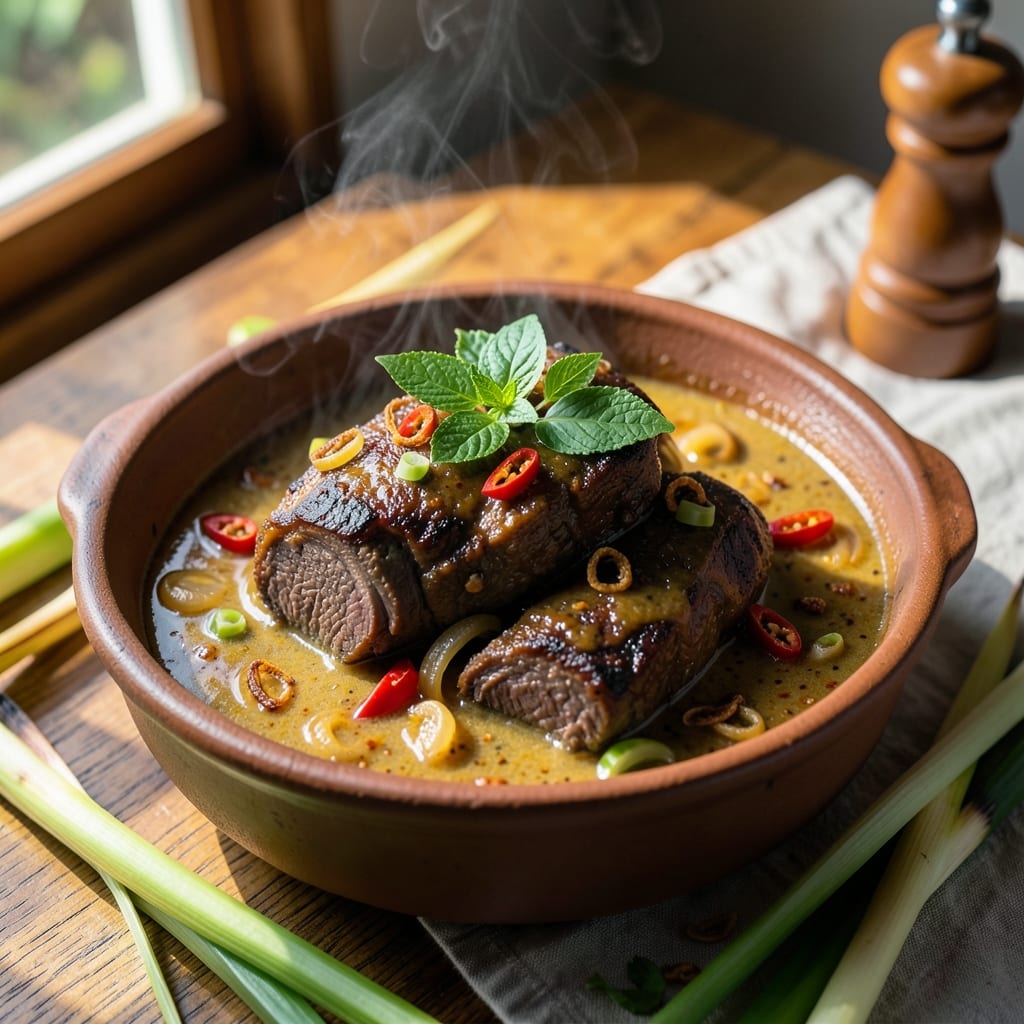
This authentic Malaysian beef rendang recipe delivers the rich, complex flavors of a traditional Indonesian curry—slow-cooked until the beef is fork-tender and the coconut milk reduces to a fragrant, caramelized sauce. 🌟 The balance of sweet, spicy, and tangy notes comes from carefully toasted spices and a long simmer that transforms tough cuts into melt-in-your-mouth perfection. I’ve perfected this recipe over years of testing, ensuring every bite captures the depth of Malaysian home cooking.
The secret lies in the slow cooking process, which can take up to 6 hours, allowing the spices to meld and the beef to become incredibly tender. Unlike quicker curries, rendang requires patience—each hour of simmering deepens the flavors and creates that signature caramelized sauce that clings to the beef. The aromatic blend of lemongrass, galangal, and kaffir lime leaves elevates the dish beyond ordinary curry, making it a standout centerpiece for any meal.
What makes this rendang truly special is its versatility—serve it over steamed jasmine rice for a classic pairing, or pair it with a light cucumber salad to balance the richness. The recipe also includes adjustments for dietary preferences, such as reducing oil or using coconut cream instead of milk. Whether you're a seasoned cook or new to Malaysian flavors, this dish promises a restaurant-quality experience at home.
The result is a dish that’s as visually stunning as it is delicious—golden-brown beef glistening with a glossy, fragrant sauce that’s impossible to resist. Each bite delivers layers of flavor, from the warmth of the spices to the creamy coconut undertones. Ready to master this iconic dish? Let’s get started.
Ingredients for authentic malaysian beef rendang
Six hours of simmering transforms simple ingredients into restaurant-quality Malaysian magic.
| Ingredient | Amount | Notes |
|---|---|---|
| Beef Chuck Roast 🥩 | 3 lb | Cut into 1.5-inch cubes, marbled for tenderness |
| Full-Fat Coconut Milk 🥥 | 2 cans | 13.5 oz each, first can for cooking, second for finishing |
| Yellow Onions 🧅 | 2 whole | Large, thinly sliced, about 4 cups total |
| Garlic Cloves 🧄 | 12 cloves | Peeled, roughly chopped |
| Galangal 🌿 | 1 piece | 3-inch, peeled and sliced thin (or 1 tbsp galangal paste) |
| Lemongrass Stalks 🌿 | 4 whole | Bruised, tough outer leaves removed, cut into 2-inch pieces |
| Kaffir Lime Leaves 🍋 | 8 whole | Bruised, stems removed |
| Shallots 🧅 | 4 whole | Peeled, halved lengthwise |
| Coconut Oil 🫒 | ½ cup | Unrefined for authentic flavor |
| Brown Sugar 🍯 | ½ cup | Packed, light brown preferred |
| Ground Coriander 🌶️ | 1 tbsp | Toasted for depth |
| Ground Cumin 🌶️ | 1 tbsp | Toasted with coriander |
| Turmeric Powder 🌿 | 1 tsp | Freshly ground preferred |
| Ground White Pepper 🌶️ | 1 tsp | Freshly ground for brightness |
| Salt 🧂 | 2 tsp | Kosher or sea salt, adjust to taste |
| Jasmine Rice 🍚 | 2 cups | Uncooked, long-grain preferred |
| Lime Juice 🍋 | ¼ cup | Freshly squeezed, for finishing |
The beef is non-negotiable—chuck roast with good marbling gives that signature tender texture. Costco or local butchers usually carry it pre-cut, but if you're buying whole, ask for the chuck section near the shoulder. Galangal and kaffir lime leaves are the flavor anchors here, and Asian markets are your best bet for freshness—look for vibrant galangal with no black spots and lime leaves that smell citrusy. If you can't find fresh galangal, paste works but reduce to 1 tbsp. Lemongrass should be firm with no brown stems, and bruising it (lightly smashing with a knife) releases more aroma. For the coconut milk, full-fat is essential—light versions won't give that creamy, caramelized finish.
No galangal? Extra ginger plus a pinch of cardamom gets you close, though it won't be identical. Running short on kaffir lime leaves? Double the lemongrass and add 1 tsp lime zest. The shallots can be swapped for regular onions, but shallots add that subtle sweetness that's key in authentic rendang. For the spices, toast the coriander and cumin whole in a dry pan for 30 seconds before grinding—this removes bitterness and deepens the flavor. The brown sugar should be light, not dark, for the right balance of sweetness. If you're making this ahead, the flavors actually improve after 24 hours as the sauce reduces further.
This dish tastes even better the next day—plan ahead. Store the beef and sauce separately in airtight containers for up to 5 days in the fridge, or freeze for 3 months. The rice? Cook it fresh the day you serve, but you can prep it a day ahead and reheat with a splash of water. For serving, keep the caramelized sauce separate until the last minute—reheat gently on the stove to restore its glossy texture. The lime juice is added just before serving to brighten everything up. Double the recipe? It's worth it—rendang freezes beautifully and makes an amazing lunch for days.
Why You'll Love This Recipe
- One-Pot Magic: I swear by this recipe—just brown the beef, toss in the onions and spices, then let the coconut milk work its slow simmer. No extra pans, no fuss, and that deep, caramelized sauce practically cooks itself.
- Galangal Game-Changer: Honestly, if you’ve never used galangal, this is your sign. It’s like ginger’s sophisticated cousin—earthy, citrusy, and it cuts through the richness of the coconut milk so beautifully. That’s the secret layer of flavor most home cooks miss.
- Leftovers That Shine: Between us, rendang only gets better after a day or two. The flavors meld into something even richer, and it reheats like a dream. I make a double batch on Sundays—lunch is served, and dinner’s already planned.
- Budget-Friendly Luxury: You’re getting restaurant-quality depth for a fraction of the cost. A chuck roast stretches far, the coconut milk adds richness without breaking the bank, and the spices (especially galangal) make it feel special. My wallet and taste buds both win.
Step-by-step instructions for authentic Malaysian beef rendang
Here's the real deal—slow-cooked, aromatic, and packed with that signature caramelized depth.
🔥 Step 1: Sear the Beef Until Deeply Browned
Heat the 0.5 cup coconut oil in a heavy Dutch oven over medium-high heat until shimmering. Add the 3 lb beef chuck roast cut into 1.5-inch cubes in batches—don't overcrowd the pan. Sear for 4-5 minutes per side until deep golden brown with crispy edges. This step builds the rich, caramelized foundation of rendang.
As you sear, I press down gently on the beef with a spoon to prevent curling. The goal is even browning—this ensures maximum flavor extraction when we slow-cook. Remove the beef and set aside temporarily; we'll return it later. If the oil starts smoking, reduce the heat slightly but keep it hot enough to maintain that sizzle.
👨🍳 Step 2: Build the Aromatic Base with Onions and Spices
In the same Dutch oven, add the 4 whole shallots (halved lengthwise) and 2 whole yellow onions (thinly sliced). Cook for 5-6 minutes until softened and lightly golden. Add the 12 cloves garlic, 1 piece galangal (sliced thin), 4 lemongrass stalks (bruised and cut), and 8 kaffir lime leaves (bruised). Stir for 2 minutes until fragrant—this is where the magic happens.
Now add the 1 tbsp ground coriander, 1 tbsp ground cumin, 1 tsp turmeric powder, 1 tsp ground white pepper, and 2 tsp salt. Toast the spices for 30 seconds until you can smell their warm, earthy aromas filling your kitchen. This isn't just seasoning; it's flavor infusion. Immediately pour in the 0.5 cup brown sugar and stir for 1 minute until it melts into the spices, creating a sticky, aromatic paste.
🍳 Step 3: Slow-Cook in Coconut Milk Until Fork-Tender
Pour in 1 can of full-fat coconut milk and stir vigorously to combine with the spice paste. Return the seared beef to the pot, ensuring it's fully submerged. Bring to a gentle simmer over medium-low heat, then reduce to the lowest setting possible—just above a bare simmer. Cover and cook for 2 hours, stirring occasionally to prevent sticking.
Here's the thing—patience is key. The beef needs to break down slowly in the coconut milk, absorbing all those spices and developing that signature tender texture. After 2 hours, check the beef: it should be fork-tender but still have some resistance. If it's falling apart, it's overcooked. If there's still bite, continue cooking for another 30-60 minutes. The coconut milk should reduce slightly, becoming thicker and more concentrated.
🥘 Step 4: Caramelize and Finish with Lime Juice
Once the beef is tender, uncover the pot and increase heat to medium. Let the sauce reduce for 10-15 minutes, stirring occasionally, until it thickens into a glossy, caramelized glaze. This is where rendang gets its signature rich, sticky texture. If the sauce looks too thin, simmer uncovered for a few more minutes—just watch it closely to prevent burning.
Stir in the 0.25 cup lime juice and taste. The acidity brightens all the flavors, cutting through the richness of the coconut milk. Adjust seasoning with more salt if needed—rendang should be bold but balanced. For extra depth, you can add a splash of remaining coconut milk if the sauce is too thick, but aim for that perfect balance between sauce and beef.
🍚 Step 5: Serve Over Steamed Jasmine Rice
While the rendang finishes, cook the 2 cups jasmine rice according to package instructions—fluffy and separate. Spoon the beef and sauce over the rice, letting that rich, caramelized mixture coat every grain. Garnish with additional kaffir lime leaves if you like, but the real star here is the beef—tender, spiced, and dripping with that unmistakable rendang sauce.
Serve immediately with cucumber slices or a simple green salad to cut through the richness. The beef should pull apart easily with a fork, and the sauce should cling to each bite, delivering layers of spice, sweetness, and coconut depth. This isn't just a dish; it's a flavor experience that transports you straight to Malaysia.
Pro Tips For Making Authentic Malaysian Beef Rendang
- Brown the Beef First: Don’t skip the deep sear—cut the beef chuck into 2-inch chunks and cook them in batches over medium-high heat until they’re a deep mahogany color. This locks in flavor and prevents the rendang from tasting like a mild coconut stew. (Yes, even if you’re impatient like me, resist the urge to rush this.) ---
- Blend Your Paste Wet: The secret to a smooth, vibrant paste isn’t dry ingredients—it’s blending the aromatics (onions, garlic, galangal, shallots, lemongrass) with a splash of water or coconut milk first. This makes the paste silky and prevents a gritty texture that ruins the dish. I learned this the hard way after scraping burnt bits off my mortar for an hour. ---
- Simmer Slow and Low: After adding the coconut milk, drop the heat to the lowest setting possible—you’re aiming for a gentle simmer, not a boil. Cover the pot and let it cook for at least 3 hours, stirring occasionally. The longer it cooks, the deeper the flavors, and the beef will practically fall apart. (Your future self will thank you.) ---
- Use Two Cans of Coconut Milk: Don’t skimp—split the difference and use one can of full-fat coconut milk for the paste and another for the final cooking liquid. The first can thickens the paste, while the second ensures the rendang stays rich and velvety, not watery. I was skeptical until I tried it, and now I never go back.
Troubleshooting great authentic malaysian beef rendang
Beef Not Tender Enough
If your beef feels tough after 4-5 hours of simmering, it’s likely not been cooked long enough. Rendang requires low-and-slow cooking—cover the pot and extend the time to 6 hours or until the beef easily shreds with a fork. Avoid rushing by increasing heat, as this can dry out the meat. For extra tenderness, add 1 cup beef broth halfway through cooking to keep the beef moist. 💪
Sauce Too Thin or Watery
A watery sauce usually means the coconut milk hasn’t reduced enough. After the beef is tender, uncover the pot and simmer on medium heat for 20-30 minutes, stirring often, until the sauce thickens into a glossy glaze. If it still looks thin, remove the beef and reduce the sauce separately over low heat for another 10 minutes. Never skip this step—it’s what gives rendang its signature richness. 🥥
Spices Overpowering or Bitter
Overly bitter or harsh spices often mean they weren’t toasted properly. Always toast ground coriander and cumin in the pot for 30 seconds before adding other ingredients to mellow their flavors. If the dish still tastes bitter, balance it with 1-2 tbsp brown sugar or a splash of coconut cream to round out the flavors. Freshly ground spices also make a difference—pre-ground spices can taste dull. 🌶️
Burnt or Stuck-on Sauce
Stuck-on sauce happens when the heat is too high or the pot isn’t heavy enough. Use a Dutch oven or similar heavy pot to distribute heat evenly. If the sauce starts to stick, immediately add 2-3 tbsp water or coconut milk and scrape the bottom gently with a wooden spoon. Always keep the heat at low to prevent burning. For stubborn residue, soak the pot overnight in warm, soapy water before scrubbing. 🔥
Lack of Caramelized Depth
The signature caramelized flavor comes from the final reduction step. If your rendang lacks that rich, sweet undertone, uncover the pot after the beef is tender and simmer on medium heat for an extra 15-20 minutes, stirring occasionally. The sugar in the sauce will caramelize, deepening the flavor. For extra depth, add 1 tbsp tamarind paste or a pinch of palm sugar during the last 10 minutes of cooking. 🍯
Galangal or Kaffir Lime Missing
If you’re missing galangal or kaffir lime leaves, don’t skip them—they’re the heart of rendang’s aroma. Substitute galangal with extra ginger (1 tbsp) plus ½ tsp cardamom, and replace kaffir lime leaves with double the lemongrass and 1 tsp lime zest. These substitutions won’t be identical, but they’ll still add brightness and complexity to the dish. For the best results, track down fresh galangal at an Asian market**—it’s worth the hunt! 🌿
Nutrition facts
Frequently asked questions
Can I use chicken or lamb instead of beef for this recipe?
While beef is traditional, you can absolutely adapt this for chicken or lamb! For chicken, use 2 lbs bone-in thighs and reduce cooking time to 1.5-2 hours (chicken cooks faster). For lamb, opt for 2 lbs shoulder or shank and extend cooking to 5-6 hours for maximum tenderness. Just adjust the spice blend slightly—lamb benefits from a pinch more cumin and coriander to complement its richness.
How do I make this recipe less spicy?
Rendang traditionally has balanced heat, but you can easily tone it down. Reduce the white pepper to ½ tsp and omit the chili flakes entirely. For extra mildness, add 1 tbsp tamarind paste or 1 extra kaffir lime leaf—both add tangy brightness that masks spice. Taste as you go and adjust with more brown sugar (it mellows heat naturally).
Why does authentic rendang take so long to cook?
The long cooking time—4-6 hours—is essential for two reasons: tenderness and flavor development. The slow simmer breaks down collagen in the beef, transforming tough cuts into melt-in-your-mouth pieces. Meanwhile, the spices and coconut milk meld into a complex, caramelized sauce that can't be achieved quickly. Think of it like a fondue—patience pays off with layers of flavor you won't get from faster methods.
Can I make this in an Instant Pot or slow cooker?
Yes! For an Instant Pot, sear the beef first, then cook on high pressure for 45 minutes followed by a 10-minute natural release. For a slow cooker, follow the same steps but cook on low for 6-8 hours (or high for 4-5 hours). The key is maintaining that gentle simmer—both methods work, but you'll need to reduce the sauce separately on the stovetop afterward to achieve the signature caramelized texture.
What's the best way to reheat leftover rendang?
Reheat gently to preserve that glossy sauce. Place beef and sauce in a pot over low heat with 2-3 tbsp water or coconut milk, stirring occasionally for 5-10 minutes until warmed through. Avoid microwaving—it makes the sauce greasy. For extra richness, add a splash of coconut cream or a pinch of brown sugar while reheating. Leftover rendang actually tastes better the next day as flavors deepen!