
Snacks
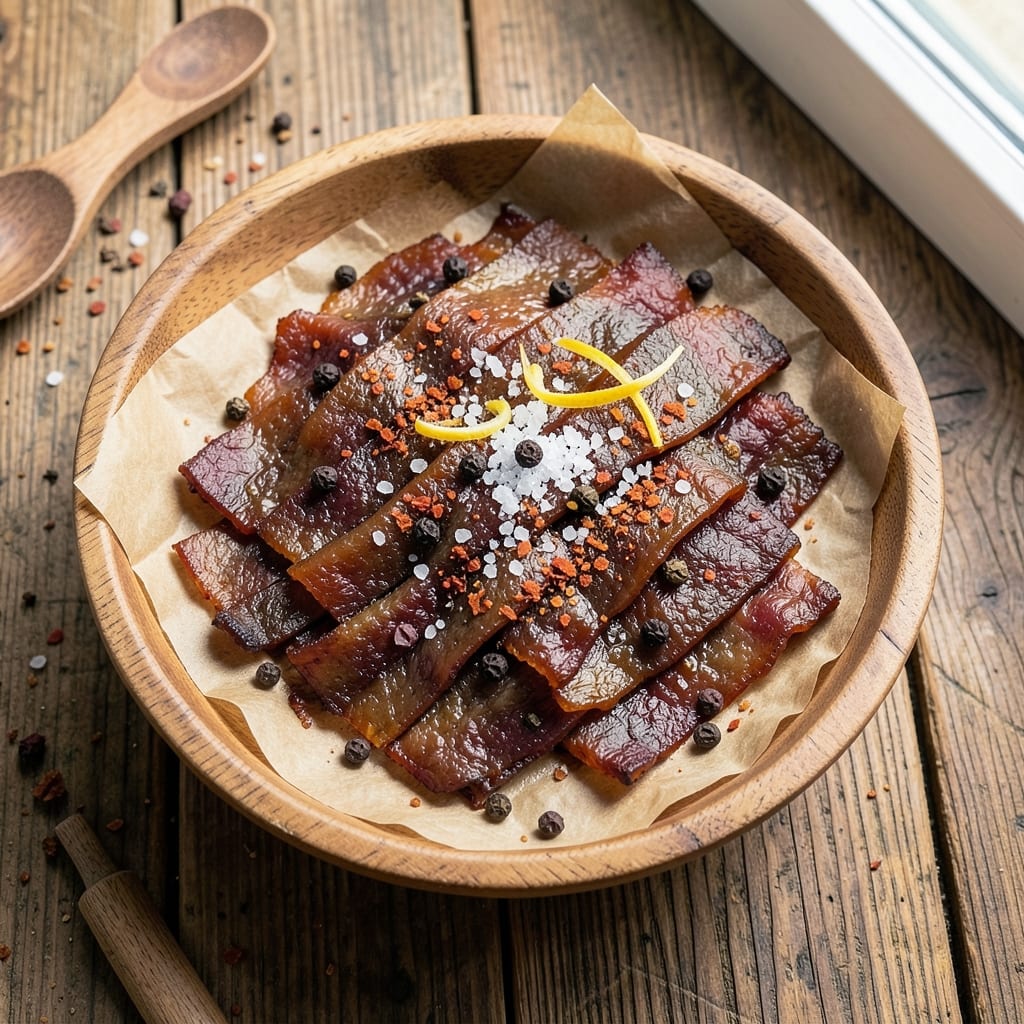
This all-natural beef jerky recipe transforms lean beef into protein-packed, flavorful bites that skip the artificial additives. The secret lies in selecting the right cut—top round or flank steak—and marinating it for deep flavor penetration. Unlike processed versions, this method preserves natural beef taste while delivering that satisfying chew and smoky aroma.
We'll focus on a simple yet effective marinade blend of coarse salt, black pepper, garlic powder, and smoked paprika, all ingredients you likely already have. The process is straightforward: thinly slice the beef against the grain, marinate for at least 4 hours, then dehydrate completely using your oven or a dedicated dehydrator. This method ensures proper food safety while maintaining texture.
The result is jerky with a perfect balance of tender yet chewy bite, packed with natural protein and bold flavors. Each piece delivers satisfying crunch and smoky depth without artificial preservatives. Whether you're prepping for hiking trips or just craving a healthy snack, this recipe delivers restaurant-quality jerky at home.
Store properly in an airtight container, and you'll have shelf-stable protein bites ready whenever you need them. The beauty of this method is its versatility—adjust the spice blend to suit your taste, or try different cuts for varying textures. Let's get started on making your own all-natural beef jerky today.
Ingredients for all natural beef jerky
Lean beef and simple pantry spices transform into restaurant-quality jerky with no artificial junk.
| Ingredient | Amount | Notes |
|---|---|---|
| Top Round Steak or Flank Steak 🥩 | 1 ½ lb | Thinly sliced against grain |
| Coarse Kosher Salt 🧂 | ½ cup | Diamond Crystal preferred |
| Black Peppercorns 🌶️ | 2 tbsp | Freshly cracked for intensity |
| Garlic Powder 🧄 | 2 tbsp | No added anti-caking agents |
| Smoked Paprika 🌶️ | 1 tbsp | Spanish pimentón for depth |
| Brown Sugar 🍯 | 2 tbsp | Light or dark variety |
| Worcestershire Sauce 🍶 | 1 tbsp | Anchovy-free version preferred |
| Liquid Smoke 🔥 | 1 tsp | For authentic smoky flavor |
| Extra-Virgin Olive Oil 🫒 | 1 tbsp | For even coating |
| Apple Cider Vinegar 🍎 | 1 tbsp | For tenderizing |
| Onion Powder 🧅 | 1 tsp | For subtle depth |
| Ground Cayenne Pepper 🔥 | ½ tsp | Adjust for heat preference |
The beef cut matters most—top round gives lean texture while flank steak adds slight tenderness. Grab pre-sliced beef jerky steak from the butcher counter at Whole Foods or Costco to save time, or ask for thinly sliced top round if buying whole. Look for good marbling (visible fat streaks) for better flavor. The flank steak option needs a quick 10-minute soak in vinegar to tenderize if you're using it. For best results, slice against the grain—this creates that perfect chewy texture we're after.
No coarse kosher salt? Diamond Crystal is ideal, but Morton coarse salt works fine too. Short on Worcestershire? A splash of soy sauce plus a pinch of sugar gets you close. The smoked paprika makes all the difference—Penzeys or McCormick brands have the best flavor. Want extra smokiness? Add another half teaspoon of liquid smoke. The brown sugar helps caramelize during dehydrating, so don't skip it. If you're sensitive to heat, cut the cayenne to a quarter teaspoon—it's easy to adjust later. For the olive oil, any good quality brand works, but extra-virgin gives the best flavor.
Marinated beef keeps 2-3 days in the fridge before dehydrating. The dehydrator method (165°F for 4-6 hours) gives best results, but your oven on low heat with the door cracked works too. Once fully dried, store in airtight containers with parchment paper between layers—this prevents sticking. Properly stored, your jerky stays good for 2 weeks in the fridge or 3 months in the freezer. For camping trips, pack in vacuum-sealed bags—they'll last 6 months at room temperature.
Why You'll Love This Recipe
- Five-Ingredient Magic: I swear by this lineup—lean steak, salt, pepper, garlic powder, and smoked paprika. That’s it. No preservatives, no mystery blends, just pure, bold flavor with zero fuss.
- Crisps Like a Pro: The coarse kosher salt does double duty—it tenderizes the meat while creating that perfect crust. You’ll get that satisfying snap without any complicated curing tricks.
- Snack Attack Ready: Between us, this jerky disappears fast. I keep a batch in my freezer for road trips, gym bags, or when I’m craving something savory without the mess of a full meal.
- Budget-Friendly Protein: Top round and flank steak are affordable cuts that pack serious flavor. A single pound stretches into endless portions, and the spices cost pennies. My wallet thanks me every time.
Step-by-step instructions for all-natural beef jerky
Here's how to transform tough cuts into perfectly chewy, flavor-packed protein bites.
Prepare the Meat for Maximum Tenderness
Slice the 1.5 lb top round steak or flank steak against the grain into strips about ¼-inch thick. I use a sharp boning knife for clean cuts—this thickness ensures proper drying without toughness. Place the slices in a large bowl and pour over 1 tbsp apple cider vinegar and 1 tbsp Worcestershire sauce. Let it marinate for 30 minutes at room temperature while you prep the rub.
The vinegar tenderizes the meat by breaking down proteins, while the Worcestershire adds depth. Don't skip this step—it's what makes the jerky melt-in-your-mouth tender rather than chewy in the wrong way. If you're using flank steak, trim off any large fat deposits first since they don't dry well.
Create the Signature Spice Blend
In a small bowl, combine 0.5 cup coarse kosher salt, 2 tbsp freshly cracked black peppercorns, 2 tbsp garlic powder, 1 tbsp smoked paprika, 2 tbsp brown sugar, 1 tsp onion powder, 0.5 tsp ground cayenne pepper, and 1 tsp liquid smoke. Mix thoroughly until the salt crystals are fully coated with spices. This blend gives you that perfect balance of smoky, sweet, and spicy flavors.
I like to use a mortar and pestle for the peppercorns to get maximum freshness, but a whisk works too. The coarse kosher salt helps create a textured crust while drawing out moisture for even drying. If you prefer less heat, reduce the cayenne to ¼ tsp—but don't skip it entirely, as it adds complexity.
Coat and Cure the Meat
Drain the marinated meat and pat it dry with paper towels. This step is crucial—any excess moisture will make your jerky soggy. In a large resealable bag, combine the meat with the spice blend and 1 tbsp extra-virgin olive oil. Seal the bag and massage the mixture vigorously for 2-3 minutes until every strip is evenly coated. Let it cure in the refrigerator for 12-24 hours, turning the bag occasionally.
The curing process allows the salt and spices to penetrate deeply while the oil helps distribute flavors. I like to cure for the full 24 hours when I have time—it develops more complex flavors. If you're short on time, 12 hours still works but may be slightly less intense. Don't skip this step, even if you're eager to dehydrate!
Dehydrate for Perfect Texture
Preheat your dehydrator to 160°F. Arrange the cured meat strips in a single layer on the dehydrator trays, leaving about ½-inch between each piece for proper air circulation. Dehydrate for 6-8 hours, checking periodically. The jerky is done when it's dry to the touch but still pliable—not brittle. For oven drying, use the lowest setting possible (usually 170°F) and prop the oven door open slightly with a wooden spoon.
This low-and-slow approach prevents the outside from drying too quickly while the inside stays moist. You're aiming for that classic jerky texture—chewy but not rubbery. If you notice any strips drying faster than others, rotate the trays halfway through. The jerky should be completely dry with no visible moisture and able to snap when bent but not crumble.
Test and Store for Freshness
Let the jerky cool completely before testing. Cut a small piece and check for doneness—it should be firm but still flexible, with no moisture visible. If it's still slightly damp, return it to the dehydrator for another 30-60 minutes. Once fully cooled, store in an airtight container in the refrigerator for up to 2 weeks or freeze for 3 months to maintain maximum freshness.
Properly made jerky should keep well without refrigeration for 1-2 weeks in cool, dry conditions, but I always store mine in the fridge for peak quality. The flavors will continue to develop over time, becoming more complex as the spices meld. When ready to enjoy, cut into 1-inch pieces and pack for hiking, travel, or as a protein-packed snack at your desk.
Pro Tips For Making All Natural Beef Jerky
- Trim Thin, Not Shred: Slice your steak against the grain at ¼-inch thickness max—any thicker and the jerky turns chewy. I learned this the hard way when I rushed and ended up with jerky that needed a fork. A sharp boning knife makes this easier, and if the slices look uneven, don’t panic—just keep them consistent. ---
- Salt the Night Before: Coat your steak in 2 tablespoons coarse kosher salt per pound and refrigerate uncovered for 12–24 hours. This isn’t just drying—it’s breaking down proteins for better texture. I used to skip this, and my jerky always tasted flat. Trust me, the wait makes it worth it. ---
- Skip the Crowding: When dehydrating, leave at least ½-inch space between slices. I’ve seen people stack jerky like lasagna, and it just steams instead of drying. If your dehydrator is packed, run it longer at a lower temp—160°F for 6–8 hours is safer than rushing at 180°F. ---
- Crush Those Peppercorns: Whole black peppercorns just sit on top—grind them first into a fine powder. Pair that with 1 teaspoon garlic powder and 1½ teaspoons smoked paprika per pound mixed into the salt rub, not sprinkled on after. I was skeptical until I tried it; the flavor sticks better this way.
Serving suggestions for this recipe
Snack Pairings
Pair your homemade jerky with trail mix for a perfect on-the-go snack. I like combining it with almonds, dried cranberries, and dark chocolate chips for a balanced mix of protein, fiber, and sweetness. For a savory twist, try pickled jalapeños or cornichons—the tangy crunch contrasts beautifully with the smoky jerky. 🌶️
For a cheese plate, add your jerky alongside aged cheddar, brie, or gouda. The salty, spicy notes of the jerky cut through the richness of the cheese, making every bite more satisfying. I often serve it with crackers or sliced baguette for a complete charcuterie experience.
Meal Pairings
Use your jerky as a protein boost in salads. Toss 1-inch pieces into a kale and quinoa salad with avocado, cherry tomatoes, and a lime vinaigrette. The jerky adds a smoky depth that elevates the dish. I also love adding it to grain bowls with black beans, roasted sweet potatoes, and cilantro-lime rice.
For a quick lunch, wrap your jerky in a tortilla with cream cheese, cucumber slices, and a drizzle of hot sauce. Roll it up like a burrito and slice into pinwheels. This is a great option for meal prep—just assemble and refrigerate until ready to eat. 🌮
Beverage Pairings
Cool down with iced tea—I recommend unsweetened hibiscus tea or peach iced tea to complement the smoky, spicy flavors. The tartness of the tea balances the richness of the jerky perfectly. For a craft beer pairing, try a hoppy IPA or a wheat beer like Blue Moon. The bitterness in IPAs cleanses the palate between bites.
If you prefer wine, a dry rosé or Cabernet Sauvignon works beautifully. The acidity in rosé cuts through the fat, while the tannins in Cabernet stand up to the smoky notes. For a non-alcoholic option, sparkling water with a squeeze of lemon keeps things refreshing. 🍷
Creative Serving Ideas
Turn your jerky into a jerky bark for a fun, shareable snack. Melt white chocolate or dark chocolate in a double boiler, then spread it on parchment paper. Press crumbled jerky pieces into the chocolate and let it set in the fridge. Once firm, break into pieces for a sweet-and-salty treat. 🍫
For a jerky pizza, top a mini pizza crust with pizza sauce, mozzarella, and your jerky strips before baking. Add red onions and fresh basil for extra flavor. This is a great way to use up leftovers while adding a protein punch to your pizza night. 🍕
Nutrition facts
Frequently asked questions
Can I use ground beef instead of sliced steak?
No, ground beef won't work for this recipe. The thin slicing against the grain is essential for proper drying and that signature chewy texture. Ground beef would turn into a crumbly mess when dehydrated. Stick with top round or flank steak for best results.
How do I know when the jerky is fully dehydrated?
Your jerky is done when it's completely dry to the touch, firm but still pliable (not brittle), and snaps when bent but doesn't crumble. Test by checking for no visible moisture and ensuring it holds its shape. If any pieces feel damp, return them to the dehydrator for another 30-60 minutes.
What's the best way to store homemade jerky?
Store in an airtight container with parchment paper between layers to prevent sticking. In the fridge, it keeps for 2 weeks, while freezing extends shelf life to 3 months. For camping, vacuum-sealed bags work best—jerky stays fresh for 6 months at room temperature.
Can I make this recipe without a dehydrator?
Use your oven on the lowest setting (170°F) with the door slightly propped open for airflow. Arrange strips on a wire rack over a baking sheet and dehydrate for 4-6 hours, checking frequently. A cool, dry place works too—just spread strips on racks for 2-3 days in warm weather.
Why does my jerky turn out rubbery?
Rubbery jerky usually means it wasn't sliced thin enough or dried properly. Always cut ¼-inch thick against the grain and dehydrate at 160°F until completely dry. If using oven, keep it below 170°F—higher temps create rubbery texture. For extra tenderness, marinate longer (24 hours instead of 12).