Main Courses
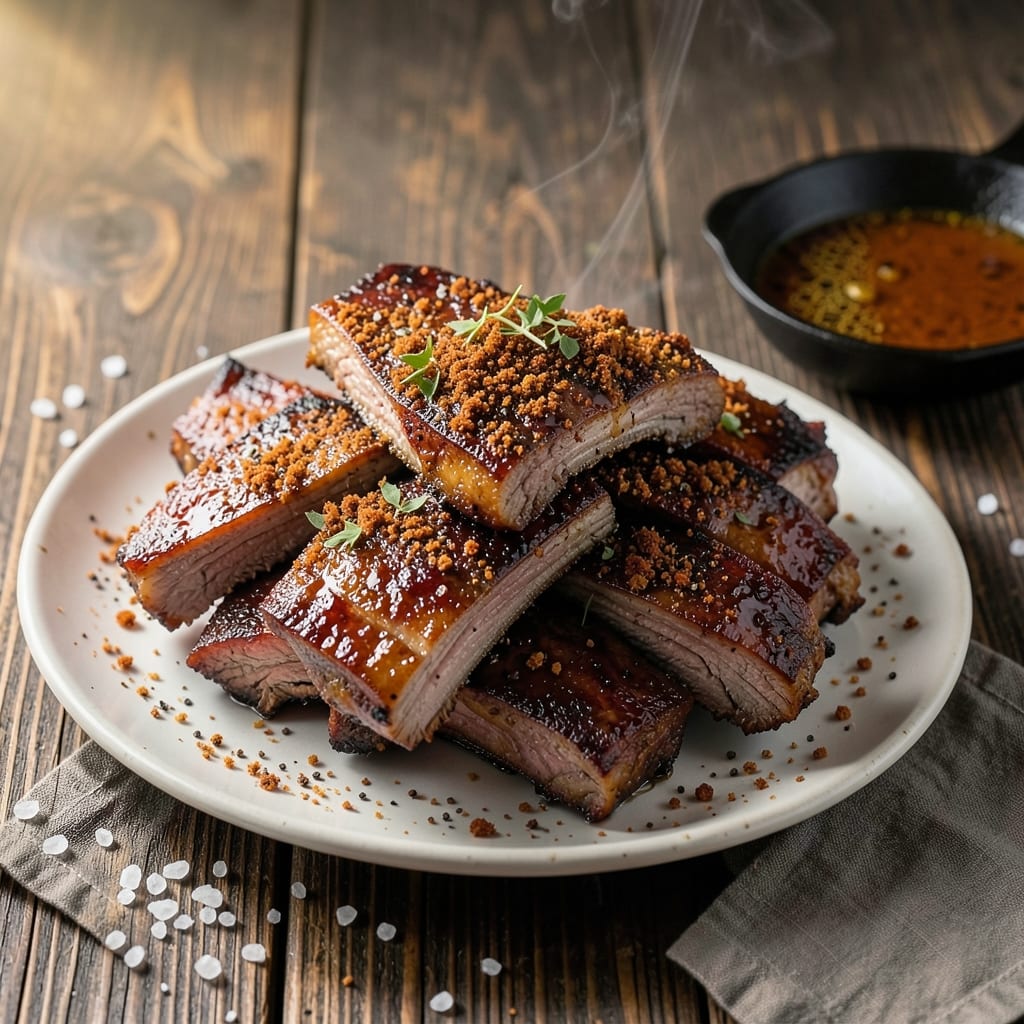
This Angus beef ribs recipe transforms tender meat into melt-in-your-mouth perfection with a bold dry rub and precise cooking technique. 🔥 The secret lies in balancing a deep, smoky crust with juicy, fall-apart texture—a result of slow, controlled heat and proper resting. Whether you're grilling, smoking, or oven-roasting, this method delivers restaurant-quality ribs at home.
The dry rub isn’t just seasoning—it’s the foundation. Coarse salt, smoked paprika, and brown sugar create a caramelized bark that locks in moisture while adding layers of flavor. After a 3-4 hour cook (depending on your method), the ribs develop that coveted snap when you pull them apart, revealing tender meat underneath. This isn’t your average backyard ribs recipe; it’s a foolproof approach that works for beginners and pitmasters alike.
What sets these ribs apart is the reverse sear finish—a modern twist that guarantees a perfect crust without overcooking. The result? Ribs so tender they nearly dissolve on your plate, paired with a crust that’s crisp enough to stand up to bold sides like baked beans or tangy coleslaw. Serve with a bourbon cocktail or bold red wine to complete the meal.
No guesswork, no wasted time—just restaurant-quality ribs that impress even the most skeptical eaters. Ready to master the art of slow-cooked Angus? Let’s get started.
Ingredients for angus beef ribs
Four pounds of Angus beef ribs plus a dry rub that turns ordinary into extraordinary.
| Ingredient | Amount | Notes |
|---|---|---|
| Angus Beef Ribs 🥩 | 4 lb | Bone-in, meaty cuts preferred |
| Coarse Kosher Salt 🧂 | ½ cup | Diamond Crystal preferred |
| Smoked Paprika 🌶️ | 2 tbsp | High-quality for smoky depth |
| Light Brown Sugar 🍯 | 2 tbsp | Packed measurement |
| Ground Black Pepper 🌶️ | 1 tbsp | Freshly ground for best flavor |
| Garlic Powder 🧄 | 1 tbsp | Not garlic salt |
| Onion Powder 🧅 | 1 tbsp | For balanced sweetness |
| Ground Cumin 🌿 | 1 tsp | Toasted for deeper flavor |
| Chili Powder 🌶️ | 1 tsp | Mild or medium heat |
| Unsalted Butter 🧈 | ½ cup | Cold for basting |
| Yellow Onion 🧅 | 1 whole | Sliced for reverse sear |
| Fresh Thyme Leaves 🌿 | ¼ cup | Chopped for garnish |
| Apple Cider Vinegar 🍎 | 2 tbsp | For basting liquid |
| Honey 🍯 | 1 tbsp | For glaze option |
The ribs are non-negotiable—Angus delivers that buttery, melt-in-your-mouth texture. Look for meaty cuts with good marbling, and ask your butcher to trim excess fat if needed. Costco or Whole Foods usually carry high-quality bone-in ribs, but any reputable grocery store with a good meat counter will work. Pro tip: if the ribs feel dry or have a dull color, ask for a different cut. The dry rub ingredients are all pantry staples, but Penzeys or bulk bins at natural food stores have the best quality spices. Smoked paprika is the secret weapon here—it gives that deep, smoky flavor without overpowering.
No smoked paprika? Substitute half chili powder and half regular paprika—it won’t be identical, but it’ll get you close. Running low on brown sugar? White sugar works in a pinch, though the crust won’t be quite as caramelized. The butter needs to be cold for basting—if it’s soft, pop it in the freezer for 15 minutes. Fresh thyme is ideal, but dried works at one-third the amount. For the reverse sear, I like to use yellow onions because they caramelize beautifully, but red onions add a nice sweetness too. If you’re feeling fancy, add a splash of bourbon to the basting liquid—trust me, it elevates everything.
Store leftover ribs airtight in the fridge for 3-4 days, or freeze for up to 3 months. They reheat beautifully—just warm in a skillet with a splash of broth or water. The dry rub keeps well in an airtight container for up to 6 months, so make extra. I always portion the ribs into individual servings before freezing—makes lunches or leftovers a breeze. And if you’ve got extra basting liquid, save it for future meals—it’s pure flavor gold.
Why You'll Love This Recipe
- Minimal Prep Required: I swear by this recipe because it’s literally four ingredients plus salt and pepper. No brining, no fancy rubs—just a quick dry rub of smoked paprika and brown sugar, then the oven does all the work. (Yes, even on a Tuesday night.)
- Smoky-Sweet Magic: The smoked paprika and brown sugar caramelize into this sticky, crispy crust that clings to the ribs like a hug. Angus beef stays tender while the edges get that perfect snap—crunchy enough to satisfy, but melts in your mouth.
- Leftovers That Don’t Suck: Between us, most rib recipes leave you with sad, dry scraps. Not these. The sugar keeps them moist for days, so I meal prep them for lunches or toss them into salads. (My kids actually ask for them—rare, I know.)
- Budget-Friendly Luxury: You’re paying for Angus beef, but the rub costs pennies. A single rack feeds four, and the leftovers stretch further than takeout. Honestly, it’s the closest I get to fancy dining without the restaurant price tag.
Step-by-step instructions for dry-rubbed Angus beef ribs
Here's the foolproof method for ribs with a perfect crust and melt-in-your-mouth tenderness.
👨🍳 Step 1: Create the Signature Dry Rub
In a medium bowl, combine all 0.5 cup coarse kosher salt, 2 tbsp smoked paprika, 2 tbsp light brown sugar, 1 tbsp ground black pepper, 1 tbsp garlic powder, 1 tbsp onion powder, 1 tsp ground cumin, and 1 tsp chili powder. Mix thoroughly with your hands until the salt is evenly distributed and the spices are fully incorporated.
This blend creates the perfect balance of smoky, sweet, and spicy flavors that will develop into a deep, crackling crust. I like to press the rub into the meat with my fingers to ensure maximum adhesion—this prevents it from falling off during cooking and guarantees even flavor penetration.
🔥 Step 2: Season and Reverse Sear the Ribs
Pat the 4 lb angus beef ribs completely dry with paper towels—this is crucial for developing that perfect crust. Generously apply the dry rub all over the ribs, pressing it into every crevice. Let them sit at room temperature for 30 minutes while you prepare your oven and pan.
Preheat your oven to 250°F and place a wire rack on a baking sheet. Arrange the ribs on the rack, bone-side down, and bake for 2 hours. This low-and-slow cook transforms the tough connective tissue into tender, pull-apart meat while keeping the exterior dry for maximum crust development.
🍳 Step 3: Build the Buttery Onion Glaze
While the ribs are cooking, slice the 1 whole yellow onion into ¼-inch thick rounds. In a large skillet, melt the 0.5 cup unsalted butter over medium heat until it foams. Add the onion slices and cook for 8-10 minutes until golden brown and caramelized.
Remove the onions and set aside, leaving the butter in the pan. Add 2 tbsp apple cider vinegar and 1 tbsp honey to the pan, scraping up any browned bits. Simmer for 2 minutes until slightly reduced—this creates a sticky, flavorful base for your glaze.
🔥 Step 4: Sear and Glaze for Maximum Crust
Remove the ribs from the oven and increase the oven temperature to 450°F. In a large cast-iron skillet, heat the buttery onion mixture over high heat until it's sizzling. Place the ribs in the skillet, bone-side down, and sear for 3-4 minutes until the bottom develops a deep brown crust.
Flip the ribs and spoon the onion glaze generously over the top. Transfer the skillet to the preheated oven and roast for 10-15 minutes until the glaze is bubbly and the ribs reach an internal temperature of 195-203°F (they should be fork-tender).
🍽️ Step 5: Rest and Garnish for Serving
Transfer the ribs to a cutting board and let them rest for 10 minutes before serving. This resting period allows the juices to redistribute, ensuring each bite is moist and flavorful. While they rest, stir the 0.25 cup fresh thyme leaves into the remaining glaze in the skillet and keep it warm.
Slice the ribs between the bones and arrange them on a platter. Drizzle with the thyme-infused glaze and serve immediately. The result should be fall-apart tender meat with a perfect balance of smoky, sweet, and savory flavors in every bite.
Pro Tips For Making Angus Beef Ribs
- Trim the Fat First: The membrane on the bone side of the ribs is tough and chewy—peel it off with your fingers or a butter knife before seasoning. I learned this the hard way after biting into a perfectly cooked rib that still felt like chewing leather. ---
- Salt Before Heat: Apply the kosher salt at least 4 hours ahead (or overnight) so it penetrates deep into the meat. Skip this, and you’ll end up with a dry exterior and a bland interior—no amount of smoking or sugar will fix that. ---
- Watch the Sugar Burn: Light brown sugar caramelizes fast—keep the ribs moving in the smoker or oven, and resist the urge to crank the heat past 250°F. After burning three batches, I finally figured out that patience here means a glossy crust, not ashes. ---
- Rest Under Foil: Pull the ribs off the heat when they hit 195°F internal temp, wrap them in foil, and let them sit for 10-15 minutes. This locks in juices that would otherwise drip out when you slice—your future self will thank you for not skipping this.
Creative variations of this dish
Smoky Bourbon Glaze
Swap the onion glaze for a rich bourbon reduction by simmering ½ cup bourbon with 2 tbsp brown sugar and 1 tbsp apple cider vinegar until reduced by half. Brush this over the ribs during the final 10 minutes of cooking. The alcohol burns off, leaving behind deep caramelized notes that pair perfectly with the smoky dry rub. 🍷
Asian-Inspired Five-Spice
Replace the dry rub with a fusion blend of 1 tbsp five-spice powder, 1 tbsp toasted sesame seeds, 1 tbsp honey, 1 tsp ginger powder, and ½ tsp cinnamon. Cook the ribs with a splash of soy sauce and rice vinegar> in the glaze for an umami-packed twist. Serve with steamed jasmine rice and pickled vegetables for a full Asian-inspired meal.
Spicy Coffee Rub
Add 2 tbsp instant coffee granules and 1 tbsp cayenne pepper to the original dry rub for a bold, caffeine-kissed crust. The coffee deepens the smokiness while the cayenne adds heat. Pair with a cream cheese glaze> (mix ½ cup cream cheese with 1 tbsp honey) for a sweet-spicy contrast. This variation is a crowd-pleaser for those who love intense flavors.
Honey-Garlic Reverse Sear
Infuse the butter for the onion glaze with 4 minced garlic cloves and 1 tbsp minced fresh rosemary while melting. After searing, brush the ribs with a mix of 2 tbsp honey and 1 tbsp soy sauce before the final oven finish. The result is a sticky, aromatic glaze that balances the dry rub’s smokiness with bright, garlicky sweetness.
Breakfast Ribs
Transform these ribs into a brunch sensation by serving them with crispy hash browns and fried eggs. Increase the chili powder in the rub to 2 tsp and add ½ tsp onion powder> for extra depth. Top with a cheddar cheese sauce> (melt ½ cup shredded cheddar with 2 tbsp sour cream) for a decadent, hearty meal that’s perfect for weekend feasts.
Slow-Smoked Texas Style
For a true Texas BBQ experience, smoke the ribs at 225°F for 4-5 hours> using hickory and oak wood chips before finishing with the reverse sear. Skip the onion glaze and instead wrap the ribs in butcher paper> with ½ cup beef broth> and 1 tbsp brown sugar> during the last hour. This method creates a tender, bark-covered masterpiece with deep smoky flavors.
Nutrition facts
Frequently asked questions
Can I use bone-in or boneless Angus beef ribs for this recipe?
This recipe is designed for bone-in Angus beef ribs—they hold up better to slow cooking and develop more flavor. Boneless ribs will cook faster and may not yield the same satisfying crackling crust. If you must use boneless, reduce the cooking time by 30-45 minutes and monitor closely to avoid overcooking.
What’s the best way to store leftover ribs?
Wrap leftovers tightly in aluminum foil or place them in an airtight container to preserve moisture. Store in the fridge for 3-4 days or freeze for up to 3 months. Reheat in a skillet with a splash of beef broth or water over medium-low heat until warmed through—never microwave, as it dries out the meat.
Why do my ribs turn out tough instead of tender?
Tough ribs usually mean one of two things: overcooking (past 203°F internal temp) or not enough resting time. Always let ribs rest for 10-15 minutes after cooking—this lets the juices redistribute. For extra tenderness, try wrapping them in butcher paper during the last hour of cooking to trap steam.
Can I grill these ribs instead of using the oven?
Start by smoking or grilling the ribs at 225°F for 2-3 hours (indirect heat), then finish with a high-heat sear for 3-4 minutes per side to build the crust. Use the same dry rub and glaze—just adjust for outdoor conditions. A meat thermometer is your best friend to avoid overcooking.
What sides pair best with these ribs?
Classic choices like creamy baked beans, tangy coleslaw, or garlic mashed potatoes balance the richness perfectly. For a lighter option, try grilled corn on the cob or roasted sweet potatoes. The buttery onion glaze also works as a drizzle for roasted veggies—don’t waste it!