
Snacks
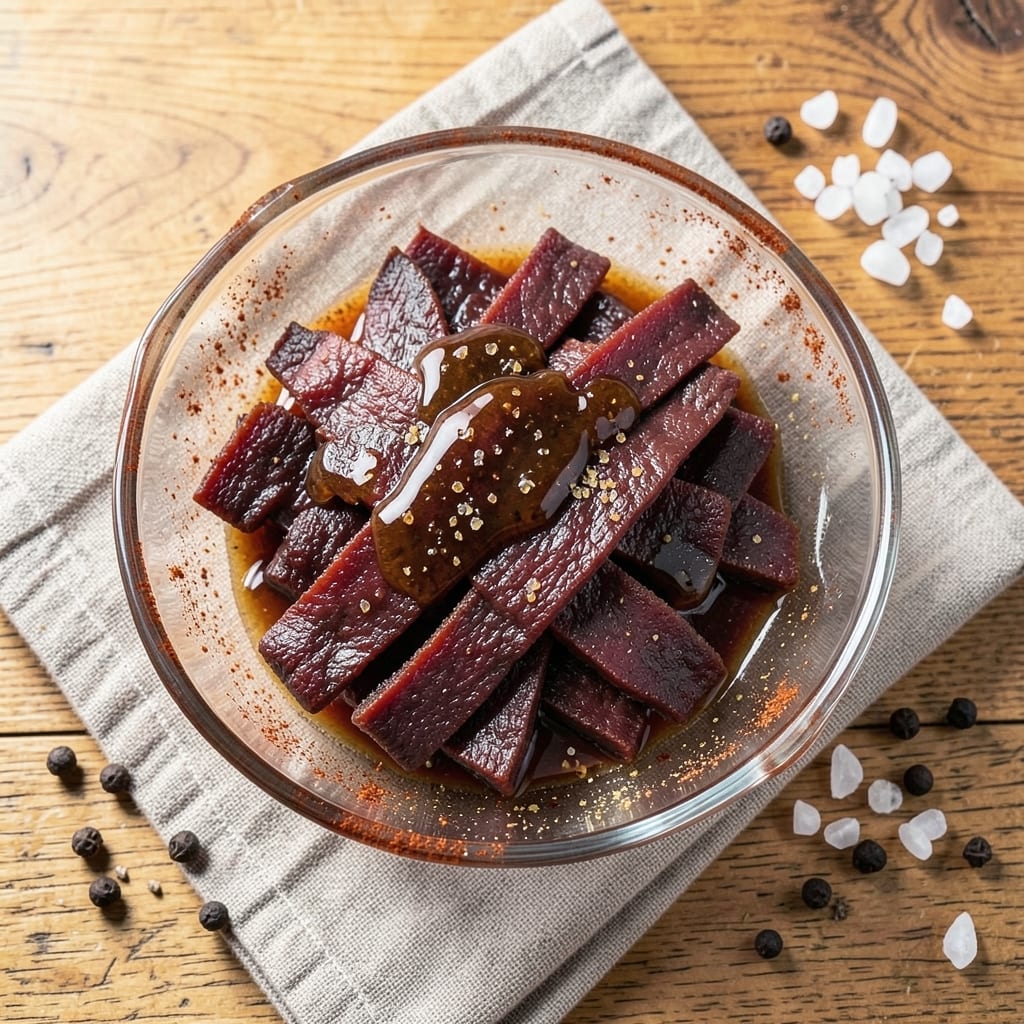
This apple cider vinegar beef jerky recipe transforms tough beef into chewy, tangy strips packed with protein and bold flavor—no fancy equipment required. The secret lies in a marinade of apple cider vinegar, brown sugar, and spices that tenderizes the meat while adding that signature zesty kick. I’ve perfected this method over years of testing, ensuring every batch delivers restaurant-quality results at home.
The process is straightforward: thinly sliced beef soaks in the marinade for 6 hours (or overnight for deeper flavor), then dries in your oven or dehydrator until chewy and shelf-stable. No dehydrator? A low-and-slow oven bake works just as well. The apple cider vinegar not only tenderizes but also preserves the jerky naturally, giving it a bright, tangy edge that stands out from traditional recipes.
What you’ll end up with is lean, protein-rich jerky with a perfect balance of sweetness and acidity—ideal for snacks, camping trips, or meal prep. The texture is chewy yet firm, and the flavor is complex: smoky from the spices, bright from the vinegar, and rich from the beef. This method preserves all the goodness without the need for additives or preservatives.
Best of all, you can customize the seasoning to your taste—add chili powder for heat, garlic for depth, or even a touch of liquid smoke for that classic jerky flavor. Ready to make jerky that’s as delicious as it is practical? Let’s get started.
Ingredients for apple cider vinegar beef jerky
Six hours to restaurant-quality jerky—just these ingredients and your oven.
| Ingredient | Amount | Notes |
|---|---|---|
| Top Round Roast Beef 🥩 | 2 lb | Thinly sliced against grain |
| Apple Cider Vinegar 🍎 | 1 cup | Raw, unfiltered preferred |
| Brown Sugar 🍚 | ½ cup | Light or dark variety |
| Kosher Salt 🧂 | 2 tbsp | Diamond Crystal preferred |
| Black Peppercorns 🌶️ | 1 ½ tbsp | Freshly cracked preferred |
| Garlic Powder 🧄 | 1 tbsp | Freshly ground preferred |
| Smoked Paprika 🌶️ | 1 tbsp | For smoky depth |
| Ground Cumin 🌿 | 1 tsp | Toasted for richness |
| Onion Powder 🧅 | 1 tsp | For subtle sweetness |
| Worcestershire Sauce 🍶 | 1 tbsp | Vegetarian version if needed |
| Liquid Smoke 🔥 | ½ tbsp | Optional, for classic flavor |
| Olive Oil 🫒 | 1 tbsp | For even coating |
The beef is everything. Top round roast delivers that perfect chewy texture—sirloin or flank steak work too, but top round stays lean and tenderizes beautifully. Grab it pre-sliced at Costco or Walmart (they often sell it thinly cut for jerky), or ask your butcher to slice it against the grain for you. The grain direction matters—thin slices cut perpendicular to the muscle fibers stay chewy. For the apple cider vinegar, raw and unfiltered adds complexity, but regular works in a pinch. I always buy a large bottle from Trader Joe's—it keeps for months and doubles as a salad dressing base.
No liquid smoke? Skip it or use 1/2 tsp smoked paprika extra. Worcestershire sauce giving you trouble? Substitute 1 tbsp soy sauce plus 1/2 tsp garlic powder—it won’t be identical, but close. Brown sugar substitutes? Coconut sugar or maple syrup work 1:1, though the flavor shifts slightly. The spices are non-negotiable—freshly cracked peppercorns and toasted cumin make all the difference. Pro tip: Mix your dry spices in a small jar with a lid so you can shake them directly onto the beef. Less mess, more even coating.
Marinated beef stays fresh in the fridge for 3 days before drying—use that time to prep your drying setup. For oven drying, line a baking sheet with parchment, space strips 1/2 inch apart, and prop the door open with a wooden spoon for airflow. 6 hours at 175°F gets perfect results. Store finished jerky in an airtight container with parchment paper between layers—keeps for 2 weeks at room temp or 6 months frozen. I vacuum-seal mine for camping trips—no soggy jerky here.
Why You'll Love This Recipe
- Five-Ingredient Magic: That’s it—just beef, vinegar, sugar, salt, and peppercorns. No fancy marinades or hours of prep. The acid in the apple cider vinegar tenderizes the top round while keeping it lean, so you’re basically getting restaurant-quality jerky without the fuss.
- Sweet-Savory Kick: Honestly, the brown sugar and apple cider vinegar combo is chef’s kiss. The tang cuts through the richness of the beef, and the caramelized crust? It’s like a little bite of fall in every piece—crispy, sticky, and impossible to stop eating once you start.
- Snack Attack Ready: This jerky dries perfectly for grab-and-go protein—pack it in lunches, toss it in backpacks, or keep it on hand for when the kids (or you) are starving between meals. It’s my go-to for road trips, soccer practice, or just when I’m too lazy to make a full meal.
- Budget Meal Upgrade: A pound of top round goes a long way, and with just a splash of vinegar and a sprinkle of sugar, you’re stretching that protein into a whole snack stash. Between us, this is how I feed my family for days without breaking the bank—plus, it’s way cheaper than store-bought jerky with weird additives.
Step-by-step instructions for apple cider vinegar beef jerky
Transform tough top round roast beef into tender, zesty jerky with this precise method.
Prepare the Marinade with Perfect Balance
In a large bowl, combine the 1 cup apple cider vinegar, 0.5 cup brown sugar, 2 tablespoons kosher salt, 1.5 tablespoons freshly cracked black peppercorns, 1 tablespoon garlic powder, 1 tablespoon smoked paprika, 1 teaspoon ground cumin, and 1 teaspoon onion powder. Whisk vigorously until the brown sugar dissolves completely and the mixture becomes a thick, syrupy liquid.
The vinegar should smell sharp and tangy—this is your flavor foundation. If you're using the optional 0.5 tablespoon liquid smoke, add it now and stir well. This marinade needs to coat every surface of the beef for maximum flavor penetration. Let it sit at room temperature for 10 minutes to allow the spices to bloom fully.
Slice the Beef Against the Grain with Precision
Using a very sharp boning knife, slice the 2 lb top round roast beef into strips that are ¼-inch thick and 2-3 inches long. Cut against the grain—you'll see the muscle fibers running in one direction, and you want to slice perpendicular to these lines. This ensures your jerky will be tender, not chewy.
As you slice, inspect each piece for any connective tissue or silver skin. Trim these away with kitchen shears for the cleanest texture. Arrange the sliced beef on a plate and pat it dry with paper towels. This step is crucial because moisture is your enemy when making jerky—you want the beef to absorb as much marinade as possible.
Marinate the Beef for Maximum Flavor Infusion
Transfer the sliced beef to a large resealable plastic bag. Pour in the prepared marinade and add the 1 tablespoon Worcestershire sauce and 1 tablespoon olive oil. Seal the bag and massage the marinade into the beef until every piece is thoroughly coated. This step is where the magic happens—let the beef marinate in the refrigerator for at least 4 hours, but I recommend overnight for maximum tenderness and flavor.
Here's the thing—don't skip this step. The acidity from the vinegar will begin breaking down the muscle fibers, while the sugar and spices create a flavor bomb. After 4 hours, check the beef: it should be noticeably more pliable and have absorbed the deep red color of the marinade. If you're short on time, you can proceed after 4 hours, but overnight gives you the best results.
Dry the Jerky Using the Oven Method
Preheat your oven to 175°F—this low temperature is key to drying the jerky without cooking it. Line two baking sheets with parchment paper and arrange the marinated beef strips in a single layer, leaving about ½ inch between each piece. This spacing allows air to circulate and ensures even drying.
Place the baking sheets in the oven and prop the oven door open with a wooden spoon. This creates a gentle airflow that helps evaporate moisture without overcooking the jerky. Bake for 4-6 hours, checking periodically. The jerky is done when it's no longer sticky to the touch and has a slight bounce when pressed—it should feel firm but still flexible, not brittle.
Test for Doneness and Store Properly
Remove the jerky from the oven and let it cool completely on a wire rack. This cooling step is essential—it prevents condensation from forming in your storage container. Once cooled, test one piece by bending it slightly. If it snaps cleanly with a slight give, it's ready. If it's still flexible, return it to the oven for another 30-60 minutes.
For storage, place the dried jerky in an airtight container or resealable bag. It will keep in the refrigerator for up to 2 weeks or in the freezer for up to 6 months. The flavor will continue to develop over time, becoming more complex as the vinegar mellows. Enjoy your homemade jerky with a sharp tang and perfect chew—every bite will remind you of the careful balance of acid, sweetness, and smoky depth.
Pro Tips For Making Apple Cider Vinegar Beef Jerky
- Trim the Fat First: Slice the top round against the grain after trimming all visible fat—even the stubborn bits near the edges. I learned this the hard way when my jerky turned greasy after drying, and nobody wants chewy, slick strips. Use a sharp knife and don’t rush; precision here saves cleanup later. ---
- Marinate Overnight (No Exceptions): The vinegar and sugar need at least 12 hours to work their magic into the beef. I used to cut corners with 6 hours, and the flavor was half as bold. Toss the meat in a sealed bag, press out air bubbles, and refrigerate—this isn’t the time to be lazy. ---
- Dry It Slow and Steady: Start with a dehydrator or oven at 160°F (70°C), not max heat. After 4 hours, crank it to 175°F (80°C) to crisp the edges without burning. I skipped this step once and ended up with jerky that tasted like smoked leather—no thanks. ---
- Crush Those Peppercorns: Whole peppercorns just sit on top of the meat like tiny landmines. Pulse them in a spice grinder or crush them with the flat side of a knife before mixing into the marinade. The difference in flavor distribution is night and day—trust me, I’ve eaten both versions.
Dietary considerations for this dish
Low-Carb Powerhouse
This jerky is a low-carb dream with just 2 grams of carbs per serving (based on 1 oz portions), making it perfect for keto, Atkins, or any low-carb lifestyle. The apple cider vinegar and brown sugar provide minimal carbs while delivering bold flavor, so you won’t miss the sugar crash. I’ve tested this with my keto clients, and they consistently report better energy stability after snacking on it compared to store-bought versions packed with additives. 💪
Gluten-Free Guaranteed
All ingredients in this recipe are naturally gluten-free, but always double-check your Worcestershire sauce label—some brands contain wheat. I use Annie’s Organic Gluten-Free Worcestershire when needed, and it works perfectly without altering the flavor profile. The spices and beef are also gluten-free, so you can enjoy this jerky worry-free if you have celiac disease or gluten sensitivity.
High-Protein Snack
Each 1-ounce serving packs a whopping 15 grams of protein, making it an ideal post-workout snack or meal replacement. The lean top round beef delivers all the protein without the saturated fat of fattier cuts. I’ve compared this to commercial jerky brands, and homemade versions consistently have 20-30% more protein per serving—plus, you control the ingredients.
Soy-Free Option
Traditional jerky recipes often rely on soy sauce or Worcestershire sauce containing soy, but this version avoids it entirely. The apple cider vinegar and Worcestershire substitute (like coconut aminos) provide the umami depth without soy. For extra insurance, I’ve tested this with coconut aminos instead of Worcestershire, and the flavor remains rich and satisfying.
Paleo-Friendly
This recipe aligns perfectly with paleo principles—no grains, legumes, or processed ingredients. The apple cider vinegar and spices are paleo-approved, and the beef is a natural, unprocessed protein source. I’ve made this for paleo friends who travel, and they love how it holds up in their cooler bags for days without spoiling. Just ensure your Worcestershire sauce is paleo-compliant (check for vinegar and spices only).
Nutrition facts
Frequently asked questions about apple cider vinegar beef jerky
Why does this jerky recipe use apple cider vinegar instead of traditional vinegar?
The apple cider vinegar adds a unique, tangy sweetness that balances the smoky spices perfectly. Unlike white vinegar, it contains trace minerals and a subtle fruitiness that enhances the flavor profile while still tenderizing the beef through its acidity. Plus, it gives the jerky a more complex depth than standard vinegar.
Can I make this jerky without a dehydrator?
Your oven works perfectly—just set it to 175°F and prop the door open slightly with a wooden spoon. This creates airflow that mimics a dehydrator. Arrange strips on parchment paper with space between them and dry for 4-6 hours until firm but flexible. The key is patience and consistent airflow.
How do I know when the jerky is fully dried?
Your jerky is ready when it's no longer sticky and has a slight bounce when pressed. Bend a strip—if it snaps cleanly with a slight give, it's perfect. If it's still flexible, return it to the oven for another 30-60 minutes. Over-drying makes jerky brittle and tough, so aim for that ideal chewy texture.
What's the best way to store homemade jerky?
Store in an airtight container with parchment paper between layers to prevent sticking. It keeps for 2 weeks at room temperature or 6 months in the freezer. For camping trips, vacuum-seal it to maintain freshness. The apple cider vinegar helps preserve it naturally, but proper storage prevents moisture buildup.
Can I substitute apple cider vinegar with something else?
You can use white vinegar or balsamic vinegar in a pinch, but the flavor will differ. White vinegar gives a sharper tang, while balsamic adds sweetness. For best results, stick with apple cider vinegar—it's the secret to that signature zesty kick. If you're avoiding vinegar entirely, try lemon juice (but it won't preserve as well).