
Salads
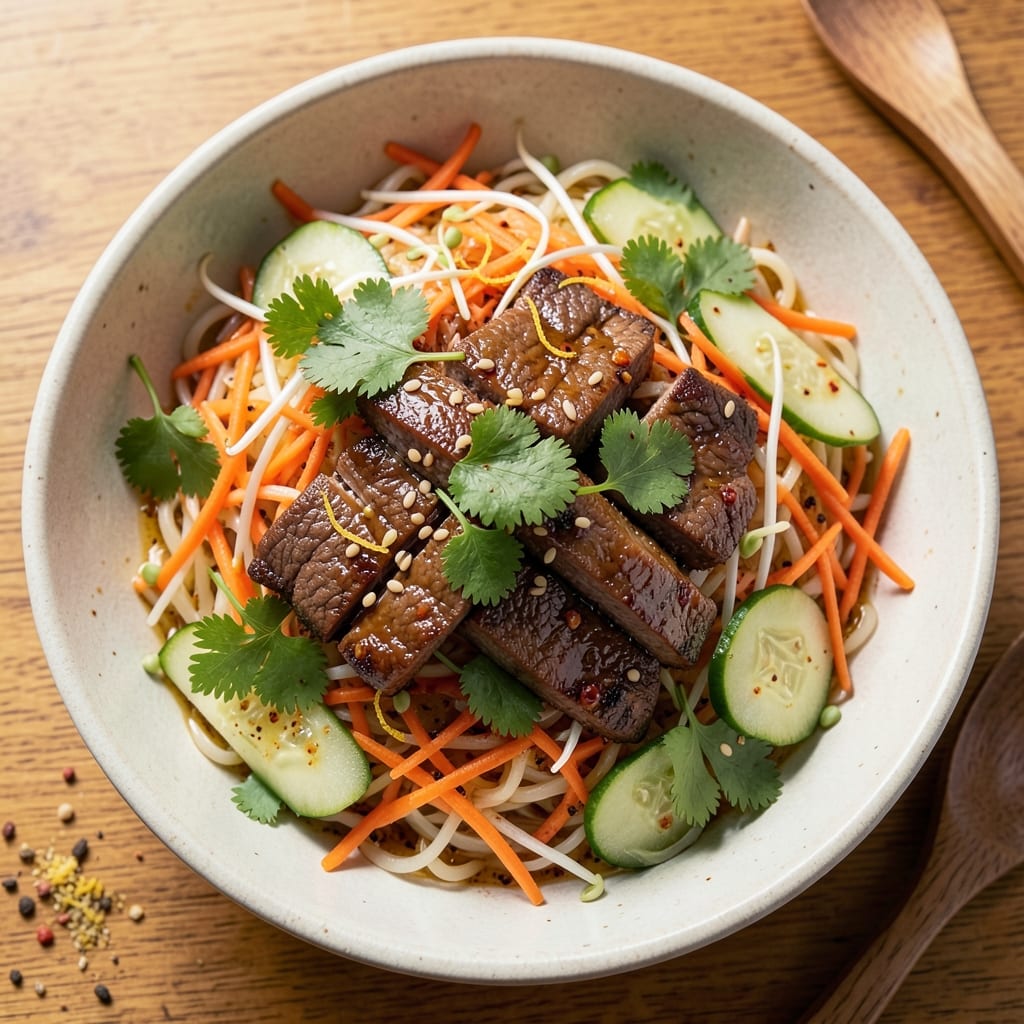
This Asian beef noodle salad recipe delivers restaurant-quality results with perfectly tender beef, crisp vegetables, and a tangy peanut dressing that ties everything together. The secret lies in quick-cooking the beef and assembling the salad while everything is still warm for maximum flavor absorption. I've been perfecting this dish for years, and it never fails to impress—whether you're serving it as a light lunch or a refreshing dinner.
The foundation of this recipe is in the beef preparation—thinly sliced flank steak gets marinated in a simple soy-ginger mixture before being stir-fried to achieve that signature crisp-tender texture. Wide rice noodles provide the perfect base, absorbing the dressing without becoming soggy. Fresh vegetables like shredded carrots, cucumber, and bean sprouts add crunch and freshness, while crushed peanuts and cilantro bring texture and aroma.
What makes this salad truly special is the dressing—a bold combination of peanut butter, soy sauce, lime juice, and chili that creates a perfect balance of sweet, salty, tangy, and spicy flavors. The key is letting the dressing sit for at least 15 minutes before tossing with the salad, allowing the flavors to meld and intensify. By the time you serve it, you'll have a dish that's vibrant, satisfying, and packed with authentic Asian-inspired flavors.
This recipe is incredibly versatile—serve it as a main dish with extra protein or as a side for grilled meats. The leftovers keep well in the fridge for up to 3 days, making it perfect for meal prep. Let's get started on creating this flavorful, textured dish that's sure to become a favorite.
Ingredients for asian beef noodle salad
Restaurant-quality Asian beef noodle salad starts with these 15 vibrant ingredients—crisp, tender, and packed with zing.
| Ingredient | Amount | Notes |
|---|---|---|
| Flank Steak 🥩 | 1 lb | Thinly sliced against grain |
| Wide Rice Noodles 🍜 | 8 oz | Uncooked, dried variety |
| Carrots 🥕 | 2 whole | Julienned or shredded |
| English Cucumber 🥒 | 1 whole | Thinly sliced lengthwise |
| Bean Sprouts 🌱 | 2 cups | Fresh, rinsed well |
| Fresh Cilantro 🌿 | ½ cup | Chopped, stems removed |
| Crushed Peanuts 🥜 | ½ cup | Toasted for extra flavor |
| Lime Juice 🍋 | ¼ cup | Freshly squeezed |
| Soy Sauce 🍶 | ¼ cup | Low-sodium preferred |
| Peanut Butter 🥜 | ¼ cup | Smooth, unsweetened |
| Sesame Oil 🫒 | 1 tbsp | Toasted, for aroma |
| Ginger 🧄 | 1 tbsp | Fresh, grated finely |
| Red Chili Flakes 🌶️ | 1 tsp | Adjust to taste |
| Garlic Cloves 🧄 | 3 cloves | Minced, fresh preferred |
| Sesame Seeds 🌾 | 1 tbsp | Toasted for garnish |
The flank steak is non-negotiable for that signature crisp-tender texture. Look for well-marbled cuts at your local Asian market—they'll have it pre-sliced, which saves time. If you're slicing yourself, freeze the meat for 20 minutes first to make it easier. The rice noodles? Thai Kitchen brand is my go-to—they soak perfectly and hold up to the dressing. For the ginger, fresh is a must—the flavor is completely different from powdered. Grab a small knob at the produce section, about the size of a golf ball.
No fresh ginger? Powdered works in a pinch, but use half the amount. The peanut butter should be smooth, not crunchy—Smucker's Natural is my pick. Out of soy sauce? Coconut aminos works too, though it's less salty. The bean sprouts can be pre-washed if you're short on time, but rinse them well to remove any dirt. For the chili flakes, Trader Joe's brand has the perfect heat level. If you're sensitive to spice, start with half the amount and adjust. The dressing needs time to meld—let it sit for 15 minutes before tossing with the salad.
Prep the dressing first—it needs time to develop. Store any unused dressing in an airtight jar in the fridge for up to 1 week. The cooked beef and noodles keep for 3 days separately, so you can assemble this salad fresh each time. Freeze the cooked beef for up to 3 months if you want to prep ahead. Toast your crushed peanuts in a dry pan for 3-4 minutes—they'll release so much aroma. Keep the cilantro in a jar with a damp paper towel to stay fresh longer.
Why You'll Love This Recipe
- No Marinate Madness: That flank steak? Just slice it thin against the grain, toss with soy sauce and a splash of rice vinegar, then let it sit for 15 minutes while you chop veggies. No fancy marinating—just enough time to make it tender enough to eat without chewing for 10 minutes.
- Umami Bomb: The moment you toss in those bean sprouts and cucumber with the dressing—garlic, lime, chili—it’s like a flavor explosion in your mouth. Sweet, tangy, spicy, and that beef? It’s got this perfect chew with just enough char from the pan.
- Lunchbox Legend: Between us, this is my go-to for packed lunches. The noodles hold up for days, the dressing keeps everything fresh, and it’s the only salad my kids actually finish. (Yes, even on a Tuesday night.)
- Budget Powerhouse: Flank steak stretches across three meals, the noodles are cheaper than pasta, and you’re using crunchy veggies that last forever. Honestly, I’ve made this for under $8 per serving, and it still feels like a restaurant dish.
Step-by-step instructions for Asian beef noodle salad
Here's how to create a perfectly balanced salad with tender beef and vibrant flavors.
Prepare the Wide Rice Noodles
Bring a large pot of water to a rolling boil and add the 8 oz wide rice noodles. Cook for 8-10 minutes until they're tender but still have a slight bite—you want them al dente so they don't turn mushy. I like to test them by tasting a small piece; it should be soft but still hold its shape.
Drain the noodles immediately in a colander and rinse them under cold water for 30 seconds to stop the cooking process. This prevents them from becoming too soft. Transfer the drained noodles to a large mixing bowl and set aside. The noodles will cool slightly as you work on the other components, which helps prevent them from becoming soggy when combined with the dressing.
Marinate and Cook the Flank Steak
In a small bowl, whisk together the 0.25 cup soy sauce, 0.25 cup lime juice, 1 tbsp sesame oil, 1 tbsp grated ginger, 3 minced garlic cloves, and 1 tsp red chili flakes. This marinade will tenderize the beef and infuse it with bright, zesty flavors. Place the 1 lb flank steak in a resealable plastic bag and pour the marinade over it, making sure it's evenly coated.
Seal the bag and marinate in the refrigerator for at least 30 minutes, or up to 2 hours if you have time. After marinating, remove the steak from the bag and pat it dry with paper towels. Heat a large skillet over medium-high heat and add the steak, cooking for 3-4 minutes per side until it's browned and reaches medium-rare (about 135°F internal temperature). Let it rest for 5 minutes before thinly slicing it against the grain into ¼-inch thick strips.
Assemble the Vegetable Components
While the steak rests, prepare the vegetables. Using a julienne peeler or a sharp knife, cut the 2 whole carrots into thin matchsticks. Slice the 1 whole English cucumber lengthwise into thin strips, discarding the seeds. Rinse the 2 cups bean sprouts thoroughly and drain them well. Chop the 0.5 cup fresh cilantro, removing any tough stems. Toast the 0.5 cup crushed peanuts in a dry skillet over medium heat for 2-3 minutes until fragrant and lightly golden.
Add the julienned carrots, cucumber strips, bean sprouts, and chopped cilantro to the bowl with the cooked noodles. Gently toss everything together to combine, being careful not to break the noodles. The vegetables should be evenly distributed throughout the noodles, creating a colorful and textured base for the salad.
Make the Peanut Dressing
In a small saucepan, combine the 0.25 cup peanut butter, 0.25 cup soy sauce, 0.25 cup lime juice, 1 tbsp sesame oil, 1 tbsp grated ginger, and 3 minced garlic cloves. Cook over low heat, stirring constantly, for 5-7 minutes until the mixture is smooth and slightly thickened. If the dressing becomes too thick, add 1-2 tablespoons of water to loosen it.
Remove the saucepan from heat and let the dressing cool for 5 minutes. Once cooled, stir in the 1 tbsp toasted sesame seeds and 1 tsp red chili flakes, adjusting the spice level to your preference. The dressing should have a rich, nutty flavor with a hint of tanginess and a touch of heat.
Combine and Serve
Add the sliced flank steak to the bowl with the noodles and vegetables. Pour the peanut dressing over the top and toss everything together gently but thoroughly. The dressing should coat the noodles and vegetables evenly, creating a harmonious blend of flavors and textures. Taste and adjust the seasoning if needed—you might want to add a bit more lime juice for brightness or a touch more soy sauce for saltiness.
Serve the Asian beef noodle salad immediately while the steak is still warm and the flavors are at their peak. Garnish with additional toasted sesame seeds and chopped cilantro for a fresh, vibrant finish. This dish is best enjoyed right away, so gather everyone around the table for a delicious and satisfying meal!
Pro Tips For Making Asian Beef Noodle Salad
- Slice Steak Against the Grain: I learned this the hard way—if you slice flank steak with the grain, you’ll end up with chewy, rubbery strips. Flip the cut, find those long muscle fibers, and slice perpendicular to them. Thin strips (about ¼-inch) cook faster and stay tender, especially when stir-frying.
- Soak Noodles Just Until Plump: Wide rice noodles turn mushy if you over-soak them. Drop them in warm (not boiling) water for 5-7 minutes—just until they’re pliable but still hold shape. Drain immediately and rinse with cold water to stop cooking. Over-soaking is the fast track to a soggy salad.
- Shock Cucumber in Ice Water: English cucumbers release bitter water when cut. Toss the slices in a bowl of ice water for 10 minutes before draining. This removes excess moisture and bitterness, so your salad stays crisp and refreshing—not waterlogged.
- Marinate Steak for 30 Minutes Minimum: I used to skip this, thinking it was optional. Wrong. A 30-minute marinade (even just soy sauce, garlic, and a little sugar) makes the beef tender and flavorful. If you’re short on time, slice it thinner first, then marinate—it’ll still work, but don’t skip the step entirely.
Health benefits of asian beef noodle salad
Lean Protein Power
This salad packs a protein punch with lean flank steak, providing about 30 grams of protein per serving—perfect for muscle repair and satiety. Flank steak is particularly lean compared to other cuts, offering 180 calories per 3-ounce serving while delivering iron and zinc for immune support. The quick cooking method preserves these nutrients better than slow-cooked beef. 💪
Complex Carbs for Energy
The wide rice noodles provide complex carbohydrates that fuel your body with sustained energy, unlike simple sugars that cause spikes and crashes. One serving delivers about 35 grams of carbs, with 3 grams of fiber to support digestion. These noodles have a lower glycemic index than white pasta, making them ideal for balanced meals. I always choose Thai Kitchen brand for their consistent texture and quality.
Healthy Fats Balance
The peanut dressing adds monounsaturated fats from peanut butter, which support heart health by reducing LDL cholesterol. Just 2 tablespoons of peanut butter in the dressing provide 8 grams of healthy fats per serving. Sesame oil contributes polyunsaturated fats, including omega-6 fatty acids, while adding rich flavor. The balance of fats, protein, and carbs keeps you full for hours.
Vitamin-Rich Vegetables
This salad is a nutrient powerhouse thanks to its fresh vegetables. Carrots provide beta-carotene (vitamin A precursor) for vision and immunity, while cucumber delivers hydration with 95% water content. Bean sprouts are packed with vitamin K and folate, essential for blood clotting and cell repair. The cilantro adds vitamin C and antioxidants that combat inflammation. 🌱
Antioxidant Boost
The ginger and garlic in both the marinade and dressing offer anti-inflammatory benefits, while red chili flakes provide capsaicin, a compound that may boost metabolism. Sesame seeds contribute calcium and magnesium, supporting bone health and muscle function. Together, these ingredients create a flavor profile that's as beneficial for your body as it is delicious for your palate.
Low-Calorie, High-Flavor
Despite its rich flavors, this salad is surprisingly light and low-calorie—each serving clocks in at around 450 calories, making it perfect for a satisfying lunch or dinner without overindulging. The tangy lime juice and spicy chili flakes enhance flavor perception, allowing you to enjoy bold tastes with fewer calories. It's a great option for anyone watching their weight while still craving restaurant-quality meals. ✨
Nutrition facts
Frequently asked questions
Can I use chicken or shrimp instead of beef?
For chicken, use 1 lb boneless, skinless chicken breast or thighs, sliced thinly. Cook for 5-6 minutes per side until fully done (165°F). Shrimp works beautifully too—just cook for 2-3 minutes per side until pink. The marinade recipe stays the same, but reduce cooking time significantly.
How do I prevent the noodles from getting soggy?
Rinse the cooked noodles with cold water for 30 seconds after draining, then toss them with a tiny bit of sesame oil before adding other ingredients. Also, assemble the salad right before serving—don't let it sit too long. For extra insurance, keep the dressing separate until the very end.
What's the best way to store leftovers?
Store components separately: dress the noodles and veggies with a little oil to keep them fresh, and wrap the cooked beef tightly in plastic. Refrigerate for up to 3 days. When ready to serve, toss everything together fresh and add dressing just before eating. The beef freezes well for 3 months if wrapped airtight.
Can I make this gluten-free?
Yes! Use tamari or coconut aminos instead of soy sauce, and check your rice noodles for gluten-free certification. Most Asian markets carry gluten-free rice noodle brands. Also verify your peanut butter is gluten-free, as some brands process in shared facilities.
Why does my dressing separate?
The peanut butter and oils naturally separate when cooled. Just whisk vigorously before using or heat the dressing gently for 10 seconds in the microwave to restore smoothness. For extra stability, add 1 tsp cornstarch mixed with 1 tbsp water to the hot dressing while cooking.