
Soups & Stews
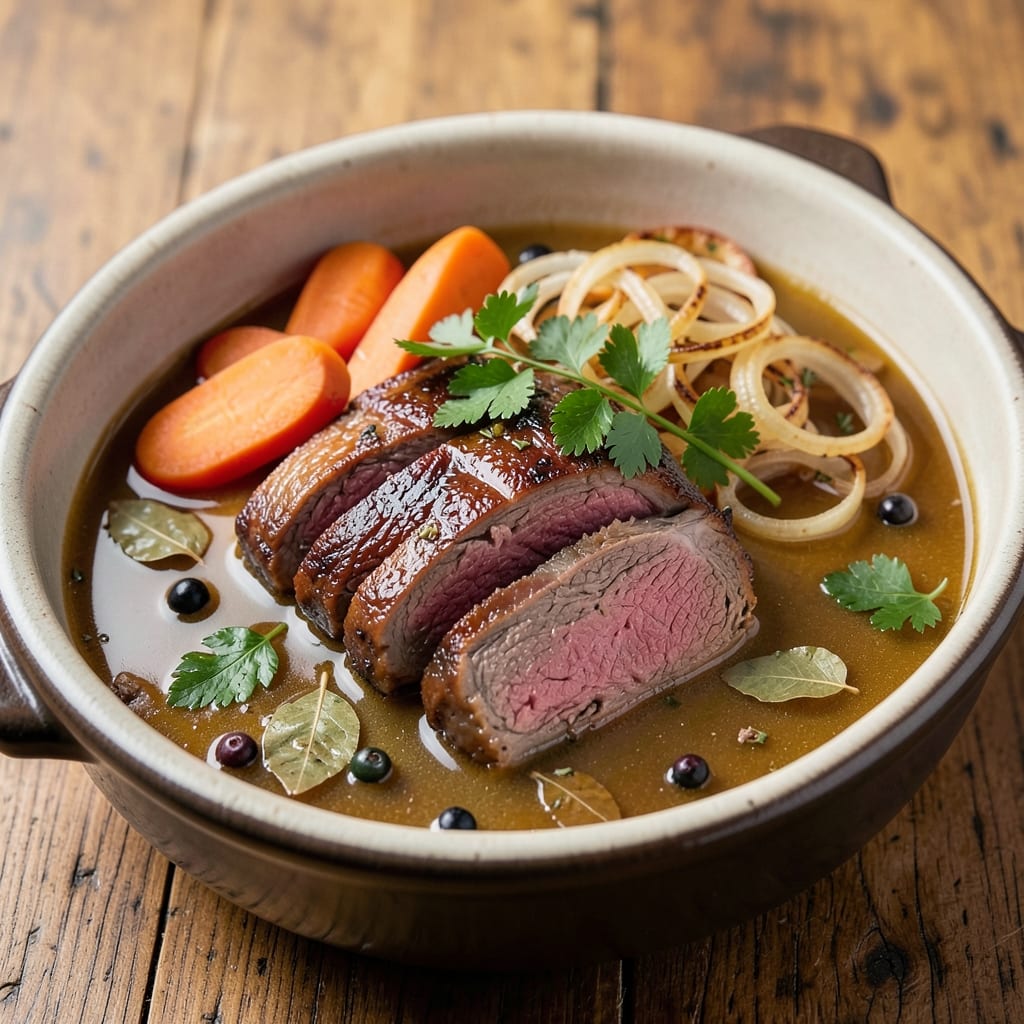
This Austrian boiled beef recipe brings hearty tradition to your table with tender beef simmered in aromatic broth until melt-in-your-mouth perfect. 💛 The secret lies in slow cooking with bay leaves, juniper berries, and a touch of sweetness that balances the signature horseradish kick. What makes this dish special is its ability to transform tough cuts into succulent bites while developing deep, savory flavors through hours of gentle simmering.
The recipe follows authentic Austrian techniques, where beef is first parboiled to remove impurities before being transferred to a flavorful broth with vegetables and spices. This method ensures the meat remains juicy while absorbing the rich, herby notes of the cooking liquid. The horseradish, traditionally served on the side, adds a sharp contrast that cuts through the richness beautifully.
By the time you serve this dish, you'll have perfectly tender beef that falls apart easily, infused with the subtle sweetness of carrots and onions, and enhanced by the earthy depth of juniper berries. The accompanying broth is rich enough to serve as a soup or as a sauce for dumplings, making every bite satisfying. This is comfort food at its finest—warm, hearty, and full of tradition.
Pair it with classic Austrian sides like buttery spaetzle or red cabbage for a complete meal that feels like a homecoming. The recipe delivers restaurant-quality results with minimal effort, proving that slow cooking can be both rewarding and foolproof. Let's get started on creating this timeless dish.
Ingredients for austrian boiled beef
Twelve ingredients transform tough beef into restaurant-quality tenderness through slow simmering and aromatic spices.
| Ingredient | Amount | Notes |
|---|---|---|
| Beef Chuck Roast 🥩 | 3 lb | Tough cut preferred for slow cooking |
| Yellow Onions 🧅 | 2 whole | Peeled, halved lengthwise |
| Carrots 🥕 | 4 whole | Medium size, scrubbed clean |
| Bay Leaves 🌿 | 4 whole | Dried, standard size |
| Juniper Berries 🌲 | 10 whole | Freshly crushed preferred |
| Fresh Parsley 🌿 | ¼ cup | Chopped, stems removed |
| Salt 🧂 | 2 tbsp | Kosher or sea salt |
| Black Peppercorns 🌶️ | 1 tbsp | Freshly cracked |
| Sugar 🍚 | 1 tbsp | White granulated |
| Fresh Horseradish Root 🌿 | 2 oz | Peeled, grated fresh |
| Water 💧 | 12 cups | Filtered preferred |
| Apple Cider Vinegar 🍎 | 2 tbsp | For brightness |
The beef cut matters most here—chuck roast with its marbling breaks down beautifully during slow cooking. Local butchers or Costco usually carry it pre-cut, but if buying whole, ask for the chuck section near the shoulder. Fresh juniper berries elevate the dish, but if unavailable, substitute with 1 tsp juniper extract (though fresh is superior). For the horseradish, Trader Joe's sells pre-peeled roots, saving prep time. Look for vibrant, firm roots—they'll keep in the fridge for 2-3 weeks.
No juniper berries? 1 tsp ground allspice mimics the earthy depth, though not identical. The apple cider vinegar adds brightness—substitute with lemon juice if needed, but reduce to 1 tbsp. For the horseradish, pre-made horseradish sauce works in a pinch, though fresh grating delivers that signature kick. The bay leaves should be fresh if possible, but dried are fine—just remove them before serving. If your carrots are small, use 6-8 baby carrots instead; no need to peel them unless they're particularly dirty.
This dish tastes even better the next day as flavors meld. Store the beef and broth separately in airtight containers for up to 5 days in the fridge. For longer storage, freeze the beef in portions for up to 3 months. The broth can be frozen for 6 months. Reheat gently on the stove—never microwave the beef directly, as it can turn rubbery. The horseradish should be prepared fresh when serving, as it loses potency when stored.
Why You'll Love This Recipe
- Deep, Earthy Magic: That first bite? Rich, savory, and layered with juniper’s piney punch and bay leaves’ warm depth. It’s not just beef—it’s a slow-cooked flavor bomb that tastes like a cozy Alpine tavern, and honestly, I’d eat it straight from the pot.
- Leftovers That Shine: This dish only gets better the next day. I make a big batch on Sundays, then repurpose it into sandwiches, stir-fries, or even a quick beef hash. The beef stays juicy, the carrots sweeten, and the onions caramelize—it’s the ultimate lazy-day lifesaver.
- Budget Meal for Crowds: A chuck roast stretches across meals without breaking the bank. With just five core ingredients, I feed my family of four (plus my dad when he visits) for under $20. The juniper berries add luxury for pennies, and the leftovers stretch into lunches for days.
Step-by-step instructions for Austrian boiled beef
This classic Austrian method transforms tough beef into melt-in-your-mouth perfection.
🔥 Step 1: Prepare the Beef and Aromatics
Pat the 3 lb beef chuck roast dry with paper towels to remove any surface moisture. This step is crucial—wet beef creates steam instead of a flavorful crust. Place the roast in a large Dutch oven or heavy pot that can accommodate all ingredients comfortably.
Peel and halve the 2 whole yellow onions lengthwise, then place them cut-side down directly on top of the beef. This positioning ensures the onions caramelize slightly during cooking, infusing the meat with their sweet flavor. Scrub the 4 whole carrots clean and add them whole to the pot as well. The whole vegetables will soften beautifully while maintaining their shape.
🍳 Step 2: Build the Flavor Base
Add the 4 whole bay leaves, 10 whole juniper berries (lightly crushed between your palms), 2 tbsp salt, 1 tbsp black peppercorns, 1 tbsp sugar, and 2 tbsp apple cider vinegar to the pot. The vinegar adds bright acidity that cuts through the richness of the beef. Give everything a gentle stir to distribute the seasonings evenly.
Pour in the 12 cups water, making sure the beef is completely submerged. If needed, add a few extra ice cubes to ensure full coverage. This water-to-meat ratio creates the perfect broth while allowing the beef to cook gently. Bring the liquid to a gentle simmer over medium-high heat—you should see small bubbles breaking the surface but no vigorous boiling.
⏰ Step 3: Simmer Until Fork-Tender
Once the liquid reaches a simmer, reduce the heat to low and maintain a gentle bubble. Cover the pot with a lid, leaving it slightly ajar to allow steam to escape. This slow cooking method is essential—it breaks down the tough connective tissue in the chuck roast while keeping the meat incredibly moist.
Simmer for 3 to 3.5 hours until the beef is fork-tender. You'll know it's ready when a knife slides in easily and the meat pulls apart cleanly. The internal temperature should reach 195-205°F—this is where the magic happens as the collagen transforms into gelatin, making the beef incredibly tender. Check the beef after 3 hours—some cuts may finish earlier, while others might need the full time.
🥘 Step 4: Prepare the Horseradish Sauce
While the beef cooks, prepare the signature horseradish sauce. Peel and grate the 2 oz fresh horseradish root using a box grater or food processor. Transfer the grated horseradish to a bowl and mix in the 0.25 cup chopped fresh parsley. This combination creates the perfect balance of sharp, spicy horseradish and fresh herbal notes that complement the rich beef.
Add 1 tbsp apple cider vinegar to the horseradish mixture and stir well. The vinegar helps mellow the horseradish's intensity slightly while adding brightness. Taste and adjust the seasoning with additional salt or pepper if needed. This sauce should be vibrant green and have a sharp, tangy kick—it's what makes this Austrian boiled beef truly special.
🍽️ Step 5: Rest and Serve
Once the beef reaches the perfect tenderness, carefully remove it from the pot using tongs and transfer it to a cutting board. Let it rest for 15-20 minutes before slicing. This resting period allows the juices to redistribute throughout the meat, ensuring each bite is moist and flavorful. Skim any excess fat from the cooking liquid if desired, but leave about 2 cups of the rich broth for serving.
Slice the beef against the grain into ¼-inch thick slices. The meat should be so tender it practically falls apart. Serve the beef hot, accompanied by the remaining vegetables from the pot and a generous spoonful of the prepared horseradish sauce on each plate. The combination of rich, tender beef with the sharp horseradish creates a flavor profile that's both comforting and exciting—true Austrian tradition.
Pro Tips For Making Austrian Boiled Beef
- SEAR THE MEAT FIRST: Don’t skip browning the chuck roast—even if it’s a boiled dish. A quick 3-4 minute sear in a hot pot with oil locks in flavor and makes the broth richer. I used to skip it, and the final result always tasted flat. ---
- CRUSH THE JUNIPER: Whole juniper berries? Toss them in a bag with a rolling pin first. They release their piney aroma better when broken open—just don’t pulverize them into dust. I learned this after my first batch tasted underwhelming. ---
- DON’T BOIL IT: Simmer, don’t boil. A rolling boil wastes meat and makes the broth cloudy. Keep it at a gentle bubble—just enough to hear an occasional tiny pop. My grandmother called it “the whisper of patience.” ---
- PEEL CARROTS AFTER COOKING: Leave the skins on until the very end. They hold the carrots together during long cooking, and peeling afterward saves time. Plus, the texture’s better—no tough, stringy edges. (Yes, even if it looks messy.)
Dietary considerations for austrian boiled beef
Gluten-Free Adaptations
The traditional recipe is naturally gluten-free, but always double-check your ingredients. The juniper berries and bay leaves from Penzeys Spices are certified gluten-free, and the beef itself contains no gluten. The only potential concern is the apple cider vinegar—opt for a brand like Bragg that guarantees gluten-free production. The horseradish sauce remains safe as long as you use pure horseradish root without additives. ✨
Low-Carb Considerations
This dish is already low-carb friendly, with only 10 grams of total carbs per serving (mostly from the carrots and onions). To reduce carbs further, skip the carrots entirely or replace them with celery stalks (about 4 large stalks). The onions can be reduced to just 1 whole onion halved, cutting carbs by nearly half. The broth remains rich and flavorful without the vegetables, making it ideal for keto diets.
Dairy-Free Options
While the original recipe doesn't contain dairy, serving suggestions often include spaetzle or mashed potatoes. For a dairy-free version, serve the beef with cauliflower mash (made with 4 cups steamed cauliflower, 2 tbsp dairy-free butter, and salt to taste). The rich beef broth pairs beautifully with the creamy texture while keeping the dish dairy-free. The horseradish sauce remains unchanged and dairy-free.
Allergen-Friendly Tips
For nut allergies, ensure all spices (like ground allspice substitutes) are processed in nut-free facilities. The beef itself is allergen-free, but always verify with your butcher that no cross-contamination occurred during processing. For soy allergies, check the ingredients on any pre-made horseradish sauces—some brands include soy-based preservatives. Freshly grated horseradish is always the safest choice. 💪
Vegetarian Alternatives
While this dish is traditionally made with beef, you can create a vegetarian version using extra-firm tofu or mushrooms. For tofu, press and cube 2 blocks (14 oz each) of firm tofu, then simmer in the same broth for 2-2.5 hours. For mushrooms, use 2 lbs of king oyster mushrooms (whole) and simmer for 1.5 hours. Both alternatives absorb the broth's flavors beautifully, though the texture will differ from beef.
Nutrition facts
Frequently asked questions
What cut of beef works best for this Austrian boiled beef?
Use a chuck roast weighing 3 pounds—this tough cut is perfect for slow cooking as it breaks down beautifully into tender, flavorful meat. The marbling in chuck roast adds richness to the broth while ensuring the beef stays juicy throughout the long simmer. Never use leaner cuts like sirloin, as they won't develop the same satisfying texture.
Why does the recipe call for juniper berries?
Juniper berries are essential for authentic Austrian flavor—they add an earthy, pine-like aroma that complements the beef beautifully. Without them, the dish loses its traditional character. If you can't find fresh berries, lightly crush 1 teaspoon of ground allspice as a substitute, though it won't be identical. The berries should be lightly crushed before adding to release their oils.
Can I make this recipe in a slow cooker?
Transfer all ingredients to a 6-quart slow cooker and cook on low for 8-9 hours or high for 5-6 hours. The slow cooker's gentle heat mimics the traditional simmering method perfectly. Just make sure the beef is fully submerged in liquid throughout cooking. The texture and flavor will be just as rich as on the stovetop.
What happens if I overcook the beef?
Overcooking beyond 3.5 hours can turn the beef stringy rather than tender. The magic happens at 195-205°F internal temperature, where collagen breaks down into gelatin. If you're unsure, check doneness by inserting a knife—if it slides in easily and the meat pulls apart, it's perfect. Never let it boil vigorously, as this can toughen the meat.
How can I use the leftover broth?
The rich beef broth is versatile! Use it as a base for soups, gravies, or even a flavorful sauce for dumplings. Strain out any solids and store in the fridge for up to 5 days or freeze for 6 months. It's especially delicious with mashed potatoes or as a sipping broth. For extra depth, add a splash of apple cider vinegar when reheating.