Soups & Stews
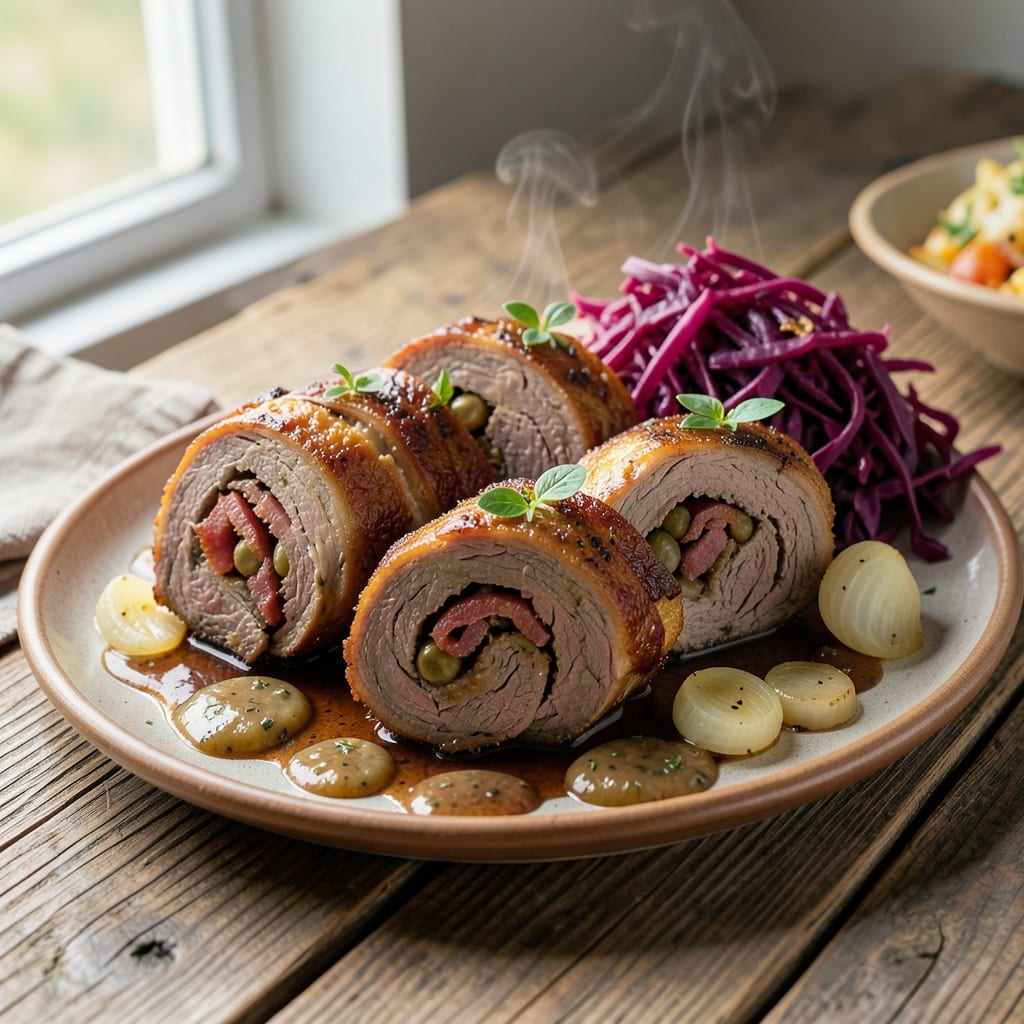
Authentic German beef rouladen delivers the hearty, comforting flavors of Bavarian home cooking in every tender bite. This classic dish transforms thinly pounded beef into flavorful rolls stuffed with tangy mustard, crisp pickles, and savory bacon—all braised until fork-tender in a rich, aromatic broth. What makes this recipe truly special is the balance of textures: the crisp cabbage wrapping, the melt-in-your-mouth beef, and the crunch of pickles that keep every bite exciting.
The secret to authentic rouladen lies in the preparation: pounding the beef just right ensures it stays tender while holding its shape, and the mustard-pickle filling adds a perfect balance of sharp and sweet. Traditional German techniques—like using dark beer in the braising liquid and finishing with a touch of caraway—elevate this dish from ordinary to extraordinary. The result is a meal that feels like a warm hug, perfect for family gatherings or special occasions.
Once braised to perfection, these rouladen serve beautifully with red cabbage, buttery potatoes, or fluffy spaetzle to soak up every drop of the flavorful gravy. The dish tastes even better the next day, making it ideal for meal prep. Whether you're celebrating Oktoberfest or simply craving a taste of Germany, this recipe delivers restaurant-quality results with a homemade touch.
Ready to master this German classic? The step-by-step instructions will guide you through every detail—from pounding the beef to rolling, braising, and serving—so you can create a dish that tastes like it came straight from a Munich kitchen.
Ingredients for authentic german beef rouladen
Pantry staples plus a few specialty items for that authentic Bavarian taste.
| Ingredient | Amount | Notes |
|---|---|---|
| Top Round Roast Beef 🥩 | 1 ½ lb | Pounded to 1/4-inch thickness |
| Dijon Mustard 🍯 | ¼ cup | High-quality for tanginess |
| Cornichons 🥒 | ½ cup | Sliced lengthwise for crunch |
| Thick-Cut Bacon 🥓 | 6 oz | Smoked, cut into strips |
| Red Cabbage 🥬 | 1 small | Shredded for wrapping |
| Yellow Onion 🧅 | 1 medium | Thinly sliced for filling |
| Garlic Cloves 🧄 | 4 cloves | Minced for flavor |
| Carrots 🥕 | 2 medium | Julienned for texture |
| Dark Beer 🍺 | 1 ½ cups | Dortmunder or Munich Dunkel |
| Beef Broth 💧 | 1 ½ cups | Low-sodium preferred |
| Tomato Paste 🍅 | 2 tbsp | Smooth, no sugar added |
| Ground Caraway Seeds 🌿 | 1 tsp | Freshly ground preferred |
| Bay Leaves 🍃 | 2 whole | Fresh for best flavor |
| Black Peppercorns 🌶️ | 1 tsp | Freshly cracked |
| Olive Oil 🫒 | 1 tbsp | For searing beef |
The beef is the star, so grab top round roast—it's lean but tender when pounded right. Costco or Whole Foods usually carry it pre-sliced for rouladen, but if you're buying a whole roast, ask the butcher to cut it into thin strips. For the mustard, Maille Dijon is my go-to, but any good-quality Dijon works. Cornichons are key for that signature crunch—Trader Joe's has them in the refrigerated section, or sub dill pickles if needed. The bacon should be thick-cut for maximum flavor, and smoked is traditional, but regular bacon works in a pinch.
No dark beer? Use a malty ale or even stout—just avoid light lagers. For the broth, low-sodium is critical so you control the saltiness. Fresh caraway seeds are a game-changer, but if you only have ground, use half the amount. The tomato paste can be the squeeze-tube kind from Trader Joe's—it's perfect for small batches. For the cabbage, if you can't find red, green cabbage works too, but it'll change the color slightly. And if you're short on time, pre-shredded coleslaw mix saves steps without sacrificing much flavor.
The beer and broth can be prepped ahead—just store them separately until ready to use. The filled rouladen keep well in the fridge for 2 days before braising, so this is a great make-ahead meal. Once braised, they reheat beautifully—just add a splash of water or broth to prevent drying. The dish tastes even better the next day as the flavors meld. Store leftovers in the fridge for 4 days or freeze for 3 months. The cabbage and carrots can be prepped a day ahead too—just keep them wrapped in damp paper towels in the fridge.
Why You'll Love This Recipe
- One-Pan Wonder: I swear by this recipe because it’s actually hands-off. You slice the beef, slather it with Dijon, wrap it with bacon and pickles, then pop it in the oven. The bacon crisps up while the cabbage cooks—no flipping, no fuss. Honestly, the only real effort is the initial rolling, and even that’s satisfyingly tactile.
- Crispy-Creamy Magic: That first bite? The bacon’s smoky crunch gives way to tender beef, and the tangy Dijon ties it all together. The cornichons add this bright, briny pop that cuts through the richness—like a little flavor party in your mouth. Between us, it’s the kind of dish that makes you want to call someone just to share it.
- Leftovers That Shine: This recipe actually improves the next day. The flavors meld even more, and the beef gets even more fork-tender. I’ll pack it for lunches, slice it for sandwiches, or reheat it with a sprinkle of fresh dill. (Yes, even on a Tuesday night.) It’s the kind of meal that turns into multiple meals without trying.
- Budget-Friendly Feast: Top round beef is affordable, bacon adds luxury without breaking the bank, and cabbage stretches across meals. I’ve made this for date nights, family dinners, and even a potluck—it’s hearty enough to feed a crowd but doesn’t require a grocery haul. Plus, the leftovers mean fewer takeout nights. Win.
Step-by-step instructions for authentic German beef rouladen
Here's how to make these classic German rolls with perfect cabbage-wrapped layers.
Prepare the Beef and Filling
Start by pounding the 1.5 lb top round roast beef between two sheets of plastic wrap until it reaches about ¼-inch thickness. This makes it easier to roll later. Using a sharp knife, cut the beef into four even strips about 2 inches wide—this will give you one roll per serving.
In a bowl, mix together the 0.25 cup Dijon mustard, 0.5 cup cornichons (chopped if they're whole), 6 oz thick-cut bacon (cut into strips), 1 medium yellow onion (thinly sliced), 4 cloves garlic (minced), 2 medium carrots (julienned), 1 tsp ground caraway seeds, and 1 tsp black peppercorns. This tangy, crunchy filling is the heart of every authentic rouladen.
Assemble the Rouladen
Spread about 1 tablespoon of the mustard mixture evenly across each beef strip. Then, using your hands, gently press the filling into a tight roll, starting from one end. The cabbage will help hold everything together, so don't worry if it's not perfect—just make sure the filling stays inside.
Lay each roll seam-side down on a cutting board. Take the 1 small red cabbage (shredded) and wrap it tightly around each roll, overlapping the leaves like you would with a burrito. Secure with a toothpick if needed—this keeps everything in place during cooking. I like to make sure the cabbage covers the entire roll completely for that classic German presentation.
Sear the Rouladen
Heat 1 tablespoon olive oil in a large Dutch oven over medium-high heat. Once hot, carefully add the cabbage-wrapped rouladen and sear for 2-3 minutes per side until golden brown. The oil should sizzle gently—this creates a beautiful crust that locks in all those delicious flavors.
Remove the rouladen from the Dutch oven and set aside. In the same pot, add 2 tbsp tomato paste and cook for 1 minute until it darkens slightly. This step builds the foundation for your rich sauce, so don't skip it. Pour in 1.5 cups dark beer and scrape up any browned bits from the bottom of the pot—this is where all the flavor lives.
Simmer to Perfection
Return the rouladen to the Dutch oven and add 1.5 cups beef broth, 2 whole bay leaves, and any juices that have collected. Bring everything to a gentle simmer, then reduce heat to low. Cover and let it cook for 2-2.5 hours, turning the rouladen occasionally, until the beef is fork-tender and the cabbage is soft but still holds its shape.
The sauce should reduce to a thick, glossy consistency—if it gets too thin, uncover and simmer for another 10-15 minutes. The aroma will fill your kitchen with that classic German comfort-food smell. Taste and adjust seasoning if needed, but it should already be perfectly balanced between the tangy mustard, sweet beer, and savory beef.
Rest and Serve
Once cooked, remove the rouladen from the Dutch oven and let them rest for 10 minutes on a warm plate. This resting time is crucial—it lets the juices redistribute so every bite is moist and flavorful. Meanwhile, skim any excess fat from the sauce and adjust the consistency with a splash of broth if needed.
To serve, carefully unwrap each rouladen and arrange it on a plate with the cabbage leaves fanned out. Ladle the rich sauce over the top and around the plate. The cabbage should be tender but still hold its shape, and the beef should be juicy with a perfect sear. Serve with buttered spaetzle or a simple green salad to complete this authentic German meal.
Pro Tips For Making Authentic German Beef Rouladen
- Salt the Beef Overnight: I learned this the hard way—skipping the overnight salt for the top round means dry, tough rouladen no matter how long you braise. Use 1.5 teaspoons of kosher salt per pound, pat it dry first, and refrigerate uncovered on a rack for 12-24 hours. The crust will form better, and the meat stays juicy even after rolling.
- Cut Bacon Thinly, Not Thick: Thick-cut bacon is great for breakfast, but for rouladen, you need slices paper-thin to avoid soggy filling. Lay each slice between two sheets of parchment, then pound with a meat mallet until translucent—this also renders fat faster during cooking. (Yes, it’s tedious, but the difference is noticeable.)
- Sear the Meat Before Stuffing: Cold meat won’t hold its shape when rolled, and the filling will slide out during cooking. Sear the beef slices for 2 minutes per side in a screaming-hot pan before adding mustard and cornichons—this firms up the edges and gives the rouladen structure. Let them cool slightly before rolling to prevent filling leaks.
- Braise at 300°F, Not Boil: Low and slow is non-negotiable for tender rouladen, but many people crank the heat too high and end up with stewed beef. Cover the pot and maintain a gentle simmer (tiny bubbles, occasional skimming of foam) at 300°F for 2.5-3 hours. The bacon will crisp, and the beef will melt like butter—no guesswork, just a thermometer.
Dietary considerations for authentic german beef rouladen
Gluten-Free Adaptations
Traditional rouladen rely on beer and breadcrumbs, but you can easily adapt this recipe for gluten-free diets. Replace the 1.5 cups dark beer with an equal amount of gluten-free beer like Omission or Glutenberg, or use gluten-free chicken or vegetable broth mixed with a splash of apple cider vinegar for acidity. For extra binding in the filling, add 1 tbsp gluten-free breadcrumbs (like Bob's Red Mill) to the mustard mixture. The cabbage wrapping naturally contains no gluten, so the dish remains safe while keeping that authentic texture. 🌱
Dairy-Free Options
While traditional rouladen don't contain dairy, you can modify the serving suggestions to keep the meal dairy-free. Skip the buttered spaetzle and serve with roasted potatoes tossed in olive oil and rosemary, or a side of quinoa pilaf with fresh herbs. The rich beer-braised sauce already delivers deep flavor, so no dairy is needed. For extra richness in the sauce, stir in 1 tbsp nutritional yeast at the end for a cheesy note without dairy. The crisp cabbage and tender beef remain the stars of the dish.
Lower-Carb Choices
To reduce carbs while keeping the dish hearty, swap the red cabbage wrapping for thinly sliced mushrooms (about 8 oz cremini mushrooms per roll). Mushrooms add umami depth and hold the filling together during braising. For sides, serve with cauliflower mash instead of potatoes, or a zucchini noodle salad with lemon and olive oil. The beef and bacon filling remain high-protein and low-carb, making this a satisfying option for keto or low-carb diets. The flavor stays true to German comfort food while fitting dietary needs. 🥦
Vegetarian Substitutes
While rouladen traditionally use beef, you can create a vegetarian version by using extra-firm tofu or seitan cut into strips and pounded to ¼-inch thickness. Marinate the tofu in 2 tbsp soy sauce and 1 tbsp maple syrup for 30 minutes before assembling. The filling remains the same (mustard, pickles, bacon can be omitted or replaced with smoked tempeh). Wrap the tofu strips in cabbage and braise as directed. For extra protein, add lentils to the filling mixture. The dish loses its meaty texture but gains a satisfying, plant-based heartiness. 🌿
Allergen-Friendly Tips
For those with mustard allergies, replace the Dijon with 1 tbsp apple cider vinegar and 1 tsp white miso paste for tanginess. If cornichons are problematic, use dill pickles (without seeds) or omit them entirely—just add an extra ½ tsp caraway seeds for flavor. For bacon allergies, substitute with smoked paprika or liquid smoke (½ tsp) in the filling. Always check labels on beef broth and tomato paste for hidden allergens. With these swaps, everyone at the table can enjoy this German classic safely. 💛
Nutrition facts
Frequently asked questions
Can I use ground beef instead of roast beef for rouladen?
While roast beef is traditional for its tenderness, you can use ground beef (80/20 blend) if needed. Form it into ¼-inch thick patties and wrap them tightly in cabbage. The texture will be slightly denser, but the flavor remains authentic. For best results, use chuck roast instead of lean ground beef to maintain juiciness.
What if I don't have cornichons? Can I substitute something?
Cornichons are traditional, but you can use dill pickles (chopped) or sweet pickles (like bread-and-butter) for a milder crunch. For extra tang, add ½ tsp extra Dijon mustard to the filling. Avoid sour pickles—they can overpower the dish. The key is to keep that crisp texture!
How do I prevent the rouladen from falling apart when rolling?
Use toothpicks or kitchen twine to secure each roll before wrapping in cabbage. Pound the beef to ¼-inch thickness (not thinner) for better structure. If the filling feels too loose, add 1 tbsp gluten-free breadcrumbs to bind it. The cabbage wrapping also helps hold everything together during cooking.
Can I make rouladen ahead of time?
Yes! Assemble the rouladen up to 2 days ahead and refrigerate unwrapped. When ready to cook, sear and braise as directed. For longer storage, freeze the assembled (but unwrapped) rouladen for 3 months. Thaw overnight in the fridge before cooking. The flavors actually improve after resting!
What's the best way to reheat leftovers?
Place rouladen in a skillet with 2 tbsp beef broth and warm over low heat for 10-15 minutes until heated through. Avoid microwaving—they'll get soggy. For extra crispiness, sear the cabbage-wrapped rolls in a hot pan for 2 minutes per side before serving. The sauce can be reheated separately on the stovetop.