
Soups & Stews
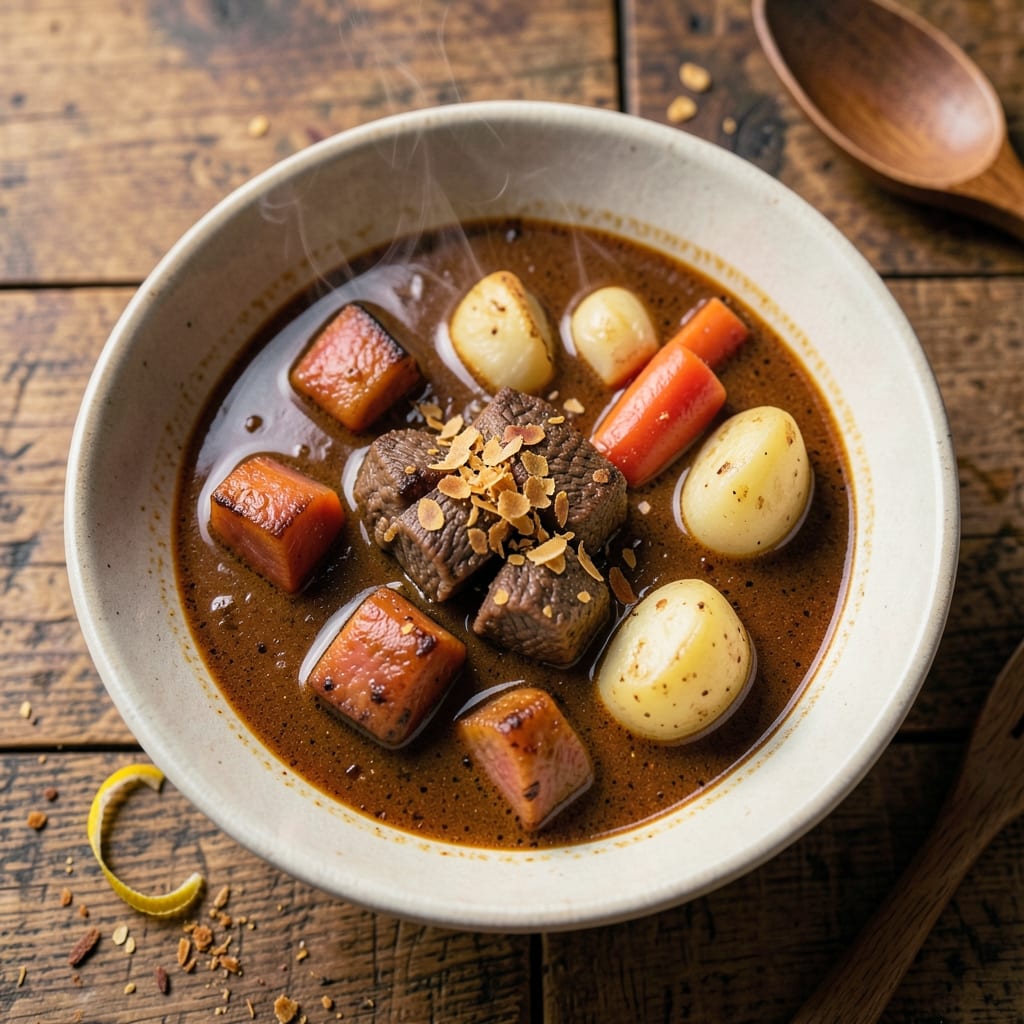
This authentic Japanese beef curry recipe delivers the deep, complex flavors you crave—slow-simmered beef in a rich, spiced coconut gravy that balances sweet, smoky, and umami notes perfectly. The secret lies in the traditional Japanese curry roux, where carefully blended spices and katsuobushi (bonito flakes) create that signature depth that separates homemade from store-bought. I've perfected this version after years of refining the simmering technique to achieve tender beef and a velvety sauce that clings to every bite.
The beauty of this dish is in its simplicity once you understand the key steps: browning the beef for maximum flavor, building the roux with proper spice toasting, and simmering everything together until the sauce reaches that ideal consistency—thick enough to coat the rice but still silky smooth. What sets this apart is the use of authentic Japanese curry blocks (or homemade roux) combined with coconut milk, which creates that distinctive coconut depth without overpowering the beef's natural richness.
By the time you serve it over steamed rice with a side of pickles, you'll have a restaurant-quality meal that's both comforting and sophisticated. The beef becomes fork-tender while absorbing the aromatic sauce, and the katsuobushi adds delicate layers of umami that elevate every spoonful. This is the kind of curry that makes your kitchen smell like a Tokyo izakaya—warm, inviting, and impossible to resist.
Perfect for weeknight dinners or special occasions, this recipe serves 4-6 and comes together in about 1 hour of active time (plus simmering). The best part? Leftovers taste even better the next day as the flavors continue to meld. Let's get cooking—your taste buds will thank you.
Ingredients for authentic japanese beef curry
Here's what you'll need to create this restaurant-quality Japanese beef curry with rich umami and coconut depth.
| Ingredient | Amount | Notes |
|---|---|---|
| Beef Chuck Roast 🥩 | 2 lb | Cut into 1.5-inch cubes, boneless |
| Japanese Curry Powder 🌶️ | 3 tbsp | Homemade or store-bought (like S&B Golden Curry) |
| Katsuobushi (Bonito Flakes) 🐟 | 1 tbsp | For umami depth, optional but recommended |
| Coconut Milk 🥥 | 1 can (13.5 oz) | Full-fat for creaminess |
| Carrots 🥕 | 2 medium | Peeled, cut into 1-inch chunks |
| Potatoes 🥔 | 2 medium | Russet or Yukon Gold, peeled, cubed |
| Onion 🧅 | 1 large | Yellow or white, sliced |
| Fresh Ginger Root 🌿 | 1 inch | Peeled, grated |
| Apples 🍎 | 1 medium | Sweet variety like Fuji, peeled, diced |
| Garlic Cloves 🧄 | 4 cloves | Minced |
| Vegetable Oil 🫒 | 2 tbsp | For browning beef |
| Water 💧 | 1 cup | For thinning sauce if needed |
| Soy Sauce 🍶 | 1 tbsp | For depth of flavor |
| Salt 🧂 | 1 tsp | Kosher or sea salt |
| Black Pepper 🌶️ | ½ tsp | Freshly ground |
The beef is the star—chuck roast gives you that melt-in-your-mouth texture, but sirloin works too if you're in a hurry. Look for good marbling at Whole Foods or your local butcher shop. For the curry powder, S&B Golden Curry is the gold standard, but you can make your own blend with turmeric, coriander, and cumin. Katsuobushi (bonito flakes) is non-negotiable for that authentic umami punch—find it in the Asian aisle or order online. Don't skip the apples; they add subtle sweetness that balances the richness.
No bonito flakes? Dried shiitake mushrooms soaked in hot water work as a substitute (use 1 tbsp of the soaking liquid). Running low on curry powder? Mix 1 tbsp each of turmeric, coriander, and cumin for a quick fix. The potatoes and carrots can be swapped for sweet potatoes if you prefer, but stick to russets for the best texture. For the ginger, fresh is best, but if you're using dried, reduce to 1/4 tsp. The coconut milk should be full-fat—Thai Kitchen brand is widely available and reliable.
This curry tastes even better the next day as the flavors meld. Store leftovers in an airtight container in the fridge for up to 4 days. Freezes beautifully for 3 months—portion into single servings for easy reheating. For extra richness, stir in a splash of coconut milk when reheating. Serve over steamed rice with a side of pickles to cut through the richness. The sauce thickens as it cools, so add a splash of water or coconut milk if it becomes too thick.
Why You'll Love This Recipe
- One-Pot Magic: I swear by this—just sear the beef, toss in the curry roux and coconut milk, then let it simmer. No chopping boards, no extra pans, and honestly? The rich, caramelized sauce clings to everything like it’s been slow-cooked all day.
- Umami Bomb: That first sprinkle of katsuobushi (bonito flakes) while the curry cooks—it’s like a secret weapon. The flakes dissolve into the sauce, adding this deep, savory punch that turns ordinary beef into something ridiculously good. Between us, the Japanese curry powder alone makes this taste like a hug in a bowl.
- Leftovers That Win: I make this on Sundays because it only gets better the next day. The flavors meld, the sauce thickens just right, and reheating it? Zero effort. My kids grab it straight from the fridge for lunch—no complaints, just empty bowls.
- Budget Stretch: Beef chuck roast is affordable, and a little goes a long way. Add carrots and potatoes (if you’re feeling fancy), and suddenly you’ve fed four people for the price of takeout. Plus, the curry powder lasts forever, so you’re not buying it every week. Solid move for my wallet.
Step-by-step instructions for slow-simmered Japanese beef curry
Here's how to build layers of umami and coconut richness—just like Japan's home-style curry.
Brown the Beef for Deep Flavor
Heat the 2 tablespoons vegetable oil in a heavy-bottomed pot over medium-high heat until shimmering. Add the 2 lb beef chuck roast, cut into 1.5-inch cubes, in a single layer without overcrowding. Let them sear undisturbed for 3-4 minutes until a deep golden crust forms—this develops the Maillard reaction that forms the curry's foundation.
Real talk: Don't rush this step. You'll see the beef release easily when it's ready to flip. Once browned on all sides (about 8-10 minutes total), remove the beef and set aside. The remaining browned bits will become the flavor base for your sauce.
Build the Aromatic Base
In the same pot, add the 1 large onion, sliced, and cook for 4-5 minutes until softened and translucent. Add the 2 medium carrots and 2 medium potatoes, both cut into 1-inch chunks, along with the 1 medium apple, peeled and diced. Stir occasionally for 3 minutes until the vegetables begin to soften slightly.
Add the 1 inch fresh ginger root, peeled and grated, and the 4 cloves garlic cloves, minced. Cook for 1 minute until fragrant—this is where the curry's aromatic complexity begins to develop. The apples add subtle sweetness that balances the rich flavors.
Bloom the Spices and Umami Elements
Sprinkle the 3 tablespoons Japanese curry powder evenly over the vegetables and stir for 30 seconds to toast the spices and release their essential oils. Add the 1 tablespoon katsuobushi (bonito flakes) and the 1 tablespoon soy sauce, stirring constantly for 1 minute until the spices are fragrant and the bonito flakes begin to dissolve.
Here's the moment that matters: Pour in the 1 can (13.5 oz) coconut milk and stir vigorously to combine. The curry powder will temporarily thicken the mixture—this is normal. Add the 1 cup water and the 1 teaspoon salt and 0.5 teaspoon black pepper, then return the beef to the pot.
Simmer Until Tender and Flavorful
Bring the mixture to a gentle boil, then reduce heat to low and cover partially. Let it simmer for 1.5-2 hours, stirring occasionally, until the beef is fork-tender and the potatoes are easily pierced with a knife. The sauce should thicken naturally as the vegetables release their starches.
If the sauce becomes too thick before the beef is tender, add 2-3 tablespoons water at a time until it reaches a smooth, velvety consistency. The curry should coat the back of a spoon but still be spoonable—this balance is key to authentic texture.
Rest and Serve with Perfect Texture
Once the beef is tender and the flavors have melded (you'll notice a rich, aromatic aroma), remove the pot from heat and let it rest, covered, for 10 minutes. This resting period allows the flavors to fully develop and the sauce to thicken slightly.
Serve the curry hot over steamed rice, ensuring each bowl gets a generous portion of both the beef and the flavorful sauce. The combination of tender beef, sweet apples, and umami-rich coconut milk creates a harmonious balance that's distinctly Japanese home-style curry.
Pro Tips For Making Authentic Japanese Beef Curry
- SEAR THE BEEF FIRST: I learned this the hard way—skipping the sear means your curry will taste like stewed beef, not deep-fried. Pat the chuck roast very dry, then hit it with high heat in oil until it’s got a deep brown crust. That crust carries flavor into the curry, and no, you can’t just "add more curry powder" to fix it.
- BLOOM THE CURRY POWDER: This isn’t the prettiest method, but it’s the tastiest: toast the curry powder in a dry pan for 30 seconds until it smells like a Japanese home kitchen. Then add a splash of oil to bloom it—this unlocks the spices’ aroma before they even hit the pot. (Yes, even if you’re impatient like me.)
- SIMMER LOW AND LONG: After adding the coconut milk, resist the urge to rush. Let the curry simmer at a gentle bubble for at least 45 minutes—this lets the flavors meld and the beef tenderize. If you walk away and it’s still bubbling hard, you’re doing it wrong. (Your future self will thank you.)
- SAVE THE BONITO FLAKES: Don’t dump the katsuobushi all at once—reserve a handful to sprinkle at the very end. The flakes should sizzle and dissolve into the hot curry, adding a smoky umami punch. If you add them too early, they’ll turn to mush and ruin the texture. (I know, I know, but trust the process.)
Flavor customization for authentic japanese beef curry
Spice Level Control
Japanese curry is traditionally mild, but you can adjust the heat to your preference. Start with 3 tablespoons of Japanese curry powder (like S&B Golden Curry) for a balanced flavor. For a mild version, reduce to 2 tablespoons—this keeps the sweet and umami notes prominent. If you prefer medium heat, add ½ teaspoon of cayenne pepper or 1 teaspoon of gochugaru (Korean chili flakes). For spicy kick, increase to 1 tablespoon of gochugaru or 1 teaspoon of chili crisp. 🌶️
Pro tip: Toast the spices for 30-60 seconds in the pot before adding coconut milk to deepen their flavor without adding extra heat. The katsuobushi (bonito flakes) already adds umami depth, so don’t overdo the spice—balance is key in authentic Japanese curry.
Sweetness Adjustments
The 1 medium apple in the recipe adds natural sweetness, but you can tweak this for your taste. For a sweeter curry, add 1 extra apple or 2 tablespoons of honey during the simmer. If you prefer less sweetness, reduce the apple to ½ medium or omit it entirely. The coconut milk already provides a creamy richness, so adjust the sweetness gradually to avoid overpowering the beef’s savory notes. 🍎
For a caramelized depth, brown the diced apple in the pot for 2-3 minutes before adding the other vegetables. This enhances its natural sugars and adds a subtle buttery note to the sauce.
Umami Boosters
Katsuobushi (bonito flakes) is essential for authentic umami, but you can enhance it further. Add 1 teaspoon of fish sauce or 1 tablespoon of soy sauce (already in the recipe) for extra depth. For a vegetarian option, replace the katsuobushi with 1 tablespoon of dried shiitake mushroom powder or 1 teaspoon of nutritional yeast. These alternatives still deliver umami without animal products. 🐟
Another trick: Stir in 1 teaspoon of miso paste during the final 10 minutes of simmering for a fermented richness. Just be mindful—miso can alter the sauce’s texture slightly, so start with a small amount.
Texture Variations
For a thicker, stew-like curry, reduce the 1 cup water to ½ cup and simmer uncovered for the last 15 minutes to evaporate excess liquid. If you prefer a lighter, soupier texture, increase the water to 1.5 cups and add ½ cup more coconut milk for creaminess. The goal is a sauce that coats the back of a spoon but remains silky smooth. ✨
For extra heartiness, stir in ½ cup cooked lentils or ½ cup chopped mushrooms during the final 30 minutes of simmering. This adds texture and bulk without overpowering the beef’s tenderness.
Regional Twists
In Hokkaido, curry often includes potatoes and carrots cut into larger chunks for a rustic texture. For a Kyoto-inspired version, add 1 tablespoon of mirin and 1 teaspoon of sake during the simmer to brighten the flavors. In Osaka, curry is sometimes served with pickled vegetables on the side to cut through the richness. 🗺️
For a modern fusion twist, swap the beef for shredded chicken thighs and add 1 tablespoon of curry-infused coconut yogurt at the end for a creamy finish. This works surprisingly well while keeping the dish authentic in spirit.
Nutrition facts
Frequently asked questions
Why does authentic Japanese beef curry use apples?
The apple is key for balancing the rich flavors—its natural sweetness cuts through the umami depth from the beef and katsuobushi while adding subtle caramelization when cooked. Traditional Japanese curry relies on this fruit to prevent the dish from becoming too heavy, creating that perfect harmony of sweet, savory, and spiced notes.
Can I substitute beef chuck with another cut?
Yes! For quick cooking, use sirloin or ribeye (cut into 1-inch cubes)—they brown faster but may stay slightly firmer. For extra tenderness, try chuck roast or short ribs (simmer 2.5 hours). Avoid lean cuts like flank steak—they dry out during the long simmer. The fat content in chuck is ideal for flavor development.
How do I fix a curry that's too thick or too thin?
For thick sauce, stir in 2-3 tablespoons water or coconut milk while simmering. For thin sauce, remove the lid and simmer 10-15 minutes uncovered to reduce. Pro tip: The sauce thickens as it cools, so adjust just before serving. Never rush the simmer—rushing causes separation or grainy texture.
Is Japanese curry the same as Indian curry?
Not at all! Japanese curry uses coconut milk, apples, and milder spices (like turmeric and coriander) for a sweet-savory profile, while Indian curry relies on yogurt, tomatoes, and bold spices (ginger, garam masala, chili). Japanese curry is thicker, smoother, and often served with pickles to balance richness—think "comfort food" rather than "spicy heat."
Can I make this curry ahead of time?
It tastes better the next day as flavors meld. Store in an airtight container in the fridge for 4 days or freeze for 3 months. Reheat gently on low heat, adding a splash of water or coconut milk if needed. The sauce may thicken further—stir well before serving. Leftovers reheat beautifully for quick lunches!