
Main Courses
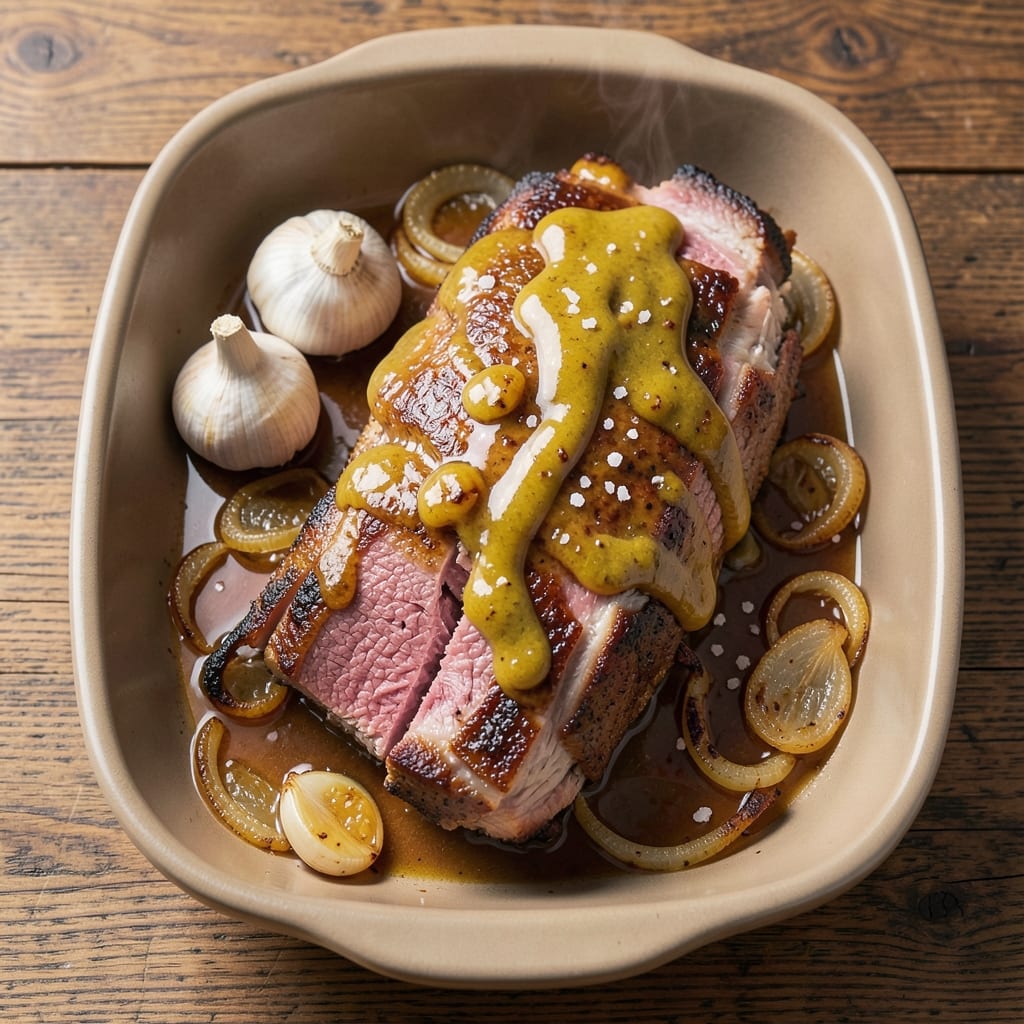
This baked corned beef recipe with mustard delivers the perfect balance of a crispy crust and juicy pink center—no guesswork required. The secret lies in a simple mustard marinade that tenderizes the meat while creating that signature caramelized exterior. I've perfected this method over years of holiday cooking, ensuring every slice stays moist and flavorful, even when sliced thin.
The process starts with a flavor-packed marinade of yellow mustard, garlic, and spices that penetrates the beef overnight. Then, it bakes low and slow until the crust turns golden and the internal temperature reaches 145°F. The mustard glaze isn't just for flavor—it's what transforms tough cuts into melt-in-your-mouth perfection. This recipe serves a crowd but scales easily for smaller gatherings.
What you'll end up with is a restaurant-quality corned beef that's crispy on the outside, tender on the inside, and packed with deep, savory flavors. The mustard adds a subtle tang that cuts through the richness, making every bite irresistible. Serve it with classic sides like braised cabbage, roasted potatoes, or rye bread for the full experience.
Whether you're hosting a St. Patrick's Day feast or just craving a hearty Sunday dinner, this recipe delivers foolproof results with minimal effort. The marinade can be prepped the night before, and the baking process is hands-off, leaving you free to enjoy the meal you've worked so hard to create.
Ingredients for baked corned beef recipe with mustard
Eight simple ingredients transform tough beef into a restaurant-worthy centerpiece with crispy edges and juicy perfection.
| Ingredient | Amount | Notes |
|---|---|---|
| Corned Beef Brisket 🥩 | 4 lb | Top round or brisket preferred |
| Yellow Mustard 🍯 | ½ cup | Dijon or coarse grain preferred |
| Garlic Cloves 🧄 | 8 cloves | Minced for marinade |
| Onion 🧅 | 1 whole | Yellow or red, sliced |
| Beef Broth 💧 | 1 cup | Low-sodium preferred |
| Brown Sugar 🍚 | ¼ cup | Light or dark variety |
| Black Peppercorns 🌶️ | 1 tbsp | Freshly cracked |
| Bay Leaves 🌿 | 2 whole | Dried preferred |
| Olive Oil 🫒 | 2 tbsp | Extra-virgin for richness |
| Salt 🧂 | 2 tsp | Kosher or sea salt |
| Apple Cider Vinegar 🍎 | 2 tbsp | For tangy depth |
| Honey 🍯 | 1 tbsp | For glaze balance |
| Cornstarch 🌾 | 1 tbsp | For crispy crust |
The corned beef brisket is non-negotiable—top round or brisket delivers the best texture. Grab a 4-pound piece from the butcher counter at Whole Foods or your local grocer's meat department, where they'll often trim it for you. Look for good marbling and ask for it to be scored lightly to help the marinade penetrate. Costco sells pre-cut briskets perfect for this recipe if you're feeding a crowd. The yellow mustard should be coarse grain or Dijon—French's or Maille are my go-tos, but any bold, tangy variety works. Fresh garlic and onions are a must, but if you're short on time, frozen chopped onions (thawed) and jarred minced garlic (not the paste kind) save the day.
No yellow mustard? Dijon mustard at half the amount works in a pinch, though it'll be slightly less coarse. Apple cider vinegar can be swapped for white vinegar if needed, but the honey adds a nice balance—substitute maple syrup if you're avoiding honey. The cornstarch is key for that crispy crust, but all-purpose flour at double the amount does the trick if you're out. For the beef broth, low-sodium is best, but homemade stock elevates it to another level. If you're making this ahead, prep the marinade the night before—the flavors meld beautifully overnight. The olive oil should be extra-virgin, but any good-quality oil will work if that's what you've got.
Marinate the beef overnight in the fridge—no exceptions—this ensures maximum tenderness. When baking, cover loosely with foil for the first hour, then uncover to crisp. The cornstarch glaze goes on just before the final 15 minutes—don't skip this step for that signature crust. Leftovers keep for 4-5 days in the fridge, but honestly, it's even better the second day. Slice thinly against the grain for maximum tenderness. Freezes beautifully for up to 3 months if you're planning ahead—just thaw in the fridge overnight before reheating.
Why You'll Love This Recipe
- One-Pan Magic: The corned beef and onions caramelize right on that sheet pan—no pots, no pans, just 45 minutes in the oven. Honestly, I’ve made this while scrolling through my phone; the mustard glaze does all the work.
- Mustard Kiss: That tangy yellow mustard? It’s the secret weapon—cuts through the richness of the brisket while adding a bright, sharp finish. The garlic and broth deepen it into something dangerously addictive, especially when the edges get crispy.
- Leftovers That Shine: This recipe practically begs for seconds, and the best part? The flavor improves overnight. I’ll slice the next day’s leftovers into sandwiches, and suddenly, it’s lunch for the week—no sad, dry meat here.
- Budget Crowd-Pleaser: A single brisket feeds six, and beef broth stretches every dollar. Between us, this is my go-to for game days or when my college-age kids bring friends over—no one questions the mustard, but they always ask for more.
Step-by-step instructions for baked corned beef with mustard
Here's how to achieve that perfect balance of crispy exterior and tender, juicy center every time.
Prepare the Corned Beef for Maximum Flavor
Start by rinsing the 4 lb corned beef brisket under cold water to remove any excess curing salts. Pat it completely dry with paper towels—this step is crucial for developing that crispy crust later. Place the brisket in a large bowl and rub it generously with 2 tablespoons of olive oil to help the mustard adhere and create a golden exterior.
In a separate small bowl, combine the 0.5 cup yellow mustard, 2 tablespoons apple cider vinegar, 1 tablespoon honey, 2 teaspoons salt, 1 tablespoon freshly cracked black peppercorns, and 8 minced garlic cloves. Mix until smooth and well combined. Spread this mixture evenly over the entire surface of the brisket, pressing it into the meat so it penetrates slightly. This marinade will infuse flavor deep into the meat while creating that signature mustard glaze.
Create the Mustard Glaze and Build the Baking Pan
In a small saucepan, combine the 1 cup beef broth, 0.25 cup brown sugar, 2 whole bay leaves, and the remaining 1 tablespoon black peppercorns. Bring to a gentle simmer over medium heat for 5 minutes to infuse the flavors. Remove from heat and let cool slightly while you prepare the baking setup.
Preheat your oven to 325°F. Place the seasoned brisket in a large roasting pan or Dutch oven that's just big enough to hold it snugly. The tight fit helps create that crispy crust. Pour the cooled broth mixture over the brisket, then slice the 1 whole onion into 8 wedges and arrange them around the brisket. The onions will caramelize slightly during baking, adding sweetness to the dish.
Bake Low and Slow for Maximum Tenderness
Cover the roasting pan tightly with aluminum foil and bake in the preheated oven for 3 hours. This long, slow cook time is essential for breaking down the tough connective tissue in the brisket, resulting in that melt-in-your-mouth tenderness. After 3 hours, remove the foil and increase the oven temperature to 375°F to begin the browning process.
Return the brisket to the oven uncovered for 30-45 minutes until the mustard glaze is bubbling and the exterior develops a deep golden-brown color. You'll know it's ready when the internal temperature reaches 145°F in the thickest part of the meat. The crust should be crispy enough to hold its shape when you press gently with tongs, but still tender enough to slice easily.
Create the Crispy Cornstarch Crust (The Secret Weapon)
While the brisket is finishing, prepare the crispy crust mixture by whisking together the 1 tablespoon cornstarch and 2 tablespoons apple cider vinegar in a small bowl until smooth. Brush this generously over the top of the hot brisket using a pastry brush. The cornstarch will caramelize quickly in the residual heat, creating that coveted crispy crust while keeping the interior juicy.
Let the brisket rest for 15-20 minutes before slicing. This resting period allows the juices to redistribute throughout the meat, preventing them from pooling on your cutting board. The crust will remain crispy while the interior stays perfectly tender. Slice against the grain for maximum tenderness in each bite, and serve with the caramelized onions and pan juices for an authentic, restaurant-quality experience.
Pro Tips For Making Baked Corned Beef Recipe With Mustard
- Pat the beef dry first: I learned this the hard way—skipping this step means your crust won’t form properly. Grab paper towels and wipe down the brisket thoroughly before searing, even if it feels unnecessary. The extra few minutes guarantee a golden, crispy exterior that holds up to the mustard glaze.
- Use a mix of mustards: Plain yellow mustard works, but for depth, blend it with 1-2 tablespoons of whole-grain or Dijon. The texture and tang balance the corned beef’s saltiness better, and it won’t overpower the dish like store-bought sweet mustard might. Trust me, your taste buds will notice.
- Don’t skip the garlic-onion paste: Chop the garlic and onion fine, then smash them into a paste with the flat side of your knife. Spread it directly on the beef before baking—this ensures even flavor distribution and prevents dry spots. Yes, it’s extra work, but it makes a real difference in every bite.
- Baste halfway through baking: After the first hour at 325°F (165°C), pull the pan out and spoon that mustard-broth mixture all over the beef. The acidity tenderizes the meat while the broth keeps it moist. Do this once more before the final 15 minutes at 375°F (190°C) for maximum flavor and texture.
Best sauces and condiments for these flavors
Mustard Glaze Basics
The yellow mustard marinade isn't just flavor—it's the foundation for that signature crispy crust. I use French's Classic Yellow Mustard for its coarse texture, which clings beautifully to the beef. For extra depth, whisk in 1 tablespoon of Dijon mustard with the apple cider vinegar and honey before applying to the meat. This combo creates a balanced glaze that caramelizes perfectly during baking. 🍯
Sweet & Tangy Variations
For a spiced twist, add 1 teaspoon of smoked paprika and ½ teaspoon of cayenne to the mustard marinade. This gives the crust a subtle smokiness that pairs wonderfully with the sweet caramelized onions. If you prefer fruitier notes, replace the honey with 1 tablespoon of fig jam—it adds a rich, jammy depth that complements the mustard beautifully.
Crispy Crust Techniques
The cornstarch glaze is non-negotiable for that restaurant-quality crust. Mix 1 tablespoon cornstarch with 2 tablespoons apple cider vinegar and brush it on just before the final 15 minutes of baking. For an extra-crispy finish, broil the beef for 2-3 minutes at the very end—watch it closely to avoid burning. A pastry brush works best for even application.
Pan Sauce Upgrades
Never waste those flavorful pan juices! After removing the beef, place the roasting pan on the stovetop over medium heat and add ¼ cup of beef broth. Scrape up any browned bits with a wooden spoon, then simmer until slightly thickened. This makes an excellent dipping sauce for the corned beef slices. For a richer version, stir in 1 tablespoon of butter at the end.
Sweet Mustard Glaze
For a sweet-and-sour finish, make a quick glaze by combining 2 tablespoons of brown sugar, 1 tablespoon of apple cider vinegar, and 1 teaspoon of Dijon mustard. Simmer until thickened, then brush it over the beef during the last 20 minutes of baking. This creates a sticky, caramelized crust that's irresistible. Perfect for those who love a balance of sweet and tangy flavors. 🌶️
Spicy Mustard Crust
Crank up the heat with a spicy mustard crust by adding 1 teaspoon of hot sauce (like Cholula) to the cornstarch glaze. For extra kick, sprinkle ½ teaspoon of cayenne pepper over the beef before baking. This works especially well if you're serving with cooling sides like braised cabbage or potato salad to balance the heat.
Nutrition facts
Frequently asked questions
Why does the recipe call for marinating overnight?
The overnight marinade is essential for breaking down the tough fibers in the beef, ensuring maximum tenderness. The mustard, garlic, and vinegar work together to penetrate deep into the meat, creating a flavorful crust while keeping the center juicy. Skipping this step can result in a less tender final product.
Can I use a different cut of beef instead of brisket?
For best results, stick with brisket or top round—these cuts have the right amount of connective tissue for slow baking. However, you can try a beef chuck roast in a pinch, though it may require an extra 30-45 minutes of cooking time. Avoid leaner cuts like sirloin, as they won't develop the same rich texture.
How do I know when the corned beef is fully cooked?
Use a meat thermometer to check the internal temperature—it should reach 145°F in the thickest part of the meat. The crust should also be deep golden-brown and crispy to the touch. If unsure, slice a small piece to check for doneness before serving.
Can I make this recipe in a slow cooker?
While possible, baking yields better results for that crispy crust. If you must use a slow cooker, bake the beef for 2 hours first, then transfer it to the slow cooker on low for 4-6 hours. Finish with the cornstarch glaze under the broiler for 5 minutes to recreate the crust.
What's the best way to reheat leftover corned beef?
Slice the beef and reheat in a skillet with a splash of beef broth over medium-low heat until warmed through. Avoid microwaving, as it can make the crust soggy. For extra crispiness, broil for 2-3 minutes after reheating. Leftovers keep for 4-5 days in the fridge.