Soups & Stews
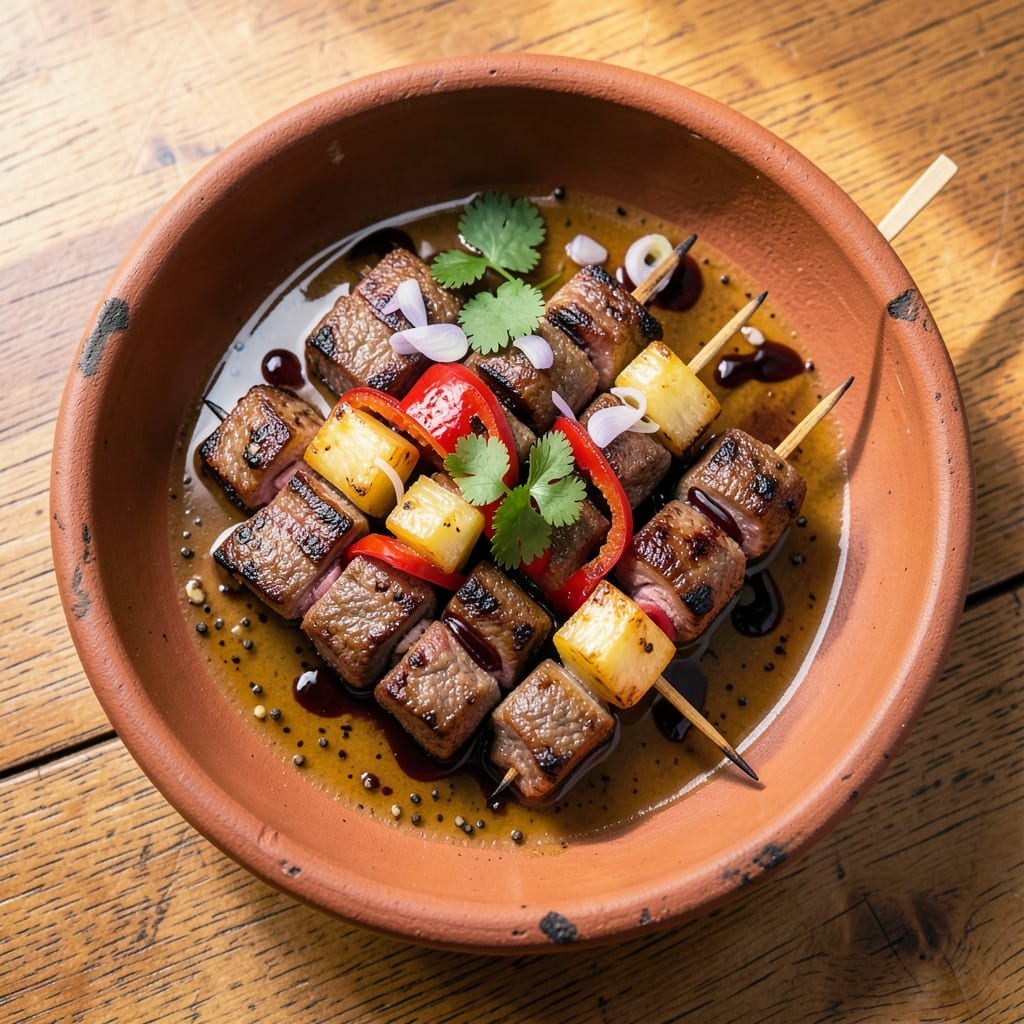
This banyan beef skewer recipe transforms simple beef into a restaurant-worthy dish with a caramelized coconut-tamarind glaze that balances sweet, tangy, and smoky flavors. The marinade tenderizes the meat while infusing it with aromatic spices, and the glaze develops a glossy, sticky finish when charred over high heat. I perfected this technique after years of experimenting with Southeast Asian skewers—where the right balance of acidity and richness makes all the difference. What starts as raw beef becomes a dish that’s rich enough for a dinner party but simple enough for a weeknight.
The beauty of these skewers lies in their versatility—whether you grill them over charcoal for that classic smoky depth or broil them in the oven for convenience, the glaze caramelizes into a sticky, finger-licking sauce that clings to every bite. The tamarind adds a bright, tangy contrast to the coconut’s natural sweetness, while a touch of chili keeps the flavors dynamic. This isn’t just a skewer recipe; it’s a flavor profile that elevates ordinary beef into something unforgettable. The key is patience—letting the glaze reduce and develop its depth ensures a result that’s far more complex than the ingredients suggest.
By the time you’re done, you’ll have juicy, charred beef skewers with a glossy, caramelized glaze that’s impossible to resist. The contrast of tender meat against the crispy edges, paired with the sticky-sweet sauce, creates a bite that’s both satisfying and sophisticated. Serve them over steamed jasmine rice or with a side of cucumber salad to balance the richness, and pair with a cold beer or a glass of Thai iced tea for the full experience. This recipe delivers restaurant-quality results without the fuss—proof that a little technique goes a long way.
For those who love to experiment, the glaze can be adjusted—add a splash of lime for extra brightness or a pinch of smoked paprika for depth. The marinade also works beautifully with chicken or shrimp, making this a flexible foundation for any skewer dish. Once you master the glaze, you’ll find yourself reaching for it again and again. Let’s get started—your taste buds will thank you.
Ingredients for banyan beef skewer
Simple ingredients that transform into restaurant-quality skewers with caramelized coconut-tamarind glaze.
| Ingredient | Amount | Notes |
|---|---|---|
| Beef Sirloin 🥩 | 1 ½ lb | Cut into 1-inch cubes, boneless |
| Coconut Milk 🥥 | 1 can | Full-fat, unsweetened, 13.5 oz can |
| Tamarind Paste 🍯 | ½ cup | Adjust for tanginess preference |
| Brown Sugar 🍚 | ½ cup | Packed, light or dark |
| Soy Sauce 🥄 | ¼ cup | Low-sodium preferred |
| Garlic Cloves 🧄 | 6 cloves | Minced, fresh preferred |
| Ginger Root 🌿 | 1 tbsp | Freshly grated, peeled |
| Red Chili Flakes 🌶️ | 1 tbsp | Adjust for heat preference |
| Lime Juice 🍋 | ¼ cup | Freshly squeezed |
| Vegetable Oil 🫒 | 2 tbsp | For brushing skewers |
| Wooden Skewers 🪵 | 8 whole | Soaked in water 30 minutes |
| Salt 🧂 | 1 tsp | Kosher or sea salt |
| Black Pepper 🌶️ | ½ tsp | Freshly ground |
| Coconut Oil 🥥 | 1 tbsp | For glaze richness |
| Fresh Cilantro 🌿 | ¼ cup | Chopped, for garnish |
The beef is where it all starts. Sirloin stays tender but firm enough for skewers—avoid lean cuts like flank. Costco or Trader Joe's often have pre-cubed beef that saves time, but if you're cutting yourself, keep the pieces uniform. Tamarind paste can be tricky to find, so Asian markets or the international aisle are your best bet. If you can't find it, lime juice plus a pinch of salt gets you close. The coconut milk? Full-fat only—it makes all the difference in that rich glaze.
No tamarind? Lime juice plus a splash of balsamic vinegar mimics the tang. Short on brown sugar? Maple syrup works in a pinch, though the caramelization won't be quite the same. The soy sauce adds depth, but if you're avoiding sodium, coconut aminos is a great swap. Fresh ginger and garlic are non-negotiable here—they're the aromatic backbone. Pre-minced garlic from the jar works, but fresh is always better. For the chili flakes, go easy at first—you can always add more, but you can't take it out.
Marinate the beef for at least 4 hours (overnight is ideal) to maximize tenderness. The glaze keeps for 5 days in the fridge—store it in a jar with a thin layer of oil on top to prevent a skin from forming. Skewers reheat beautifully—5 minutes over a gas flame or in a hot skillet brings them back to life. Garnish with cilantro right before serving—it wilts fast, so don't do it ahead. The glaze thickens as it cools, so thin it with a splash of water if needed before serving.
Why You'll Love This Recipe
- Skewers in 15 Minutes: I swear, the hardest part is threading the beef onto sticks—no chopping, no peeling, just cube and skewer. That tamarind paste does the heavy lifting for flavor while I’m still debating what to watch on TV.
- Sweet-Sour Magic: Between us, the combo of tamarind and brown sugar is chef’s kiss—tangy enough to cut through the richness of the beef, but creamy coconut milk keeps it luscious. It’s the kind of balance that makes you go back for seconds without even thinking.
- Weeknight or Party Star: Honestly, this is my go-to for both lazy Tuesdays and when unexpected guests show up. Grill it for dinner, pack leftovers for lunch, or serve it cold—it handles everything. (Yes, even my picky teen approves.)
- Budget-Friendly Feast: A single sirloin and a can of coconut milk stretch to feed four, and the sauce costs pennies. Plus, the leftovers? Even better the next day—those flavors just deepen. My wallet and my family win every time.
Step-by-step instructions for banyan beef skewers
Here's how to create tender, caramelized beef skewers with that signature tangy-sweet glaze.
Marinate the Beef for Maximum Flavor
In a large bowl, combine the 1.5 lb beef sirloin cut into 1-inch cubes, 0.25 cup soy sauce, 6 cloves minced garlic, 1 tbsp freshly grated ginger root, 1 tbsp red chili flakes, 1 tsp salt, and 0.5 tsp black pepper. Mix gently to coat the beef evenly. Cover and refrigerate for at least 4 hours (overnight works best). This marinade tenderizes the beef while infusing it with bold flavors.
I like to press the marinade into the beef cubes using my hands—this ensures every bite gets that perfect balance of spicy, savory, and aromatic notes. Don't skip this step; the longer it marinates, the more flavorful your skewers will be.
Assemble and Prep the Skewers
Soak the 8 whole wooden skewers in water for 30 minutes to prevent burning. Thread the marinated beef cubes onto the skewers, leaving a small gap between each cube. You should have about 2 cubes per skewer for perfect portion sizes.
Brush each skewer lightly with 2 tablespoons vegetable oil to help them cook evenly and prevent sticking. Arrange the skewers on a plate and set aside. Here's the thing—if you're short on time, you can skip the soaking, but your skewers might burn more easily, so keep an eye on them.
Grill the Skewers Until Perfectly Charred
Preheat your grill to medium-high heat (about 400°F). Once hot, place the skewers on the grill and cook for 8-10 minutes, turning occasionally, until the beef is deeply browned and slightly charred on the outside. You'll know they're ready when the internal temperature reaches 145°F and the edges are nicely seared.
Don't walk away during this step. You want that beautiful char without burning the beef. If your grill runs hot, reduce the heat slightly or move the skewers to a cooler part of the grill. The goal is to get that smoky, caramelized crust while keeping the inside juicy.
Make the Coconut-Tamarind Glaze
In a saucepan, combine 1 can coconut milk, 0.5 cup tamarind paste, 0.5 cup brown sugar, and 1 tbsp coconut oil. Bring to a gentle simmer over medium heat, stirring constantly to prevent burning. Let it cook for 10-12 minutes until the mixture thickens slightly and becomes glossy. The glaze should coat the back of a spoon.
Stir in the 0.25 cup lime juice and remove from heat. Taste and adjust the sweetness or tanginess by adding a bit more brown sugar or tamarind paste if needed. This glaze is the star of the dish—it balances the rich beef with a perfect blend of sweet, tangy, and creamy flavors.
Glaze and Garnish for Serving
Brush each skewer generously with the warm coconut-tamarind glaze. For extra richness, let them sit for 2-3 minutes to allow the glaze to caramelize slightly. Garnish with 0.25 cup chopped fresh cilantro right before serving to add a bright, fresh contrast to the bold flavors.
Serve immediately with steamed jasmine rice or crusty bread to soak up that delicious glaze. The contrast of the tender, charred beef with the sweet-tangy glaze is what makes these skewers truly special. Enjoy while warm for the best experience!
Pro Tips For Making Banyan Beef Skewer
- MARINATE OVERNIGHT: Skip the rush—let those beef cubes soak in the tamarind and coconut milk sauce for at least 6 hours (I do it overnight). The acid and fat break down the meat, making it fork-tender and soaking up the flavors like a sponge. Trust me, the difference between "meh" and "wow" is that extra time.
- THIN THE SAUCE: Don’t drown your skewers in a thick, clumpy mess. After simmering coconut milk with tamarind and sugar, strain it through a fine sieve to remove any fiber. Then, reduce it on medium heat until it coats the back of a spoon—this ensures a glossy, sticky glaze that clings to the beef instead of pooling in the pan.
- GRIDDLE NOT GRILL: I learned this the hard way—direct flame turns banyan beef into charred logs. Use a griddle or cast-iron skillet on medium-high heat instead. Flip skewers every 2-3 minutes to sear evenly, then finish them under a broiler for 1-2 minutes to crisp up the sauce. The result? Juicy beef with caramelized edges, not burnt sticks.
- SALT THE COCONUT: Unsalted coconut milk? Add a pinch of salt to the sauce while reducing—it balances the sweetness and tamarind tang. I was skeptical until I tried it: the flavor becomes deeper, and the skewers taste more cohesive. It’s a tiny tweak that makes the dish sing. (Yes, even if the recipe doesn’t mention it.)
Wine and beer pairings for these flavors
Thai Iced Tea
The bold, creamy sweetness of Thai iced tea cuts through the richness of the caramelized glaze beautifully. Look for brands like Thai Forest Tea or Tiger Tea—these are the gold standard, with their signature sweetened condensed milk and black tea blend. Serve it over ice in a tall glass, and the contrast between the cool, sweet tea and the warm, smoky skewers is pure magic. 🌟
Singha Beer
A crisp, light lager like Singha (Thailand’s most popular beer) is my go-to pairing for these skewers. Its clean, slightly malty profile complements the coconut-tamarind glaze without overpowering it. Chill it thoroughly before serving—room temperature beer ruins the experience. For a fun twist, try a Singha Lemon, which adds a citrusy brightness that mirrors the lime in the glaze.
Red Wine Pairing
If you prefer wine, a medium-bodied Pinot Noir from Thailand or California works wonders. The fruit-forward notes in the wine echo the tamarind’s tang, while its acidity balances the richness of the glaze. Avoid heavy reds like Cabernet—they’ll clash with the dish’s delicate sweetness. A glass of Decanter Thai Ruby (a Thai red blend) is a fantastic local option if you can find it.
Cocktail Option
For a refreshing cocktail pairing, try a Thai Basil Gin Fizz. Mix 2 oz gin, 1 oz lime juice, ½ oz simple syrup, and 2 basil leaves (muddled), then top with soda water. The herbal notes and citrus cut through the skewers’ richness, while the effervescence cleanses your palate. Garnish with a lime wedge and serve over ice for the full experience.
Non-Alcoholic Choice
For a non-alcoholic option, Thai mango lassi is a crowd-pleaser. Blend 1 cup yogurt, ½ cup mango puree, 1 tbsp honey, and ½ cup coconut milk until smooth. The creamy, fruity texture mirrors the glaze’s richness while keeping things light. Serve chilled in a glass with a sprinkle of toasted coconut flakes for extra flair.
Nutrition facts
Frequently asked questions
Can I substitute beef with another protein for these skewers?
This marinade works beautifully with chicken thighs (use 1.5 lb) or shrimp (peeled and deveined, 1.5 lb). For shrimp, reduce marinating time to 1-2 hours to avoid overcooking. The glaze remains the same, but adjust cooking time—chicken needs 12-15 minutes on the grill, while shrimp cooks in just 3-4 minutes per side.
How do I prevent the wooden skewers from burning?
Soak skewers in water for 30 minutes before using to prevent burning. If you're short on time, brush them with oil first. For extra safety, use metal skewers or soy wax-coated bamboo skewers, which handle high heat better. Keep a spray bottle nearby to mist them if they start to char too quickly.
Can I make the glaze ahead of time?
Yes! The glaze keeps for 5 days in the fridge. Store it in a jar with a thin layer of oil on top to prevent a skin from forming. Reheat gently in a saucepan over low heat, stirring until smooth. For longer storage, freeze the glaze in ice cube trays—thaw and reheat as needed for up to 3 months.
What's the best way to reheat cooked skewers?
Reheat skewers over a gas flame for 2-3 minutes per side or in a hot skillet with 1 tbsp oil for 3-4 minutes. Brush with fresh glaze while reheating to restore that caramelized shine. For oven reheating, broil on high for 5 minutes—watch closely to avoid burning the glaze.
Why did my glaze turn grainy or separate?
This usually happens if the glaze cooled too quickly or if coconut milk wasn't stirred well before measuring. To fix it, whisk the glaze vigorously over low heat until smooth. For prevention, always use full-fat coconut milk and bring it to a gentle simmer before adding other ingredients. If it still separates, strain through a fine-mesh sieve before using.