
Soups & Stews
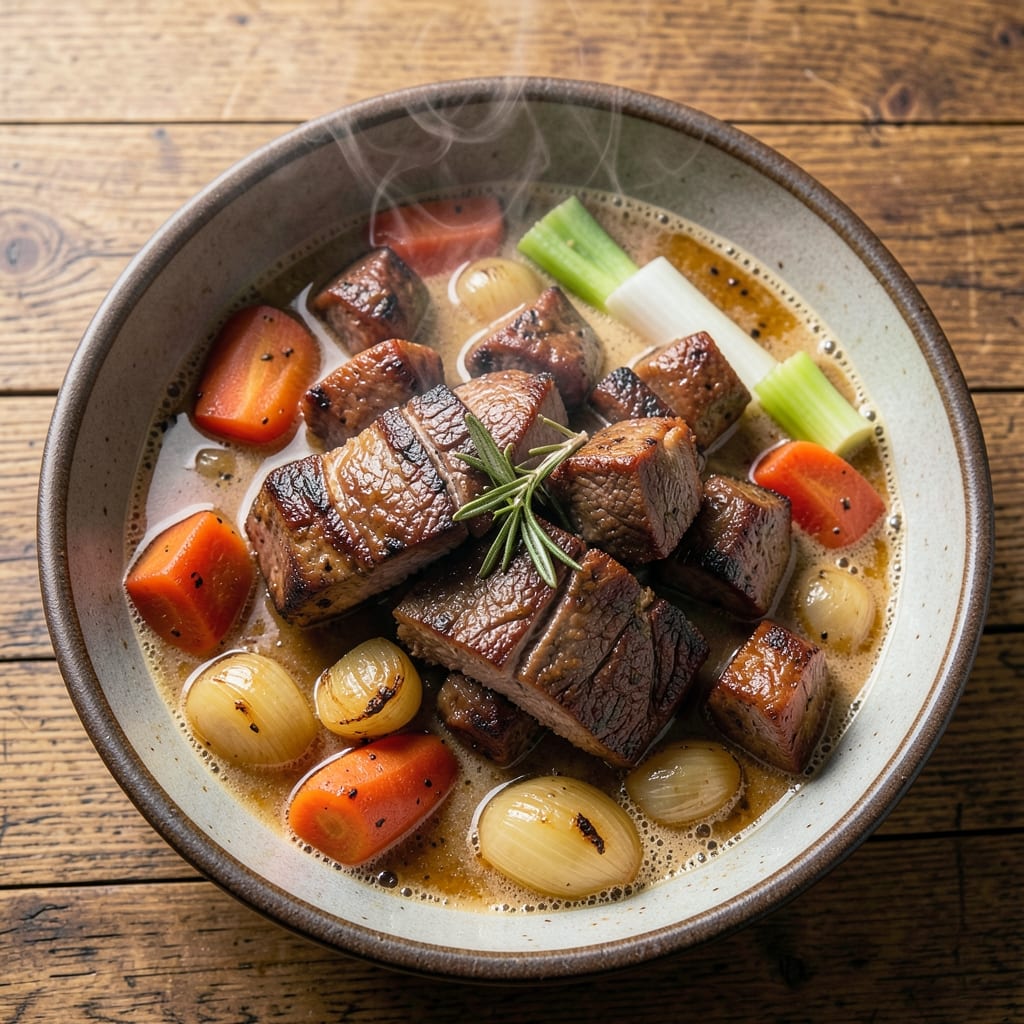
This beef ale stew recipe transforms tough cuts of beef into melt-in-your-mouth perfection with slow-simmered depth and malty richness. The secret lies in a balanced blend of dark ale and aromatic vegetables, braised until the meat falls apart and the sauce thickens into a velvety embrace. After years of perfecting the technique—from proper beef selection to ale reduction—I’ve developed a method that delivers restaurant-quality results at home, every time.
The foundation begins with a chuck roast, cut into even pieces for consistent tenderness, then seared to lock in juices before simmering in ale-infused broth. Carrots, onions, and celery form the classic mirepoix, while bay leaves and thyme add layers of earthy complexity. The key? Low-and-slow cooking—three hours on the stove or six in a slow cooker—allows flavors to meld without overpowering the beef’s natural richness.
What you’ll end up with is a deep amber stew where fork-tender beef floats in a sauce so rich it coats every spoonful. The ale’s bitterness mellows into a caramelized sweetness, while the vegetables soften just enough to blend seamlessly into the dish. Serve with crusty bread to soak up every last drop, or pair with roasted potatoes for a hearty pub-style meal that feels like a homecoming.
This recipe scales effortlessly—double it for a crowd or halve it for a cozy weeknight dinner. The beauty of ale stew lies in its versatility: swap the ale for stout, add mushrooms for umami, or finish with a splash of balsamic for brightness. Let’s get cooking—the aroma alone will have everyone at the table wondering what’s for dinner.
Ingredients for beef ale stew
Sixteen ingredients, six servings of restaurant-quality pub-style richness.
| Ingredient | Amount | Notes |
|---|---|---|
| Chuck Roast 🥩 | 3 lb | Cut into 1.5-inch cubes, trimmed of excess fat |
| Dark Ale 🍺 | 2 cups | Full-bodied, non-alcoholic preferred for kids |
| Beef Broth 🍲 | 2 cups | Homemade or high-quality low-sodium |
| Yellow Onions 🧅 | 2 whole | Medium, cut into 1-inch chunks |
| Carrots 🥕 | 4 whole | Medium, peeled and cut into 1-inch chunks |
| Celery Stalks 🧅 | 4 whole | Cut into 1-inch chunks, strings removed |
| Garlic Cloves 🧄 | 6 cloves | Peeled and lightly crushed |
| Fresh Thyme 🌿 | 2 sprigs | Or 1 tsp dried thyme |
| Bay Leaves 🌿 | 2 whole | Dried, standard size |
| Tomato Paste 🍅 | 2 tbsp | High-quality, no sugar added |
| All-Purpose Flour 🌾 | 1 tbsp | For thickening, optional |
| Olive Oil 🫒 | ½ cup | Extra-virgin for searing |
| Salt 🧂 | 1 ½ tsp | Diamond Crystal kosher salt |
| Ground Black Pepper 🌶️ | 1 tsp | Freshly ground preferred |
| Worcestershire Sauce 🍶 | 1 tbsp | Vegan if needed |
The chuck roast is non-negotiable—its marbled fat renders down to create a luxurious sauce, while the connective tissue dissolves into tender perfection. Costco or Whole Foods carry excellent cuts, but any well-marbled beef will work. Trim excess fat before cubing for cleaner searing, and cut pieces evenly (about 1.5 inches) to ensure consistent doneness. For the ale, Guinness or Samuel Smith's Nut Brown Ale add depth, while non-alcoholic options like Heineken 0.0 work beautifully for family meals. Avoid light ales—they lack the malty backbone needed to carry the dish.
Substitutions should preserve the stew's depth. No dark ale? Stout or porter work equally well, but beef broth with a splash of balsamic vinegar can mimic the maltiness in a pinch. Worcestershire sauce can be omitted if vegan, though it adds umami complexity—soy sauce or liquid aminos are decent alternatives. Fresh thyme is ideal, but dried works at one-third the amount. The tomato paste is optional but recommended for a subtle sweetness; Trader Joe's single-serve tubes are perfect for this recipe. For a vegetarian twist, swap beef for mushrooms and lentils**—though the sauce will be lighter.
This stew improves with time—3-4 days in the fridge, where flavors meld further. For longer storage, freeze portions for up to 3 months**. Reheat gently on the stove, adding a splash of broth if the sauce thickens too much. The aroma alone will draw everyone to the table, so prepare it when you're ready for a crowd. Leftovers reheat beautifully, and the sauce thickens further, making it ideal for sandwiches or over polenta.
Why You'll Love This Recipe
- Slow-Simmer Magic: I swear by the chuck roast—it turns tough into tender, no fancy cuts needed. Just sear it, dump in the dark ale and broth, then let the oven do the work while I do nothing.
- Ale & Broth Bomb: That dark ale isn’t just for drinking—it’s the secret weapon here. The malty depth cuts through the richness of the beef, while the beef broth keeps it rich without being heavy.
- Leftovers for Days: Make a double batch, and you’ll have hearty lunches for the week. The flavors actually improve after sitting overnight—honestly, my favorite way to eat it.
- Budget Feast: Chuck roast is cheap, carrots and onions stretch the pot, and a six-pack’s worth of ale makes this way more affordable than takeout. Plus, it feels fancy without the price tag.
Step-by-step instructions for beef ale stew
Here's the method for crafting a deeply flavorful, slow-simmered stew with perfect texture.
Sear the Chuck Roast for Deep Flavor
Heat the 0.5 cup olive oil in a large Dutch oven over medium-high heat until shimmering. Working in batches to avoid crowding, add the 3 lb chuck roast cut into 1.5-inch cubes and sear for 2-3 minutes per side until deeply browned. This step develops the rich, caramelized crust that forms the stew's foundation.
Don't rush this process—you're building flavor through the Maillard reaction. Once all pieces are browned, remove them from the pot and set aside on a plate. The seared meat will release its rendered fat into the pot, which will later form the base of your sauce.
Build the Aromatic Base
In the same Dutch oven, add the 2 whole yellow onions cut into 1-inch chunks, 4 whole carrots cut into 1-inch chunks, and 4 whole celery stalks cut into 1-inch chunks. Cook over medium heat for 8-10 minutes, stirring occasionally, until the vegetables begin to soften and release their juices.
Add the 6 cloves garlic cloves that have been peeled and lightly crushed, along with the 2 sprigs fresh thyme and 2 whole bay leaves. Stir for 1 minute until the garlic becomes fragrant. This aromatic trio will infuse the stew with complex, layered flavors that develop beautifully during the simmering process.
Create the Rich Sauce Base
Stir in the 2 tbsp tomato paste and cook for 1 minute to eliminate its raw taste. Sprinkle the 1 tbsp all-purpose flour over the vegetables and stir vigorously for 1-2 minutes to cook off the raw flour taste. This creates a light roux that will help thicken the stew naturally.
Pour in the 2 cups dark ale and 2 cups beef broth, scraping up any browned bits from the bottom of the pot. Add the 1.5 tsp salt, 1 tsp ground black pepper, and 1 tbsp Worcestershire sauce. Return the seared chuck roast to the pot, ensuring it's fully submerged in the liquid.
Simmer Until Tender and Flavorful
Bring the stew to a gentle boil, then reduce heat to low and cover partially. Let it simmer for 2.5-3 hours, stirring occasionally, until the beef is fork-tender and easily pulls apart. The liquid should have reduced slightly but still coat the back of a spoon.
I check for doneness by inserting a fork into the beef—it should slide in easily with minimal resistance. The vegetables should be tender but still hold their shape. If the stew reduces too quickly, add a splash of water or broth to maintain the proper consistency.
Adjust and Serve with Confidence
Remove the 2 sprigs fresh thyme and 2 whole bay leaves before serving. Taste the stew and adjust seasoning if needed—you may need a touch more salt or pepper to balance the flavors. The ale and Worcestershire sauce should provide enough umami, but don't hesitate to make final adjustments.
Serve the stew hot, accompanied by crusty bread or over buttery egg noodles. The rich, malty notes from the ale will complement the tender beef perfectly, creating a hearty, satisfying meal that's ideal for cold weather gatherings.
Pro Tips For Making Beef Ale Stew
- Sear the Chuck Hard: A deep caramelized crust locks in flavor—don’t rush this. Use a Dutch oven on high heat, let the roast sit for 3-4 minutes per side until it’s golden-brown before pouring in the ale. (Yes, even if it smells like you’re burning the kitchen down.)
- Deglaze with Ale Immediately: Scrape up those browned bits right after searing—this is where half the flavor hides. Pour in 1/2 cup of the dark ale, let it bubble for 30 seconds, then repeat. (I used to skip this and wondered why my stew tasted flat.)
- Cut Carrots in Even Chunks: Big carrots stay crunchy and undercooked; tiny ones turn to mush. Aim for 1-inch pieces so they soften with the meat, not before. (And resist the urge to peel them—extra texture = better stew.)
- Simmer Low and Slow: After adding broth, bring to a boil once, then drop to a gentle simmer (tiny bubbles, 180°F). Too much heat = tough meat and cloudy broth. Cover and walk away for 2.5-3 hours—set a timer, because this isn’t the time to check every 10 minutes.
Pro cooking tips for great beef ale stew
Searing Secrets
Don’t skip searing—this is where the magic starts. Use a large Dutch oven (like the All-Clad Stainless Steel) to avoid crowding the beef. Work in batches if needed, and sear until you get deep golden-brown crusts. I like to use medium-high heat and let the beef sit undisturbed for 2-3 minutes per side—this builds maximum flavor through the Maillard reaction. The rendered fat from the searing beef will later become the base of your rich sauce. 🔥
Vegetable Prep Matters
Cut your onions, carrots, and celery into 1-inch chunks—this ensures even cooking and prevents some pieces from turning mushy while others stay tough. I always remove the strings from celery and trim the ends of carrots before cutting. For extra flavor, lightly char the vegetables in the Dutch oven for 2-3 minutes before adding garlic and herbs. This deepens their sweetness and complexity.
Ale Reduction Trick
If you want an even richer sauce, reduce the ale before adding it to the pot. Simmer 2 cups of ale in a saucepan until reduced by half (about 10-15 minutes). This concentrates the malt flavors and adds depth without making the stew too thin. Just be careful not to burn it—keep the heat at medium-low and stir occasionally. 🍺
Low-and-Slow Simmering
Patience is key here. After adding all ingredients, bring the stew to a gentle boil (small bubbles) and then reduce to the lowest possible heat. Cover with a lid and let it simmer for 2.5-3 hours. I check the beef’s doneness by inserting a fork—it should slide in easily. If the stew reduces too quickly, add ½ cup beef broth to maintain the perfect consistency.
Thickening the Sauce
For a thicker sauce, stir in 1 tbsp cornstarch mixed with 2 tbsp cold water during the last 15 minutes of cooking. Alternatively, let the stew simmer uncovered for the final 10 minutes to reduce naturally. Avoid over-thickening—you want a sauce that coats the beef but still has body. If using flour,
Final Flavor Boost
Before serving, taste and adjust seasoning. A splash of balsamic vinegar (1 tbsp) brightens the dish, while a pinch of smoked paprika adds warmth. Remove the thyme sprigs and bay leaves before serving—they’ve done their job! For extra richness, stir in 1 tbsp cold butter at the end. This stew tastes even better the next day, so make extra for leftovers. ✨
Nutrition facts
Frequently asked questions
Can I substitute dark ale with another beer or non-alcoholic option?
For a similar flavor profile, use stout or porter—they add richness. Non-alcoholic options like Heineken 0.0 or Guinness 0.0 work well for family meals. If you're out of beer entirely, mix 2 cups beef broth with 1 tbsp balsamic vinegar and 1 tsp malt vinegar for a decent substitute. The key is maltiness—avoid light lagers, which lack depth.
How do I know when the beef is fully tender?
Use the fork test: Insert a fork into the largest piece of beef. If it slides in easily with minimal resistance, the meat is tender. The beef should also pull apart easily when you lift it with tongs. For extra insurance, check the internal temperature—it should reach 195°F-205°F for fork-tender results.
Can I make this stew in a slow cooker?
Yes! Brown the beef in a skillet first, then transfer everything to the slow cooker. Cook on low for 6-7 hours or high for 3-4 hours, adding a splash of broth if needed. The slow cooker method is even more forgiving—just ensure the beef is fully submerged in liquid. The sauce may be thinner, so reduce it uncovered for 10 minutes before serving.
What if my stew turns out too thin or too thick?
For a thinner stew, stir in ½ cup beef broth and simmer for 10-15 minutes more. To thicken, mix 1 tbsp cornstarch with 2 tbsp cold water and stir it in during the last 15 minutes of cooking. Avoid over-thickening—you want a sauce that coats the beef but still has body. If using flour, cook it into the vegetables first to avoid lumps.
How long can I store leftovers, and how do I reheat them?
Store leftovers in an airtight container in the fridge for 3-4 days or freeze for up to 3 months. Reheat gently on the stove over medium-low heat, stirring occasionally and adding a splash of broth if the sauce thickens too much. Never microwave—it can make the sauce watery and ruin the texture. The stew actually tastes better the next day as flavors meld further!