
Soups & Stews
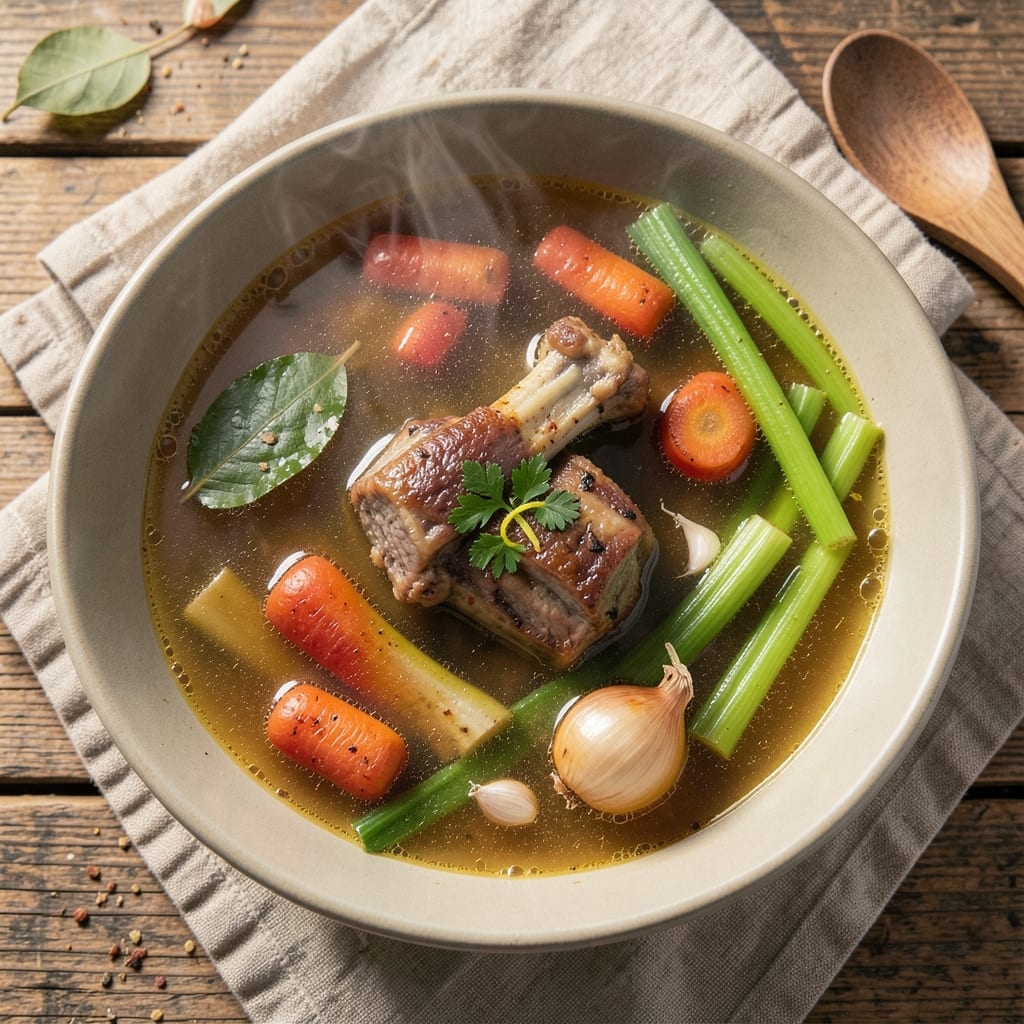
This beef bone broth vegetable soup transforms simple ingredients into a deeply satisfying meal that warms both body and soul. The foundation lies in rich, homemade broth—slow-simmered to extract maximum umami from beef bones, vegetables, and aromatics. Unlike store-bought versions, homemade broth delivers layers of depth that elevate every spoonful, turning a basic vegetable soup into something extraordinary.
The process begins with building flavor through a simple yet critical technique: skimming foam and impurities from the simmering broth to ensure clarity and richness. As the vegetables—carrots, celery, onions, and potatoes—soften in the broth, they absorb its savory essence, creating a harmonious blend of textures and tastes. The result is a soup that’s hearty enough to stand alone yet light enough for any meal.
What makes this recipe truly special is its balance—substantial enough to satisfy yet gentle on the palate. The broth’s depth pairs perfectly with tender vegetables, while optional additions like shredded chicken or fresh herbs add versatility. Whether served as a comforting weeknight dinner or a nourishing meal for guests, this soup delivers restaurant-quality results without the fuss.
Ready in just 1 hour (including broth prep), this recipe proves homemade cooking doesn’t require hours of effort. The key lies in patience—letting flavors meld slowly—and the reward is a bowl of soup that feels like a hug in every bite. Let’s get started on creating something truly nourishing.
Ingredients for beef bone broth vegetable soup
Homemade broth builds the soul of this umami-rich vegetable soup, where every ingredient serves the broth's depth.
| Ingredient | Amount | Notes |
|---|---|---|
| Beef Bones 🦴 | 4 lb | Kneecaps and marrow bones preferred |
| Yellow Onion 🧅 | 1 whole | Chopped, medium size |
| Carrots 🥕 | 4 medium | Whole, peeled, cut into chunks |
| Celery Stalks 🧄 | 4 whole | Cut into 2-inch pieces |
| Garlic Cloves 🧄 | 6 cloves | Smashed, not minced |
| Bay Leaves 🌿 | 2 whole | Fresh preferred |
| Black Peppercorns 🌶️ | 1 tbsp | Whole, not ground |
| Salt 🧂 | 1 tbsp | Diamond Crystal preferred |
| Russet Potatoes 🥔 | 2 lb | Peeled, cut into 1-inch cubes |
| Fresh Thyme 🌿 | 2 sprigs | Stems removed |
| Fresh Parsley 🌿 | ¼ cup | Chopped, for garnish |
| Apple Cider Vinegar 🍎 | 1 tbsp | For brightness |
| Olive Oil 🫒 | 2 tbsp | Extra-virgin, for skimming |
| Shredded Chicken 🍗 | 1 ½ cups | Optional, cooked separately |
The beef bones are the cornerstone—kneecaps and marrow bones from Whole Foods or your local butcher deliver the richest gelatin and marrow. Look for bones with visible marrow channels and minimal meat clinging. If you're buying pre-packaged, Bonafide Provisions or ButcherBox offer high-quality options shipped directly. Fresh bay leaves and thyme add aromatic complexity, while the Diamond Crystal kosher salt ensures proper seasoning balance. For maximum flavor extraction, roast the bones at 400°F for 30 minutes before simmering to deepen their caramelization.
No beef bones? Beef chuck roast cut into large chunks works in a pinch, though it won't yield the same gelatinous richness. Swap fresh thyme for dried at one-third the amount, but fresh is ideal for its bright, floral notes. The carrots and celery can be subbed with turnips or leeks for variation, though classic mirepoix remains foundational. For extra umami, add 1 tbsp fish sauce or 2 slices kombu seaweed to the broth during simmering. The potatoes should be firm yet tender—Yukon Golds hold their shape beautifully, while russets break down more dramatically, enriching the broth further.
Broth keeps for 5 days refrigerated or 6 months frozen in airtight containers. Portion into ice cube trays for easy single-serving additions to future dishes. The vegetables can be prepped ahead and stored in the fridge for 3 days before simmering. For a restaurant-quality finish, strain the broth through a fine-mesh sieve after simmering to achieve clarity. Garnish with fresh parsley and a drizzle of high-quality olive oil before serving to elevate presentation and flavor.
Why You'll Love This Recipe
- No-Fuss Prep: I swear by this—just toss chopped onion, carrots, celery, and garlic into a pot with beef bones and water. Honestly, the hardest part is waiting for the broth to simmer, not chopping.
- Rich Umami Bomb: That deep, savory punch from slow-simmered beef bones? It’s the kind of flavor that makes you forget about takeout. The carrots and celery soften just enough to soak it all up.
- Meal Prep MVP: Make a big batch on Sunday, and you’ve got lunch covered for days. I freeze portions—just reheat, add fresh herbs, and boom, instant nourishing meal.
- Budget Superstar: Beef bones are cheaper than steak, and this soup stretches for ages. Between us, it’s my go-to for feeding a crowd without breaking the bank.
Step-by-step instructions for crafting homemade beef bone broth vegetable soup
This method transforms simple ingredients into a deeply flavorful soup where each element plays a crucial role.
Prepare the Broth Base with Beef Bones
Place the 4 lb beef bones in a large stockpot and cover them with cold water by about 2 inches. This initial water layer prevents the bones from scorching when you first heat the pot. Bring to a boil over medium-high heat, then immediately reduce to a simmer. Skim off any foam or impurities that rise to the surface during the first 15 minutes of simmering—this ensures a crystal-clear broth.
Add the 1 whole yellow onion, 4 medium carrots, 4 whole celery stalks, 6 smashed garlic cloves, 2 whole bay leaves, 1 tbsp black peppercorns, and 1 tbsp salt. The vegetables should be partially submerged, but that's okay—they'll release their flavors as they simmer. Partially cover the pot and let it simmer gently for 3 hours, maintaining a temperature between 180-200°F. You'll know it's working when the broth develops a rich, amber color and the bones become tender enough to pierce with a fork.
Infuse with Aromatics and Acid
After the initial 3-hour simmer, remove the pot from heat and carefully strain the broth through a fine-mesh sieve into a clean stockpot, discarding the bones and vegetables. Return the broth to the heat and add 1 tbsp apple cider vinegar and 2 sprigs fresh thyme. The vinegar brightens the broth while the thyme adds an earthy depth. Simmer uncovered for an additional 1 hour to reduce the broth slightly and intensify its flavor. You should end up with about 6-7 cups of concentrated, umami-rich liquid.
While the broth simmers, heat 2 tbsp olive oil in a separate skillet over medium heat. Add the 2 lb peeled, cubed russet potatoes and cook for 8-10 minutes until they develop a slight golden crust. This step ensures the potatoes don't turn mushy in the soup later. Remove the potatoes and set aside.
Assemble and Finish the Soup
Return the strained broth to a simmer and add the pre-cooked potatoes. Let the soup simmer gently for 15-20 minutes until the potatoes are fork-tender and the broth has absorbed their starch, creating a naturally thickened consistency. Taste and adjust seasoning—you may need to add more salt or a splash of vinegar for brightness.
Stir in the 1.5 cups shredded chicken (if using) and 0.25 cup chopped fresh parsley just before serving. The parsley adds a fresh contrast to the deep, savory broth. Ladle the soup into bowls, ensuring each serving gets a generous portion of the flavorful liquid and tender vegetables. The result is a soup where every spoonful delivers layers of umami from the homemade broth, balanced by the natural sweetness of the potatoes and the bright finish of the parsley.
Pro Tips For Making Beef Bone Broth Vegetable Soup
- Roast the Bones First: I learned this the hard way—raw bones take forever to render flavor. Toss them in a 400°F oven for 20-30 minutes until they darken slightly. The caramelization jumpstarts the broth’s depth, cutting hours off simmering time. (Yes, even if you’re impatient like me.)
- Char the Aromatics: Skip the gentle sauté—get that onion, celery, and garlic deep brown before adding liquid. Five minutes of high heat in a dry pot develops their sweetness and complexity. I used to rush this, and the soup always tasted flat. (Your future self will notice.)
- Don’t Crowd the Pot: Bones need room to breathe. Pack them in too tight, and you’ll end up with murky broth, not clear, golden elixir. Leave gaps between them—think "loosely packed" like a lazy grocery bag. I’ve tried forcing them in, and it’s a waste of time and flavor.
- Add Acid Late: Vinegar or lemon juice brightens the broth, but toss it in only in the last 10 minutes. Too early, and it’ll break down the collagen you’re working so hard to extract. A splash of apple cider vinegar at the end makes all the difference—trust the process.
Serving suggestions for this beef bone broth vegetable soup
Bread Pairings
Crusty baguette slices are my go-to for this soup—their chewy texture contrasts beautifully with the silky broth. Toast them lightly in the oven with a drizzle of garlic-infused olive oil and sprinkle of flaky sea salt before serving. For a heartier option, try sourdough rounds or ciabatta, which soak up the flavorful liquid without falling apart. 🥖
Toppings & Garnishes
Freshly chopped parsley and chives brighten each bowl with their vibrant green color and fresh flavor. I also love adding a swirl of crème fraîche or a dollop of Greek yogurt just before serving—it adds a creamy contrast to the rich broth. For extra crunch, sprinkle with toasted pumpkin seeds or crumbled bacon if you prefer a smoky touch.
Protein Additions
While the recipe includes optional shredded chicken, you can also add poached eggs for a luxurious twist. Simply crack fresh eggs into each bowl just before serving and let them poach gently in the hot broth. Another great option is crispy prosciutto—lay it on top right before serving so it stays crisp rather than soggy. 🍳
Seasonal Variations
In summer, swap russet potatoes for zucchini or summer squash to keep the soup lighter. For fall, add roasted butternut squash cubes and a sprinkle of cinnamon for warmth. Winter calls for heartier additions like kale or Swiss chard wilted into the broth, or even wild mushrooms sautéed with garlic before adding to the soup.
Presentation Tips
Serve this soup in pre-warmed stoneware bowls to keep it hot longer and enhance the rustic aesthetic. Garnish with a drizzle of high-quality olive oil and a pinch of smoked paprika for color and depth. For an elegant touch, arrange a sprig of thyme or a few edible flowers on top—it instantly elevates the dish from comforting to restaurant-worthy. ✨
Nutrition facts
Frequently asked questions
Can I use store-bought beef broth instead of making it from scratch?
The homemade broth is what gives this soup its deep, rich flavor, but you can absolutely use high-quality store-bought beef broth in a pinch. Look for low-sodium versions to better control seasoning, and add 1 tbsp apple cider vinegar and 1 tsp fish sauce to boost umami. The texture will be slightly less rich, but the soup will still be delicious. For best results, simmer the broth for 20 minutes to reduce and concentrate the flavors before adding vegetables.
How do I prevent the vegetables from turning mushy?
The key is to par-cook the potatoes before adding them to the soup. Sear them in olive oil for 8-10 minutes until slightly golden, then add them to the simmering broth. This creates a barrier that prevents them from absorbing too much liquid. For other vegetables, add harder veggies (like carrots and celery) first and softer ones (like zucchini) later in the cooking process. Always simmer gently—avoid boiling vigorously.
Can I make this soup ahead of time?
This soup actually tastes even better the next day! Store it in an airtight container in the refrigerator for up to 4 days. The flavors meld beautifully overnight, and the broth will develop even more depth. Reheat gently on the stove over medium-low heat, stirring occasionally, until warmed through. Avoid microwaving as it can make the broth watery. You can also freeze the soup for up to 3 months—just thaw it in the fridge overnight before reheating.
What can I substitute if I don't have beef bones?
For a similar depth of flavor, use beef chuck roast cut into large chunks (about 2 lbs) instead of bones. Simmer it with the vegetables for 2 hours before removing and shredding it to add back to the soup. Another option is beef marrow bones or oxtail, which add richness. If you're vegetarian, consider a mushroom-based broth with soy sauce or miso paste for umami, though the flavor profile will differ significantly.
Why does my broth look cloudy?
Cloudy broth usually means you didn't skim enough foam during the initial simmer or the broth was boiled too vigorously. Skim for at least 15 minutes at the start to remove impurities. If the broth is already cloudy, strain it through a fine-mesh sieve or cheesecloth for a clearer result. For extra clarity, chill the broth overnight—the fat will solidify on top, making it easy to remove. The flavor won't be affected, but the appearance will be smoother and more refined.