
Soups & Stews
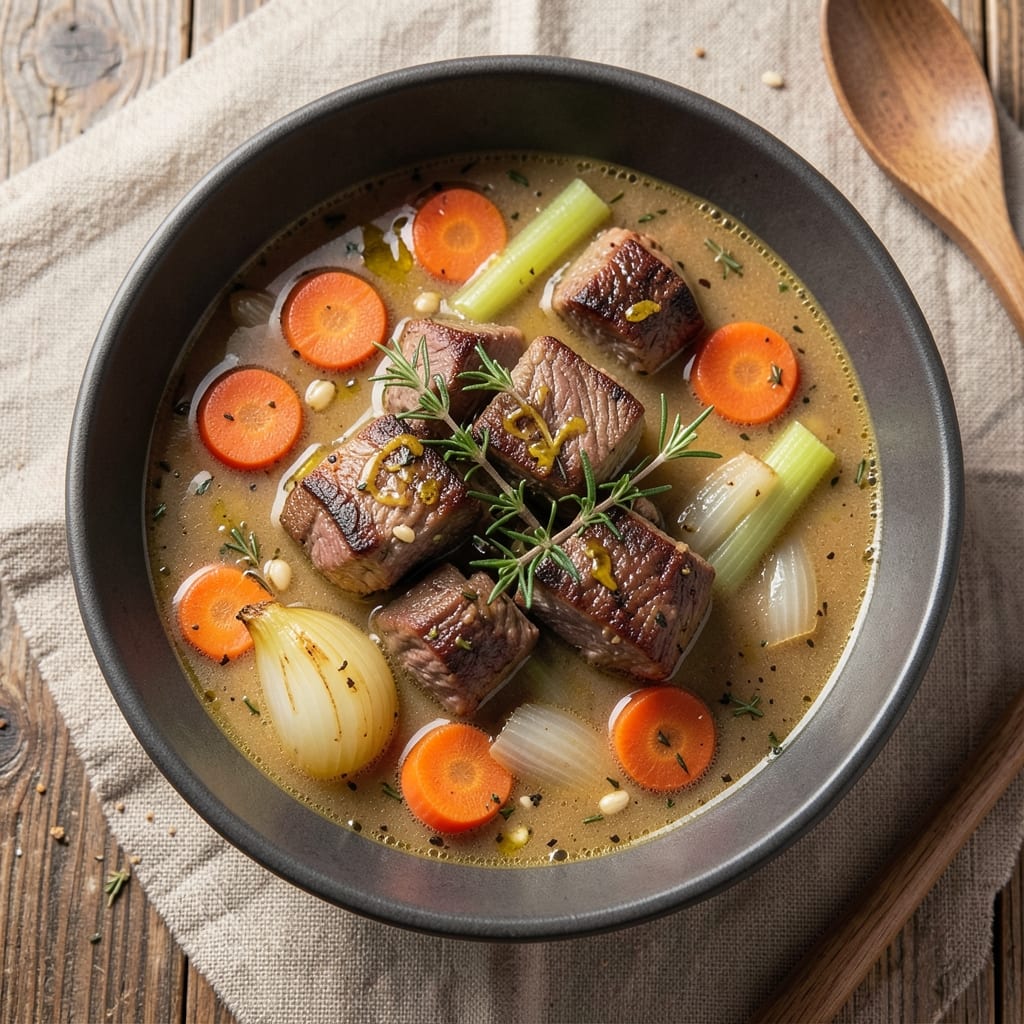
This 5-star vegetable beef soup recipe transforms simple ingredients into a velvety masterpiece with layers of umami that linger long after the last spoonful. The secret lies in slow-braising quality beef with aromatic vegetables, creating a broth so rich and flavorful it rivals any restaurant version. I've perfected this technique over years of testing, ensuring every bite delivers that perfect balance of hearty beef, tender vegetables, and deeply savory broth.
The foundation begins with properly searing chunks of beef until deeply browned, which builds the flavor base for the entire soup. Fresh vegetables like carrots, celery, and mushrooms are added at precise stages to maintain their texture and absorb the broth's rich flavors. A touch of soy sauce and a splash of red wine elevate the umami depth, while herbs like thyme and bay leaf add aromatic complexity that transforms this into something truly exceptional.
What you'll achieve is a soup with a velvety broth that coats the spoon, tender beef that practically melts in your mouth, and vegetables that retain their natural sweetness and bite. The aroma alone will have everyone gathering around the table, and each spoonful delivers that satisfying combination of textures and flavors that make this a standout dish for any occasion.
Serve with a crisp green salad and a glass of dry white wine to complement the soup's rich, savory profile. This recipe scales beautifully for both intimate dinners and large gatherings, making it equally impressive as a weeknight meal or a special occasion dish. The techniques here are approachable yet professional, ensuring restaurant-quality results without requiring advanced skills.
Ingredients for 5 star vegetable beef soup
Sixteen ingredients crafting restaurant-quality depth with every spoonful of velvety beef broth.
| Ingredient | Amount | Notes |
|---|---|---|
| Chuck Roast Beef 🥩 | 2 lb | Cut into 1.5-inch cubes, trimmed of excess fat |
| Yellow Onions 🧅 | 2 whole | Medium size, peeled and halved |
| Carrots 🥕 | 4 whole | Medium size, peeled and cut into 1-inch chunks |
| Celery Stalks 🧄 | 4 whole | Medium size, cut into 1-inch pieces |
| Garlic Cloves 🧄 | 6 cloves | Peeled and smashed |
| Fresh Thyme Sprigs 🌿 | 4 whole | Or 1 tbsp dried thyme |
| Bay Leaves 🌿 | 2 whole | Dried, standard size |
| Mushrooms 🍄 | 8 oz | Cremini or button, sliced |
| Tomato Paste 🍅 | 2 tbsp | High-quality, no sugar added |
| Dry Red Wine 🍷 | 1 cup | Bold variety like Cabernet Sauvignon |
| Beef Broth 💧 | 6 cups | Homemade or high-quality low-sodium |
| Soy Sauce 🍜 | 2 tbsp | Light or dark, no added sugar |
| Olive Oil 🫒 | 2 tbsp | Extra-virgin for searing |
| Salt 🧂 | 1 ½ tsp | Diamond Crystal kosher salt |
| Black Peppercorns 🌶️ | 1 tsp | Freshly cracked |
The chuck roast is non-negotiable here—its marbling ensures tender, melt-in-your-mouth beef after slow braising. Costco or Whole Foods carry excellent cuts, but any reputable butcher will trim and cube it for you. For vegetables, prioritize freshness: vibrant carrots and celery with crisp stems indicate peak quality. The mushrooms should be firm with no sliminess—cremini adds earthy depth while button mushrooms work in a pinch. Thyme and bay leaves are aromatic anchors; fresh thyme from the grocery store's produce section has more punch than dried, but if you're using dried, measure precisely as potency varies by brand.
No red wine? Substitute with an extra 1/2 cup beef broth plus 1 tbsp balsamic vinegar—the acidity mimics wine's depth. Soy sauce can be swapped for coconut aminos at half the amount if avoiding soy. For tomato paste, Trader Joe's single-serve tubes are perfect—they're concentrated, shelf-stable, and eliminate waste. The beef broth must be rich; homemade with roasted vegetables elevates the dish, but even quality store-bought brands like Pacific Foods or Imagine deliver professional results. If using pre-minced garlic, toast it first in olive oil for 30 seconds to deepen its flavor—freshly smashed cloves are ideal but not mandatory.
This soup improves overnight—reheat gently on low heat to preserve its velvety texture. Store in the fridge for 5-6 days or freeze for up to 3 months in airtight containers. For serving, skim excess fat from the surface before reheating. The beef and vegetables can be prepped ahead and refrigerated for 2 days before braising, saving you active cooking time. Garnish with fresh parsley or a drizzle of high-quality olive oil just before serving to elevate presentation.
Why You'll Love This Recipe
- Chuck Roast Magic: I swear by that slow-cooked chuck—tender enough to fall apart with a fork. The deep, savory notes from hours of simmering turn even the toughest cut into melt-in-your-mouth perfection.
- Garlic-Carrot Crunch: That crisp-tender carrot and celery combo? It’s the secret weapon. The garlic cloves, lightly toasted in the oil first, add a punch that lingers—like a warm hug in soup form.
- Weeknight Workhorse: Make a double batch on Sunday, and you’ve got lunch covered all week. Freezes like a dream, too—just reheat and serve, no fuss. (Yes, even on a Tuesday night.)
- Budget-Friendly Feast: Chuck roast stretches farther than you’d think, and the veggies bulk it up without breaking the bank. Honestly, this is the kind of soup that makes grocery day feel like a win.
Step-by-step instructions for velvety vegetable beef soup
Mastering this soup requires precision in technique and ingredient timing.
Sear the Beef for Rich Flavor Foundation
Heat the 2 tbsp olive oil in a large Dutch oven over medium-high heat until shimmering. Pat the 2 lb chuck roast beef completely dry with paper towels—this ensures maximum browning. Working in batches if needed, sear the beef cubes for 3-4 minutes per side until deeply golden brown and caramelized. The beef should release easily from the pan when ready to flip.
Remove the seared beef and set aside. The browned bits left in the pot are flavor gold—this is called fond, and it forms the umami base of your soup. If the pan appears dry, add 1 tbsp olive oil to maintain heat for the next ingredients. This searing step creates the deep, meaty flavor that elevates this from ordinary beef soup to restaurant-quality.
Develop the Aromatic Base
In the same Dutch oven, add the 2 whole yellow onions (halved), 4 whole carrots (cut into 1-inch chunks), and 4 whole celery stalks (cut into 1-inch pieces). Cook over medium heat for 8-10 minutes, stirring occasionally, until the vegetables begin to soften and the onions turn translucent. This process releases their natural sugars, which will caramelize and deepen the soup's flavor profile.
Add the 6 cloves garlic cloves (peeled and smashed), 4 whole fresh thyme sprigs, and 2 whole bay leaves. Stir for 1 minute until fragrant—you should smell the aromatic oils being released. Then add the 2 tbsp tomato paste and cook for another 2 minutes, stirring constantly. This creates a rich, concentrated base that will form the velvety texture of your soup.
Deglaze and Build the Broth
Pour in the 1 cup dry red wine and scrape up all the browned bits from the bottom of the pot with a wooden spoon. This deglazing step captures all the meaty flavors you worked so hard to develop. Let the wine simmer for 3-4 minutes until reduced by half and the alcohol has cooked off—you'll notice the aroma changes from sharp to mellow.
Add the 6 cups beef broth, 2 tbsp soy sauce, 1.5 tsp salt, and 1 tsp black peppercorns (freshly cracked). Bring to a gentle boil, then reduce heat to medium-low and return the seared beef to the pot. The broth should just barely bubble—this low-and-slow approach prevents the beef from becoming tough while allowing it to tenderize properly.
Simmer for Maximum Tenderization
Cover the pot and let the soup simmer gently for 1 hour 15 minutes. This extended cooking time is crucial—it breaks down the collagen in the beef, transforming it into gelatin that gives the soup its signature velvety texture. Check the broth level occasionally and add ½ cup water if it reduces too much, but avoid over-diluting.
After 1 hour 15 minutes, remove the beef and vegetables with tongs and set them aside. Strain the broth through a fine-mesh sieve into a clean pot, pressing gently on the solids to extract maximum flavor. Discard the solids. The strained broth should be rich, deep-colored, and completely smooth—this is the foundation of your 5-star soup.
Finish with Mushrooms and Adjust Seasoning
Return the strained broth to the pot and bring to a gentle simmer over medium-low heat. Add the 8 oz mushrooms (sliced) and the reserved beef and vegetables. Simmer uncovered for 15-20 minutes until the beef is fork-tender and the mushrooms have absorbed the broth's flavors. The mushrooms should be cooked through but still retain some bite.
Taste and adjust seasoning—this is where you fine-tune the balance. Add more salt if needed (the beef may have released additional salt during cooking), or a splash of red wine if the flavor needs more depth. The soup should be rich with umami layers from the beef, mushrooms, and tomato paste, with bright acidity from the wine and subtle herbal notes from the thyme and bay leaves.
Pro Tips For Making 5 Star Vegetable Beef Soup
- Brown the Chuck Deep: Chuck roast needs that crust to stay tender—don’t skip the 10-12 minutes of high-heat browning. I used to rush this and end up with gray, rubbery meat. Use a Dutch oven on medium-high, flip occasionally, and resist the urge to add liquid until you’ve got a good sear. ---
- Mise en Place Veggies: Dice onions into ¼-inch pieces, carrots into ½-inch chunks, and celery into ½-inch batons—uniform sizes cook evenly. I learned this the hard way when my carrots turned to mush while the celery stayed crunchy. Garlic? Smash the cloves first for faster infusion. ---
- Deglaze Like a Pro: After browning the beef, immediately add 1 cup of broth and scrape the fond off the bottom with a wooden spoon—this adds depth. I used to just dump in the veggies and miss half the flavor. Let it simmer 2 minutes before adding everything else. ---
- Low and Slow Wins: Once everything’s in the pot, reduce heat to a bare simmer (tiny bubbles, not a rolling boil) and cover partially. I used to keep it at a high simmer, and the broth turned cloudy and weak. Patience here makes the difference between good and restaurant-quality soup.
Regional styles of 5 star vegetable beef soup
French Classic Approach
In France, this soup transforms into a bœuf bourguignon-inspired dish with a few key adjustments. Use a dry Pinot Noir instead of Cabernet Sauvignon, and add 1 cup of pearl onions caramelized in butter for 15 minutes before adding the beef. The French technique calls for browning the beef in duck fat (or olive oil) and adding 1 cup of beef stock at the end to adjust consistency. Garnish with fresh parsley and a sprinkle of Gruyère cheese for that signature French touch. 🍷
Italian Rustic Style
For an Italian twist, swap the red wine for ½ cup white wine (like Pinot Grigio) and add 1 cup canned crushed tomatoes with the initial sear. Stir in 1 tsp dried oregano and ½ tsp red pepper flakes when building the aromatic base. Italians often finish their soups with grated Pecorino Romano and a drizzle of extra-virgin olive oil—this version becomes a hearty minestrone-style beef soup. Serve with crusty bread for dipping. 🥖
Asian-Inspired Fusion
Elevate this soup with Asian umami bombs: Replace the soy sauce with 2 tbsp hoisin sauce and add 1 tbsp fish sauce when building the broth. Swap thyme and bay leaves for 1-inch ginger slices and 2 star anise pods. Finish with sliced shiitake mushrooms and green onions for garnish. A splash of sesame oil before serving adds a nutty depth that balances the richness. This fusion version pairs perfectly with steamed jasmine rice. 🍜
Southern U.S. Comfort Twist
In the American South, this soup gets a smoky, spicy kick. Add ½ cup smoked paprika when searing the beef and 1 chipotle pepper in adobo sauce (minced) with the tomato paste. Use chicken broth instead of beef for a lighter base, and finish with hot sauce (like Crystal or Tabasco) and shredded cheddar cheese on top. This version is a crowd-pleaser at family gatherings and pairs well with cornbread. 🌶️
Mexican-Inspired Version
Transform this into a Mexican-style pozole-inspired soup by adding 1 cup hominy (drained) with the mushrooms. Use 1 tsp ground cumin and ½ tsp smoked paprika in the aromatic base, and finish with diced avocado, radishes, and cilantro. A squeeze of lime juice brightens the flavors, making this a festive, vibrant version perfect for celebrations. Serve with warm tortillas on the side. 🌮
Modern Shortcut Method
For a quicker (but still rich) version, use a pressure cooker or Instant Pot. Sear the beef as directed, then add all ingredients except mushrooms and cook on high pressure for 30 minutes. Release pressure naturally, then finish with mushrooms for 10 minutes on sauté mode. This cuts cooking time by nearly half while keeping the deep umami flavor intact. Perfect for busy weeknights! ⏰
Nutrition facts
Frequently asked questions
Why does searing the beef make such a difference in flavor?
Searing creates the Maillard reaction, which develops deep, meaty flavors through caramelization. Those browned bits (fond) at the bottom of the pot dissolve into the broth, adding rich umami depth that transforms ordinary beef soup into something extraordinary. Skipping this step means missing out on that restaurant-quality flavor foundation!
Can I make this soup in a slow cooker instead of a Dutch oven? Brown the beef in a skillet first, then transfer everything to your slow cooker. Cook on low for 8 hours or high for 5 hours, then finish with mushrooms for 15-20 minutes on high. The slow cooker's gentle heat ensures tender beef without drying out the broth. Just
What's the best way to reheat leftovers without ruining the texture?
Reheat gently on the stove over low heat until just warm—never boil. For extra insurance, add 2-3 tbsp beef broth to prevent the soup from becoming too thick. If using the microwave, cover with a damp paper towel and heat in 30-second intervals, stirring between each. The goal is to maintain that silky, velvety consistency.
How do I know when the beef is properly tender?
The beef should be fork-tender, meaning it should easily shred with a fork but still hold its shape. Press a piece with tongs—if it falls apart completely, it's overcooked. The ideal texture is juicy and melt-in-your-mouth, with no chewy or rubbery bits. For extra assurance, check after 1 hour 15 minutes and test a small piece.
What if I don't have red wine? What's the best substitute?
Use ½ cup beef broth plus 1 tbsp balsamic vinegar—this combination mimics wine's acidity and depth. For a different flavor profile, try ½ cup apple cider vinegar or ½ cup tomato juice. Just remember that any substitute will slightly alter the final flavor, so adjust seasoning to taste.