
Main Courses
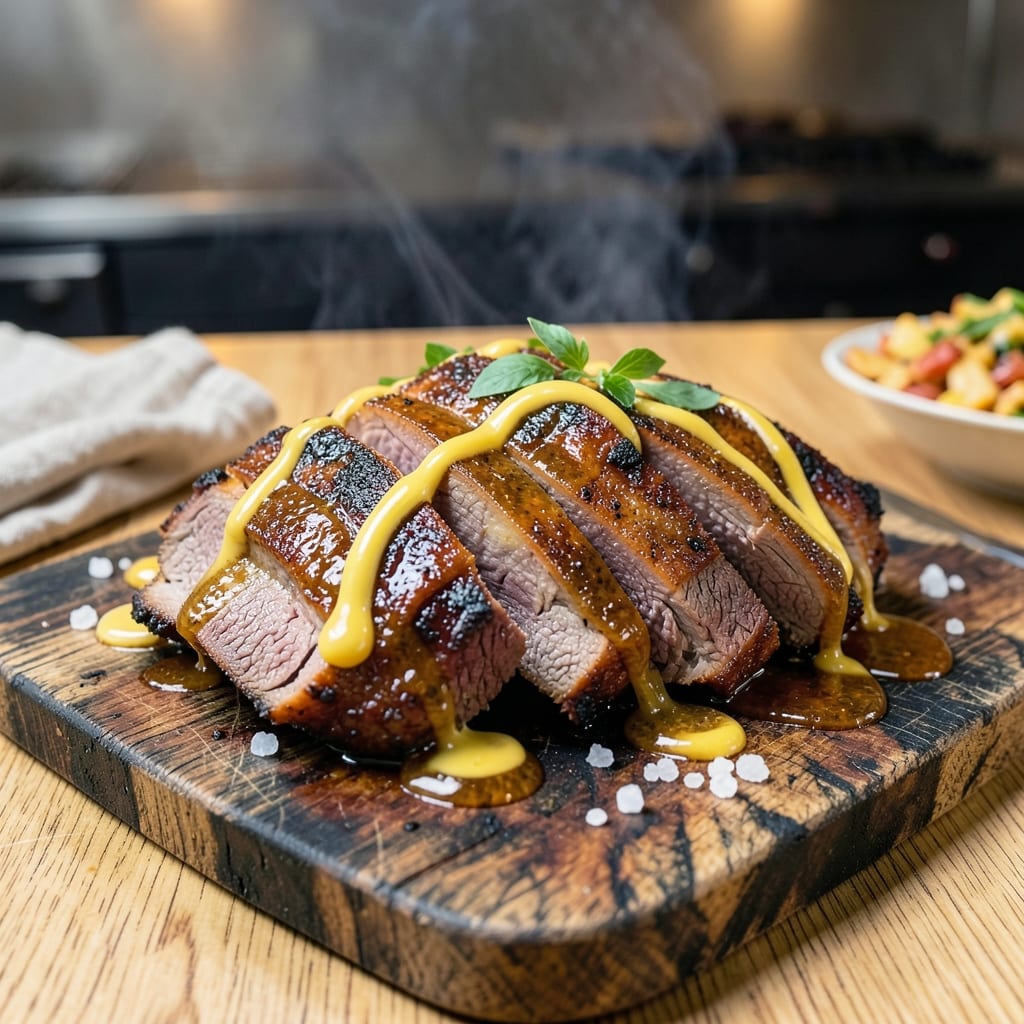
This BBQ pitmasters' beef brisket recipe delivers the smoky-spiced bark and melt-in-your-mouth tenderness that makes brisket the star of any cookout. 🔥 After years of perfecting low-and-slow techniques—from wood choice to bark development—I’ve refined this method to create restaurant-quality results at home. The secret lies in patience, precise temperature control, and a rub that transforms tough meat into irresistible bites.
What sets this recipe apart is the balance between bold, caramelized bark and a buttery, tender core. We’ll use a hickory-oak blend for that classic BBQ smoke flavor while keeping the meat juicy through careful monitoring of internal temperatures. The dry rub, a blend of spices and brown sugar, develops a deep, smoky crust that’s impossible to resist. This isn’t just a recipe—it’s a pitmaster’s philosophy: slow, steady, and full of flavor.
The process begins with a 12-hour smoke at 225°F, ensuring the brisket cooks evenly without drying out. As the bark forms, we’ll baste with butter and mop sauce to lock in moisture and enhance the smoky depth. By the time it’s done, your brisket will have a crispy exterior and a core that’s so tender, it nearly falls apart at the touch. This is the kind of brisket that makes people line up for seconds—and thirds.
Serve it with classic sides like creamy coleslaw, cornbread, and pickled jalapeños to round out the meal. Whether you’re hosting a backyard BBQ or feeding a crowd, this recipe delivers the authentic, smoky satisfaction that defines pitmaster-style cooking. Let’s get started—your brisket awaits.
Ingredients for bbq pitmasters beef brisket
Sixteen ingredients for a brisket that tastes like it spent a weekend in a pitmaster's smoker.
| Ingredient | Amount | Notes |
|---|---|---|
| Beef Brisket (Packer Cut) 🥩 | 8 lb | Whole packer cut, 2-3 inches thick |
| Yellow Mustard 🍯 | ½ cup | For mop sauce base |
| Apple Cider Vinegar 🍎 | ¼ cup | For tangy mop sauce |
| Brown Sugar 🍚 | 1 cup | Dark brown preferred |
| Smoked Paprika 🌶️ | ¼ cup | For deep smoky bark |
| Coarse Kosher Salt 🧂 | ½ cup | Diamond Crystal preferred |
| Ground Black Pepper 🌶️ | 2 tbsp | Freshly cracked |
| Garlic Powder 🧄 | 2 tbsp | Not garlic salt |
| Onion Powder 🧅 | 2 tbsp | For depth of flavor |
| Ground Cumin 🌿 | 1 tbsp | Toasted for warmth |
| Unsalted Butter 🧈 | 1 cup | For basting and moisture |
| Hickory-Oak Wood Chips 🌳 | 4 lb | For authentic BBQ smoke |
| Water 💧 | 1 cup | For soaking wood chips |
| Beef Tallow or Bacon Fat 🥓 | ½ cup | For extra bark crispiness |
The brisket cut is non-negotiable—packer cut with a thick fat cap is what you need. Costco or your local butcher shop are the best places to find it fresh. If you're buying frozen, thaw it in the fridge for 48 hours—never in cold water. The wood chips make all the difference: Traeger or Cookshack brands are my go-to for consistent smoke flavor. Soak them for 30 minutes before using to prevent flare-ups. For the dry rub, smoked paprika is the secret weapon here—it gives that authentic BBQ flavor without overpowering the meat.
No yellow mustard? Dijon mustard works in a pinch, but it's not the same. Running short on brown sugar? White sugar plus molasses mimics the flavor, though it won't caramelize as beautifully. The mop sauce is where you can get creative—swap apple cider vinegar for white vinegar or lemon juice if needed. For the wood chips, cherry or pecan work too, though they'll give a slightly sweeter smoke. If you can't find beef tallow, lard or extra bacon fat will do the trick for that crispy bark. The spices? Penzeys or Spicewalla are worth the splurge for professional-quality blends.
Store your brisket in the fridge for up to 3 days before smoking—this actually improves the flavor as it dries slightly on the surface. The dry rub keeps well in an airtight container for 3 months, so make extra. Leftover brisket? Slice against the grain and freeze portions for up to 3 months. I always make a double batch of mop sauce—it keeps for 1 week in the fridge and makes cleanup a breeze. The wood chips? Store them in a sealed container in a cool, dry place for up to 6 months.
Why You'll Love This Recipe
- Five-Ingredient Magic: I swear, you only need five things—brisket, mustard, vinegar, sugar, and that smoky paprika—and you’ve got a flavor bomb. Honestly, the way the apple cider vinegar tenderizes the beef while the brown sugar caramelizes? It’s like the brisket does most of the work for you.
- Smoky Sweet Payoff: That packer cut? It’s tough before, but after slow-cooking with smoked paprika and a glaze of mustard and vinegar, it falls apart. Between us, the first bite—juicy, slightly tangy, with that deep smokiness—is the kind of thing that makes you pause and say, “Damn, that’s good.”
- Leftovers That Don’t Suck: I make this on Sunday, and by Wednesday, I’m still eating it. The brisket stays tender for days, and the sauce? It just gets better as it sits. Sandwiches, tacos, even fried rice—it’s the ultimate “I didn’t even have to cook today” meal.
- Weeknight BBQ Hero: No smoker? No problem. This recipe nails that pitmaster taste in your oven or slow cooker. I’ll be real: my husband’s a picky eater, but he’ll clear his plate for this. Plus, it’s cheaper than takeout, and the leftovers feed us for half the week.
Step-by-step instructions for smoky-spiced brisket mastery
Here's how pitmasters transform a tough cut into melt-in-your-mouth perfection.
🔥 Step 1: Create the Ultimate Rub and Prep the Brisket
In a large bowl, combine the 0.5 cup coarse kosher salt, 0.25 cup smoked paprika, 2 tbsp garlic powder, 2 tbsp onion powder, 1 tbsp ground cumin, and 2 tbsp ground black pepper. Mix thoroughly until the spices are evenly distributed and the salt crystals glisten slightly.
Pat the 8 lb beef brisket (packer cut) completely dry with paper towels—this is non-negotiable for crispy bark. Trim the fat cap to about ¼ inch thickness, leaving enough to protect the meat during smoking. Rub the spice mixture generously over all surfaces, pressing firmly so it adheres. Here's the thing—don't be shy with the rub. You want a thick, flavorful crust that'll develop that coveted dark bark.
🔥 Step 2: Set Up the Smoker Like a Pro
Soak the 4 lb hickory-oak wood chips in 1 cup water for at least 30 minutes before using. This prevents flare-ups and ensures steady smoke production. Preheat your smoker to 225°F using these soaked wood chips—you're aiming for clean, blue smoke that fills the chamber without thick white vapor.
Place the brisket fat-side up on the smoker grate. This positioning lets the rendered fat baste the meat continuously during cooking. I always add a water pan to the smoker to maintain humidity—this prevents the surface from drying out before the bark can form. Close the lid and resist the urge to peek. Every time you open it, you lose heat and extend cook time by 15-20 minutes.
⏰ Step 3: Smoke Through the Stall with Precision
Smoke the brisket undisturbed for 6-8 hours until the internal temperature reaches 165-170°F. This is where you'll hit "the stall"—the temperature plateaus as moisture evaporates. Don't panic; this is normal physics. The bark should be developing a dark mahogany color, and the meat should probe tender but still have some resistance.
Here's the pitmaster secret: when you hit the stall, wrap the brisket tightly in pink butcher paper (not foil—paper breathes better). This technique, called the "Texas crutch," powers you through the stall while preserving that crispy exterior. Return it to the smoker and continue cooking until the internal temperature reaches 200-205°F and a probe slides in like butter.
🍳 Step 4: Prepare the Mop Sauce and Baste
While the brisket smokes, make your mop sauce by whisking together the 0.5 cup yellow mustard, 0.25 cup apple cider vinegar, and 1 cup brown sugar in a small saucepan. Bring to a gentle simmer over medium heat and let it reduce slightly—about 5 minutes—until it reaches a thick, syrupy consistency. This sauce will keep your brisket moist and add sweet-tangy depth.
Every 90 minutes during the smoke, baste the brisket with this sauce using a basting brush. The acidity in the vinegar helps tenderize the meat while the sugar caramelizes on the surface, enhancing that bark. Don't skip this step—it's what separates good brisket from exceptional brisket.
🔪 Step 5: Rest and Slice for Maximum Juiciness
Once probe-tender, remove the brisket from the smoker and let it rest in the butcher paper for at least 1 hour (I prefer 2 hours wrapped in towels in a cooler). This resting period allows the juices to redistribute throughout the meat. Real talk: skipping this step means dry, stringy slices. Don't be impatient—good things come to those who wait.
Unwrap the brisket and locate the grain direction—you'll see lines running through the meat. Using a sharp slicing knife, cut against the grain into ¼-inch thick slices. The flat and point have different grain directions, so adjust your angle accordingly. Serve immediately with the remaining mop sauce spooned over the top and extra unsalted butter melted over each slice for that buttery core you're craving.
Pro Tips For Making Bbq Pitmasters Beef Brisket
- Trim the Fat First: Cut off that thick fat cap before you even think about seasoning—it’s the difference between a brisket that renders perfectly and one that turns into a grease-soaked mess. Use a sharp knife and slice it down to about ¼-inch thick, then score the fat in a crosshatch pattern so it crisps instead of steaming the meat. ---
- Mix the Rub Wet: Skip the dry rub—this recipe’s mustard, vinegar, and brown sugar need moisture to stick. Whisk them into a thick paste with a splash of water (about 1 tablespoon) before slathering it on. It’ll cling to the brisket like glue, not just dust off when you flip it. ---
- Don’t Rush the Smoke: The first 2 hours are the hardest—resist the urge to peek or adjust the heat. Let the brisket sit undisturbed at 225°F (250°F max) while the bark forms. I learned this the hard way after opening the lid every 10 minutes and ending up with a sad, uneven crust. ---
- Wrap in Butcher Paper: Foil traps steam and turns your brisket into a sad, gray sponge. Instead, use butcher paper—it lets moisture escape while keeping the meat from drying out. Crimp the edges tightly, then weigh it down with a cast-iron skillet if your smoker’s airflow is wonky. (Yes, it’s extra work, but it’s worth it.)
Creative variations of this recipe
Texas-Style Bark
For a deeper, darker bark with intense smoky flavor, increase the smoked paprika to ⅓ cup and add 1 tbsp chili powder to the rub. Pitmasters in Central Texas often use a 1:1 ratio of brown sugar to salt for this variation, creating a sweeter, stickier crust. I like to baste with a mix of equal parts apple cider vinegar and beef broth instead of the standard mop sauce—this adds a savory depth that complements the sweetness. 🌶️
Pro tip: Sprinkle 1 tbsp coarse kosher salt over the brisket in the last 30 minutes of smoking to intensify the bark formation. This technique, called "salting the crust," is a secret weapon at Texas BBQ competitions. The salt draws out moisture, creating a more concentrated, caramelized surface.
Carolina Vinegar-Based
In the Carolinas, they take brisket to another level by using a vinegar-heavy mop sauce. Replace the yellow mustard with ½ cup apple cider vinegar and ¼ cup hot sauce (like Crystal or Texas Pete) for a tangy kick. The rub stays similar, but I add 1 tsp cayenne pepper for heat. This style creates a thinner bark but with a bold, acidic punch that cuts through the richness. 🍯
Carolina pitmasters often finish their brisket with a butter-bacon baste—melt ½ cup unsalted butter with 4 slices cooked bacon and brush it on during the last 2 hours of cooking. The fat from the bacon enhances the bark while adding smoky depth. Serve with white bread to soak up that vinegar-rich sauce.
Smoked Coffee Brisket
This variation is a crowd-pleaser at competition BBQs. Add 2 tbsp instant coffee granules to the dry rub for a deep, earthy note. The coffee enhances the bark's complexity and pairs beautifully with the smoky flavors. I like to use dark roast coffee for a bolder flavor profile. This style works especially well with cherry wood chips for a slightly sweeter smoke. ✨
For an extra touch, baste the brisket with a mix of ½ cup coffee, ¼ cup brown sugar, and 2 tbsp apple cider vinegar during the last 3 hours of smoking. The coffee grounds can also be sprinkled lightly over the surface before the final rest—this adds a subtle bitterness that balances the sweetness of the bark.
Spicy Cajun Twist
Bring the flavors of Louisiana to your brisket by adding 1 tbsp cayenne pepper and 1 tbsp dried thyme to the rub. Swap the brown sugar for 1 cup granulated sugar to create a slightly crisper bark. The mop sauce gets a Cajun upgrade with 1 tbsp Worcestershire sauce and 1 tsp hot sauce. This variation is perfect for those who love a little heat with their smoky flavors. 🌶️
Finish the brisket with a butter-herb baste**: melt ½ cup unsalted butter with 2 tbsp chopped fresh parsley and 1 tsp dried oregano, then brush it on during the last 1 hour of cooking. Serve with dirty rice and cornbread for a full Southern-inspired meal.
Honey-Glazed Brisket
For a sweeter, stickier bark, replace half the brown sugar in the rub with ½ cup honey. The honey caramelizes beautifully during smoking, creating a glossy, sweet crust. I also add 1 tsp cinnamon to the rub for warmth. This style is especially popular in the Pacific Northwest, where pitmasters love to experiment with fruit-based glazes. 🍯
Baste the brisket with a mix of ½ cup honey, ¼ cup apple cider vinegar, and 1 tbsp Dijon mustard during the last 2 hours of cooking. The acidity in the vinegar helps balance the sweetness, while the mustard adds depth. Serve with apple slices and caramelized onions to complement the honey glaze.
Nutrition facts
Frequently asked questions
Why does the recipe specify a packer cut brisket?
The packer cut is essential because it includes both the lean flat and the fattier point, creating the perfect balance of texture and flavor. The thick fat cap protects the meat during long smoking, while the flat provides a tender, sliceable surface. Using a different cut (like just the flat) would result in dry, stringy slices—this is the cut that delivers that legendary brisket experience.
Can I use an electric smoker instead of a charcoal grill?
Electric smokers work perfectly for this recipe—just maintain a consistent 225°F temperature. The key is using wood chips (soaked in water) and adding a water pan to prevent dryness. I recommend adding a few extra wood chips every 2 hours to sustain the smoke flavor. The Texas crutch (butcher paper wrap) works just as well in electric smokers.
What's the deal with the \"stall\" and why shouldn't I panic?
The stall happens around 165°F when moisture evaporates, causing the temperature to plateau. This is normal physics—don't panic! The solution is the Texas crutch: wrapping the brisket in butcher paper to push through the stall while keeping that crispy bark. Many pitmasters swear this technique is what separates good brisket from competition-worthy brisket.
How do I know when the brisket is truly done?
Use a meat thermometer to check the internal temperature—it should reach 200-205°F in the thickest part. The probe should slide in like butter, and the bark should be dark mahogany. If you're unsure, check the point (it cooks faster) and the flat separately. The point should be tender first, while the flat may need 1-2 more hours.
What's the best way to reheat leftover brisket?
Never microwave it! Instead, slice the brisket and reheat in a 350°F oven for 10-15 minutes with a splash of beef broth. For extra flavor, brush with a mix of apple cider vinegar and butter before reheating. This keeps the slices juicy and restores that smoky bark. Leftovers keep well in the fridge for 3-4 days or frozen for 3 months.