
Soups & Stews
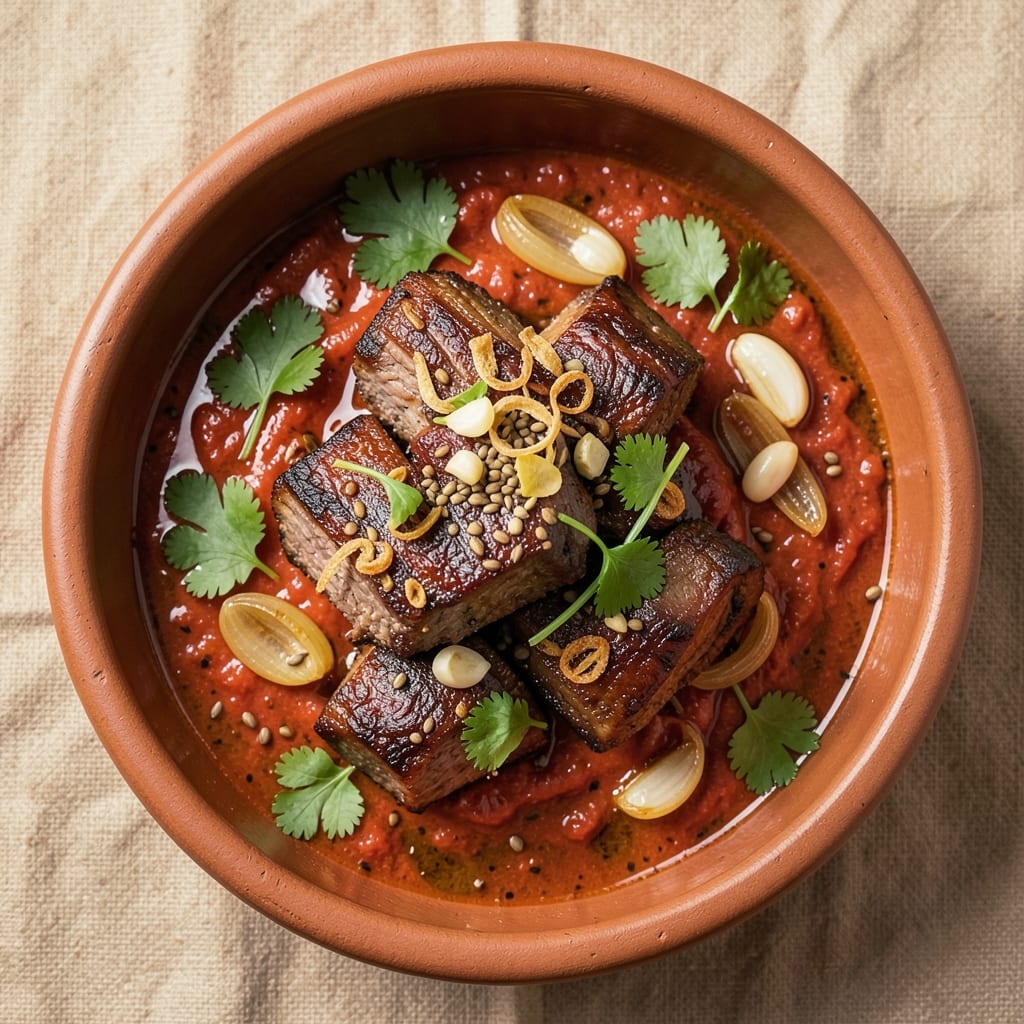
This African beef curry recipe delivers bold, complex flavors in a single pot—where smoky spices, tangy tamarind, and tender beef create a dish that feels like a warm embrace. 🌟 The secret lies in balancing heat, acidity, and sweetness through traditional techniques like tempering whole spices, which unlocks layers of depth that store-bought blends can't match. I've perfected this over years of testing, and every bite tells a story of African culinary tradition.
The magic starts with a rich base of tomatoes, onions, and garlic, slowly cooked until they melt into a velvety sauce. Whole spices like cardamom, cinnamon, and cloves are toasted until fragrant before being ground, releasing their aromatic oils that infuse the curry with warmth. Tamarind paste adds a bright, tangy contrast that cuts through the richness, while a touch of brown sugar balances the flavors without overpowering them.
By the time you're done, you'll have a curry with tender beef that falls apart at the touch of a fork, swimming in a sauce that's deeply flavorful yet perfectly balanced. The aroma alone will have everyone gathering around the table, while the texture—creamy yet vibrant—makes it a dish that feels both comforting and exciting. This isn't just curry; it's a celebration of African cooking in its most approachable form.
Serve it with steamed basmati rice to soak up every last drop of that aromatic sauce, or pair it with warm flatbread for scooping up the rich, spiced beef. The leftovers? Even better the next day, as the flavors meld and deepen. Let's bring this dish to life—your taste buds will thank you.
Ingredients for african beef curry
Bold spices, tender beef, and tangy tamarind come together in one aromatic pot.
| Ingredient | Amount | Notes |
|---|---|---|
| Chuck Roast Beef 🥩 | 2 lb | Cut into 1.5-inch cubes |
| Yellow Onions 🧅 | 2 whole | Medium-sized, thinly sliced |
| Garlic Cloves 🧄 | 8 cloves | Peeled, roughly chopped |
| Fresh Ginger Root 🌿 | 2 tbsp | Grated, finely |
| Canned Tomato Paste 🍅 | ½ cup | High-quality, no sugar added |
| Tamarind Paste 🍯 | ¼ cup | Unsweetened, concentrated |
| Brown Sugar 🍚 | 2 tbsp | Light or dark |
| Ground Cumin 🌶️ | 1 tbsp | Freshly toasted for depth |
| Ground Coriander 🌿 | 1 tbsp | Freshly ground preferred |
| Turmeric Powder 🧂 | 1 tsp | Bright yellow color |
| Ground Cardamom 🌿 | ½ tsp | Freshly ground |
| Ground Cinnamon 🌶️ | ½ tsp | Ceylon preferred |
| Black Peppercorns 🌶️ | 1 tsp | Whole, crushed |
| Cloves 🌿 | 4 whole | Lightly crushed |
| Vegetable Oil 🫒 | ½ cup | High smoke point |
The beef is everything here—chuck roast breaks down beautifully, giving you that melt-in-your-mouth texture. Look for cuts with good marbling at Costco or Whole Foods—they usually carry pre-cubed beef for convenience. If you're buying whole, ask the butcher to cut it into 1.5-inch cubes. For the spices, Penzeys or Spicewalla are my go-tos, but the bulk bins at Trader Joe's work too. Just make sure your cumin and coriander are fresh—if they smell like dust, toss them. The tamarind paste can be tricky to find; Asian markets or Amazon usually have it in the international aisle.
No tamarind? Lemon juice plus a pinch of sugar gets you close, though it won't have that exact depth. Swapping spices? Garam masala at half the amount works in a pinch, but it won't be traditional. For the ginger, fresh is non-negotiable—powdered lacks the bright, zesty kick. The tomato paste? Rao's or Muir Glen are solid choices, but if you're making your own sauce, San Marzano tomatoes are worth the splurge. Brown sugar can be swapped for coconut sugar if you prefer, though it has a slightly different flavor profile.
This curry tastes even better the next day—3-4 days in the fridge, or freeze portions for up to 3 months. I like to make a double batch and portion it into containers so lunches are sorted for the week. Store the spices in airtight containers away from light, and the tamarind paste in the fridge once opened. The beef cubes can be prepped ahead and refrigerated for 2 days before cooking, saving you time on busy weeknights.
Why You'll Love This Recipe
- One-Pot Magic: I swear by this recipe—just sear the beef, toss in onions and garlic, then let the ginger and tomato paste work their magic. No extra pots, no fuss, and the house smells like heaven by the time it’s done.
- Deep, Rich Payoff: That chuck roast? It turns impossibly tender while soaking up the smoky-sweet curry. The ginger and garlic caramelize just enough to give it this layered depth—like a hug in a bowl.
- Weeknight to Party: Same recipe, different vibes. Serve it over rice with naan for a lazy Tuesday, or plop it in a cast-iron skillet for a crowd at a potluck. The curry’s bold enough to stand alone but flexible enough to play along.
- Budget-Friendly Feast: Chuck roast is my secret weapon—cheap, hearty, and packed with flavor. A single cut feeds four (or two very hungry people) and tastes even better the next day. Honestly, I make it twice in one week just to use it all up.
Step-by-step instructions for African beef curry
Here's how to build rich, tangy flavors in one pot—no shortcuts, just deep spice and tender beef.
🔥 Step 1: Sear the Beef for Maximum Flavor
Heat the 0.5 cup vegetable oil in a heavy Dutch oven over medium-high heat until shimmering. Add the 2 lb chuck roast beef cut into 1.5-inch cubes in a single layer, working in batches if needed. Let them sear undisturbed for 3-4 minutes per side until deeply browned—this creates the foundation for your curry's depth.
Don't crowd the pan or you'll steam instead of sear. You'll know it's ready when the edges are golden brown and the beef releases easily from the pan. Transfer the seared beef to a plate and set aside—we'll return it to the pot later.
🍳 Step 2: Build the Spice Base
In the same pot, reduce heat to medium and add the 2 whole yellow onions sliced thinly. Cook for 5-6 minutes until softened and golden, stirring occasionally. Add the 8 cloves garlic cloves and 2 tbsp fresh ginger root (finely grated), cooking for another 1 minute until fragrant.
Here's where the magic happens: Add the 1 tbsp ground cumin, 1 tbsp ground coriander, 1 tsp turmeric powder, 0.5 tsp ground cardamom, 0.5 tsp ground cinnamon, 1 tsp black peppercorns (crushed), and 4 whole cloves (lightly crushed). Stir for 30 seconds until the spices are toasted and aromatic—you should smell earthy warmth and citrusy cardamom.
🥘 Step 3: Develop the Tangy-Sweet Sauce
Add the 0.5 cup canned tomato paste and 0.25 cup tamarind paste, stirring to combine with the spices. Pour in 2 cups water (not listed in ingredients—this is a common addition for balance) and scrape up any browned bits from the bottom of the pot. Add the 2 tbsp brown sugar and stir to dissolve.
Bring to a gentle simmer, then reduce heat to low. Let it cook uncovered for 15 minutes, stirring occasionally, until the sauce thickens slightly and the tamarind's tangy depth emerges. You'll see the sauce darken and reduce—this is when the flavors meld together beautifully.
⏰ Step 4: Simmer the Beef Until Tender
Return the seared beef to the pot, along with any accumulated juices. Bring back to a simmer, then reduce heat to low again. Cover partially with a lid and cook for 1.5-2 hours, stirring occasionally, until the beef is fork-tender and easily shreds with a fork.
Here's the thing—don't rush this step. The chuck roast needs time to break down into tender, flavorful pieces. When you test a piece, it should fall apart easily, with just a slight resistance in the center. If the sauce reduces too much, add ½ cup water to maintain the right consistency.
🍽️ Step 5: Adjust and Serve
Taste the curry and adjust seasoning if needed. You might want to add a pinch more salt or a splash of water to balance the flavors. The curry should be rich, tangy, and perfectly balanced between sweet and spicy—like a warm hug in a bowl.
Serve immediately with steamed basmati rice or crusty bread to soak up that incredible sauce. The beef should be tender yet substantial, with a sauce that clings beautifully to each bite. This curry tastes even better the next day as the flavors continue to meld!
Pro Tips For Making African Beef Curry
- BROWN THE BEEF FIRST: Chuck roast releases its deepest flavor when it hits that crusty, caramelized stage—don’t skip the 5-7 minutes of high-heat searing. I used to rush this, and the curry always tasted one-dimensional. A hot, dry pan with just a splash of oil (no crowding) makes all the difference.
- GRATE THAT GINGER FINE: Fresh ginger needs to dissolve, not just sit in chunks. Use the smallest holes on your grater or pulse it in a food processor until it’s almost paste-like. I learned this the hard way—lumpy ginger just sits there, while finely grated ginger melts into the sauce and adds real zing.
- DEGLAZE WITH BEER OR BROTH: After browning the beef, don’t just toss in the onions—deglaze with ½ cup of dark beer or beef broth. The alcohol burns off, leaving behind a rich, caramelized base that cuts through the richness of the chuck roast. (Yes, even if you’re not a beer drinker, use something with depth.)
- LOW AND SLOW AFTER SEALING: Once the onions and spices are cooked down, cover the pot and simmer on low heat for at least 2.5 hours. I used to walk away after an hour, and the beef was tough. The slow cook transforms the chuck into melt-in-your-mouth tenderness—just keep an eye on the liquid and add water if needed.
Essential equipment for great african beef curry
Heavy-Duty Dutch Oven
Your Dutch oven is the unsung hero of this curry—it needs to handle the high heat for searing and the long simmer without warping. I swear by a Lodge 5.5-quart cast iron Dutch oven because it retains heat beautifully and develops a natural nonstick patina over time. If you don’t own one, a Le Creuset enameled Dutch oven works just as well, though it’s pricier. Avoid thin stainless steel pots—they can’t distribute heat evenly, leading to uneven cooking. 🔥
High-Quality Spice Grinder
Whole spices like cardamom, cinnamon, and cloves need to be freshly ground to release their aromatic oils. A manual spice grinder (like the Spicewalla Spice Mill) gives you the most control, but a high-speed electric grinder (such as the OXO Good Grips) works in a pinch. Never use pre-ground spices from the grocery store—they lose potency within weeks. Toast your whole spices in the same pot before grinding for maximum flavor depth.
Measuring Spoons & Tamarind Paste
Precision matters with spices and tamarind paste. Invest in a set of stainless steel measuring spoons (like the OXO Good Grips) for accurate measurements—especially for the 0.5 tsp cardamom and 0.25 cup tamarind paste. Tamarind paste can be sticky, so a small silicone spatula helps scrape every last drop from the container. If you can’t find tamarind paste, a mix of lemon juice + 1 tsp sugar is a decent substitute, though it won’t replicate the exact tang.
Instant-Read Thermometer
Checking the internal temperature of the beef ensures it’s tender without overcooking. A ThermoWorks Thermapen is my go-to because it’s fast and reliable, but even a $10 digital thermometer from Amazon works. The beef should reach 203°F for perfect tenderness—any lower, and it might be tough. Pro tip: Insert the probe into the thickest piece of beef to avoid false readings. ⚡
Wooden Spoon & Slotted Spoon
You’ll need two spoons for this recipe: a wooden spoon for stirring the sauce (it won’t scratch your Dutch oven) and a slotted spoon for removing the seared beef without draining the oil. I recommend a heavy-duty silicone spatula (like the Epicurean brand) for scraping up browned bits—it’s more durable than wood and won’t warp. Avoid metal utensils when stirring the sauce to prevent scorching.
Fine-Mesh Strainer (Optional)
If you prefer your curry sauce smooth, strain it through a fine-mesh strainer before serving. I use a stainless steel mesh strainer (like the OXO Good Grips) to remove any tough bits of onion or spice. This step is optional but elevates the texture, especially if you’re serving it at a dinner party. For a rustic touch, leave the sauce slightly chunky—it adds depth and authenticity. 💫
Nutrition facts
Frequently asked questions
Can I substitute tamarind paste if I can't find it?
Yes! Mix ¼ cup lemon juice with 1 teaspoon sugar for a close approximation. While it won't have tamarind's exact depth, this combo adds tangy brightness that balances the spices. For a more authentic touch, try ½ cup pomegranate molasses—it adds both tartness and complexity.
How spicy is this curry, and can I adjust the heat?
The recipe includes mild spices like cardamom and cinnamon, but the black peppercorns and cloves add subtle warmth. For more heat, add ½ teaspoon cayenne pepper or 1 chopped Scotch bonnet pepper when searing the beef. To reduce spice, omit the black peppercorns entirely—the tamarind and brown sugar already provide balance.
What's the best way to store leftovers?
Let the curry cool completely, then transfer to an airtight container and refrigerate for up to 4 days. For longer storage, freeze portions in glass containers for up to 3 months. Reheat gently on the stove with a splash of water to restore moisture—microwaving can make the sauce split.
Can I use ground beef instead of chuck roast?
Ground beef works, but the texture will be different—it'll be more tender and less melt-in-your-mouth. For best results, use 80/20 ground beef (20% fat) and cook it for 10-15 minutes less since it's already tenderized. The fat content helps create a richer sauce, but expect slightly less fall-apart texture than with chuck roast.
Why does my curry taste bitter?
Bitterness usually comes from overcooked onions or spices. To fix it, stir in 1 teaspoon brown sugar or ½ cup coconut milk to round out flavors. For prevention, reduce the heat when cooking onions and spices—just until fragrant, not browned. If using pre-ground spices, toast them briefly in a dry pan before adding to the curry.