
Main Courses
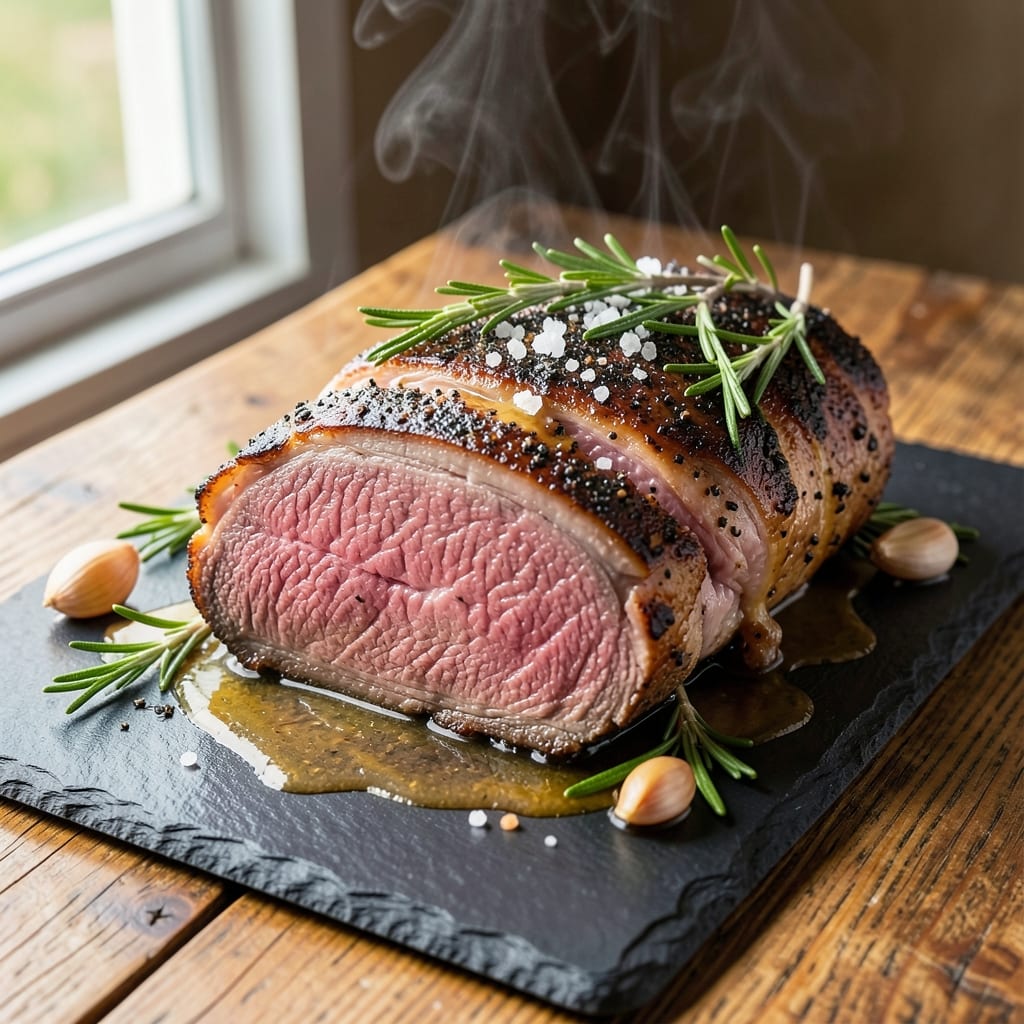
This All-American roast beef recipe delivers the perfect balance of a crispy, golden-brown crust and juicy, tender center that makes every holiday table shine. 🔥 The secret lies in dry-brining and precise temperature control—no guesswork, just foolproof results that impress even the most critical guests. I’ve perfected this method over years of hosting Thanksgiving dinners, ensuring the beef stays moist while developing that coveted caramelized exterior.
The process starts with a simple dry brine, where the beef rests uncovered in the refrigerator for 24 hours—this step transforms tough cuts into melt-in-your-mouth perfection. A medium-rare finish (130°F internal temperature) guarantees a juicy bite, while a 45-minute rest locks in those flavors. This isn’t your average roast; it’s a showstopper that pairs beautifully with classic sides like roasted garlic mashed potatoes or a tangy horseradish cream sauce.
What sets this recipe apart is the restaurant-quality crust achieved through high-heat searing before finishing in the oven. The beef develops deep, savory notes without overpowering the natural richness of the meat. Whether you’re hosting a holiday feast or a weekend gathering, this roast beef becomes the star of the meal—juicy, flavorful, and impossible to resist.
Serve it sliced thick with your favorite sides, and watch as everyone asks for seconds. The best part? This method works for any cut—ribeye, sirloin, or even a budget-friendly chuck roast. Let’s get started on a dish that’s pure American comfort food at its finest.
Ingredients for all american roast beef
Eight ingredients transform a simple roast into a holiday centerpiece with crispy crust and juicy perfection.
| Ingredient | Amount | Notes |
|---|---|---|
| Ribeye Roast 🥩 | 4 lb | Bone-in preferred, even thickness |
| Diamond Crystal Kosher Salt 🧂 | 1 ½ tbsp | Coarse grain for brining |
| Freshly Ground Black Pepper 🌶️ | 1 tbsp | Cracked peppercorns preferred |
| Unsalted Butter 🧈 | ½ cup | Cold, cubed for crust |
| Garlic Cloves 🧄 | 8 cloves | Smashed, skin-on |
| Fresh Rosemary 🌿 | ¼ cup | Chopped, stems removed |
| Fresh Thyme 🌿 | ⅛ cup | Leaves only, stems discarded |
| Extra-Virgin Olive Oil 🫒 | 2 tbsp | For searing and basting |
| Yellow Onion 🧅 | 1 whole | Quartered, for aromatics |
| Beef Tallow or Duck Fat 🧈 | 2 tbsp | For extra-rich crust (optional) |
| Worcestershire Sauce 🍶 | 1 tbsp | For depth of flavor |
| Red Wine 🍷 | ½ cup | Bold cabernet sauvignon |
| Fresh Horseradish 🌱 | 1 tbsp | Grate fresh for serving |
The beef cut is everything here. Ribeye delivers the perfect marbling for juiciness, but sirloin or chuck roast work too if you're on a budget—just trim excess fat. I always buy from Costco or Whole Foods for consistent quality, looking for cuts with good marbling and even thickness. The dry brine (just salt and pepper) happens overnight, so plan ahead—this isn't a last-minute dish. For the herbs, fresh is non-negotiable—dried just won't give that same aromatic punch. If you can't find fresh rosemary or thyme, substitute with 1/3 the amount of dried, but trust me, it won't be the same.
No red wine? Beef broth with a splash of balsamic vinegar works in a pinch. The Worcestershire sauce adds that umami depth—don't skip it, even if you're not a fan of the flavor. For the crust, butter alone works perfectly, but if you want extra richness, beef tallow or duck fat (available at specialty butchers) takes it to the next level. The garlic should be smashed with skins on—this keeps the flavor contained while releasing aroma. If you're prepping ahead, make the herb mixture 2 days early and store it in the fridge in a sealed container. The horseradish is just for serving, but if you want to add it to the crust, mix in 1 tbsp of grated horseradish with the butter—game changer for spice lovers.
This roast reheats beautifully—4-5 days in the fridge or 3 months frozen. For freezing, wrap tightly in butcher paper, then foil, to prevent freezer burn. The crust gets crispy again when reheated, but if you're serving leftovers, cover with foil for 10 minutes at 350°F to warm through gently. I always slice it thick against the grain for maximum tenderness. The red wine reduction can be made ahead too—simmer it down to 1/4 cup and keep it in the fridge for up to 1 week. Pair with roasted garlic mashed potatoes and you've got a showstopper.
Why You'll Love This Recipe
- Two-Ingredient Rub: I swear by this salt-and-pepper combo—no fancy blends, just the real deal. Diamond Crystal kosher salt clings perfectly to the ribeye while the fresh black pepper gets crushed right into the crust, locking in flavor without overpowering.
- Crispy-Creamy Magic: That butter-basted garlic? It’s the secret weapon. The outside gets a golden, crackling crust while the inside stays juicy—like a steakhouse cut but made in my own oven. (Yes, even on a Tuesday night.)
- Leftovers That Win: Slice it thin for sandwiches the next day, or cube it for tacos—this roast never disappoints. Honestly, I make it bigger than I need just so I can repurpose it all week.
- Game Day Hero: Whether it’s a Super Bowl spread or a casual family dinner, this roast beef brings the crowd. It’s hearty enough for football season but simple enough for a weeknight—no one will guess it’s this easy.
Step-by-step instructions for slow-roasted ribeye roast
This method delivers a restaurant-quality roast with a deep mahogany crust and melt-in-your-mouth tenderness.
👨🍳 Step 1: Prep and Season the Roast for Maximum Flavor
Start by patting the 4 lb ribeye roast completely dry with paper towels—this is non-negotiable for crispy crust. I like to work in sections, pressing firmly to remove all moisture from the surface and cavity. The drier the meat, the better the crust forms.
In a small bowl, combine the 1.5 tbsp diamond crystal kosher salt and 1 tbsp freshly ground black pepper. Rub this generously over the entire roast, including inside the cavity. I press the seasoning into the meat with my fingertips so it adheres well. Let it sit at room temperature for 30 minutes while you prep the aromatics—this helps the seasoning penetrate and the meat cook more evenly.
🍳 Step 2: Build the Herb Butter Crust for Unmatched Richness
In a food processor, pulse the 8 cloves garlic (skin-on) until finely chopped but not paste. Add the 0.25 cup fresh rosemary, 0.125 cup fresh thyme, 2 tbsp extra-virgin olive oil, and pulse until combined. Transfer this to a bowl and mix in the 0.5 cup cold unsalted butter, cubed, until evenly distributed.
Preheat your oven to 400°F. Place the roast fat-side up on a rack in a roasting pan. Spread the herb butter mixture evenly over the entire surface, pressing gently to ensure contact. For extra richness, dot with 2 tbsp beef tallow or duck fat—this creates an incredibly crispy crust that's worth every calorie.
🔥 Step 3: Sear and Roast for Perfect Crust and Juiciness
Heat a large oven-safe skillet over medium-high heat. Add the 1 whole yellow onion, quartered, and sear for 5 minutes until caramelized. Remove and set aside. In the same skillet, sear the roast on all sides until deeply browned—about 3-4 minutes per side. This step develops incredible flavor through the Maillard reaction.
Transfer the seared roast to the prepared roasting pan with the caramelized onions. Pour in the 0.5 cup red wine and 1 tbsp Worcestershire sauce, scraping up any browned bits from the skillet. Roast uncovered at 325°F for 2 hours, basting occasionally with the pan juices. The internal temperature should reach 130°F—this is where the magic happens for that perfect pink center.
⏰ Step 4: Rest and Slice for Maximum Juiciness
Remove the roast from the oven and let it rest for 20-30 minutes before slicing. This resting period is absolutely crucial—it allows the juices to redistribute throughout the meat, preventing them from pooling and running out when you cut. I like to tent it loosely with foil to keep it warm while it rests.
Slice the roast against the grain into ½-inch thick pieces. The meat should be fork-tender with a beautiful pink center. Serve immediately with the pan juices reduced by half and the grated 1 tbsp fresh horseradish on the side for that classic All-American kick.
Pro Tips For Making All American Roast Beef
- Sear First, Roast Slow: The ribeye roast won’t caramelize properly if you jump straight to low heat. Sear it hard in a screaming-hot pan with butter and garlic cloves for 3-4 minutes per side first—this locks in flavor and creates that golden crust you’re after. (Yes, even if you’re using a ribeye roast, not steak.)
- Salt the Night Before: I learned this the hard way—salting right before roasting just doesn’t cut it. Diamond Crystal kosher salt needs time to penetrate that thick roast. Sprinkle it all over 12-24 hours ahead, then let it sit uncovered in the fridge. The meat stays juicier, and the seasoning sticks like glue.
- Watch the Internal Temp: A meat thermometer is your best friend here. For medium-rare, pull it at 125°F—waiting for 130°F means you’ll dry out that ribeye roast faster than you can say “overcooked.” Let it rest 10-15 minutes before slicing, or all that juicy goodness will pool on the cutting board.
- Upgrade with Garlic Butter: Skip the plain butter—mash those garlic cloves into the softened butter before searing. The flavor gets absorbed into the crust, and you end up with a roast that tastes like it came from a fancy restaurant, not your kitchen. (Bonus: Save the leftover garlic butter for toast—it’s too good to waste.)
Serving suggestions for leftovers
Classic Holiday Sides
Nothing complements roast beef like creamy mashed potatoes with roasted garlic and buttery Yorkshire pudding—both crowd-pleasers that soak up the rich pan juices beautifully. For the potatoes, I use 4 lbs Yukon Gold potatoes boiled until tender, then mashed with ½ cup unsalted butter, ½ cup whole milk, and 4 cloves roasted garlic. The pudding gets its crispy top from baking in a hot oven (450°F) with 2 tbsp beef drippings mixed into the batter. 🥔
Add roasted Brussels sprouts with crispy pancetta for a touch of sophistication. Toss 1 lb halved Brussels sprouts with 2 tbsp olive oil, 3 slices cooked pancetta (crumbled), and ½ tsp smoked paprika, then roast at 425°F for 25 minutes. The salty-sweet contrast balances the beef’s richness perfectly.
Sauce Pairings
A red wine reduction made from the pan juices elevates every bite. After removing the roast, deglaze the pan with ½ cup red wine, reduce by half, then whisk in 1 tbsp cold butter for a silky finish. For a tangy twist, serve with horseradish cream—mix ½ cup sour cream, 1 tbsp grated fresh horseradish, and 1 tsp Dijon mustard. 🍷
For a lighter option, au jus is a must. Simmer 1 cup beef broth with 1 tbsp Worcestershire sauce and 1 tsp black peppercorns until reduced to ½ cup. Strain and serve warm over sliced beef for dipping.
Plating Presentation
Slice the roast against the grain into ½-inch thick pieces and arrange on a warm platter. Fold the Yorkshire pudding in half to show its crispy top, then place it beside the beef. Spoon the mashed potatoes into a rustic ceramic bowl and drizzle with extra pan juices. Garnish with fresh thyme sprigs and crispy fried shallots for a restaurant-worthy touch. ✨
For a family-style spread, serve everything in shallow bowls—beef in the center, sides surrounding it, and sauces in small ramekins. Use dark wood cutting boards or a marble slab to keep the presentation warm and inviting.
Make-Ahead Tips
Prep the mashed potatoes and Yorkshire pudding batter a day ahead—store them separately in the fridge. Reheat the potatoes with a splash of milk, and bake the pudding fresh before serving. The roast beef reheats beautifully: wrap slices in foil and warm in a 350°F oven for 10 minutes. The horseradish cream can be made 2 days ahead and stored in an airtight container. 💡
For a stress-free holiday, assemble the Brussels sprouts and pancetta the night before and refrigerate. Roast them straight from the fridge—just add 5 extra minutes to the cooking time. The flavors meld even better after resting!
Nutrition facts
Frequently asked questions
Can I use a different cut of beef for this recipe?
While ribeye is ideal for its marbling, you can use sirloin or chuck roast for budget-friendly options. Trim excess fat from chuck roast first—it benefits from longer cooking times (up to 3 hours at 325°F) to tenderize. For sirloin, reduce the roasting time slightly to avoid dryness.
Why is resting the roast so important?
Resting for 20-30 minutes after roasting lets the meat's juices redistribute evenly, preventing them from pooling and running out when sliced. This step ensures every bite stays moist and flavorful. Skipping it results in dry, stringy beef—no one wants that at the dinner table!
How do I know when the roast is done?
Use a meat thermometer for precision! The internal temperature should reach 130°F for medium-rare (the perfect pink center). For medium, aim for 140°F. Insert the probe into the thickest part of the meat, avoiding fat or bone. The crust will be golden-brown and crispy by then.
Can I make this roast ahead and reheat it?
Yes! This roast reheats beautifully. Wrap slices in foil and warm in a 350°F oven for 10 minutes to maintain moisture. For leftovers, store in the fridge for up to 4-5 days or freeze for 3 months. The crust stays crispy when reheated properly—just avoid microwaving!
What's the best way to carve the roast?
Slice against the grain into ½-inch thick pieces for maximum tenderness. Start at one end and cut diagonally to expose the most meat fibers. Use a sharp carving knife and saw back and forth gently—no need to force it. The grain runs lengthwise, so cutting perpendicular creates shorter fibers that melt in your mouth!