
Main Courses
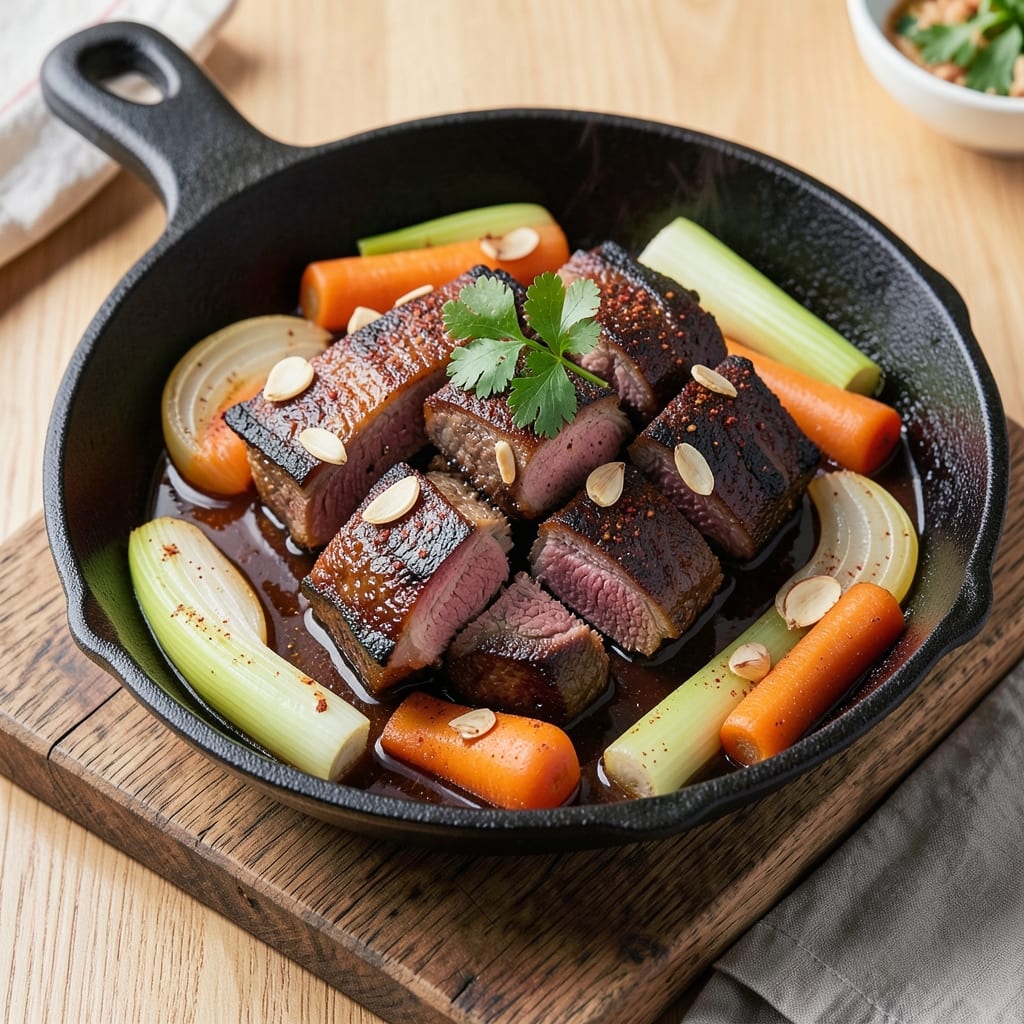
This American beef short ribs recipe delivers restaurant-quality tenderness with a deep, smoky flavor that transforms tough cuts into melt-in-your-mouth perfection. The secret lies in a slow braise that develops rich caramelized fond—a flavorful browned residue—that forms at the bottom of the pot, creating layers of complexity you won’t find in quick-cook methods. I’ve perfected this technique over years of testing, ensuring every bite is juicy, flavorful, and worth the wait.
The process begins with a high-heat sear to lock in juices, followed by a long, low simmer in a flavorful liquid that infuses the meat with depth. While it requires patience—about 3 hours of active cooking time—this method guarantees results that rival your favorite steakhouse. The ribs become so tender they practically fall apart, while the braising liquid reduces into a glossy, aromatic sauce perfect for drizzling over each serving.
What you’ll end up with is a dish that’s hearty enough for a Sunday supper but impressive enough for company. The short ribs develop a caramelized crust on the outside while remaining tender and succulent inside, all blanketed in a sauce that’s rich, slightly sweet, and packed with umami. Serve with classic sides like creamy mashed potatoes or roasted root vegetables to complete the meal.
This recipe is designed for home cooks who want restaurant-quality results without shortcuts. The long braising time might seem daunting, but the hands-off approach makes it manageable—ideal for those who appreciate dishes that reward patience with extraordinary flavor. Let’s get started on creating a meal that will have everyone asking for seconds.
Ingredients for american beef short ribs
Sixteen ingredients transform tough beef into melt-in-your-mouth perfection through slow braising and smoky depth.
| Ingredient | Amount | Notes |
|---|---|---|
| Beef Short Ribs 🥩 | 4 lb | Bone-in, 2-3 inches thick |
| Yellow Onion 🧅 | 2 whole | Chopped into 1-inch pieces |
| Carrots 🥕 | 4 whole | Cut into 2-inch chunks |
| Celery Stalks 🌿 | 4 whole | Cut into 2-inch pieces |
| Garlic Cloves 🧄 | 8 cloves | Smashed, not minced |
| Smoked Paprika 🌶️ | 2 tbsp | For deep smoky flavor |
| Ground Black Pepper 🌶️ | 1 tbsp | Freshly cracked preferred |
| Kosher Salt 🧂 | 2 tbsp | Diamond Crystal preferred |
| Dry Red Wine 🍷 | 2 cups | Bold Cabernet Sauvignon |
| Beef Broth 💧 | 4 cups | Low-sodium preferred |
| Tomato Paste 🍅 | ½ cup | San Marzano preferred |
| Fresh Thyme 🌿 | ¼ cup | Leaves only, stems removed |
| Fresh Rosemary 🌿 | ¼ cup | Chopped, woody stems removed |
| Olive Oil 🫒 | ½ cup | High smoke point preferred |
| Balsamic Vinegar 🍶 | 1 tbsp | For depth of flavor |
The beef short ribs are the star—look for cuts with good marbling and a rich red color. Costco or Whole Foods often carry high-quality bone-in ribs, but your local butcher can trim them to 2-3 inches thick if needed. Fresh herbs make a difference here: Trader Joe's sells pre-bundled thyme and rosemary that’s perfect for this recipe. The wine should be bold—Cabernet Sauvignon or Merlot work best. If you're using a dry red you already have, just make sure it's not overly fruity. For tomato paste, San Marzano is the gold standard, but any quality canned paste will do.
No red wine? Beef broth with 1 tbsp balsamic vinegar works just as well. Fresh thyme and rosemary can be swapped for 1 tbsp dried each, but fresh is ideal. The ribs don't need to be trimmed of excess fat—it renders down during cooking, adding flavor. If your ribs have a thick layer of silver skin, score it lightly with a knife to help tenderize. For the vegetables, carrots and celery can be swapped for potatoes or turnips if you prefer. The key is to keep the aromatics balanced—onion, garlic, and herbs should all be present in roughly equal proportions.
This braise tastes even better the next day, so make extra. Store leftovers in an airtight container in the fridge for up to 5 days—the flavors deepen as the sauce reduces. For longer storage, freeze portions in airtight containers for up to 3 months. To reheat, warm gently on the stove with a splash of water or broth. The ribs are perfect served with creamy mashed potatoes or crusty bread to soak up that rich, smoky sauce. Leftovers reheat beautifully and make great sandwiches the next day.
Why You'll Love This Recipe
- One-Pot Magic: I swear by this—just toss the ribs, veggies, and broth in one pot, walk away, and let it melt down. The onions caramelize right into the sauce, so you’re basically getting two flavors for the price of one.
- Garlic Bomb Flavor: That crispy garlic crust on the ribs? Chef’s kiss. The slow cook turns the garlic into this golden, buttery glaze that clings to every bite—like a hug for your taste buds. (Yes, even on a Tuesday night.)
- Leftovers That Shine: These ribs taste better the next day—seriously. I’ll make a double batch on Sunday, freeze half, and pull it out for lazy weeknights. Reheat in the oven, and it’s like restaurant quality all over again.
- Budget-Friendly Feast: Short ribs might sound fancy, but they stretch far—feed four for dinner, then two more for lunch. The veggies (onion, carrots, celery) bulk it up without breaking the bank, and the flavor? Worth every penny.
Step-by-step instructions for American beef short ribs
This method transforms tough beef short ribs into melt-in-your-mouth perfection with a rich, caramelized fond.
Sear the Short Ribs for Deep Flavor
Heat a heavy Dutch oven over medium-high heat until a drop of water sizzles violently. Add ½ cup of olive oil and let it shimmer for 1 minute. Working in batches to avoid crowding, add the 4 lb beef short ribs in a single layer. Sear for 4-5 minutes per side until deeply browned and crispy—this builds the flavor foundation through the Maillard reaction.
While searing, I like to press down gently on each rib with a metal spatula during the first minute to prevent curling. This ensures even contact with the hot pan. Transfer the seared ribs to a plate and set aside—don't wipe out the Dutch oven yet, as those browned bits are pure flavor gold.
Build the Aromatic Vegetable Base
In the same Dutch oven, add the 2 whole yellow onions, 4 whole carrots, and 4 whole celery stalks (all prepped as specified). Cook for 8-10 minutes until the vegetables begin to soften and develop a golden hue. Stir occasionally to prevent sticking, but don't overcrowd the pan.
Add the 8 smashed garlic cloves and cook for 30 seconds until fragrant. Here's where it gets good—sprinkle the 2 tbsp smoked paprika, 1 tbsp ground black pepper, and 2 tbsp kosher salt over the vegetables. Stir everything together and cook for another 2 minutes to toast the spices and release their aromatic oils.
Deglaze and Develop the Fond
Pour in the 2 cups dry red wine and scrape vigorously with a wooden spoon, making sure to lift all those browned bits from the bottom of the pot. This deglazing step creates the rich, caramelized fond that will form the sauce's base. Let the wine simmer for 3-4 minutes until reduced by half.
Add the 4 cups beef broth and ½ cup tomato paste, stirring to combine. Bring to a gentle simmer, then return the seared short ribs to the pot. The liquid should come about halfway up the ribs—if it's too shallow, add a splash more broth. Cover the Dutch oven and transfer to a 300°F oven.
Braise Until Fork-Tender
Braise the short ribs for 3 hours uncovered, then reduce heat to 275°F and continue cooking for another 2-3 hours until the meat is fork-tender. The ribs are done when they easily pull apart with minimal resistance. I check doneness by inserting a fork between the bones—if it slides in with almost no effort, they're ready.
During the final hour, add the ¼ cup fresh thyme and ¼ cup fresh rosemary to infuse their aromatic oils into the braising liquid. The herbs should be floating on top, not submerged, so they release their flavors gradually. The sauce should have reduced to a thick, glossy consistency with a deep, caramelized fond coating the bottom of the pot.
Finish with Balsamic Vinegar and Rest
Remove the ribs from the pot and transfer them to a serving platter. Strain the braising liquid through a fine-mesh sieve into a clean saucepan and return it to the stove. Add the 1 tbsp balsamic vinegar and simmer for 5-7 minutes until the sauce thickens slightly. Taste and adjust seasoning with additional salt if needed.
Let the short ribs rest for 10-15 minutes before serving. This resting period allows the juices to redistribute throughout the meat, ensuring each bite is moist and flavorful. Serve the ribs with the reduced braising sauce spooned over the top, accompanied by the caramelized vegetables from the pot. The contrast of tender meat with the rich, smoky sauce is what makes this dish truly special.
Pro Tips For Making American Beef Short Ribs
- Brown the Ribs First: I learned this the hard way—skipping the sear means flavorless ribs. Get that Dutch oven screaming hot, pat the ribs completely dry, and let them develop a deep crust for 4-5 minutes per side. The Maillard reaction is your friend here, and it’s non-negotiable for that rich, caramelized depth. ---
- Chop Veggies Evenly: Onions, carrots, celery—cut them all to the same rough size (about ½-inch chunks). Uneven pieces mean some cook faster, others turn to mush, and you’re left with a sad, watery mire. My grandmother swore by this, and she was right: consistency guarantees a balanced flavor base. ---
- Deglaze Aggressively: After browning the ribs, don’t just splash in liquid—scrape up those browned bits with a wooden spoon. That’s where the flavor lives, and ignoring it means losing half the taste. Use a mix of beer (or broth) and scrape every inch of the pan. Sounds weird, but it works. ---
- Simmer Low and Slow: Start with a rolling boil to dissolve spices, then drop to a gentle simmer—just a few bubbles breaking the surface. Ribs need time, not heat. Cover loosely and let them cook for 2.5-3 hours, checking occasionally. Skip the high heat, and you’ll end up with tough, dry meat instead of melt-in-your-mouth perfection.
Regional styles of this dish
Texas BBQ Style
In Texas, beef short ribs are often cooked low and slow with a focus on bold, smoky flavors. The key difference here is the use of Texas-style BBQ rub—a mix of 2 tbsp smoked paprika, 1 tbsp brown sugar, 1 tbsp garlic powder, and 1 tbsp onion powder—applied generously before searing. After braising, the ribs are finished with a glaze made from ½ cup apple cider vinegar and ¼ cup honey, creating a sticky, caramelized crust. Serve with Texas toast (thick-cut buttered bread) to soak up the sauce. 🌶️
Carolina Smoked Ribs
South Carolina takes short ribs to the next level with a smoker-cooked approach. Start by applying a dry rub of 2 tbsp brown sugar, 1 tbsp cayenne pepper, 1 tbsp black pepper, and 1 tbsp kosher salt to the ribs. Smoke them at 225°F for 5-6 hours using hickory or pecan wood for that signature Southern smoke flavor. After smoking, transfer the ribs to a Dutch oven, add 1 cup apple juice and ½ cup BBQ sauce, then braise for 1-2 hours until tender. The result is fall-apart ribs with a sweet, tangy sauce. 🔥
Midwest Braised Ribs
The Midwest approach leans into hearty, comforting flavors with a focus on rich gravy and root vegetables. After searing, braise the ribs with 4 cups beef broth, 2 cups crushed tomatoes, 2 tbsp Worcestershire sauce, and 1 tbsp Dijon mustard for depth. Add 2 potatoes and 2 carrots to the pot during the final hour of braising, letting them absorb the flavors. Serve the ribs over creamy mashed potatoes with a ladle of the reduced braising liquid spooned on top. This version is all about comfort food at its finest. ❄️
Pacific Northwest Herb-Infused
On the West Coast, short ribs are elevated with fresh, bright herbs and a touch of citrus. After searing, braise the ribs with 4 cups beef broth, ½ cup dry white wine, ¼ cup fresh tarragon, ¼ cup fresh parsley, and zest of 1 lemon. Finish with a splash of 1 tbsp lemon juice and a drizzle of 1 tbsp honey to balance the richness. The result is a lighter, herbaceous rib with a bright, citrusy kick. Pair with roasted asparagus or a simple green salad to complement the flavors. 🌿
New York Deli-Style
New York brings a bold, umami-packed twist to short ribs by incorporating beef consommé and tomato paste into the braise. After searing, cook the ribs with 4 cups beef consommé, ½ cup tomato paste, 2 tbsp soy sauce, and 1 tbsp fish sauce for an extra layer of depth. Finish with a sprinkle of toasted sesame seeds and serve on crusty rye bread with a side of pickled vegetables. This version is all about rich, savory flavors with a touch of Asian influence. 🍜
Nutrition facts
Frequently asked questions
Can I use bone-in or boneless beef short ribs for this recipe?
This recipe is designed specifically for bone-in beef short ribs—they develop the most flavor and tenderness during the long braise. Bone-in ribs stay juicier as the bone acts as a natural insulator. If you must use boneless, look for "short rib caps" or "short rib tips" (about 1-1.5 inches thick) and reduce the braising time by 30-45 minutes since they cook faster without bones.
What's the best way to store and reheat leftovers?
Store leftovers in an airtight container in the fridge for up to 5 days—the flavors actually improve as the sauce reduces further. For reheating, place ribs and sauce in a skillet over medium-low heat, adding 1-2 tablespoons of beef broth to prevent drying. Warm through gently for 5-7 minutes, stirring occasionally. Never microwave—it creates rubbery meat.
Can I substitute red wine with something else?
Yes! For equal 2 cups, use either 2 cups beef broth + 1 tbsp balsamic vinegar or 1 cup broth + 1 cup apple cider. The wine adds depth, but these substitutes work well. If using apple cider, reduce it by half first to concentrate the flavors before adding to the braise. Avoid non-alcoholic wine substitutes—they lack the acidity needed to tenderize the meat.
Why do my short ribs turn out tough instead of tender?
Tough ribs usually result from one of three issues: not searing properly (no deep brown crust), too much liquid (should cover ribs halfway), or not enough time (minimum 5 hours total braising). Always use a heavy Dutch oven, keep the liquid at a gentle simmer (not boiling), and check doneness by inserting a fork—it should slide in with minimal resistance. The ribs are done when they pull apart easily.
What are the best sides to serve with these ribs?
Classic pairings include creamy garlic mashed potatoes, buttery egg noodles, or crusty sourdough bread for soaking up sauce. For a lighter option, try roasted Brussels sprouts with bacon or a simple green salad with apple slices. The smoky, rich flavors of the ribs complement hearty sides that can stand up to their bold taste.