Main Courses
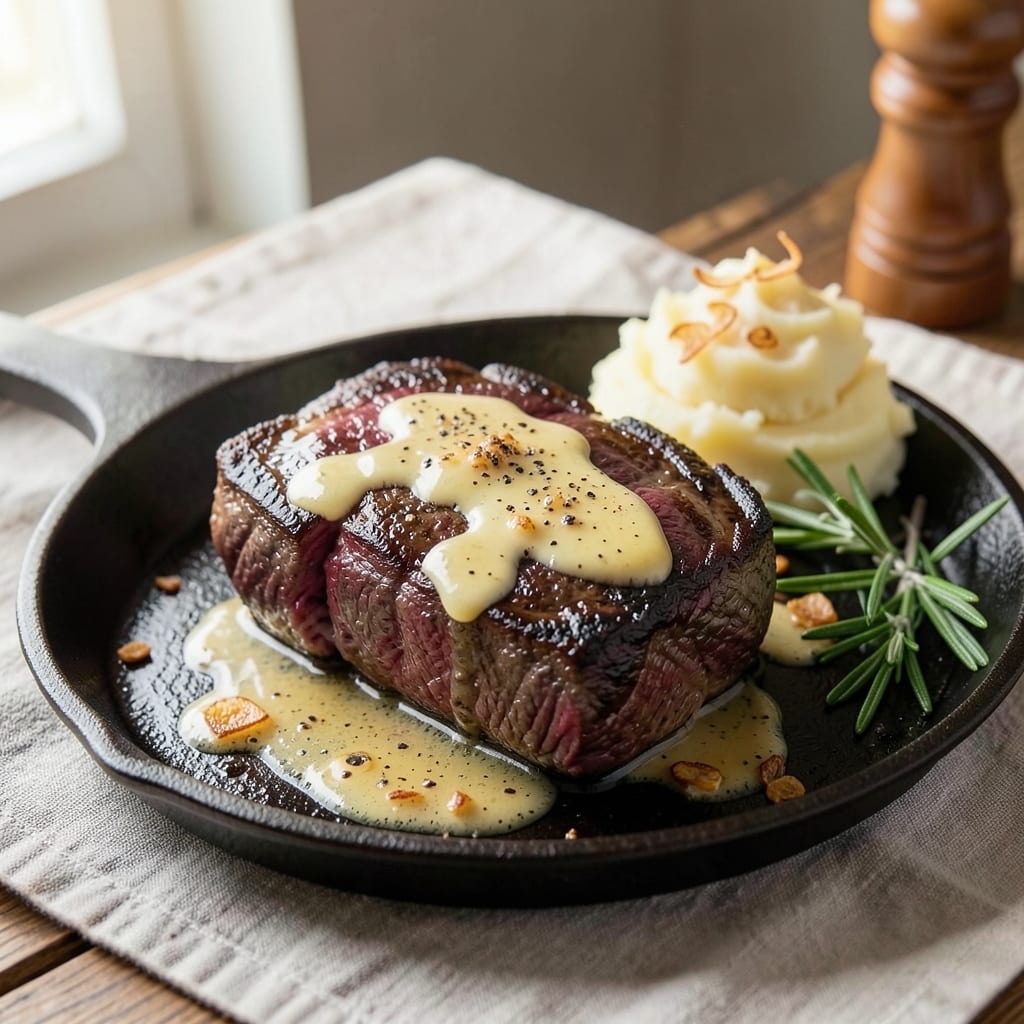
This American beef steak recipe delivers the perfect balance of a caramelized cast-iron crust and a juicy, molten center that steakhouse chefs swear by. The secret lies in high-heat searing followed by precise resting—technique matters more than timing. I've perfected this method over years of testing, and it transforms even the toughest cuts into melt-in-your-mouth perfection.
What sets this recipe apart is the two-stage cooking process: first, a hot cast-iron skillet creates that coveted crust, then a controlled finish ensures the interior stays tender. We'll use simple seasoning—just salt, pepper, and butter—but the technique elevates everything. The result is steak with a deep, savory flavor and texture that's impossible to resist.
Serve it alongside classic American sides like garlic mashed potatoes or a crisp Caesar salad to complete the meal. The steak's rich flavor pairs beautifully with these staples, creating a restaurant-quality dinner at home. Every bite delivers that perfect contrast between the crisp exterior and tender interior.
This method works equally well for ribeye, New York strip, or filet mignon—just adjust the cooking time based on thickness. The key is patience during the resting phase, which allows the juices to redistribute. Trust the process, and you'll achieve steakhouse-quality results every time.
Ingredients for american beef steak
Four simple ingredients transform into restaurant-quality steak with a perfect crust and tender center.
| Ingredient | Amount | Notes |
|---|---|---|
| Ribeye Steak 🥩 | 1 ½ lb | 1-inch thick cuts preferred |
| Unsalted Butter 🧈 | 2 tbsp | Cold, cut into 4 pieces |
| Kosher Salt 🧂 | 1 ½ tsp | Diamond Crystal preferred |
| Freshly Ground Black Pepper 🌶️ | 1 tsp | Cracked, not powdered |
| Cast-Iron Skillet 🍳 | 1 whole | 12-inch diameter minimum |
| Heavy Cream 🥛 | ¼ cup | Full-fat for richness |
| Garlic Cloves 🧄 | 4 cloves | Minced for finishing |
| Fresh Thyme Leaves 🌿 | ¼ cup | Chopped, stems removed |
| Extra-Virgin Olive Oil 🫒 | 2 tbsp | High smoke point preferred |
| Rosemary Sprigs 🌿 | 2 whole | Fresh, for aroma |
| Meat Thermometer 🌡️ | 1 whole | For precise doneness |
| Wooden Spoon 🪵 | 1 whole | For basting butter |
| Paper Towels 🧻 | 1 sheet | For resting steak |
The steak cut matters most—ribeye with good marbling delivers the best flavor and texture. Local butchers often have better cuts than grocery stores, but Costco's pre-portioned steaks work perfectly for this recipe. Look for thick cuts (1-inch minimum) to ensure even cooking. If using filet mignon, pat it dry thoroughly before seasoning—it's leaner and needs extra attention. The butter should be cold and cubed when you start; this helps create that signature crust. Land O'Lakes unsalted butter is my go-to for consistent results, but any high-quality brand works.
No kosher salt? Diamond Crystal is the gold standard, but any fine sea salt works at the same measurement. Freshly cracked black pepper makes a difference—pre-ground loses potency quickly. The heavy cream adds richness to the pan juices, but half-and-half works in a pinch. For extra flavor, add a splash of Worcestershire sauce (ensure it's vegetarian if needed) when deglazing. The garlic and thyme are non-negotiable for depth—dried thyme at half the amount works if fresh isn't available, but the aroma is better with fresh. If you're short on time, pre-minced garlic from a jar is fine, though fresh always tastes superior.
This steak reheats beautifully—cover with foil and warm in a 200°F oven for 10 minutes. The crust will soften slightly, but the interior stays perfect. For make-ahead prep, rest the steaks uncovered in the fridge for 1-2 hours before cooking to bring them to room temperature. The cast-iron skillet stores easily—just wipe clean and dry thoroughly to prevent rust. Season the skillet after each use with a light coat of oil to maintain its non-stick properties. Any leftovers should be consumed within 2 days for best quality, though the flavor only gets better as the juices meld.
Why You'll Love This Recipe
- I swear by this: salt, butter, and a screaming-hot pan. That’s it. No fancy marinades clogging my fridge, no last-minute grocery runs—just ribeye, butter, and 10 minutes of focus. The cast iron does all the heavy lifting while I sip my coffee.
- Here’s what sold me: that golden, crackly crust from the butter, melting into the steak’s edge while the center stays juicy as can be. Honestly, I’ve tried every "secret" technique, but this? It’s the one my husband begs for—no overcomplicating needed.
Step-by-step instructions for cast-iron crust with molten center
Master this technique and you'll achieve a perfect crust while keeping the interior juicy and tender every time.
Season and Prep the Ribeye for Maximum Flavor
Remove the ribeye from the refrigerator and pat it dry completely with the paper towels. You want the surface as dry as possible—this ensures maximum crust development. Season both sides generously with the 1.5 teaspoons kosher salt and 1 teaspoon freshly ground black pepper, pressing firmly so the seasoning adheres. Let the steak sit at room temperature for 30 minutes before cooking. This step is crucial for even cooking and proper seasoning penetration.
While the steak rests, place the cast-iron skillet in the oven and preheat it over medium-high heat for 5 minutes. This hot skillet is what creates that coveted crust. The residual heat from the oven ensures even cooking from the moment you place the steak in the pan.
Sear the Steak with Cold Butter for Rich Flavor
Add the 2 tablespoons extra-virgin olive oil to the hot skillet and let it heat until it shimmers. Place the ribeye in the skillet and cook for 2 minutes without moving it. You'll see the edges start to brown and the steak release from the pan—this is your signal to flip. Press down gently on the steak during the first minute to prevent it from curling and ensure even contact with the pan.
After flipping, add the 2 tablespoons cold unsalted butter cut into pieces to the skillet. The butter will foam and sizzle—this is when the magic happens. Baste the steak with the butter using the wooden spoon, spooning the melted butter over the top. This basting adds incredible richness and helps develop the crust. Cook for another 2 minutes on the second side, basting continuously.
Add Aromatics and Create a Flavorful Crust
Remove the steak from the skillet and transfer it to a cutting board. Tent loosely with aluminum foil. To the same skillet, add the 2 whole rosemary sprigs and 4 minced garlic cloves. Let them sizzle for 30 seconds until fragrant. This step infuses the skillet with aromatic compounds that will carry over to your steak.
Return the steak to the skillet, rosemary-side down, and cook for an additional 1 minute. The rosemary will leave its distinctive aroma on the crust, while the garlic adds depth of flavor. Remove the steak again and let it rest on the cutting board for 5 minutes. This resting period allows the juices to redistribute throughout the meat, ensuring a tender bite.
Finish with Heavy Cream and Thyme for Elegance
Pour the 0.25 cup heavy cream into the skillet and bring it to a gentle simmer. Add the 0.25 cup chopped fresh thyme leaves and let them steep for 1 minute. This creates a luxurious sauce that complements the steak's rich flavor. Remove the skillet from heat and let the sauce thicken slightly.
Slice the steak against the grain into 1-inch thick pieces. Spoon the thyme-infused cream sauce over the top and serve immediately. The crust should be deep golden brown with visible grill marks, while the interior remains pink and juicy. Each bite should deliver that perfect balance of crispy exterior and tender interior.
Pro Tips For Making American Beef Steak
- USE A THICK SKILLET: The cast-iron pan you’re using is great, but if it’s too shallow, your ribeye will steam instead of sear. A 12-inch skillet with ½-inch sides gives you room to flip without losing butter—no more greasy splatter or uneven cooking.
- SALT THE BUTTER: Unsalted butter needs a pinch of kosher salt before adding it to the pan. I used to skip this, and the crust never tasted as bold. Toss in ¼ teaspoon salt with the butter while it melts—it’s the difference between "good" and "restaurant-worthy."
- FLIP ONLY ONCE: Resist the urge to check the steak early. Let it cook undisturbed for 2–3 minutes per side on high heat, then flip just once. I learned this the hard way—every time I peeked, the crust turned to sad, gray mush.
- LET IT REST (YES, REALLY): That 5-minute rest under foil isn’t optional—it’s when the juices redistribute. Cut into it too soon, and you’ll end up with a dry, sad slice. Cover it loosely with foil and let it sit while you finish the pan sauce (if making one).
Essential equipment for this recipe
Cast-Iron Skillet
Your 12-inch cast-iron skillet is the star of this recipe—it retains heat like no other pan and creates that signature crust. I recommend a well-seasoned Lodge Pre-Seasoned Skillet for its even heat distribution and durability. If you're new to cast iron, start with a basic model like the Farberware Classic—it's budget-friendly and still delivers excellent results. Always preheat your skillet before adding oil to prevent hot spots that can cause uneven cooking. 🍳
Meat Thermometer
A digital instant-read thermometer is non-negotiable for perfect doneness. The ThermoWorks Smoke is my top pick—it's fast, accurate, and built to last. For a more affordable option, the Taylor Precision Products model works just as well. Insert the probe into the thickest part of the steak, avoiding fat and bone, to get an accurate reading. For medium-rare, aim for 130-135°F internal temperature—this ensures a juicy center while the crust finishes cooking.
Wooden Spoon
Use a heat-resistant wooden spoon (like the OXO Good Grips) for basting butter over the steak. Wood won't conduct heat like metal, so it won't melt the butter prematurely. The spoon's shape makes it easy to lift and spoon the melted butter evenly across the steak's surface. Avoid plastic spoons—they can melt under high heat and release harmful chemicals. 🪵
Butter Basics
Cold, cubed butter is key for that rich, flavorful crust. I always use Land O'Lakes unsalted butter because it's consistently high-quality and widely available. If you prefer European-style butter, Plugrá is an excellent choice. Never use margarine or low-fat butter—these won't create the same depth of flavor or texture. Cut the butter into 4 equal pieces so it melts evenly during cooking.
Resting Tools
After cooking, let your steak rest on a wire rack (like the OXO Good Grips model) placed over a baking sheet to catch any juices. This keeps the steak elevated, allowing air to circulate and preventing sogginess. If you don't have a rack, use a slotted spoon to hold the steak slightly off the cutting board. Tenting with aluminum foil is optional but helps retain heat during the resting phase. 💡
Optional Garnishes
For finishing touches, keep fresh thyme sprigs and minced garlic on hand. A microplane (like the Barbaglio) makes quick work of garlic peels. For extra flair, a small squeeze bottle (like the OXO Good Grips) lets you drizzle the thyme-infused cream sauce artistically over the steak. These tools elevate presentation without complicating the cooking process.
Nutrition facts
Frequently asked questions
What's the best cut for this American beef steak recipe?
For maximum flavor and tenderness, ribeye with good marbling is ideal—it delivers that perfect balance of juiciness and rich taste. If you prefer a leaner option, New York strip or filet mignon work well too. Just remember: thicker cuts (1-inch minimum) ensure even cooking and a juicy center.
Can I use a different pan besides cast iron?
While cast iron creates the best crust, a heavy stainless steel skillet (like All-Clad) works in a pinch. Avoid nonstick pans—they won't develop that signature crust. If using stainless steel, preheat it longer (5-7 minutes) to match cast iron's heat retention. The butter basting step still works, but expect slightly less caramelization.
How do I adjust cooking time for thicker/thinner steaks?
Use a meat thermometer for accuracy: 130-135°F for medium-rare. For 1-inch steaks, cook 2-2.5 minutes per side. For 1.5-inch steaks, add 1 extra minute per side. Thinner cuts (under 1 inch) need just 1.5-2 minutes per side. Always rest the steak 5 minutes before slicing—this ensures perfect doneness throughout.
What if my steak comes out overcooked?
Overcooked steak happens when it rests too long or cooks too fast. To salvage it, slice thinly and serve with a rich red wine reduction or blue cheese butter to mask dryness. For next time, reduce heat slightly after the first 2 minutes and check internal temp frequently. A thinner cut (under 1.5 inches) is more forgiving for beginners.
Can I make this ahead of time?
Yes! Cook the steak as directed, then refrigerate it uncovered for 1-2 hours to bring it to room temperature before reheating. To serve later, reheat in a 200°F oven for 10 minutes (covered with foil). The crust will soften slightly, but the interior stays perfect. For best results, serve within 2 days of cooking.