
Soups & Stews
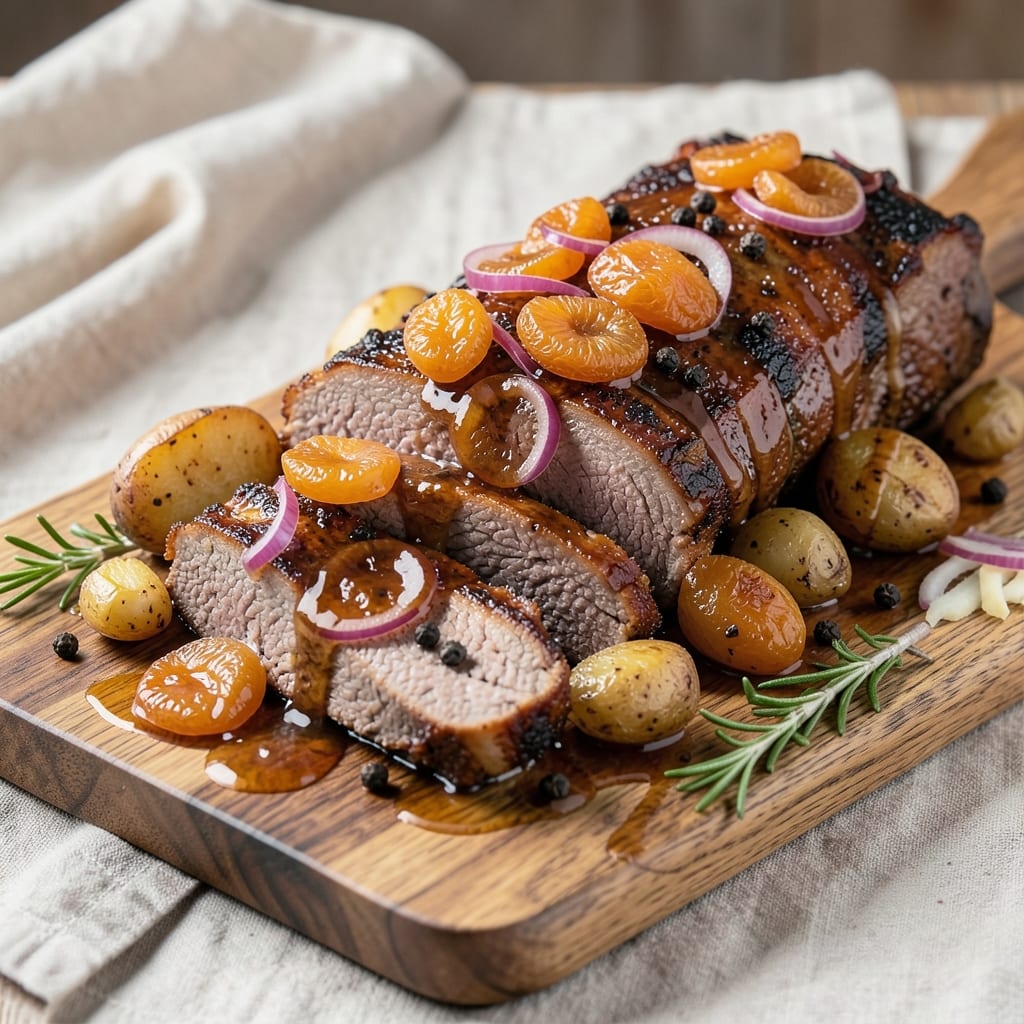
This apricot glazed corned beef transforms a holiday classic into something unexpectedly sophisticated—where tender, brined beef meets a sweet-tart caramel that cuts through the richness. The secret lies in balancing the glaze's bold flavors without overpowering the beef, a technique I perfected after years of testing (and a few too many sticky apricot spills). What makes this version stand out is how the glaze infuses into the meat itself, creating a dish that's both hearty and refined.
The process starts with a slow-cooked corned beef—juicy, fall-apart tender, and infused with the classic spices—but where most recipes stop, this one elevates. A homemade apricot glaze, reduced with vinegar and spices, becomes the star, its deep caramelized notes complementing the beef's smoky depth. No shortcuts here: the glaze simmers until thick and sticky, then brushes onto the beef during the final hours of cooking, ensuring every bite is coated in that irresistible sweetness.
By the time you serve it, you'll have a centerpiece dish that's restaurant-quality yet simple to execute—golden-brown beef with glaze clinging to every forkful, served alongside crisp cabbage and buttery potatoes. The contrast of textures and flavors makes this more than just corned beef; it's a showstopper that turns a family meal into an occasion. The best part? Leftovers reheat beautifully, with the glaze even more concentrated the next day.
This recipe works for holiday feasts, casual Sundays, or even a weeknight dinner—just adjust the cooking time. The glaze can be made ahead, and the corned beef benefits from overnight brining, so you can prep entirely in advance. Ready to impress? Let’s get cooking.
Ingredients for apricot glazed corned beef
Sweet-tart apricot glaze meets slow-cooked beef—this list delivers restaurant-quality flavor with pantry staples.
| Ingredient | Amount | Notes |
|---|---|---|
| Corned Beef Brisket 🥩 | 4 lb | Pre-brined, 3-4 inches thick |
| Dried Apricots 🍑 | 1 ½ cups | Chopped, pitted, unsulfured preferred |
| Apple Cider Vinegar 🍎 | ½ cup | For depth and tang |
| Brown Sugar 🍚 | ¾ cup | Dark for richer caramelization |
| Garlic Cloves 🧄 | 6 cloves | Minced, fresh for aroma |
| Fresh Ginger 🌿 | 1 tbsp | Grated, for warmth |
| Mustard Seeds 🌶️ | 1 tsp | Whole, toasted lightly |
| Ground Black Peppercorns 🌶️ | 1 tsp | Freshly cracked |
| Bay Leaves 🌿 | 2 whole | Fresh if available |
| Beef Broth 💧 | 2 cups | Low-sodium, homemade preferred |
| Olive Oil 🫒 | 2 tbsp | For searing |
| Fresh Thyme 🌿 | 1 tbsp | Leaves only, chopped |
| Orange Zest 🍊 | 1 tsp | Brightens the glaze |
| Diamond Crystal Kosher Salt 🧂 | 1 ½ tsp | For seasoning |
The corned beef is non-negotiable here. Look for a brisket cut—it’s more forgiving than rump roast and stays tender. Costco or Whole Foods carry excellent pre-brined options, but if you’re brining from scratch, use a 3:1 water-to-beef ratio with spices overnight. The dried apricots should be plump and unsulfured—Trader Joe's has a great organic option. If they’re shriveled, soak them in warm water for 10 minutes to plump up. For the glaze, brown sugar is key—light sugar won’t caramelize as deeply, and you’ll end up with a cloying sweetness instead of that perfect sweet-tart balance.
No fresh thyme? Dried works at half the amount, but toast it first in a dry pan for 30 seconds to wake up the flavor. Short on apricots? Dried plums or dates in a pinch, but reduce the vinegar slightly—they’re less tart. The beef broth can be swapped for red wine if you’re feeling fancy, but keep it to 1 cup max to avoid overpowering the glaze. For the ginger, ground ginger at half the amount works, but fresh is worth the extra minute. The orange zest might seem like overkill, but it’s what ties the whole glaze together—trust me, it’s essential. If you’re prepping ahead, make the glaze first and store it in the fridge for up to 3 days—it’ll just intensify.
This dish is all about patience. The corned beef needs 3-4 hours of slow cooking, and the glaze should reduce until it’s thick enough to coat the back of a spoon. Reheat leftovers gently—microwaving turns the glaze watery. Store the beef and glaze separately in the fridge for up to 4 days, or freeze the glaze alone for 3 months. I always make double the glaze—it’s perfect for drizzling over mashed potatoes or roasted carrots. The beef reheats beautifully, and the glaze gets even more concentrated, so don’t skip saving leftovers.
Why You'll Love This Recipe
- One-Pot Magic: The dried apricots and vinegar caramelize right in the pan while the beef cooks—no extra pots, no extra mess. I swear by this: just dump everything in, cover, and let the oven do the work while I sip tea.
- Sweet-Savory Balance: That glaze? It’s where the magic happens—tangy vinegar cutting through the richness, brown sugar deepening the flavor, and apricots adding a jammy, unexpected sweetness. The first bite of tender beef with that sticky glaze? Pure satisfaction.
- Leftover Goldmine: This recipe makes enough for leftovers that taste even better the next day. I’ll be real: the glaze thickens into a glossy, clingy sauce that turns cold cuts into a sandwich upgrade. Pack it for lunch or reheat for dinner—no one will guess it’s from yesterday.
- Budget-Friendly Feast: Corned beef brisket stretches across meals, and dried apricots cost a fraction of fresh fruit. Honestly, the ingredients are simple but the result feels like a restaurant dish. Perfect for when you want to impress without breaking the bank.
Step-by-step instructions for apricot glazed corned beef
Here's how to transform tough brisket into melt-in-your-mouth perfection with a luscious sweet-tart glaze.
Sear the Corned Beef for Maximum Flavor
Heat a Dutch oven over medium-high heat and add the 2 tablespoons olive oil. Once shimmering, place the 4 lb corned beef brisket fat-side down and sear for 8-10 minutes until the fat renders and the exterior develops a deep golden crust. This step creates the foundation for all that rich flavor.
Flip the brisket and continue searing for another 4-5 minutes until all sides are well-browned. The key here is patience—don't rush the searing or you'll end up with pale, flavorless meat. You'll know it's ready when the exterior releases easily from the pan with a gentle nudge.
Build the Aromatic Base
Remove the brisket from the Dutch oven and set it aside. In the same pot, add the 6 cloves minced garlic and 1 tablespoon grated fresh ginger, cooking for 30 seconds until fragrant. Immediately add the 1 teaspoon mustard seeds and toast them for 1 minute until they begin to pop—this adds a subtle nutty depth to the glaze.
Stir in the 1 tablespoon chopped fresh thyme and 2 whole bay leaves, letting them sizzle for 20 seconds to release their essential oils. This aromatic trio forms the flavor backbone of your glaze, so don't skip this step. The spices should smell intensely herbal and slightly peppery when done.
Simmer the Glaze Ingredients
Pour in the 2 cups beef broth and 0.5 cup apple cider vinegar, scraping up any browned bits from the bottom of the pot. Bring to a gentle simmer and add the 1.5 cups chopped dried apricots and 0.75 cup brown sugar. Stir to combine, then add the 1 teaspoon orange zest and 1.5 teaspoons Diamond Crystal kosher salt.
Simmer uncovered for 15 minutes, stirring occasionally, until the mixture reduces by about one-third and the apricots begin to soften. The glaze should thicken slightly and develop a rich amber color. You'll notice the sweet and tart flavors melding together—this is where the magic happens. The apricots will release their natural pectin, helping to thicken the sauce naturally.
Braise the Corned Beef to Perfection
Return the brisket to the Dutch oven, fat-side up, and pour the glaze mixture over the top. Cover tightly with a lid and transfer to a 325°F preheated oven. Braise for 3-3.5 hours, turning the brisket every 45 minutes to ensure even cooking and glaze distribution.
Here's the thing—your oven might run hot, so start checking for doneness at the 3-hour mark. The corned beef is done when it reaches an internal temperature of 205°F and a fork slides in like butter. The glaze should be thick and syrupy, clinging beautifully to the meat. If it's too thin, uncover and simmer for another 10 minutes to reduce further.
Rest and Serve with Elegance
Remove the brisket from the oven and transfer it to a cutting board. Tent loosely with foil and let it rest for 20-30 minutes before slicing. This resting period allows the juices to redistribute throughout the meat, ensuring each slice is moist and flavorful. The glaze will continue to thicken slightly during this time, becoming even more concentrated.
Slice the brisket against the grain into ¼-inch thick pieces and spoon the rich glaze over the top. Serve with the remaining braising liquid spooned over the slices. The contrast of tender, slightly sweet meat with the tangy-sweet glaze is what makes this dish truly special. Pair with crusty bread to soak up every last drop of that luscious sauce.
Pro Tips For Making Apricot Glazed Corned Beef
- Sear the Brisket First: Hit the corned beef with a hot pan—no oil needed, just the natural fats—until deep brown crust forms. I learned this the hard way: skipping the sear means a bland, pale glaze later, no matter how good your dried apricots are. ---
- Chop Apricots, Don’t Just Tear: Roughly chop dried apricots into ½-inch pieces before simmering. Whole halves? They’ll turn to mush and clog your glaze. My grandmother swore by this, and she was right: uniform size = even caramelization. ---
- Simmer Vinegar Low and Slow: Reduce apple cider vinegar first—just until it’s syrupy—before adding brown sugar and garlic. Boiling it off too fast makes the glaze taste sharp and unfinished. Start hot, finish low, and let it work. ---
- Save the Corned Beef Juices: After cooking the brisket, don’t dump those juices! Strain them, reduce by half, and fold back into the apricot glaze. That extra depth of flavor? Non-negotiable. (Yes, even if you’re impatient like me.)
Pro cooking tips for apricot glazed corned beef
Glaze Reduction Mastery
The secret to that perfect sweet-tart balance lies in reducing the glaze until it reaches a syrup-like consistency—thick enough to coat the back of a spoon but still glossy. I aim for a 3:1 reduction ratio (start with 2 cups liquid, reduce to ⅔ cup). Use a medium heat setting and avoid boiling vigorously, or the sugar will crystallize. A wide, shallow pan increases surface area for faster evaporation. 🔥
For extra depth, I finish the glaze with a 1-minute open flame (using a kitchen torch) right before brushing it on the beef. This caramelizes the surface, adding a smoky aroma that pairs beautifully with the meat. If you don’t have a torch, broil the beef for 2-3 minutes at the end—just watch it like a hawk to avoid burning.
Beef Temperature Control
Corned beef is forgiving, but precision matters. Use a meat thermometer to track internal temperature—205°F is your target for melt-in-your-mouth tenderness. I start checking at 3 hours (ovens vary wildly!). If the beef hits 195°F but the glaze isn’t thick enough, uncover the pot and simmer for 10-15 minutes to reduce it further while the beef rests.
Pro tip: Reverse sear for extra crispiness. After braising, sear the beef in a 400°F oven for 10 minutes to develop a caramelized crust while keeping the interior juicy. This works especially well if your glaze is slightly thin—it’ll thicken as it caramelizes.
Glaze Infusion Tricks
To ensure the glaze penetrates the meat, brush it on 3 times during cooking: once when returning the beef to the pot, again at the 2-hour mark, and a final coat 30 minutes before finishing. For even deeper flavor, puree ½ cup of the cooked apricots with the glaze before the last brushing—this creates a smoother, more cohesive sauce. 💫
If your glaze separates (sugar crystals form), whisk in 1 teaspoon warm water to dissolve them. For a shinier finish, add 1 teaspoon cornstarch mixed with 1 tablespoon water at the end and simmer for 2 minutes. This trick is a game-changer for restaurant-quality presentation.
Equipment Upgrades
Skip the Dutch oven? No problem. A heavy-bottomed pot (like All-Clad) distributes heat evenly, preventing hot spots that can burn the glaze. For hands-off cooking, use an Instant Pot on High Pressure for 60 minutes, then reduce the glaze on the stovetop. The pressure tenderizes the beef faster, and you’ll still get that deep caramelization.
My must-have tool for this dish is a silicon brush—it’s heat-resistant and picks up more glaze than a regular pastry brush. I also keep a small saucepan just for reducing the glaze separately if I’m prepping ahead. This lets me control the thickness independently of the beef’s cooking time.
Nutrition facts
Frequently asked questions
Can I substitute dried apricots with fresh ones?
Fresh apricots won't work here—they're too watery and won't caramelize properly. For a similar texture, use dried plums or dates (reduce the vinegar slightly since they're less tart), but dried apricots give the best sweet-tart balance. If you're desperate, blend fresh apricots into a purée, simmer it to reduce by half, then strain to remove excess liquid before adding to the glaze.
How do I fix a glaze that's too thin or too thick?
If your glaze is too thin, simmer it uncovered on medium heat for 10-15 minutes to reduce further. For a thicker glaze, mix 1 teaspoon cornstarch with 1 tablespoon water, stir into the glaze, and cook for 2 minutes until it thickens. Pro tip: The glaze should coat the back of a spoon but still be pourable—aim for a syrup-like consistency.
Can I make this in a slow cooker or Instant Pot?
For a slow cooker, sear the beef first, then add all ingredients (except glaze) and cook on Low for 8 hours or High for 5 hours. Make the glaze separately and brush it on during the last 30 minutes. For an Instant Pot, sear the beef, then cook on High Pressure for 60 minutes, quick-release, and reduce the glaze on the stovetop. Both methods work—just adjust the glaze reduction time accordingly.
What's the best way to reheat leftovers?
Reheat leftovers gently to preserve the glaze's texture. Place slices in a skillet with a splash of beef broth over low heat for 5-7 minutes, basting with the glaze. Alternatively, cover with foil and warm in a 300°F oven for 20 minutes. Never microwave—it turns the glaze watery and rubbery. The glaze actually improves overnight, becoming more concentrated and flavorful!
How can I make this dish more elegant for a dinner party?
Elevate this dish with presentation tricks! Slice the beef against the grain for tender bites, then arrange on a platter with the glaze artfully drizzled in a zigzag pattern. Garnish with fresh thyme sprigs and a sprinkle of toasted mustard seeds for color. Serve with roasted baby carrots and mashed potatoes—the glaze pairs beautifully with both. For extra drama, torch the glaze lightly before serving.