
Soups & Stews
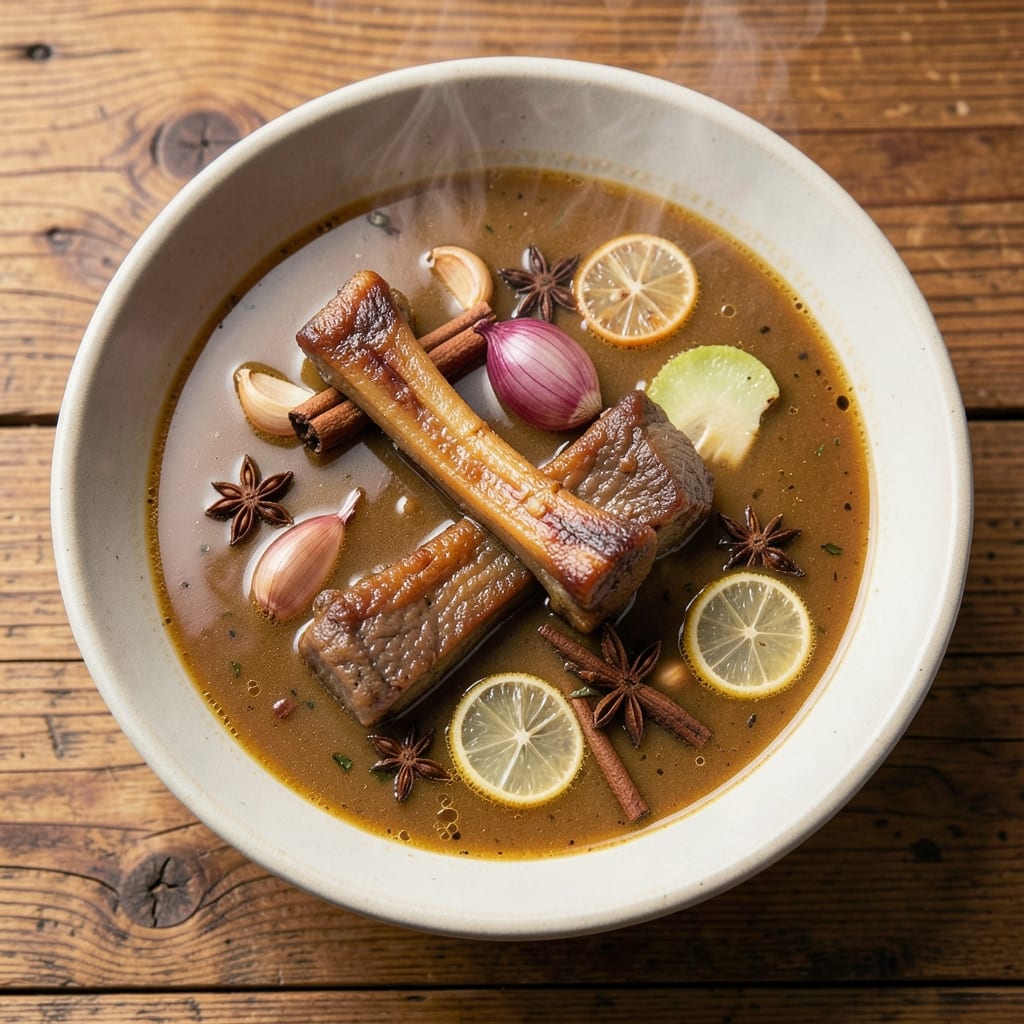
This Asian beef bone soup recipe delivers a silky, marrow-rich broth that’s both comforting and deeply flavorful—perfect for nourishing meals or family gatherings. 💛 The secret lies in slow-simmering beef bones with aromatic spices like star anise and ginger, creating a broth so rich it tastes like a hug in a bowl. I’ve refined this recipe over years, balancing traditional techniques with modern shortcuts to make it accessible without sacrificing authenticity.
The beauty of this soup is its versatility and depth—the bones infuse the broth with gelatinous richness, while soy sauce, garlic, and black pepper add layers of umami and warmth. Unlike lighter soups, this one is hearty enough to stand as a main dish, yet delicate enough to sip slowly. The marrow from the bones melts into the broth, transforming it into a velvety, healing elixir that’s been cherished in Asian kitchens for generations.
What sets this recipe apart is the balance of simplicity and sophistication—no fancy ingredients, just time and patience. The result is a bowl of soup that’s fragrant, deeply savory, and impossibly comforting, with the option to garnish with green onions or sesame oil for freshness. Whether you’re preparing it for a sick loved one or a celebratory feast, this soup delivers on both flavor and tradition.
Ready in about 4 hours (or 2 hours in a pressure cooker), this recipe is designed for foolproof results—every spoonful of broth will be worth the wait. Let’s get started on creating a soup that tastes like home.
Ingredients for asian beef bone soup
Six pounds of marrow-rich bones and aromatic spices create this velvety, deeply comforting Asian soup.
| Ingredient | Amount | Notes |
|---|---|---|
| Beef Bones 🦴 | 4 lb | Marrow-rich, knuckle or neck bones preferred |
| Yellow Onions 🧅 | 2 whole | Chopped, about 2 cups total |
| Garlic Cloves 🧄 | 8 cloves | Smashed, skin-on for deeper flavor |
| Fresh Ginger 🌿 | ½ cup | Peeled, thinly sliced (about 2 inches total) |
| Star Anise Pods 🌟 | 4 whole | Lightly crushed for aroma release |
| Cinnamon Sticks 🌳 | 2 whole | 2-inch pieces for subtle warmth |
| Dried Bay Leaves 🍃 | 2 whole | Standard size, no need to crush |
| Black Peppercorns 🌶️ | 1 tbsp | Crushed, not ground, for texture |
| Soy Sauce 🍶 | ½ cup | Dark soy for rich color and depth |
| Dried Shiitake Mushrooms 🍄 | 4 whole | Rehydrated, stems removed |
| Green Onions 🧅 | ¼ cup | Sliced, for garnish (white and green parts) |
| Sesame Oil 🫒 | 1 tbsp | Toasted, for finishing |
| Asian Pearl Onions 🧅 | 4 whole | Whole, for texture contrast |
| Water 💧 | 12 cups | Filtered preferred for clarity |
| Salt 🧂 | 1 ½ tsp | Diamond Crystal preferred for accuracy |
The bones are non-negotiable—marrow-rich knuckle or neck bones from a trusted butcher deliver the gelatinous richness that defines this soup. Costco or local Asian markets often carry high-quality beef bones, but if you're buying from a grocery store, look for bones with visible marrow channels. Fresh ginger and garlic should be vibrant and firm—no wrinkled or discolored roots. Star anise and cinnamon sticks can be found in the spice aisle or bulk bins at Whole Foods or Trader Joe's. For the soy sauce, Lee Kum Kee dark soy sauce is my go-to for that signature umami depth, but any dark soy will work. The shiitake mushrooms add earthy complexity—dried shiitake from Asian grocers are ideal, but fresh work too if rehydrated properly.
No star anise? 1 tsp ground anise seed in a pinch, though whole pods are preferred for aroma. Running short on cinnamon? 1 tsp cassia bark works similarly. The pearl onions can be swapped for regular yellow onions if unavailable, though they hold their shape better. For a quicker version, pressure cook the bones for 90 minutes instead of simmering, though traditionalists will argue the slow method yields superior gelatin. The sesame oil is purely for finishing—use toasted sesame oil for authentic flavor, but regular sesame oil will suffice. If you're worried about the broth being too rich, add an extra 1 cup of water at the end of cooking to adjust consistency.
This soup tastes even better the next day as flavors meld. Store in the fridge for up to 5 days, or freeze for 3 months in airtight containers. For freezing, portion into 2-cup servings with a layer of broth on top to prevent ice crystals. Reheat gently on the stove—never microwave, as it can break the delicate gelatin structure. Garnish with green onions and a drizzle of sesame oil just before serving to preserve freshness. The bones can be roasted first at 400°F for 30 minutes to deepen their flavor, but this step is optional for busy weeknights.
Why You'll Love This Recipe
- I swear by this trick: toss the whole onions, garlic cloves, and ginger (peeled!) straight into the pot. The bones simmer them soft while you handle the star anise—no knife skills required. Honestly, the soup tastes even better for skipping prep.
- No-Chop Start: I swear by this trick: toss the whole onions, garlic cloves, and ginger (peeled!) straight into the pot. The bones simmer them soft while you handle the star anise—no knife skills required. Honestly, the soup tastes even better for skipping prep.
- Umami Bomb: That first sip? Pure flavor payoff. The beef bones melt into rich broth, while the star anise and ginger add a warm, spiced depth. It’s the kind of taste that makes you pause mid-spoonful—like a secret message from your taste buds.
- Leftovers That Shine: This soup only gets better the next day. I make a double batch on Sundays: the broth thickens just right, and the bones stay tender. Pack it for work or freeze portions—it’s my go-to when I’m too tired to cook.
Step-by-step instructions for Asian beef bone soup
Here's the method for crafting a deep, silky broth with marrow-rich beef bones.
🔥 Step 1: Parboil the Beef Bones for Maximum Flavor
Place the 4 lb beef bones in a large stockpot and cover with 6 cups of water. Bring to a boil over high heat, then immediately reduce to a simmer. Skim off any foam that rises to the surface during the first 10 minutes—this removes impurities and ensures a clear broth.
Simmer uncovered for 30 minutes to partially cook the bones and draw out initial flavors. This pre-cooking step prevents the bones from releasing sediment later. Drain the bones, reserving the water for another use if desired, then rinse the pot thoroughly before proceeding.
🍳 Step 2: Build the Aromatic Base with Whole Spices
Return the cleaned bones to the pot and add the 12 cups water, 2 whole yellow onions (chopped), 8 cloves garlic cloves (smashed), 0.5 cup fresh ginger (sliced), 4 whole star anise pods, 2 whole cinnamon sticks, 2 whole dried bay leaves, and 1 tbsp crushed black peppercorns. Bring to a boil over medium-high heat.
Once boiling, reduce heat to low and let it simmer gently for 1 hour. The broth should remain just below a simmer—this slow extraction creates depth of flavor without clouding the liquid. You'll notice the aromatics infuse the broth with warm, earthy notes and a subtle sweetness from the caramelizing onions.
🥘 Step 3: Add Shiitake Mushrooms and Soy Sauce for Umami Depth
After the initial hour, add the 4 whole dried shiitake mushrooms (rehydrated) and 0.5 cup soy sauce. The mushrooms should be plump and tender after soaking for 20 minutes in hot water, then sliced and stems removed. Stir gently to incorporate, then continue simmering uncovered for another 2 hours.
This extended cooking time allows the collagen in the bones to break down into gelatin, transforming the broth into a luxurious, silky texture. The soy sauce adds a rich depth while balancing the earthy flavors. Check occasionally to ensure the broth doesn't reduce too much—add hot water as needed to maintain volume.
🔪 Step 4: Incorporate Pearl Onions and Season to Taste
Add the 4 whole Asian pearl onions and 1.5 tsp salt during the final 30 minutes of cooking. These onions will soften slightly but retain their shape, adding a delicate sweetness and textural contrast. Taste the broth and adjust seasoning if needed—this is where the soup's balance comes together.
Strain the broth through a fine-mesh sieve into a clean pot, pressing gently on the solids to extract maximum flavor. Discard the bones and aromatics, then return the broth to the pot. The result should be a deep amber liquid with a velvety consistency and layers of savory, umami, and slightly sweet flavors.
🍽️ Step 5: Finish with Sesame Oil and Garnish
Just before serving, gently heat the broth and stir in 1 tbsp toasted sesame oil. This final touch adds nutty aroma and a luxurious finish. Ladle the hot broth into bowls, then garnish with 0.25 cup sliced green onions (white and green parts). The onions should be crisp for contrast against the silky broth.
Serve immediately with steamed rice or noodles to soak up every drop of the rich, marrow-infused broth. The soup should be deeply flavorful with a perfect balance of savory, sweet, and umami notes—each spoonful should feel luxurious and satisfying.
Pro Tips For Making Asian Beef Bone Soup
- BLANCH BONES FIRST: Skip the direct simmer and blanch beef bones in boiling water for 10 minutes first—this removes impurities and speeds up collagen extraction. I learned this the hard way after making a cloudy broth that took three tries to fix.
- CHAR ONIONS DEEP: Don’t just soften those yellow onions—cook them until they’re caramelized and sticky, about 15 minutes on medium-low. The deeper the color, the richer the flavor foundation, and it cuts through the meaty richness later.
- STAR ANISE EARLY: Toss the star anise pods in with the bones at the very start, not as a last-minute spice. The longer they steep, the more aromatic depth they add without overpowering—just don’t forget to fish them out before serving (yes, even if you’re distracted).
- GINGER SLICES, NOT GRATES: Thinly slice fresh ginger instead of grating it—this keeps the texture clean and prevents the soup from turning slimy. A sharp knife and 1/8-inch slices do the job perfectly, and you’ll taste the bright, peppery kick without the gummy aftermath.
Regional styles of this recipe
Korean Beef Bone Soup
This version, known as beopjigae, is a staple in Korean households for healing and comfort. Start with 4 lb beef knuckle bones and simmer for 6-8 hours with 1 tbsp gochugaru (Korean red pepper flakes) and 1 tbsp fermented soybean paste (doenjang) for a subtle spicy depth. The broth should be deep red and slightly spicy—adjust heat to taste. Garnish with thinly sliced radish and a drizzle of sesame oil for authenticity. 🌶️
Chinese Beef Bone Soup
In Chinese cuisine, this soup is often called beef bone soup with ginger and star anise, emphasizing aromatic spices over heat. Use 2-inch slices of fresh ginger and 4 slices of daikon radish for a milder, sweeter profile. Add 1 tbsp Shaoxing wine during the final hour to brighten flavors. Serve with steamed jasmine rice and a side of pickled vegetables for balance. The broth should be clear with a delicate ginger aroma.
Japanese Beef Bone Soup
Japanese nikujaga-inspired beef bone soup focuses on hearty vegetables and a lighter broth. After simmering the bones for 4 hours, add 2 cups sliced potatoes, 2 cups carrots, and 1 cup daikon radish for texture. Finish with 1 tbsp mirin and 1 tsp sugar to create a subtle sweetness. The result is a comforting, vegetable-forward soup perfect for cold weather. 🍠
Vietnamese Beef Bone Soup
Vietnamese bún bò Huế (though typically pork-based) can be adapted with beef bones for a rich, spicy broth. Add 1 tbsp fish sauce, 1 tbsp sugar, and 1 tsp turmeric for color. Top with thin rice noodles, herb leaves, and sliced jalapeños for a vibrant, aromatic bowl. The broth should be fragrant with a balance of sweet, sour, and spicy notes.
Thai-Inspired Adaptation
For a Thai twist, infuse the broth with 1 stalk lemongrass, 2 kaffir lime leaves, and 1 tbsp palm sugar during the final hour. Add 1 tbsp fish sauce and 1 tsp white pepper for a bright, citrusy depth. Serve with jasmine rice and fresh cilantro for a fragrant, aromatic finish. This version is lighter but equally flavorful. 🌿
Nutrition facts
Frequently asked questions
Why do beef bones need to be parboiled first?
Parboiling removes impurities and sediment that would otherwise cloud your broth. The 30-minute simmer also partially cooks the bones, preventing them from releasing excess fat or creating a murky liquid later. This step is especially important for marrow-rich bones, which can release more particles during long cooking.
Can I use chicken or pork bones instead of beef?
While possible, beef bones are ideal for this recipe due to their high collagen and marrow content, which creates the signature silky texture. Chicken bones yield a lighter broth, and pork bones can make the soup too rich. If you must substitute, use pork knuckle bones and reduce soy sauce to 2 tablespoons to balance the flavor.
How do I know when the broth is done?
The broth is ready when it reaches a gelatinous consistency and has a deep amber color. This typically takes 3-4 hours of simmering. Test by chilling a small bowl of broth—if it jiggles like jelly when shaken, it's perfectly set. For extra richness, continue simmering up to 6 hours.
What if I don’t have star anise or cinnamon?
No problem! Replace 4 star anise pods with 1 teaspoon ground anise seed or 1 cinnamon stick with ½ teaspoon ground cinnamon. For a deeper flavor, add 1 bay leaf and 1 clove to mimic the aromatic complexity. The broth will still taste delicious, just slightly different.
Can I make this soup in a slow cooker or Instant Pot?
For a slow cooker, follow the same steps but cook on low for 8 hours or high for 5 hours. In an Instant Pot, pressure cook the bones for 90 minutes on high pressure, then natural release. The broth will be slightly less gelatinous but still deeply flavorful—just add 1 tablespoon cornstarch slurry at the end to thicken.