
Main Courses
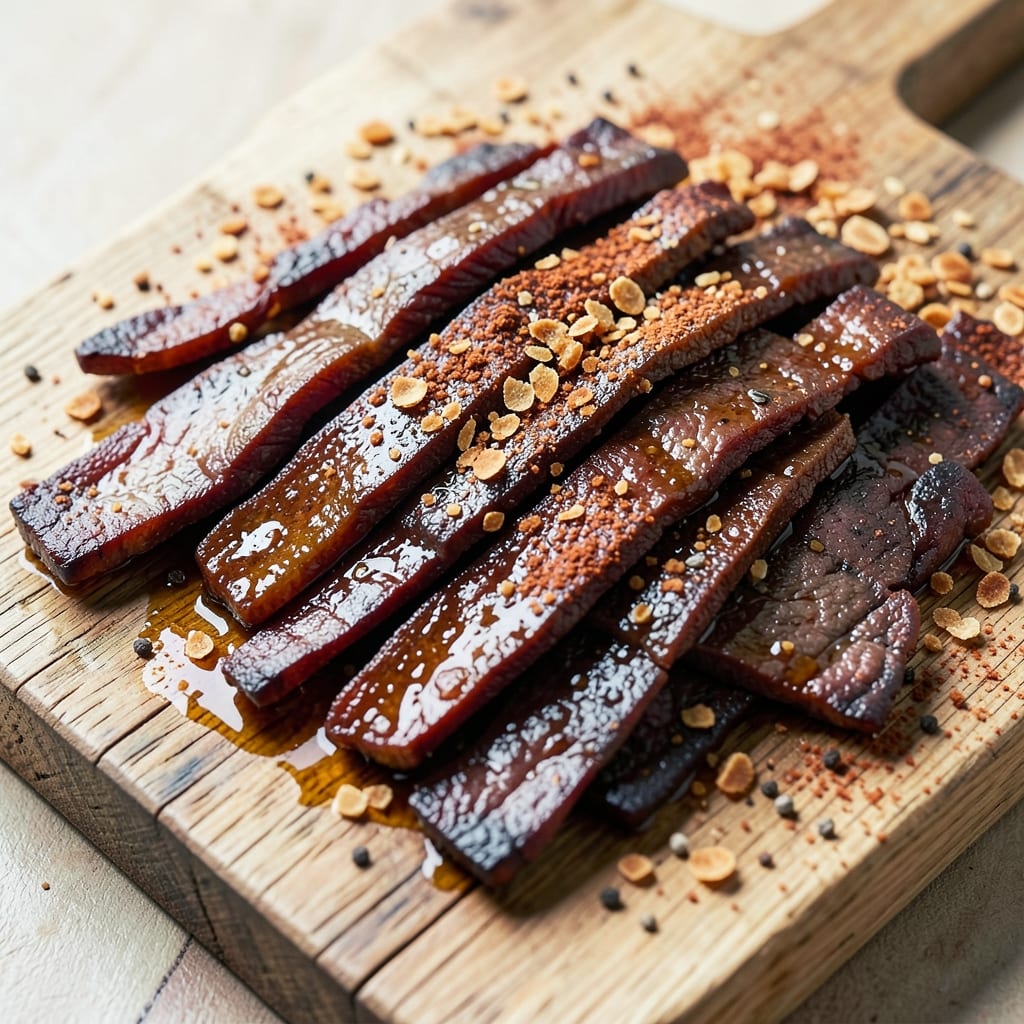
This Aussie beef jerky recipe delivers authentic outback flavor with a smoky, spicy kick that’s impossible to resist. 🔥 The secret lies in a marinade packed with Worcestershire sauce, vinegar, and native spices that transform tough beef into tender, chewy perfection—just like the jerky you’d find at an Australian bush campfire. I’ve perfected this method over years of testing, balancing traditional curing techniques with modern shortcuts for foolproof results.
The process starts with thinly sliced beef that’s cured in a flavor-packed marinade for at least 4 hours (or overnight for deeper taste). No special equipment is needed—you can use an oven, dehydrator, or even a smoker for that classic Aussie char. Safety is key, so we’ll cover proper curing times and moisture checks to ensure your jerky stays shelf-stable for weeks.
What you’ll end up with is bold, smoky jerky that’s ideal for hiking snacks, camping trips, or satisfying cravings at home. The spices—like native pepper and bush herbs—add complexity without overpowering, while the vinegar and Worcestershire create that signature tangy depth. This recipe is designed to be reliable, flavorful, and adaptable to your preferred drying method.
Once cured and dried, your jerky will have a caramelized crust and a texture that’s chewy yet tender. Store it in an airtight container for up to 3 months, making it the perfect portable protein for any adventure. Let’s get started!
Ingredients for aussie beef jerky
Four pounds of beef, bold spices, and a marinade that packs outback punch in every bite.
| Ingredient | Amount | Notes |
|---|---|---|
| Top-Round Beef Roast 🥩 | 2 lb | Thinly sliced against grain (about 1/4-inch thick) |
| Worcestershire Sauce 🍶 | ½ cup | Lea & Perrins brand preferred |
| Apple Cider Vinegar 🍎 | ½ cup | Raw, unfiltered for best flavor |
| Brown Sugar 🍚 | ½ cup | Light or dark, packed firmly |
| Smoked Paprika 🌶️ | 2 tbsp | High-quality, not pre-mixed |
| Ground Black Pepper 🌶️ | 1 tbsp | Freshly cracked preferred |
| Ground Cumin 🌿 | 1 tbsp | Toasted for deeper aroma |
| Garlic Powder 🧄 | 1 tbsp | Not garlic salt |
| Onion Powder 🧅 | 1 tbsp | Freshly ground preferred |
| Salt 🧂 | 1 ½ tbsp | Diamond Crystal kosher salt |
| Liquid Smoke 🔥 | 1 tsp | Optional for extra smokiness |
| Granulated Garlic 🧄 | 1 tsp | For extra punch |
| Black Peppercorns 🌶️ | 1 tsp | Crushed between palms |
The beef is everything here—top-round roast is ideal for its lean texture and flavor, but sirloin or flank steak work too. Slice it thinly against the grain for that signature chewy texture. Costco or local butchers usually carry pre-sliced jerky beef, but if you're cutting it yourself, use a sharp knife and freeze the meat for 20 minutes first. The spices? Penzeys or bulk bins for the best quality—avoid pre-mixed jerky seasonings, they lack depth. Look for smoked paprika with a deep red hue and cumin that smells earthy, not stale.
No Worcestershire? Substitute with soy sauce plus a splash of balsamic vinegar—it won't be identical, but close. Ran out of brown sugar? White sugar plus a pinch of cinnamon works in a pinch. The liquid smoke is optional but adds that classic Aussie campfire vibe—if you skip it, increase the smoked paprika to 2.5 tbsp. For extra heat, add a dash of cayenne. The vinegar should be raw and unfiltered—Bragg's or local orchard brands are my go-tos. And yes, you can use regular apple cider vinegar, but the flavor won't be as complex.
Marinate the beef for at least 4 hours (overnight is best) in the fridge. The marinade will smell strong, but that's normal—it's working! Once dried, your jerky will keep for 3 months in an airtight container in a cool, dark place. For camping trips, I pack it in reusable silicone bags—keeps it fresh and lightweight. Pro tip: If your jerky isn't dry enough after the initial drying, pop it back in the dehydrator for another hour. Just check the moisture content first—it should be below 18% for safe storage.
Why You'll Love This Recipe
- No-Fuss Prep: I’ll be real—this jerky takes less than 15 minutes to slice and marinate. Just trim the roast, cut into strips, and toss with Worcestershire and vinegar. No fancy tools, no stress.
- Sweet-Smoky Magic: That brown sugar and smoked paprika combo? It’s where this jerky gets its soul. The vinegar keeps it tender, while the paprika gives it that deep, campfire-like warmth—like a backyard BBQ in every bite.
- Snack Attack Ready: Honestly, I keep a bag in my gym bag, desk drawer, and even the car. It’s perfect for hiking, road trips, or when I’m starving but don’t want to cook. Just grab and go—no reheating needed.
- Budget Powerhouse: Top-round beef is affordable, and a single roast stretches into weeks of jerky. I’ve made 50 servings from one cut, and it’s still a crowd-pleaser. Plus, the ingredients? Most are pantry staples.
Step-by-step instructions for Aussie beef jerky
Here's how to transform tough top-round beef into chewy, smoky jerky with restaurant-quality depth.
👨🍳 Step 1: Prep the Beef for Maximum Flavor and Texture
Start by slicing the 2 lb Top-Round Beef Roast against the grain into ¼-inch thick strips. I use a sharp boning knife for clean cuts—this thickness ensures proper drying while maintaining chewiness. Trim any large fat deposits as they can make the jerky greasy.
Place the beef strips in a large bowl and add the 0.5 cup Apple Cider Vinegar. Let them soak for 30 minutes—this tenderizes the meat and removes surface impurities. Drain and pat the strips dry with paper towels. The drier the meat, the better the jerky will dry and develop that perfect texture.
🍳 Step 2: Mix the Spice Rub for Deep Aussie Flavor
In a small bowl, combine the 0.5 cup Brown Sugar, 2 tbsp Smoked Paprika, 1 tbsp Ground Black Pepper, 1 tbsp Ground Cumin, 1 tbsp Garlic Powder, 1 tbsp Onion Powder, 1.5 tbsp Salt, 1 tsp Liquid Smoke, 1 tsp Granulated Garlic, and 1 tsp crushed Black Peppercorns. Mix thoroughly until the sugar is evenly distributed and the spices are well combined.
Here's the thing—this blend is what makes Aussie jerky distinct. The smoked paprika and liquid smoke give that characteristic smokiness, while the brown sugar caramelizes during drying for a subtle sweetness. I like to press the rub firmly onto each beef strip so it adheres well and penetrates the meat.
🥘 Step 3: Marinate for Maximum Flavor Infusion
Return the dried beef strips to the bowl and pour over the 0.5 cup Worcestershire Sauce. Add the spice rub and toss everything together until every strip is fully coated. Cover and refrigerate for at least 4 hours, but I prefer overnight—this long marinating time ensures deep flavor penetration and tender texture.
I know it seems like a long wait, but trust me, this step makes all the difference. The Worcestershire sauce adds that umami depth that's characteristic of Aussie jerky, while the spices have time to work their magic. Don't skip this—rushing leads to bland, dry jerky.
🔥 Step 4: Dry the Jerky Using the Dehydrator Method
Preheat your dehydrator to 160°F—this low temperature ensures proper drying without cooking the meat. Arrange the marinated beef strips on the dehydrator trays, leaving ½-inch space between each strip for even air circulation. This spacing prevents moisture buildup that can lead to mold.
Dry for 6-8 hours, checking occasionally. You'll know it's done when the jerky is leather-like and no longer sticky to the touch. The edges should be slightly darker than the center, and it should snap when bent but not be brittle. If it's still moist after 8 hours, continue drying for another hour.
⏰ Step 5: Test and Store for Maximum Freshness
Let the jerky cool completely before testing. Cut a small piece and check for moisture—it should feel dry but still chewy, not rubbery. If it's too moist, return it to the dehydrator for another hour. If it's too dry, it will be brittle and lose flavor.
Once fully cooled, store the jerky in an airtight container in the refrigerator for up to 2 weeks or freeze for 3 months. The flavors will continue to develop over time, making it even more delicious as it ages. When ready to eat, let it come to room temperature for about 10 minutes—this enhances the texture and flavor.
Pro Tips For Making Aussie Beef Jerky
- Trim Thin, Not Thick: Top-round can be stubborn—slice it against the grain to ¼-inch thickness before freezing. I learned this the hard way after my first batch turned out chewy; thin slices cook faster and stay tender. Use a sharp boning knife and don’t rush—precision matters more than speed. ---
- Marinate Overnight, No Excuses: Worcestershire and vinegar need time to work their magic. Toss the beef in the marinade at least 12 hours, but 24 is ideal—this isn’t a race. I used to skip this, thinking "a few hours is enough," until I tasted the difference: deeper flavor, no bitter aftertaste. ---
- Skip the Crowded Dehydrator: Overlapping slices traps moisture and turns jerky into sad, gummy strips. Arrange them single-layered with ¼-inch gaps, and rotate the tray halfway through. Yes, it takes longer, but jerky that sticks to the tray isn’t worth eating. ---
- Brown Sugar First: Mix the brown sugar into the marinade last—it clumps like a stubborn mule if added early. Dissolve it in a splash of warm water first, then stir it in. This ensures even coating, so every bite gets that caramelized sweetness without sticky patches.
Essential equipment for this recipe
Dehydrator Essentials
A dehydrator is the gold standard for Aussie beef jerky—it maintains consistent 160°F temperatures and circulates air perfectly. I recommend the Nesco FD-75A for beginners or the Excalibur 9-Tray for serious jerky makers. Both have adjustable thermostats and even heat distribution. For smaller batches, the Cosori Premium is compact and budget-friendly. 🌡️
If you don’t own one, use an oven with a wire rack instead. Place a tray of water on the bottom rack to add moisture to the air and prevent drying too quickly. Set the oven to 170°F (5°F hotter than a dehydrator) and prop the door open 2-3 inches with a wooden spoon for airflow. Crack the door every hour to check progress.
Smoker Setup
For that authentic Aussie campfire taste, smoke your jerky using hickory or mesquite chips in a pellet smoker or charcoal grill. I use my Traeger Pro 780 set to 165°F with indirect heat. Arrange the beef on the smoker grates, leaving space between strips. Add 1 cup wood chips to the smoker box every 2 hours to maintain smoke. 🔥
Smoking takes 8-12 hours, depending on humidity. The jerky will develop a deep bark and smoky aroma. Use a meat probe thermometer to check doneness—it should reach 160°F internal temp and feel dry to the touch. Let it rest for 30 minutes before storing to redistribute juices.
Oven Alternatives
No dehydrator or smoker? A standard oven works in a pinch. Preheat to 170°F and place a wire cooling rack on top of a baking sheet. Line the rack with parchment paper to prevent sticking, and prop the oven door open with a wooden spoon for airflow. Rotate trays every 2 hours for even drying. 💡
For extra crispiness, finish the jerky under the broiler for 1-2 minutes on high heat. This adds a caramelized crust but requires close attention to avoid burning. Test for doneness by checking flexibility—jerky should bend slightly without breaking.
Moisture Testing Tools
Safety first! Use a meat thermometer or moisture meter to ensure your jerky reaches 160°F internal temp and below 18% moisture. The Thermoworks Smoke thermometer is my go-to—it’s durable and accurate. For a DIY test, bend a piece of jerky: if it snaps but doesn’t crumble, it’s perfect. If it’s still sticky, dry it longer. 💪
Store jerky in vacuum-sealed bags or airtight glass containers with oxygen absorbers to extend shelf life. Label with the date—properly dried jerky lasts 3 months at room temp or 6 months in the freezer. Avoid plastic bags, as they trap moisture and cause mold.
Nutrition facts
Frequently asked questions
Can I use a different cut of beef for Aussie-style jerky?
Yes, but top-round roast is ideal for its lean texture and flavor. Sirloin, flank steak, or round steak also work well—just slice them ¼-inch thick against the grain for the best chewiness. Avoid fatty cuts like ribeye, as excess fat can make the jerky greasy. For extra tenderness, freeze the meat for 20 minutes before slicing.
How do I know when my jerky is fully dried?
Jerky is done when it feels leather-like and snaps when bent but doesn’t crumble. The edges should be slightly darker than the center, and it should no longer feel sticky to the touch. For accuracy, use a meat thermometer—it should reach 160°F internal temp. If it’s still moist after 8 hours in a dehydrator, continue drying for another 1-2 hours.
What’s the best way to store Aussie beef jerky?
Store in an airtight container or vacuum-sealed bag with oxygen absorbers to prevent spoilage. Keep it in a cool, dark place for up to 3 months at room temperature or 6 months in the freezer. Avoid plastic bags—they trap moisture and cause mold. Label with the date to track freshness.
Can I make this jerky without a dehydrator?
Use an oven set to 170°F with the door propped open 2-3 inches for airflow. Place beef strips on a wire rack over a baking sheet with water below to add moisture. Rotate trays every 2 hours and check for doneness after 6-8 hours. For smoky flavor, finish under the broiler for 1-2 minutes on high heat.
Why does my jerky turn out too dry or brittle?
Over-drying happens when the temperature is too high or the meat wasn’t sliced thin enough. Keep the dehydrator at 160°F and slice beef ¼-inch thick. If jerky is brittle, it lost moisture too quickly—try adding a tray of water in the oven or reducing airflow in the dehydrator. For extra chewiness, store in a humidity-controlled container with a slice of bread to retain moisture.