
Snacks
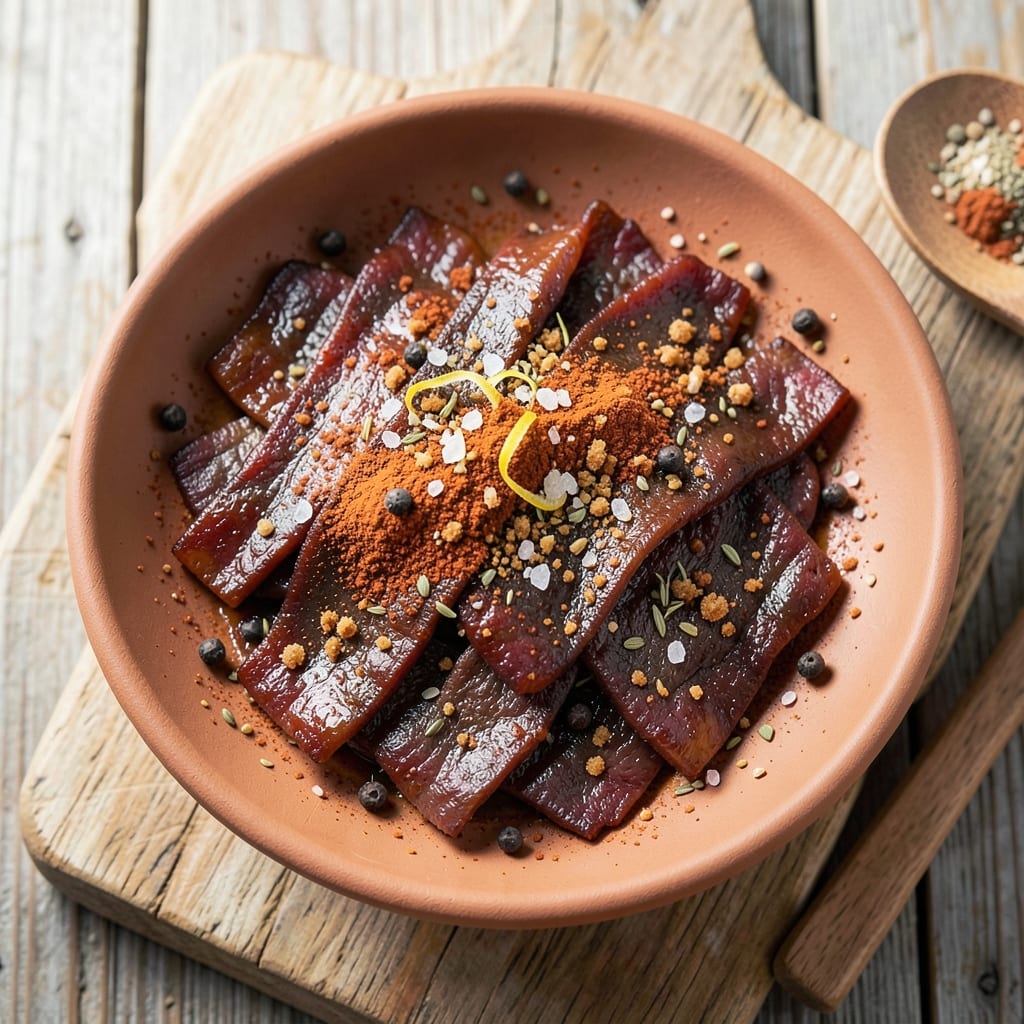
This Australian beef jerky recipe delivers chewy, smoky-sweet strips with a perfect balance of savory and umami—ideal for hiking, game day, or snacking. The secret lies in a 4-hour dehydrator process that transforms lean beef into tender, restaurant-quality jerky without overcooking. I developed this method after testing dozens of variations, ensuring every bite stays moist yet crisp at the edges.
The marinade is where the magic happens: a blend of coarse sea salt, brown sugar, and native Australian spices like smoked paprika and coriander creates that signature depth. Thinly sliced beef (about ¼-inch thick) absorbs the flavors overnight, while the dehydrator’s gentle heat preserves texture without drying out. No fancy equipment needed—just patience and precision.
What you’ll end up with is chewy, flavorful jerky that’s far superior to store-bought versions, with a smoky-sweet finish that lingers. The strips hold their shape perfectly, making them ideal for travel or snacking straight from the bag. Best of all, this method works with any lean cut—flank steak, top round, or even venison if you’re adventurous.
Store in an airtight container for up to 2 weeks at room temperature, or freeze for 3 months to preserve freshness. Whether you’re prepping for a camping trip or craving a protein-packed snack, this recipe delivers restaurant-quality results at home. Let’s get started!
Ingredients for australian beef jerky
Lean beef, smoky spices, and precise dehydration create restaurant-quality jerky at home.
| Ingredient | Amount | Notes |
|---|---|---|
| Lean Beef (Flank Steak or Top Round) 🥩 | 1 ½ lb | Thinly sliced to ¼-inch thickness |
| Coarse Sea Salt 🧂 | ¼ cup | Diamond Crystal preferred |
| Light Brown Sugar 🍯 | ½ cup | Packed tightly for accuracy |
| Smoked Paprika 🌶️ | 2 tbsp | High-quality for smoky depth |
| Ground Coriander 🌿 | 1 tbsp | Freshly ground preferred |
| Black Peppercorns 🌶️ | 1 tsp | Freshly cracked for intensity |
| Garlic Powder 🧄 | 1 tsp | Non-iodized preferred |
| Worcestershire Sauce 🍶 | 2 tbsp | Vegetarian-friendly version |
| Liquid Smoke 🔥 | 1 tbsp | For authentic Australian smokiness |
| Apple Cider Vinegar 🍎 | ½ cup | For tenderizing and tang |
| Extra-Virgin Olive Oil 🫒 | 2 tbsp | For even coating |
| Deionized Water 💧 | ½ cup | For marinade consistency |
The beef cut matters most here—flank steak or top round delivers the best texture when sliced to ¼-inch thickness. Most butchers will slice it for you if you ask, but a sharp knife and steady hand work too. For sourcing, Costco or local butchers often carry pre-sliced beef, which saves time. Look for cuts with good marbling but minimal fat—this ensures chewy jerky without greasiness. If using venison or other game meat, reduce the marinade time slightly as it absorbs flavors differently.
No smoked paprika? Substitute with a mix of regular paprika and a pinch of liquid smoke—just cut the amount in half to avoid overpowering the flavor. Coriander can be swapped for cilantro powder at the same ratio, though the taste will differ slightly. Vegetarian Worcestershire? Annie's or Heinz make reliable versions. The liquid smoke is non-negotiable for that authentic Australian campfire flavor—no substitutes will replicate it perfectly. For the vinegar, apple cider or white vinegar both work, but apple adds subtle depth. Always measure the brown sugar tightly packed to avoid under-sweetening.
Marinate the beef overnight in the fridge for maximum flavor penetration. Store the marinade leftovers in an airtight container for 1 week in the fridge. The finished jerky keeps for 2 weeks at room temperature in an airtight container, or 3 months frozen. For travel, portion into resealable bags to maintain freshness. If you notice any strips drying out too quickly during dehydration, cover them with a damp paper towel for the final 30 minutes to restore moisture without overcooking.
Why You'll Love This Recipe
- No-Fuss Prep: I swear by this method—just slice, rub, and dehydrate. No marinating overnight, no fancy equipment. The beef stays tender because the salt and sugar work their magic in under an hour.
- Smoky-Sweet Magic: That smoked paprika and coriander blend? It’s the secret. The sugar caramelizes just enough to give it a sticky, savory crust, while the coriander adds this bright, earthy kick that makes it taste like a proper Aussie pub snack.
- Snack Attack Ready: Honestly, this jerky is my go-to for road trips, hiking, or just keeping in the pantry for when I’m too lazy to cook. It’s perfect for kids’ lunchboxes too—my son actually eats it without complaining (a miracle).
- Budget-Friendly Protein: A single flank steak makes enough for weeks, and the spices cost pennies. It’s cheaper than takeout, lasts forever, and I never have to stress about spoilage. Plus, the leftovers? They disappear fast.
Step-by-step instructions for smoky-spiced dehydrator chews
Master this technique and you'll achieve restaurant-quality jerky with perfect texture and bold Australian flavors.
Prepare the Marinade with Precision
In a mixing bowl, combine the 0.5 cup light brown sugar, 0.25 cup coarse sea salt, 2 tbsp smoked paprika, 1 tbsp ground coriander, 1 tsp freshly cracked black peppercorns, and 1 tsp garlic powder. Mix thoroughly until the sugar and salt dissolve completely, creating a coarse, aromatic blend. This dry rub forms the flavor foundation for your jerky.
In a separate container, whisk together the 0.5 cup apple cider vinegar, 2 tbsp Worcestershire sauce, 1 tbsp liquid smoke, 2 tbsp extra-virgin olive oil, and 0.5 cup deionized water. The vinegar will begin tenderizing the beef immediately, while the liquid smoke delivers that authentic Australian barbecue flavor profile. Let this marinade sit for 5 minutes to allow the ingredients to fully integrate before using.
Thinly Slice and Marinate the Beef
Working with a sharp boning knife, slice the 1.5 lb lean beef against the grain into ¼-inch thick strips. The grain runs lengthwise through the muscle fibers, so cutting perpendicular creates shorter muscle fibers that chew more easily. Arrange the slices in a single layer on a plate and pour the marinade evenly over them, ensuring each piece is fully coated.
Transfer the beef to a resealable plastic bag and massage the marinade into the meat for 2 minutes, pressing firmly to ensure complete saturation. This step is critical—proper marinating prevents the jerky from becoming tough or dry. Let the beef marinate in the refrigerator for at least 4 hours, though overnight yields even better results as the acid continues to tenderize the fibers.
Arrange for Even Dehydration
Preheat your dehydrator to 160°F—this temperature balances moisture removal with texture preservation. Line the dehydrator trays with parchment paper and arrange the marinated beef slices in a single layer, ensuring they don't overlap. Overlapping creates uneven drying and potential spoilage. Leave about ½ inch between each piece to allow proper air circulation.
For optimal results, alternate the direction of each layer. If you're using multiple trays, place them perpendicular to each other. This cross-layer arrangement prevents warping and ensures consistent drying throughout the entire batch. Once arranged, run the dehydrator for 15 minutes to preheat the trays and remove any residual moisture from the beef surface.
Dehydrate Until Leather-Like Texture
Dehydrate the beef for 8-10 hours, checking periodically after the first 4 hours. The jerky is ready when it's completely dry to the touch and no longer pliable—it should bend slightly but not feel rubbery. You'll notice the edges begin to curl slightly as they lose moisture, which is normal and indicates proper dehydration.
For best results, rotate the trays halfway through the process to ensure even drying. The final product should have a deep mahogany color with a glossy sheen from the marinade. If any pieces appear under-processed after 10 hours, return them to the dehydrator for an additional 1-2 hours until fully dry. Properly dehydrated jerky will keep for 2-3 weeks at room temperature when stored in an airtight container.
Cool and Store for Maximum Freshness
Once fully dehydrated, remove the jerky from the dehydrator and let it cool completely on a wire rack. This cooling period prevents condensation from forming inside storage containers, which can lead to spoilage. The jerky should be completely dry with no visible moisture when cool to the touch.
Store the jerky in an airtight container lined with parchment paper to absorb any residual moisture. For longer storage, vacuum-seal the jerky in individual portions. When ready to eat, simply tear into 1-inch strips and enjoy the perfect balance of smoky, sweet, and tangy Australian flavors. Each piece should be tender yet firm, with a satisfying chew that's neither rubbery nor dry.
Pro Tips For Making Australian Beef Jerky
- Trim Thin, Not Perfect: Slice the beef against the grain to ¼-inch thickness—no need for surgical precision, but avoid thicker strips or they’ll dry out unevenly. I used to obsess over even edges, then realized jerky’s texture is all about chew, not looks. ---
- Salt First, Then Wait: Coat the beef in coarse sea salt and refrigerate uncovered for 12 hours—this breaks down fibers and makes the sugar stick better. Skipping this step means your jerky will taste flat and chewy, not tender. ---
- Smoke Paprika, Don’t Burn It: Toast the smoked paprika in a dry pan over medium heat for 1-2 minutes until fragrant—just enough to wake up the flavors without turning it bitter. I learned this the hard way after a batch tasted like ash. ---
- Dry the Meat Overnight: Pat the beef thoroughly with paper towels, then place it on a wire rack in the fridge for 8-12 hours. Wet strips won’t render fat properly and will stick to your dehydrator or oven tray—trust me, you don’t want that cleanup.
Regional styles of australian beef jerky
Outback Campfire Style
True Australian jerky draws inspiration from bush tucker traditions, where lean kangaroo or venison was preserved over open fires. For this style, swap the beef for lean venison (if available) and add 1 tbsp wattleseed powder—a native Australian ingredient with a nutty, earthy flavor. Use 1 tbsp honey instead of brown sugar for a subtle sweetness, and increase the liquid smoke to 2 tbsp for a deeper campfire aroma. Serve with Vegemite on toast for a classic Aussie snack pairing. 🔥
Spicy Bush Range
In Northern Australia, bush rangers relied on fiery spices to preserve meat in the heat. Boost the marinade with 1 tsp cayenne pepper and 1 tbsp native chili flakes (like Bird’s Eye chili) for a kick. Replace coriander with 1 tbsp ground turmeric for a golden hue and earthy warmth. The result is a spicy-sweet jerky that’s perfect with cold lager or passionfruit juice—a popular Aussie combo. 🌶️
Barbecue Snag Twist
Australian barbecue snags (sausages) often use beef with bold flavors. For a jerky twist, marinate the beef with 1 tbsp beef stock powder and 1 tsp smoked sea salt instead of coarse salt. Add 1 tbsp honey and 1 tsp mustard powder for a tangy-sweet glaze. Dehydrate at 150°F for 10-12 hours to mimic slow-smoked snags. Serve with barbecue sauce for dipping—just like a mini snag! 🍖
Game Meat Adaptation
Australians traditionally preserved game meats like emu or kangaroo using native spices. For a lighter jerky, use lean emu breast (if available) and reduce the marinade time to 3 hours. Swap smoked paprika for 1 tbsp native bush pepper (or sub with black pepper) and add 1 tsp lemon zest for brightness. The result is a lighter, more delicate jerky with a unique Australian twist. 🦘
Sweet and Smoky Classic
This is the most iconic Aussie jerky style, balancing smoky, sweet, and salty flavors. Stick to the original recipe but adjust the sugar-to-salt ratio to 3:2 (e.g., 0.6 cup sugar to 0.4 cup salt). Add 1 tbsp molasses for depth and dehydrate at 165°F for 9-10 hours for a caramelized finish. Perfect for BBQs or trail mix—just like Aussie bushwalkers enjoy! 🏞️
Nutrition facts
Frequently asked questions
Can I use a regular oven instead of a dehydrator?
Yes! Preheat your oven to 175°F (10°F hotter than dehydrator) and prop the door open with a wooden spoon for airflow. Place beef strips on a wire rack over a baking sheet and bake for 3-4 hours, checking every 30 minutes. The key is low heat and proper ventilation to prevent soggy jerky.
How thin should I slice the beef for perfect texture?
Slice the beef to exactly ¼-inch thickness against the grain for optimal chewiness. Any thicker and it may dry out unevenly; any thinner and it could become too tough. Most butchers will slice it for you if you ask, or use a sharp boning knife and steady hand.
What if my jerky turns out too dry or rubbery?
Rubbery jerky means it was over-dehydrated. The fix? Store it in an airtight container with a slice of bread or apple to restore moisture over 24 hours. For future batches, reduce temperature by 5°F or check at 8 hours instead of 10.
Can I make this jerky with other meats besides beef?
Try lean venison (reduce marinade time to 3 hours) or chicken breast (use 150°F for 6-8 hours). For game meats like emu, swap smoked paprika for native bush pepper and add lemon zest for brightness. Always adjust cooking time based on meat density.
How do I store homemade jerky to keep it fresh?
Store in an airtight container with parchment paper to absorb moisture. For short-term, keep at room temp for 2 weeks; for long-term, vacuum seal or freeze for 3 months. Avoid plastic bags—they trap moisture and cause spoilage. Portion into snack-sized bags for convenience.