
Soups & Stews
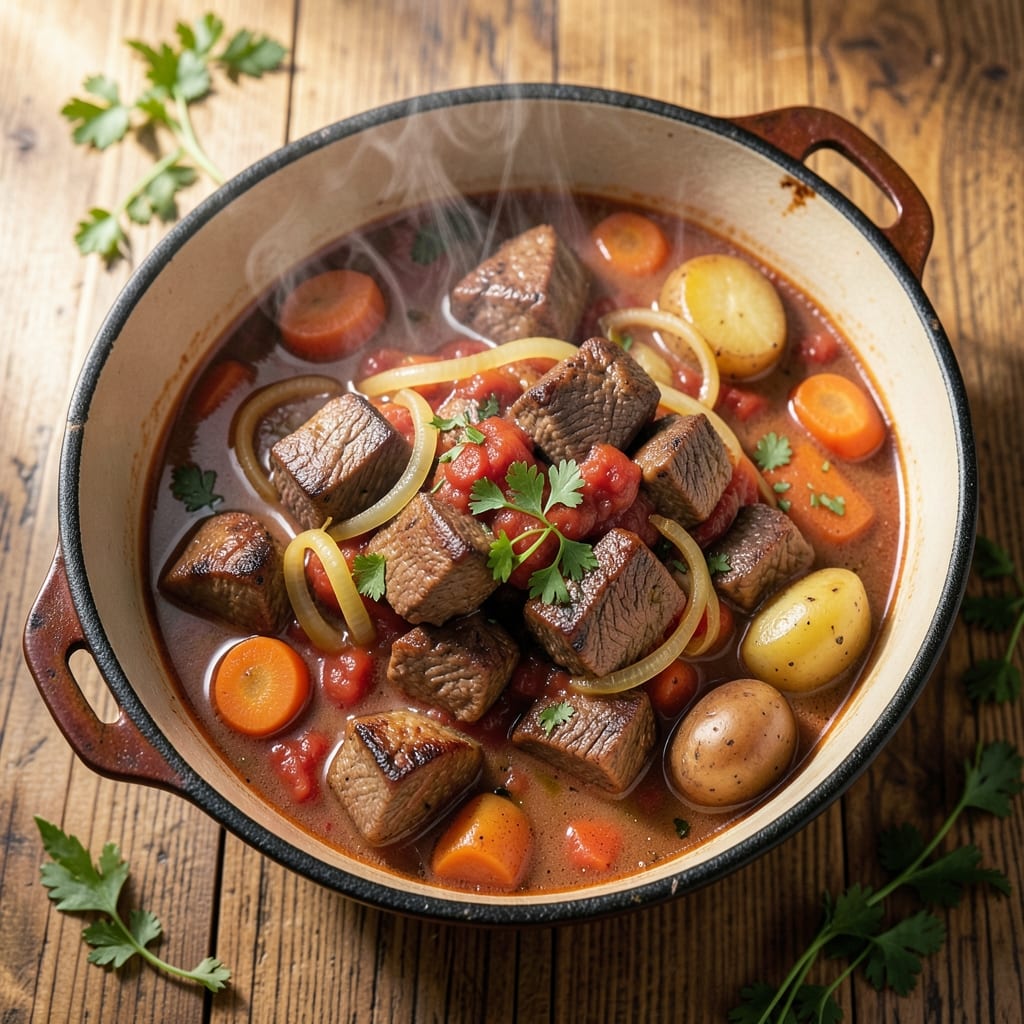
Austrian beef stew transforms tough cuts into melt-in-your-mouth tenderness through slow cooking and aromatic spices. This recipe delivers restaurant-quality depth with just a cast-iron pot, quality beef, and traditional techniques that create a rich, paprika-kissed gravy. The secret lies in proper searing and long, gentle simmering to develop complex flavors.
The process begins with browning beef chuck in batches to create a flavorful crust, then deglazing the pot with wine or beer to capture every bit of caramelized goodness. Vegetables like onions, carrots, and potatoes absorb the deep, savory broth while remaining tender. Smoked paprika and bay leaves infuse the stew with authentic Austrian warmth.
By the time it's done, you'll have a hearty stew where beef falls apart at the touch of a fork, swimming in a velvety gravy that coats every spoonful. The aroma alone will have everyone gathering at the table. Serve with crusty bread to soak up every last drop of that flavorful sauce.
This method rewards patience with restaurant-quality results at home. The slow cooking process develops rich, complex flavors that store-bought versions can't match. Perfect for cozy family dinners or impressing guests with authentic Austrian comfort food.
Ingredients for austrian beef stew
Sixteen essential ingredients transform tough beef chuck into melt-in-your-mouth Austrian richness through slow simmering and aromatic spices.
| Ingredient | Amount | Notes |
|---|---|---|
| Beef Chuck Roast 🥩 | 3 lb | Cut into 1.5-inch cubes, trimmed of fat |
| Yellow Onions 🧅 | 2 whole | Medium size, sliced into half-moons |
| Carrots 🥕 | 4 whole | Medium size, cut into 1-inch chunks |
| Russet Potatoes 🥔 | 4 whole | Medium size, peeled and cubed |
| Smoked Paprika 🌶️ | 2 tbsp | Hungarian variety for authentic flavor |
| Tomato Paste 🍅 | ½ cup | High-quality, no sugar added |
| Dry Red Wine 🍷 | 1 ½ cups | Bold variety like Cabernet Sauvignon |
| Beef Broth 💧 | 4 cups | Homemade or high-quality store-bought |
| Garlic Cloves 🧄 | 6 cloves | Minced for even distribution |
| Fresh Thyme 🌿 | 2 sprigs | Or 1 tbsp dried thyme |
| Bay Leaves 🍃 | 2 whole | Standard size, removed before serving |
| Black Peppercorns 🌶️ | 1 tsp | Freshly cracked for optimal flavor |
| Kosher Salt 🧂 | 1 ½ tbsp | Diamond Crystal preferred |
| Olive Oil 🫒 | ¼ cup | Extra-virgin for high heat searing |
| All-Purpose Flour 🌾 | 2 tbsp | For thickening gravy if needed |
The beef chuck is non-negotiable—look for well-marbled cuts at your butcher or Costco for the best value. Hungarian smoked paprika from Penzeys delivers that authentic depth, but Goya or McCormick work in a pinch. Fresh thyme sprigs elevate the dish far beyond dried, though dried thyme at one-third the amount suffices. For the wine, Cabernet Sauvignon or Merlot from the house selection works beautifully—just avoid overly sweet varieties. The beef broth should be rich and homemade if possible, but Swanson Premium or Kraft Natural are reliable store-bought options.
No smoked paprika? Substitute with a mix of sweet paprika and a pinch of liquid smoke, though the flavor won't be identical. Running short on red wine? Beer works equally well—just use a malty variety like Amber Ale or Brown Ale. Fresh thyme unavailable? Dried oregano at half the amount provides a similar earthy note. For the tomato paste, San Marzano is ideal, but any high-quality paste without added sugar will do. The potatoes should be firm and starchy—Russets or Yukon Golds are perfect. If you prefer a thicker gravy, cornstarch or roux can be added at the end, though the recipe naturally thickens as it simmers.
This stew tastes even better the next day as flavors meld, so plan ahead. Store in an airtight container in the refrigerator for up to 5 days or freeze for 3 months for future meals. The beef will continue tenderizing over time, making it ideal for meal prep. For serving, crusty sourdough or rye bread soaks up the rich sauce beautifully. If reheating, add a splash of broth or water to maintain consistency, as the stew thickens upon cooling.
Why You'll Love This Recipe
- One-Pot Magic: I swear by this recipe because it’s literally one pot—no chopping boards, no extra pans, just dump, simmer, and forget. The beef chuck roast practically falls apart on its own, and the onions caramelize right in the pot while you’re doing whatever else.
- Smoky Depth Bomb: That smoked paprika? It’s the secret weapon—earthy, warm, and just a little bit mysterious. The beef soaks it up, then melts into the potatoes, creating this insane contrast of tender meat and crispy edges. Honestly, it’s the kind of flavor that makes you want to lick the spoon.
- Leftover Goldmine: This stew only gets better the next day. The flavors marry overnight, and the potatoes absorb all that rich beef juice—perfect for lunches or freezing. I make a double batch just to have it on hand for lazy mornings or when friends drop by unannounced.
- Budget-Friendly Feast: A chuck roast stretches for days, and the veggies are cheap but add serious texture. You’re feeding a crowd for the price of one fancy dinner, and it’s still restaurant-quality. Between us, this is how I feed my family without breaking the bank.
Step-by-step instructions for Austrian beef stew
Austrian beef stew demands patience and precision—every step builds depth of flavor and texture.
Sear the Beef Chuck for Rich Foundation
Heat the 0.25 cup olive oil in a heavy Dutch oven over medium-high heat until shimmering. Working in batches, add the 3 lb beef chuck roast cut into 1.5-inch cubes, letting each piece develop a deep golden brown crust before turning. This searing creates the Maillard reaction, locking in flavors that will infuse the stew.
Don't rush this step. The beef should release easily when ready to flip, indicating proper browning. Once all pieces are seared, transfer them to a plate and set aside. The residual fat in the pot will become the flavor base for your stew.
Build the Aromatic Base with Onions and Spices
In the same Dutch oven, add the 2 whole yellow onions sliced into half-moons. Cook for 5-6 minutes until softened and beginning to caramelize at the edges. Stir in the 2 tbsp smoked paprika, 1.5 tbsp kosher salt, and 1 tsp freshly cracked black peppercorns, coating the onions thoroughly.
Add the 0.5 cup tomato paste and cook for 2 minutes, stirring constantly to prevent burning. This creates a rich, slightly sweet foundation that balances the paprika's smokiness. The paste will darken slightly—this is normal and essential for depth of flavor.
Deglaze and Simmer with Wine and Broth
Pour in the 1.5 cups dry red wine, scraping up all the browned bits from the bottom of the pot with a wooden spoon. This deglazing captures all the caramelized flavors you've built. Let the wine simmer for 3-4 minutes until reduced by half, intensifying its flavor profile.
Add the 4 cups beef broth, 6 cloves minced garlic, 2 sprigs fresh thyme, and 2 whole bay leaves. Return the seared beef to the pot, along with any accumulated juices. Bring to a gentle simmer, then reduce heat to medium-low to maintain a steady bubble. Partially cover and let cook for 1 hour, skimming any foam that rises to the surface.
Add Vegetables and Complete the Cook
After the initial hour, add the 4 whole carrots cut into 1-inch chunks and the 4 whole russet potatoes peeled and cubed. Stir gently to distribute the vegetables evenly throughout the liquid. The potatoes should be fully submerged—they'll absorb flavor as they cook.
Continue simmering uncovered for another 1.5 to 2 hours, until the beef is fork-tender and the potatoes are easily pierced with a knife. The stew should have thickened slightly, with the vegetables tender but still holding their shape. Taste and adjust seasoning if needed—you may need a touch more salt to balance the wine's acidity.
Finish and Thicken the Stew
Remove the 2 whole bay leaves and discard. In a small bowl, whisk together the 2 tbsp all-purpose flour with 2 tablespoons cold water to create a slurry. Slowly stir this into the stew, letting it simmer for 5-7 minutes until thickened to your desired consistency.
Serve immediately in deep bowls, garnished with fresh thyme leaves. The stew should be rich and velvety, with tender beef that practically falls apart at the touch. Each spoonful should deliver layers of paprika warmth, wine brightness, and deep beefy satisfaction.
Pro Tips For Making Austrian Beef Stew
- Sear the Chuck Hard: The beef won’t just flavor the stew—it’ll carry it. After patting the roast dry, hit it with a hot cast-iron or heavy pot until it’s deep brown in spots (about 5-6 minutes per side). I used to rush this, and the stew always tasted like it needed more seasoning—turns out, the crust locks in flavor.
- Cut Potatoes in Even Chunks: Uneven potatoes mean some mushy, some still crunchy. Aim for 1.5-inch cubes so they cook at the same rate—no one wants a stew where half the potatoes are falling apart while the others are still firm. (Yes, I’ve served that. Regretting it now.)
- Deglaze with Red Wine First: That browned beef fond is pure flavor gold, but water won’t cut it. Splash in ½ cup red wine (like a dry Blaufränkisch or Zweigelt) and scrape every last bit off the bottom before adding broth. I learned this the hard way—skipping the wine left my stew tasting flat, like it was missing something.
- Add Potatoes Late: Potatoes soak up liquid like sponges, turning your stew into soup. Toss them in only during the last 30 minutes of cooking—this keeps them tender without dissolving into the broth. (And no, you can’t just “add them earlier and fix it later.” Trust me.)
Best sauces and condiments for this austrian beef stew
Classic Gravy Enhancement
Thicken the stew's sauce with a flour slurry made from 2 tbsp all-purpose flour and 2 tbsp cold water, whisked together before stirring into the simmering pot. For extra richness, stir in 1 tbsp unsalted butter at the end—this adds a luxurious sheen and balances the paprika's smokiness. The butter should melt completely, creating a velvety finish that coats every bite. 🥄
Creamy Sour Cream Swirl
For a tangy twist, stir ¼ cup sour cream into the finished stew just before serving. The cool cream cuts through the richness while adding a velvety texture. I like to dollop it on top of individual servings so everyone can mix it in to their preference. Use full-fat sour cream for the best mouthfeel—Kroger or Trader Joe's brands work perfectly. 🥛
Herb-Infused Oil Drizzle
Create a quick herb oil by blending 3 tbsp olive oil, 1 tbsp fresh parsley, 1 tsp fresh thyme, and ½ tsp minced garlic. Heat the oil gently until fragrant, then drizzle over the stew just before serving. This adds a bright, aromatic finish that elevates the dish without overpowering the beef. Store the remaining herb oil in an airtight container in the fridge for up to 5 days. 🌿
Crispy Bread Crumb Topping
For a textural contrast, toast ½ cup panko breadcrumbs in a dry skillet over medium heat for 3-4 minutes until golden. Stir in 1 tbsp dried parsley and ½ tsp smoked paprika, then sprinkle over individual servings. The toasted crumbs add crunch while reinforcing the stew's signature flavors. Save any extras for future soups or stews. 🍞
Spicy Mustard Kick
Add a sharp contrast by mixing 1 tbsp Dijon mustard with 1 tsp honey and 1 tsp apple cider vinegar. Stir this into the stew during the final 5 minutes of cooking—it brightens the sauce while adding a subtle heat. For extra spice, add ½ tsp cayenne pepper directly to the pot. This variation works especially well with Merlot-based stews where the wine's tannins need balancing. 🌶️
Umami Boost with Worcestershire
For deeper savory notes, stir 1 tbsp Worcestershire sauce into the stew during the last 15 minutes of simmering. This adds a complex, fermented depth that complements the beef beautifully. I recommend Lea & Perrins for the most authentic flavor. The sauce blends seamlessly into the gravy, enhancing the overall richness without altering the stew's texture. 💫
Nutrition facts
Frequently asked questions
What's the best cut of beef for authentic Austrian beef stew?
Use beef chuck roast—it's the traditional choice with perfect marbling for rich flavor and tender results. Avoid lean cuts like sirloin; the fat renders during cooking, creating a luxurious sauce. If chuck is unavailable, brisket or short ribs work well as substitutes.
Can I make this stew in a slow cooker?
Yes! Sear the beef first, then transfer everything to the slow cooker and cook on low for 8 hours or high for 5 hours. Add potatoes during the last 1.5 hours to prevent them from turning mushy. The wine may evaporate more quickly, so add ½ cup extra broth if needed.
Why does my stew taste too acidic?
Too much wine or vinegar can make the stew taste sharp. Balance it by adding 1 tbsp tomato paste or ½ tsp sugar to mellow the acidity. For extra richness, stir in 1 tbsp butter or 2 tbsp cream at the end. Taste as you go—adjust gradually!
How do I know when the beef is perfectly tender?
The beef should be fork-tender—easily pierced with a fork and falling apart when lifted. Press a piece gently; if it crumbles with slight resistance, it's done. For extra assurance, check internal temperature: 195°F for melt-in-your-mouth texture.
Can I prepare this stew ahead of time?
This stew tastes even better the next day as flavors meld. Store in an airtight container in the fridge for up to 5 days or freeze for 3 months. Reheat gently on the stove with a splash of broth to maintain consistency. The beef will continue tenderizing over time.