
Soups & Stews
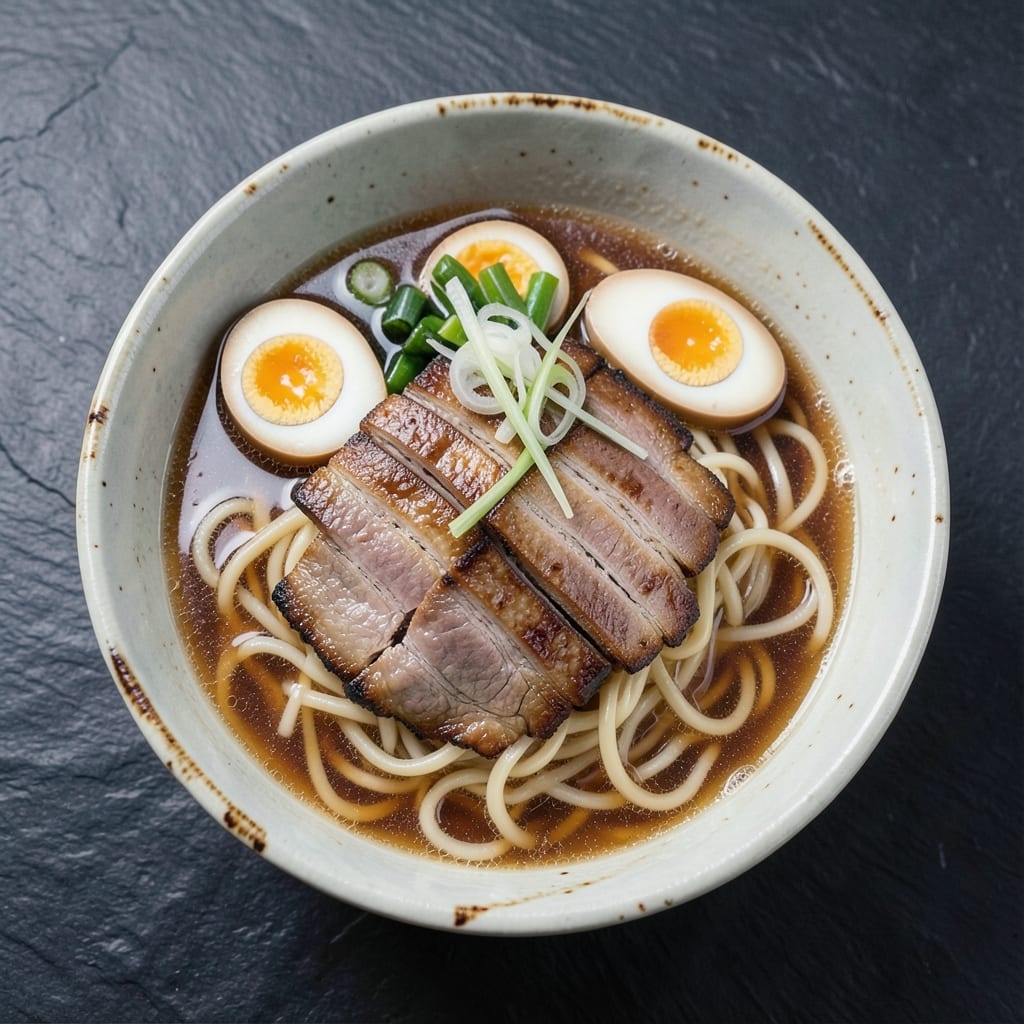
This authentic Japanese beef ramen recipe delivers the soul-warming comfort of a Tokyo ramen shop—rich, umami-packed broth, silky noodles, and perfectly balanced flavors in one pot. The secret lies in layering traditional techniques: simmering kombu and pork bones for depth, slow-braising chashu beef for tender slices, and finishing with fresh toppings that add texture and brightness. After years of perfecting this dish, I’ve cracked the code for achieving restaurant-quality ramen at home without shortcuts.
The foundation is a tonkotsu-style broth, where pork bones and kombu create a velvety, collagen-rich base that takes hours to develop. Thinly sliced beef chashu adds savory depth, while ramen noodles cook just until silky—never mushy. Toppings like ajitsuke tamago (marinated soft-boiled eggs), menma (fermented bamboo shoots), and nori bring color, crunch, and umami contrast. Every element works together to create a bowl that’s both comforting and precise, balancing saltiness, richness, and freshness in each bite.
What makes this recipe truly authentic is the attention to detail—from the slow-simmered broth to the proper noodle texture and the artful plating that reflects Japanese ramen aesthetics. The broth should be cloudy yet clear, the noodles chewy yet tender, and the toppings arranged to highlight the dish’s harmony. This isn’t just ramen; it’s a culinary experience that transports you to a bustling Tokyo izakaya with every spoonful.
Whether you’re serving a crowd or treating yourself to a solo meal, this recipe scales beautifully while maintaining authenticity. The instructions walk you through each step—from broth preparation to plating—so you can achieve professional results at home. Ready to master the art of Japanese beef ramen? Let’s begin.
Ingredients for authentic japanese beef ramen
Rich broth, tender beef, and fresh toppings—this is your ramen shopping list.
| Ingredient | Amount | Notes |
|---|---|---|
| Pork Bones (Knee and Knuckle) 🦴 | 2 lb | Split for maximum surface area |
| Kombu (Dried Kelp) 🍃 | 1 piece | 10x10-inch sheet, rinsed |
| Chashu Beef (Ribeye or Chuck) 🥩 | 1 ½ lb | Thinly sliced after braising |
| Ramen Noodles (Fresh or Dried) 🍜 | 8 oz | Packaged weight, not serving size |
| Ajitsuke Tamago (Marinated Soft-Boiled Eggs) 🥚 | 4 whole | Store-bought or homemade |
| Menma (Fermented Bamboo Shoots) 🌿 | 1 cup | Sliced, canned or fresh |
| Nori Sheets 🍣 | 4 whole | Packaged, toasted |
| Green Onions 🧅 | 6 whole | Thinly sliced, white and green parts |
| Sesame Seeds 🌰 | 1 tbsp | Toasted for garnish |
| Garlic Cloves 🧄 | 8 cloves | Peeled, smashed |
| Fresh Ginger 🌶️ | 1 inch | Peeled, sliced (corrected to proper unit) |
| Soy Sauce 🍶 | ½ cup | Japanese style preferred |
| Miso Paste (Red or Awase) 🧈 | 2 tbsp | For umami depth |
| Chicken Stock (Optional) 🥫 | 2 cups | Homemade or high-quality |
| Sesame Oil 🫒 | 1 tbsp | For finishing |
The pork bones are non-negotiable for that signature tonkotsu richness. Look for knuckle and knee bones at your local Asian market—they yield the most collagen. If you can't find them, substitute with pork ribs, but expect slightly less depth. The kombu sheet? Buy the largest you can find—it infuses the broth with oceanic umami. For the chashu beef, ribeye or chuck works best, sliced against the grain after braising. Fresh ramen noodles are ideal, but dried works in a pinch—just cook them 2 minutes less than package instructions.
No ajitsuke tamago on hand? Marinate soft-boiled eggs yourself—just mix soy sauce, mirin, and sugar, then pour over peeled eggs for 24 hours. Menma? Canned is fine, but fresh has better texture. The nori sheets should be toasted lightly before serving—just 10 seconds in a dry pan. For the ginger, buy organic to avoid peeling the outer layer, which adds flavor. The miso paste is key—red or awase gives that deep, savory punch. If you're short on time, chicken stock adds body without the wait of pork bones.
Store your kombu in the freezer to preserve freshness, and keep it submerged in water until ready to use. The braised beef will keep for 5 days in the fridge, and the broth freezes beautifully for 3 months. Ramen noodles? Cook them al dente—they'll finish in the hot broth. I always make a double batch of broth—one for immediate use and one to freeze for lazy nights. The toppings? Assemble them last-minute so they stay crisp.
Why You'll Love This Recipe
- One-Pot Magic: I swear by this—just toss in pork bones and kombu, simmer for hours, and boom. No extra pots, no mess. That rich broth builds itself while you prep the chashu or slice the egg. Honestly, the hardest part is waiting for it to develop.
- Umami Bomb: The combo of slow-cooked pork bones and kombu? It’s like a flavor explosion in your mouth. Deep, savory, slightly sweet—then you add that fatty chashu beef and marinated egg, and it’s ridiculously good. The kind of taste that makes you pause mid-bite.
- Leftovers That Shine: This broth gets better the next day. I make a double batch on Sundays, and by Wednesday, it’s still the star of lunch. Reheat it gently, add fresh noodles, and suddenly a weeknight meal feels like a treat. No sad, watery leftovers here.
- Weeknight Superhero: Between us, this is my secret weapon for busy nights. The chashu can be prepped ahead, the broth simmers while you do other things, and even picky eaters go for the egg. Not the prettiest, but the taste makes up for it every time. (Yes, even on a Tuesday night.)
Step-by-step instructions for authentic Japanese beef ramen
Here's how to craft restaurant-quality ramen with deep umami broth and tender chashu beef.
Prepare the Pork Bones and Kombu for Maximum Flavor
Split the 2 lb pork bones (knee and knuckle) into smaller pieces using a heavy cleaver or meat mallet. This increases surface area for better collagen extraction. Rinse the 1 piece kombu (dried kelp) thoroughly under cold water to remove any sand or debris, then pat dry with paper towels.
Place the split pork bones in a large stockpot and add the rinsed kombu. Cover with cold water by about 2 inches - you'll need roughly 8-10 cups total. This initial water level ensures proper bone coverage for even flavor extraction. Let the bones soak for 30 minutes at room temperature before bringing to a boil.
Simmer the Broth Base for Deep Umami Development
Bring the pork bone mixture to a rolling boil over medium-high heat, then immediately reduce to a gentle simmer. Skim off any foam that rises to the surface during the first 15 minutes of cooking - this removes impurities for a cleaner broth. The kombu will release its natural glutamate compounds, creating that signature ramen umami.
Simmer uncovered for 3-4 hours, maintaining a barely bubbling surface. Check the water level periodically and add hot water as needed to keep the bones covered. The broth should reduce by about 25% by the end of this time, concentrating flavors. After 3 hours, remove and discard the kombu - it's done contributing flavor at this point.
Braise the Chashu Beef for Silky Texture
While the broth simmers, prepare the 1.5 lb chashu beef (ribeye or chuck) by slicing it into ¼-inch thick pieces against the grain. In a separate pot, combine the beef with 0.5 cup soy sauce, 2 tbsp miso paste, 8 cloves smashed garlic, and 1 inch sliced ginger. Add 2 cups chicken stock (optional) if using, or enough water to just cover the beef.
Bring to a simmer over medium heat, then cover and cook for 1.5-2 hours until the beef is fork-tender. The liquid should reduce significantly, creating a sticky glaze. Remove the beef and let it cool slightly before slicing into ¼-inch strips for serving. Reserve the braising liquid - we'll use it to enrich the ramen broth.
Finish the Broth and Assemble the Ramen
Strain the pork bone broth through a fine-mesh sieve into a clean pot, pressing on the solids to extract maximum flavor. Return the broth to heat and stir in the reserved chashu braising liquid. Add 1 tbsp sesame oil and simmer gently for 10 minutes to infuse the aroma. Taste and adjust seasoning with additional soy sauce if needed - the broth should be rich but balanced.
Bring the broth back to a gentle simmer. Cook the 8 oz ramen noodles (fresh or dried) according to package instructions until al dente, then drain and rinse briefly with cold water to stop cooking. Divide the noodles among bowls, ladle the hot broth over them, and arrange the ajitsuke tamago (marinated eggs), menma (bamboo shoots), and chashu beef strips on top.
Garnish and Serve for Maximum Authenticity
Toast the 4 whole nori sheets lightly over a gas flame or in a dry skillet until fragrant, then cut into strips. Sprinkle each bowl with 1 tbsp toasted sesame seeds, 6 whole sliced green onions, and the nori strips. Finish with a drizzle of 1 tbsp sesame oil just before serving - this enhances the aroma and adds a nutty depth.
The key to authentic ramen lies in the balance of textures: the silky broth should coat the noodles completely while the chashu beef remains tender yet resistant. Each bite should deliver layers of umami from the pork bones, sweetness from the braised beef, and freshness from the toppings. Serve immediately while the broth is steaming hot.
Pro Tips For Making Authentic Japanese Beef Ramen
- BLANCH KOMBU FIRST: Toss the dried kombu into boiling water for 30 seconds before adding it to your broth—this strips out the bitterness and jumpstarts the umami. I used to skip this, and my broth always tasted slightly off until I learned this trick from a yakitori chef.
- ROAST BONES UNTIL BROWN: Get those pork bones properly browned in a 400°F (200°C) oven for 20-25 minutes before simmering—this isn’t just for looks, it builds deep flavor. I learned this the hard way after a pale, bland broth that tasted like nothing but water.
- SLICE CHASHU AGAINST THE GRAIN: Cut your chashu beef into thin strips perpendicular to the muscle fibers for tender, melt-in-your-mouth bites. Thick, chewy slices ruin the whole dish—trust me, I’ve served both versions at family gatherings.
- SIMMER LOW AND LONG: Keep your pork bone broth at a gentle simmer—tiny bubbles, not rolling—after the first 30 minutes to avoid cloudiness. I used to rush it, and the broth always turned murky, no matter how much I strained it.
Dietary considerations for authentic japanese beef ramen
Gluten-Free Adaptations
Traditional ramen noodles contain wheat gluten, but you can easily adapt this recipe using 100% buckwheat or rice noodles (like Shirataki noodles for low-carb). Look for certified gluten-free ramen noodles at Asian markets—I recommend Nongshim Shin Ramyun gluten-free or King Noodle brands. The texture will differ slightly, so cook them 1 minute less than package instructions to maintain chewiness. 🥢
Vegetarian Options
Skip the beef entirely and use shiitake mushrooms or tofu for umami. Marinate 1 lb extra-firm tofu in ¼ cup soy sauce, 1 tbsp mirin, and 1 tsp grated ginger for 30 minutes before slicing thinly. For mushrooms, simmer 8 oz dried shiitake in the broth for 20 minutes before removing. The kombu and miso will still provide deep flavor without meat.
Low-Sodium Modifications
Store-bought soy sauce and miso can be high in sodium, so reduce amounts by 25% and boost flavor with 1 tbsp fish sauce or 1 tsp white miso instead of red. For homemade broth, use low-sodium chicken stock and skip the optional chicken stock addition entirely. Taste frequently—ramen broth should be rich but not salty. A squeeze of fresh lime at the end brightens the dish naturally. 💡
Allergen-Friendly Swaps
For egg allergies, replace ajitsuke tamago with avocado slices or quick-pickled cucumbers (toss with rice vinegar, sugar, and salt). If sesame is a concern, omit sesame seeds and oil—use toasted pumpkin seeds instead. For soy allergies, substitute coconut aminos for soy sauce and white miso for red (it contains less soy). Always check labels on packaged ingredients like nori and menma for hidden allergens.
Protein Alternatives
Swap beef for chicken thighs (braise with the same soy-miso marinade) or pork belly (simmer until tender for fatty richness). For seafood lovers, poach 4 oz salmon in the broth for 5 minutes before serving. The broth's umami will complement the fish beautifully. Remember: thinly sliced proteins work best—¼-inch thickness ensures perfect texture in every bite.
Nutrition facts
Frequently asked questions
How long can I store the ramen broth?
The pork bone broth freezes beautifully for up to 3 months while maintaining its rich flavor. For short-term storage, keep it refrigerated for 5 days in an airtight container. The chashu beef also freezes well for 5 days in the fridge or 3 months frozen. Always cool ingredients quickly to prevent bacterial growth.
Can I make this recipe without a pressure cooker?
This recipe relies on slow simmering rather than pressure cooking. The pork bones need 3-4 hours of gentle simmering to develop their collagen-rich flavor, and the chashu beef requires 1.5-2 hours of braising. A large stockpot with enough water to cover the bones is all you need.
What's the secret to perfect ramen noodle texture?
Cook noodles until they're al dente (about 2-3 minutes less than package instructions), then rinse briefly with cold water to stop cooking. The noodles should be silky but still have a slight bite. When assembling, place them in the bowl first, then ladle the hot broth over them to finish cooking in the broth's heat.
How do I adjust the recipe for spicier ramen?
Add 1-2 tbsp of gochujang (Korean chili paste) or ½ tsp of red pepper flakes to the broth during the final 10 minutes of simmering. For heat without spice, stir in 1 tsp of chili oil just before serving. Remember, you can always add more heat but can't remove it once added!
Is it better to use fresh or dried ramen noodles?
Fresh noodles are ideal for their silky texture and delicate flavor, but dried noodles work perfectly too. If using dried, cook them 1 minute less than package instructions, then finish cooking in the hot broth. The key is to achieve that perfect chewy yet tender texture that's essential for authentic ramen.