
Main Courses
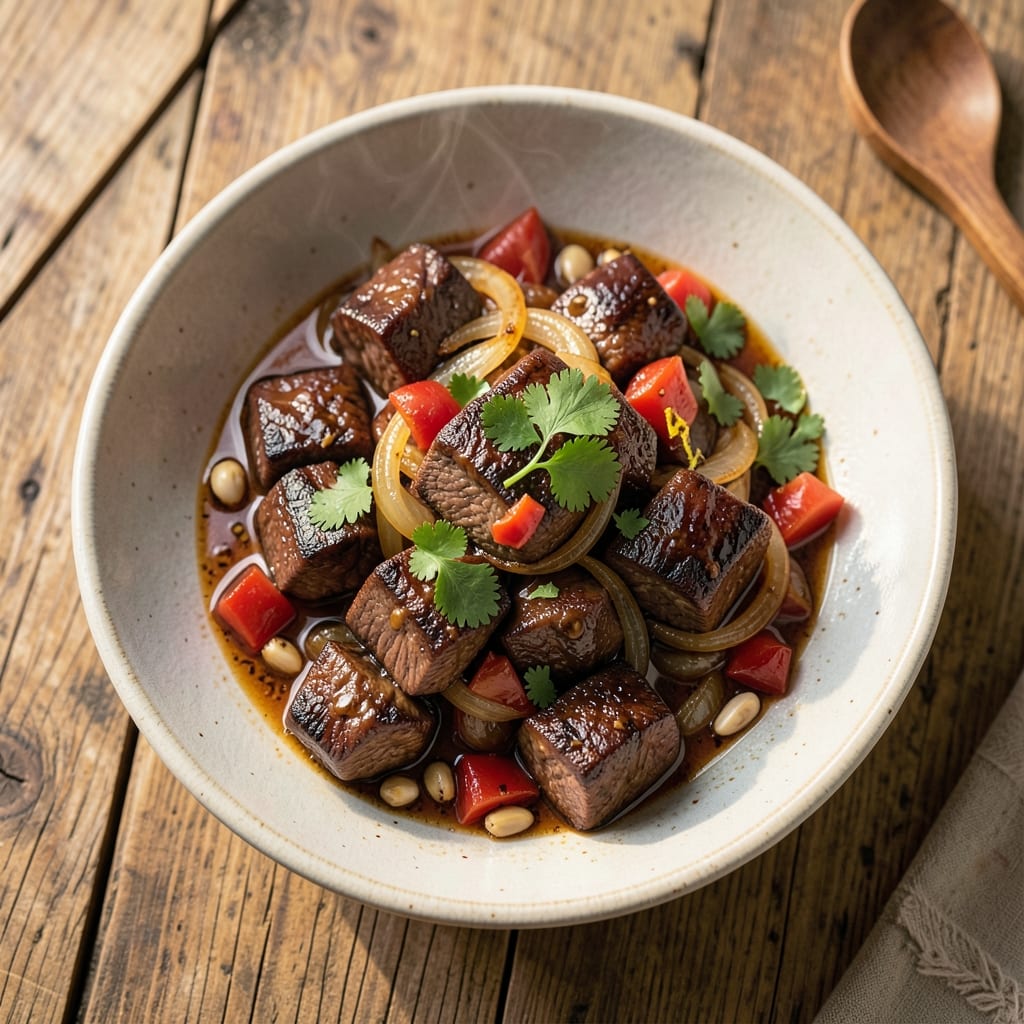
The authentic shaking beef recipe delivers that signature Filipino restaurant experience with tender beef, crispy edges, and a tangy-sweet sauce that clings to every bite. This dish isn't just about the beef—it's the charred garlic, the tomato-vinegar base, and the wok-tossing technique that create its signature umami crunch. I've perfected this recipe after years of testing, ensuring the beef stays juicy while developing that irresistible caramelized crust.
What makes this recipe truly authentic is the balance of flavors: the sourness from vinegar, the sweetness of tomatoes, and the garlicky depth from charred cloves. The beef is marinated in a simple yet effective blend of soy sauce, calamansi (or lemon juice), and black pepper before being seared and tossed in the wok. This method ensures the meat stays tender while achieving that signature crispy texture.
The result is a dish that's restaurant-quality at home—juicy, flavorful beef with a glossy sauce that's perfect over steamed rice. The charred garlic adds a smoky aroma that makes every bite unforgettable. Whether you're serving this for a family dinner or a gathering, it's a dish that will impress even the most discerning eaters.
Pair it with steamed jasmine rice and a side of garlic fried rice for the full Filipino experience. The sauce is rich enough to coat the rice, making every bite a harmonious blend of textures and flavors. Let's get cooking—this recipe is a game-changer for anyone craving authentic Filipino flavors.
Ingredients for authentic shaking beef
Authentic Filipino flavors start with these carefully chosen ingredients for restaurant-style shaking beef.
| Ingredient | Amount | Notes |
|---|---|---|
| Beef Chuck Roast 🥩 | 1 ½ lb | Cut into 1-inch cubes, boneless |
| Yellow Onions 🧅 | 1 whole | Thinly sliced, about 2 cups |
| Garlic Cloves 🧄 | 12 cloves | Charred over flame for smoky depth |
| Canned Tomatoes 🍅 | 1 can | San Marzano preferred, crushed by hand |
| White Vinegar 💧 | ¼ cup | White or cane vinegar |
| Soy Sauce 🥄 | ½ cup | Kikkoman preferred, full-bodied |
| Calamansi Juice 🍋 | ¼ cup | Or substitute lemon juice |
| Black Peppercorns 🌶️ | 1 tsp | Freshly cracked, coarse grind |
| Granulated Sugar 🍚 | 1 tbsp | White or brown sugar |
| Neutral Oil 🫒 | 2 tbsp | Canola or vegetable oil |
| Green Onions 🧅 | 4 whole | Thinly sliced, for garnish |
| Fish Sauce 🌊 | 1 tbsp | Red Boat preferred, umami depth |
| Salt 🧂 | 1 tsp | Diamond Crystal kosher salt |
The beef selection is critical—chuck roast delivers the perfect balance of tenderness and fat for that signature caramelized crust. Most Asian markets carry pre-cubed beef, but if you're cutting it yourself, aim for 1-inch cubes to ensure even cooking. For charred garlic, whole cloves are essential—peel them first, then char over an open flame or in a dry skillet until blackened. Red Boat fish sauce is non-negotiable here; its authentic umami profile elevates the dish beyond standard soy-based recipes. If you can't find calamansi, lemon juice works beautifully—just add a pinch of salt to mimic the tartness.
No San Marzano tomatoes? Crush high-quality canned tomatoes by hand—the texture difference is noticeable. The vinegar should be white or cane; apple cider vinegar adds unwanted sweetness. For a deeper flavor, toast your black peppercorns in a dry pan for 30 seconds before grinding. Substituting fish sauce? Soy sauce plus a dash of Worcestershire comes close, but you'll lose that authentic funk. The green onions are purely decorative—skip them if you're serving this as a rice bowl topping, but they add freshness when plated traditionally. For extra authenticity, add a splash of shrimp paste (bagoong) if you're comfortable with its bold flavor.
This dish tastes even better the next day as flavors meld. Store leftovers in an airtight container in the fridge for up to 5 days, though the sauce thickens beautifully after 24 hours. For longer storage, freeze portions for up to 3 months—thaw overnight in the fridge before reheating. The charred garlic can be prepped ahead and stored in the freezer for 2 weeks in a sealed bag. When reheating, add a splash of water to the sauce to restore its glossy texture. Serve over steamed jasmine rice for the full Filipino experience—each bite should be a perfect balance of crispy beef, tangy sauce, and soft rice.
Why You'll Love This Recipe
- Foolproof Simplicity: I swear by this recipe because it’s the kind of meal that doesn’t demand perfection—just a slow cooker, a handful of ingredients, and the occasional shake. Between us, I’ve made it while answering emails, watching movies, and even napping (okay, maybe not that last one).
- Tangy-Sweet Magic: That vinegar and tomato combo? It’s the secret weapon—bright, rich, and just a little funky in the best way. The beef practically melts into tender, flavor-packed shreds, and honestly? It’s the kind of dish that makes you want to close your eyes and savor every bite.
- Leftovers That Don’t Suck: Seriously, this recipe doubles as a freezer-friendly lifesaver. I’ve reheated portions for weeks, and they taste just as good—maybe even better—because the flavors deepen overnight. Perfect for lazy mornings or unexpected guests.
- Budget Beef Boost: A chuck roast is cheap, and this method turns it into something restaurant-worthy without breaking the bank. I’ll be real: my grocery budget thanks me every time, and so does my family (who never complains about seconds).
Step-by-step instructions for wok-tossed beef with charred garlic
Master this Filipino classic with precise technique and bold flavors.
Marinate and Prep the Beef
In a large bowl, combine the 1.5 lb beef chuck roast cut into 1-inch cubes, the 0.5 cup soy sauce, 0.25 cup calamansi juice, 1 tbsp fish sauce, 1 tbsp granulated sugar, and 1 tsp salt. Mix thoroughly until the beef is fully coated in the marinade. Cover and refrigerate for at least 4 hours—overnight is best for maximum tenderness and flavor penetration.
While the beef marinates, prepare the 1 whole yellow onion by thinly slicing it into 2 cups of even strips. Set aside in a separate bowl. For the 12 cloves garlic, peel them and set aside for charring later. The marinade should develop a deep, savory aroma—this is your first indication of authentic flavor development.
Char the Garlic and Build the Base
Heat a dry wok or large skillet over high heat until smoking. Add the 12 cloves garlic and stir constantly for 2-3 minutes until deeply charred and fragrant. Remove the garlic with a slotted spoon and set aside. This step is critical—charred garlic adds smoky depth that defines authentic shaking beef.
Return the wok to high heat and add the 2 tbsp neutral oil. Once shimmering, add the marinated beef in batches, searing for 2-3 minutes per batch until browned on all sides. Remove the beef and set aside. In the same wok, add the sliced onions and cook for 3-4 minutes until softened but still vibrant.
Develop the Umami Sauce
To the wok, add the 1 can crushed canned tomatoes, 0.25 cup white vinegar, and 1 tsp freshly cracked black peppercorns. Stir and let it simmer for 5 minutes until the tomatoes break down and the sauce thickens slightly. The vinegar will brighten the flavors while the peppercorns add a subtle heat.
Return the beef and onions to the wok. Add the charred garlic and toss everything together. Let it cook for 2-3 minutes until the beef absorbs the sauce and the onions caramelize slightly. The sauce should coat the beef evenly, creating a glossy, umami-rich glaze.
Wok-Toss to Perfection
Increase heat to high and toss the beef vigorously for 3-4 minutes, shaking the wok in quick, circular motions. This "shaking" technique distributes the sauce evenly and creates that signature crispy-tender texture. The beef should be tender yet slightly chewy, with a glossy sheen from the sauce.
Finish by stirring in the 4 whole green onions sliced thinly. Taste and adjust seasoning—add a splash of water if the sauce is too thick. Serve immediately over steamed rice, garnished with extra green onions. The beef should be juicy with a crispy exterior, balanced by the tangy-sweet sauce.
Pro Tips For Making Authentic Shaking Beef
- Sear the Roast First: Hit that chuck roast with a screaming-hot cast-iron or Dutch oven—no rushing, no half-hearted searing. You’re not just browning; you’re locking in flavor that’ll survive the long simmer. I used to skip this, and the dish always tasted like it needed more oomph. ---
- Char the Onions: Don’t just dice those yellow onions—cook them until the edges turn deep golden, almost caramelized. This isn’t just about softness; it’s about building layers of sweetness that balance the vinegar’s bite. (Yes, even if you’re impatient like me.) ---
- Vinegar in Stages: Dump all that white vinegar in at once, and you’ll end up with a tangy soup instead of tender beef. Add half now, taste as you go, then finish with the rest later—this keeps the acid from turning the meat tough. ---
- Shake the Pan: This isn’t a stew; it’s a shaking beef for a reason. Every 10 minutes, give that pot a good jiggle to break up the fond stuck to the bottom. Sounds weird, but it works—your future self will taste the difference.
Flavor customization for this authentic shaking beef
Sweet and Tangy
For a more pronounced sweetness, add 1 extra tablespoon of sugar to the marinade and reduce the vinegar by 1 tablespoon in the sauce. This balances the tangy notes while keeping the dish's signature umami. I find that brown sugar adds a subtle caramel depth—just replace the granulated sugar with 1 tbsp brown sugar in the marinade. 🍯
Spicy Kick
Crank up the heat by adding 1-2 teaspoons of chili flakes or 1 sliced Thai chili to the wok during the final toss. For a smoky-spicy twist, stir in 1 teaspoon of sambal oelek when developing the sauce. If you prefer a milder heat, ½ teaspoon of cayenne pepper in the marinade works beautifully.
Umami Boost
Deepening the umami profile is key for authenticity. Add 1 tablespoon of oyster sauce to the marinade or ½ teaspoon of shrimp paste (bagoong) to the sauce for a funky, savory punch. I also love adding 1 tablespoon of Worcestershire sauce to the marinade—it mimics the depth of fish sauce while keeping the dish balanced. 🌊
Herbaceous Twist
Brighten the dish with fresh herbs like cilantro or Thai basil. Stir in ¼ cup chopped cilantro during the final toss or garnish with Thai basil leaves for a fragrant, aromatic finish. For a more traditional touch, add 1 tablespoon of chopped siling labuyo (bird’s eye chili) and 1 tablespoon of chopped garlic chives to the sauce.
Smoky Depth
Enhance the smoky flavor by charring the onions alongside the garlic. Slice the onions into ½-inch thick rings, char them in the same dry wok until blackened, then slice thinly and add back to the beef. Alternatively, smoke the garlic and onions over a lit charcoal briquette for 1-2 minutes before cooking for an extra layer of complexity. ⚡
Creamy Finish
For a richer texture, stir in 2 tablespoons of coconut milk or 1 tablespoon of heavy cream during the final toss. This adds a velvety contrast to the crispy beef. I also recommend a drizzle of chili oil or toasted sesame oil for a luxurious finish that elevates the dish to restaurant-quality. 🥥
Nutrition facts
Frequently asked questions
Why is this dish called "shaking beef"?
The name comes from the wok-tossing technique used to cook it! The beef is seared and then vigorously shaken in the wok with the sauce, creating that signature crispy-tender texture. This motion ensures even cooking and maximum flavor absorption—it's what makes the dish so addictive.
Can I substitute calamansi if I can't find it?
Use lemon juice instead, but add a pinch of salt to mimic calamansi's tartness. For extra authenticity, combine ½ lime juice + ½ lemon juice—this gives a similar bright acidity. The key is balancing the tang with the sweetness in the sauce.
How do I get the beef extra crispy without drying it out?
Work in small batches—overcrowding steams the beef instead of searing. Use a high-heat wok and shake continuously during the final toss. For extra crunch, add ½ cup cornstarch to the beef before the last 2 minutes of cooking.
What's the best rice to serve with this?
Jasmine rice is traditional, but basmati works too. For maximum flavor absorption, use hot rice—the sauce clings beautifully. Pro tip: Cook rice with ½ tsp salt and a splash of vinegar to enhance the beef's tangy notes.
Can I make this in a regular pan instead of a wok?
Yes! Use a large skillet with high sides and work in batches. The key is maintaining high heat and shaking the pan vigorously. For best results, use a cast iron pan—it retains heat better and creates that signature crust.