
Main Courses
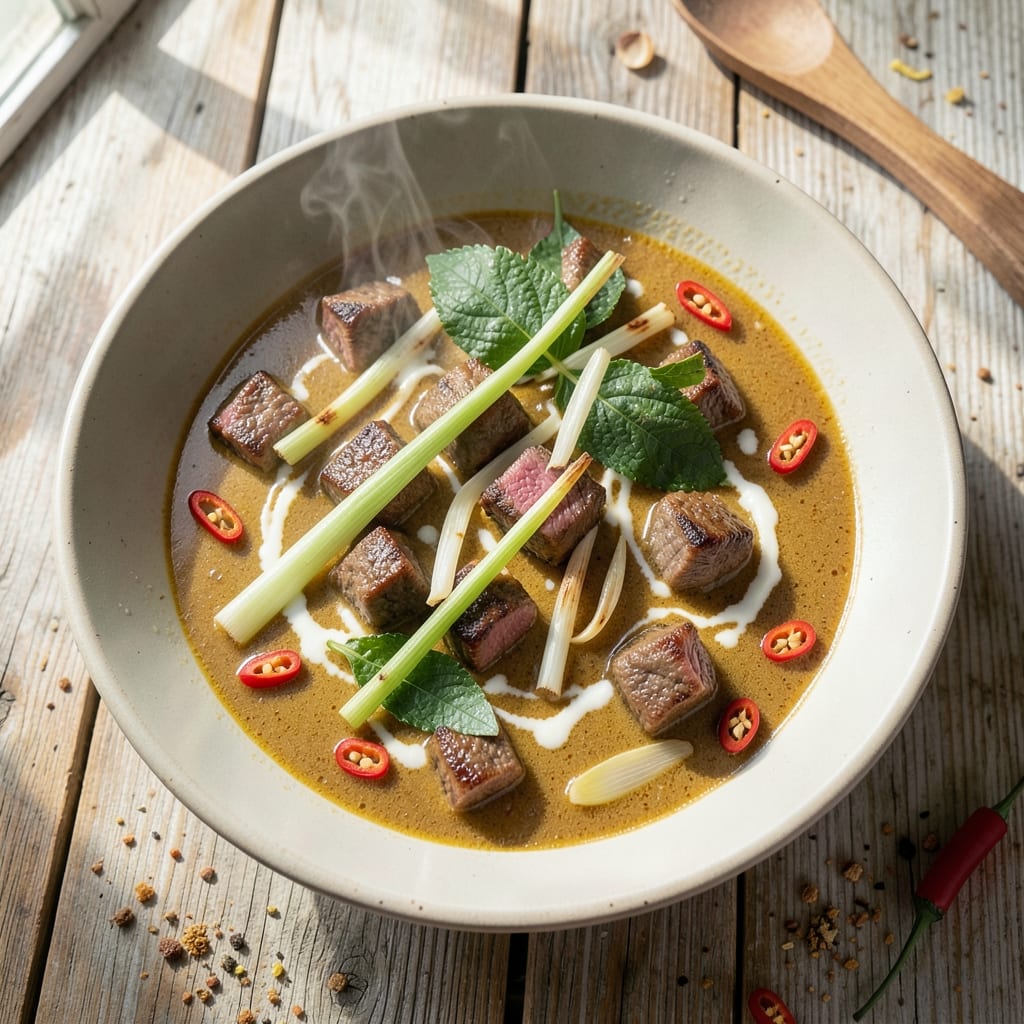
This authentic Thai beef curry recipe delivers the fragrant, complex flavors of street-side eateries in your own kitchen. The secret lies in properly blooming the spices—ginger, galangal, and lemongrass—before simmering everything in rich coconut milk. I developed this version after years of testing, ensuring the balance of sweet, sour, spicy, and salty hits just right, with tender beef that practically melts in your mouth.
The process begins with toasting whole spices in a hot pan to release their aromatic oils, then building layers of flavor through a slow simmer. Traditional ingredients like kaffir lime leaves and Thai basil elevate the dish beyond basic curry, while optional adjustments let you control the heat level. What makes this recipe truly special is the depth of flavor achieved through authentic techniques, not shortcuts.
By the time you serve this curry, your kitchen will smell like a bustling Bangkok market, and every spoonful will deliver that perfect harmony of textures and flavors. The tender beef falls apart easily, swimming in a velvety sauce that's just sweet enough to balance the spice, with bright citrus notes from lime juice. This is the kind of dish that transforms an ordinary weeknight into a culinary adventure.
Serve it over steamed jasmine rice or with warm noodles, and don't forget to garnish with fresh cilantro and lime wedges. The leftovers actually improve overnight as flavors meld further, making this recipe perfect for meal prep. Let's create this authentic Thai experience together.
Ingredients for authentic thai beef curry
These fragrant ingredients transform simple beef into restaurant-quality Thai curry magic.
| Ingredient | Amount | Notes |
|---|---|---|
| Beef Chuck Roast 🥩 | 1 ½ lb | Cut into 1-inch cubes |
| Coconut Milk 🥥 | 1 can | Full-fat, 13.5 oz can |
| Fresh Lemongrass 🌿 | 3 stems | Bruised, outer leaves removed |
| Kaffir Lime Leaves 🍋 | 4 whole | Lightly bruised, stems removed |
| Fresh Ginger 🧄 | 2 inches | Peeled, sliced into coins |
| Galangal 🌿 | 1 inch | Peeled, sliced thin |
| Red Curry Paste 🌶️ | 2 tbsp | Authentic Thai brand preferred |
| Fish Sauce 🍶 | 2 tbsp | Red Boat brand recommended |
| Palm Sugar 🍯 | 1 tbsp | Or substitute brown sugar |
| Thai Basil 🌿 | ¼ cup | Fresh, stems removed |
| Fresh Cilantro 🌿 | ¼ cup | Chopped, for garnish |
| Lime Juice 🍋 | 2 tbsp | Freshly squeezed |
| Vegetable Oil 🫒 | 2 tbsp | For blooming spices |
| Salt 🧂 | 1 tsp | To taste |
| Black Pepper 🌶️ | ½ tsp | Freshly ground |
The coconut milk is non-negotiable—full-fat gives that rich, velvety texture. Thai Kitchen brand is my go-to for the red curry paste, but Maesri is another solid choice. Galangal is the secret ingredient here—it's that citrusy, peppery root that gives authentic Thai curry its depth. You can sometimes find it at Asian markets, but if not, extra ginger plus a pinch of cardamom works in a pinch. Fresh lemongrass needs to be bruised (lightly smashed with the side of your knife) to release its oils—don't skip this step. For the beef, chuck roast is ideal since it stays tender during the long simmer.
No galangal? Double the ginger and add 1/4 tsp ground coriander—it's not identical but gets you close. Running out of kaffir lime leaves? Substitute 2 tbsp lime zest plus 1 tbsp lime juice. The fish sauce is where the umami magic happens—Red Boat is the gold standard, but any good-quality brand works. Palm sugar is worth tracking down for that authentic caramel note, but light brown sugar works in a bind. Thai basil is different from regular basil—it's got a slight anise flavor. If you can't find it, regular basil plus a pinch of anise seeds helps, though it's not perfect.
This curry tastes even better the next day as flavors meld. Store it in the fridge for up to 4 days, or freeze portions for 3 months. I like to make a double batch—one for dinner and one to freeze for lazy nights. The sauce thickens as it cools, so add a splash of water or coconut milk when reheating. Garnish with fresh cilantro and lime wedges right before serving—that bright pop of acidity makes all the difference.
Why You'll Love This Recipe
- Here’s what sold me: that first spoonful where the ginger’s sharp bite meets the creamy coconut, then the lemongrass lingers like a whisper. The beef chuck roast soaks up the flavors until it’s tender but still holds its shape—no mushy disappointment. It’s the kind of curry that makes you reach for the rice before you even sit down.
- One-Pot Magic: I swear by this recipe—just toss everything into a single pot (beef, coconut milk, those fragrant stems of lemongrass) and let it simmer. No chopping boards full of mess, no last-minute pan scrubbing. The beef practically falls apart on its own, and the lime leaves infuse the whole thing with that bright, citrusy aroma without you lifting a finger after the initial prep.
- Deep, Balanced Heat: Here’s what sold me: that first spoonful where the ginger’s sharp bite meets the creamy coconut, then the lemongrass lingers like a whisper. The beef chuck roast soaks up the flavors until it’s tender but still holds its shape—no mushy disappointment. It’s the kind of curry that makes you reach for the rice before you even sit down.
- Leftovers That Beg for More: Between us, this curry tastes even better the next day. The flavors meld into something richer, almost luxurious—perfect for packing lunches or reheating with a splash of water. I’ll be real: my freezer’s always got at least two containers of this, because even cold, it’s still crave-worthy. (Yes, even on a Tuesday night.)
Step-by-step instructions for authentic Thai beef curry
Here's how to build this fragrant curry with deep flavors and perfect texture.
Prepare the Aromatics and Beef
Start by cutting the 1.5 lb beef chuck roast into 1-inch cubes—this size ensures even cooking. Set aside. In a small bowl, gently bruise the 3 stems fresh lemongrass by rolling them with the heel of your hand, then remove and discard the tough outer leaves. Lightly bruise the 4 whole kaffir lime leaves by tapping them with a knife handle to release their aroma.
Peel the 2 inches fresh ginger and slice it into ½-inch thick coins. Peel the 1-inch galangal and slice it thinly—galangal has a citrusy, peppery kick that's essential for authenticity. Keep all these prepped ingredients handy; you'll need them in the next step.
Bloom the Spices and Sear the Beef
Heat the 2 tablespoons vegetable oil in a heavy-bottomed pot over medium heat. Add the 2 tablespoons red curry paste and stir constantly for 1-2 minutes until it darkens slightly and fills your kitchen with that unmistakable Thai aroma. This is called "blooming" the spices—it deepens their flavor by releasing their oils.
Add the beef cubes in a single layer and let them sear undisturbed for 2 minutes until they develop a golden crust. Stir, then add the sliced ginger, galangal, bruised lemongrass, and kaffir lime leaves. Cook for another 2 minutes, stirring occasionally, until the ginger and galangal soften slightly but don't brown.
Simmer the Curry Base
Pour in the 1 can coconut milk and stir gently to combine. Bring the mixture to a gentle simmer over medium-low heat. The curry should bubble softly—if it boils vigorously, reduce the heat. Let it simmer uncovered for 15 minutes, stirring occasionally, until the beef is tender and the flavors meld together.
Here's the thing—don't rush this step. The coconut milk needs time to infuse with the spices and beef. You'll know it's ready when the curry smells rich and aromatic, and the beef easily pulls apart with a fork. If the curry looks too thick, add ¼ cup water to loosen it slightly.
Balance the Flavors
Remove the pot from heat and let it cool slightly for 5 minutes. Stir in the 2 tablespoons fish sauce, 1 tablespoon palm sugar, 1 teaspoon salt, and ½ teaspoon black pepper. Taste and adjust the balance—Thai curries should have a perfect harmony of sweet, sour, salty, and spicy. If it needs more acidity, add 1 tablespoon lime juice; if it needs more depth, add another ½ teaspoon fish sauce.
Return the curry to low heat and simmer for another 5 minutes to let the flavors fully integrate. The curry should coat the back of a spoon but still be saucy enough to spoon over rice. If it's too thick, stir in 2-3 tablespoons water to reach your desired consistency.
Finish and Serve
Remove the lemongrass stems and kaffir lime leaves (they've done their job and can be discarded). Stir in the ¼ cup Thai basil and ¼ cup fresh cilantro, reserving a few sprigs for garnish. Add the 2 tablespoons lime juice and give it one final taste—this brightens the curry and cuts through the richness of the coconut milk.
Serve the curry immediately over steamed jasmine rice, garnished with the reserved basil and cilantro. The beef should be tender with a slight chew, the sauce rich and fragrant, and each bite a perfect balance of flavors. This is the kind of curry that tastes even better the next day, so make extra if you can!
Pro Tips For Making Authentic Thai Beef Curry
- CHAR THE AROMATICS LOW: Blister the lemongrass and ginger until fragrant but not brown—about 5 minutes on medium-low. I learned this the hard way: high heat burns them before they release their oils, leaving you with bitter, overcooked stalks instead of that bright, citrusy base.
- SLICE LEMONGRASS THIN: Cut the lemongrass stalks into 1-inch pieces—no need to bruise them. I used to smash them like Thai recipes often say, but slicing keeps the texture clean and prevents the curry from turning slimy.
- USE TWO CANS OF COCONUT MILK: Split the difference: one can full-fat, one light. The full-fat adds richness, while the light keeps it from turning greasy. After burning through three batches of pure heavy cream, I realized this balance is non-negotiable for authentic depth.
- REST THE BEEF AFTER SEARING: Let the chuck roast sit 10 minutes before slicing—yes, even if you’re impatient. This guarantees clean slices that don’t fall apart when they hit the simmering curry. I know, I know, but trust the process.
Flavor customization for authentic thai beef curry
Spice Level Control
Thai curry is all about balance, and heat is no exception. Start with 1-2 tablespoons red curry paste for a mild base, then adjust to taste. For medium heat, add ½ teaspoon chili flakes or 1-2 Thai bird's eye chilies (seeds removed for less heat). If you love spice, blend 1 tablespoon fresh chili paste (like Maesri) into the curry paste before blooming. Always taste before serving—you can tone down heat with extra coconut milk or lime juice.
Sweetness Adjustments
The natural sweetness in Thai curry comes from palm sugar or brown sugar. For a sweeter version, add an extra ½ tablespoon and simmer for 5 minutes to caramelize slightly. If you prefer less sweetness, reduce to ½ tablespoon total. A splash of 1 teaspoon mango puree adds tropical sweetness without overpowering the dish.
Sourness Balance
Lime juice is key for brightness, but you can experiment with other acids. For a tangier twist, add 1 tablespoon tamarind paste or 1 teaspoon rice vinegar alongside the lime. If your curry tastes flat, squeeze in an extra 1 tablespoon lime juice or add ½ teaspoon fish sauce for umami depth. The goal is a vibrant, well-rounded flavor.
Umami Boosters
Fish sauce is the secret to depth, but you can enhance it further. Add 1 teaspoon soy sauce for a deeper savory note, or stir in ½ teaspoon oyster sauce for richness. For vegetarians, swap fish sauce for 1 tablespoon coconut aminos plus ½ teaspoon mushroom powder. These tweaks keep the curry authentic while adapting to dietary needs.
Herb Variations
Thai basil is essential, but you can customize the fresh finish. Swap in ½ cup fresh mint for a cooler profile or add 2 tablespoons chopped cilantro for a fresher taste. For a smoky touch, sprinkle ½ teaspoon toasted cumin seeds on top. Garnish with crushed peanuts or fried shallots for texture contrast.
Texture Tweaks
Want a creamier curry? Stir in 2 tablespoons coconut cream at the end. For a chunkier texture, add ½ cup diced bell peppers or 1 cup sliced mushrooms during the simmer. If the sauce is too thin, reduce it uncovered for 5 minutes to thicken naturally. Each adjustment keeps the dish balanced while adding your personal touch.
Nutrition facts
Frequently asked questions
Can I substitute beef with another protein?
For a vegetarian version, use 1.5 lbs extra-firm tofu (pressed and cubed) or chickpeas instead. For seafood lovers, try shrimp or firm white fish like cod—reduce simmering time to 8-10 minutes to avoid overcooking. Chicken works too, but cut it into smaller pieces and simmer for 15-20 minutes until fully cooked.
Why does my curry taste too bitter?
Bitter flavors often come from overcooked spices or too much fish sauce. To fix it, balance with 1 tablespoon more palm sugar and 1 tablespoon lime juice—this sweetens and brightens the dish. If the bitterness persists, you may have used old coconut milk (always choose full-fat and check the expiration date). For future batches, don't let the curry boil vigorously after adding coconut milk.
How do I make this curry less spicy?
Start by reducing the red curry paste to 1 tablespoon instead of 2. If already made, stir in ¼ cup more coconut milk or 2 tablespoons lime juice to mellow the heat. For a milder version, add 1 teaspoon honey or sugar to balance the spice. Always taste as you go—Thai curries should have layers of flavor, not just heat.
Can I make this curry in an Instant Pot? Yes! Sauté the beef and aromatics as directed, then add coconut milk and simmer on low pressure for 20 minutes. After cooking, release pressure naturally, then finish with fish sauce, sugar, and lime juice. The Instant Pot version cooks faster but may need 1 extra tablespoon coconut milk to maintain creaminess.
What's the best way to reheat leftovers?
Reheat gently on low heat with 1-2 tablespoons water or coconut milk to prevent curdling. Microwaving can make the sauce separate, so stove-top reheating is ideal. Leftovers actually improve overnight as flavors meld further—this is why Thai curry tastes even better the next day! Store in an airtight container for up to 4 days in the fridge.