
Main Courses
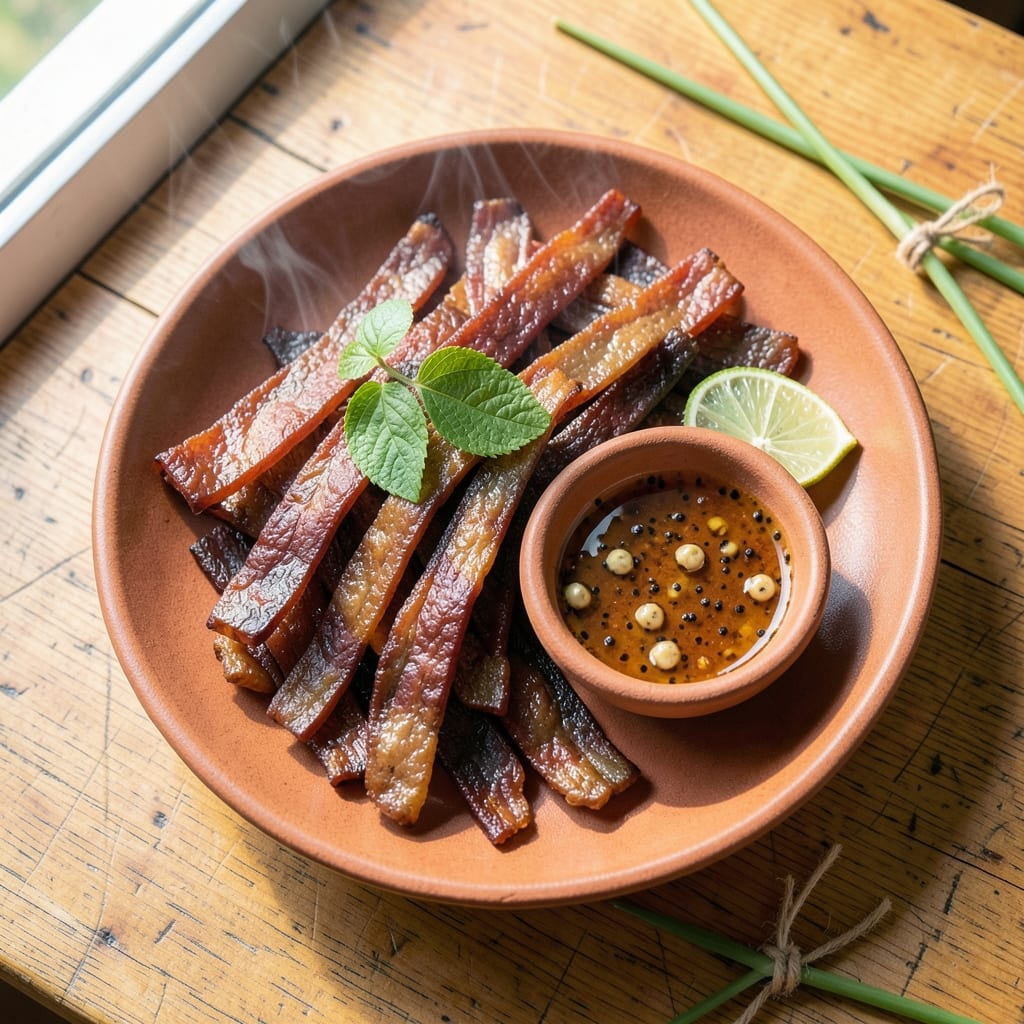
This authentic Thai beef jerky recipe brings the bold flavors of street markets straight to your kitchen—where smoky lemongrass and kaffir lime leaves transform tough beef into tender, chewy strips. The secret lies in a precise marinade blend of coconut aminos, fish sauce, and fresh herbs, fermented just enough to deepen the flavor without overpowering the meat's natural richness. Unlike traditional Western jerky, this version relies on controlled oven drying to preserve that signature Thai balance of sweet, salty, and umami.
What sets this recipe apart is the 4-hour process that delivers restaurant-quality results at home. Thinly sliced beef absorbs the marinade overnight, while high-heat drying creates the perfect texture—crispy edges with a melt-in-your-mouth center. The combination of galangal, garlic, and chili flakes adds layers of complexity that elevate it beyond basic jerky. This method ensures every bite carries the authentic taste of Thailand's bustling night markets.
The result is smoky lemongrass-kaffir chews that pair perfectly with cold beers, spicy dips, or even as a protein boost in salads. The marinade's fermentation process (just 24 hours) unlocks deeper flavors while keeping the meat tender. Whether you're a jerky novice or a seasoned maker, this recipe delivers professional-level authenticity with simple techniques.
Ready to master the art of Thai beef jerky? The process is straightforward, but the flavor payoff is unmatched. Let's get started on creating your own batch of market-fresh, smoky-sweet chews.
Ingredients for authentic thai beef jerky
Fourteen ingredients transform tough beef into restaurant-quality Thai market chews—authentic flavors start here.
| Ingredient | Amount | Notes |
|---|---|---|
| Top-Round Beef Roast 🥩 | 1 ½ lb | Thinly sliced against grain |
| Coconut Aminos 🥄 | ½ cup | Gluten-free soy sauce substitute |
| Fish Sauce 🍜 | 2 tbsp | Red Boat brand preferred |
| Fresh Lemongrass 🌿 | ¼ cup | Bruised stems only, finely chopped |
| Kaffir Lime Leaves 🍋 | 4 whole | Bruised, finely chopped |
| Galangal 🍃 | ¼ cup | Fresh, peeled, finely chopped |
| Garlic Cloves 🧄 | 6 cloves | Minced, not pressed |
| Bird's Eye Chili 🌶️ | 1 tbsp | Finely chopped, adjust for heat |
| Brown Sugar 🍯 | ¼ cup | Light or dark, packed |
| Sesame Oil 🫒 | 1 tbsp | Toasted, not flavored |
| White Vinegar 💧 | 1 tbsp | Distilled, not apple cider |
| Salt 🧂 | 1 ½ tsp | Diamond Crystal kosher |
| Black Peppercorns 🌶️ | 1 tsp | Freshly cracked, not ground |
| Lime Juice 🍋 | 2 tbsp | Freshly squeezed |
The beef is non-negotiable—top-round roast delivers the right fat-to-lean ratio for perfect texture. Look for well-marbled cuts at your butcher or Costco bulk section. Slice against the grain for maximum tenderness; 1/8-inch thickness is ideal. Fresh herbs are essential: lemongrass, kaffir lime, and galangal should be vibrant and aromatic. For galangal, Asian markets carry it fresh or frozen—avoid the powdered version. Red Boat fish sauce and coconut aminos are the gold standard here—substitutes like soy sauce will alter the flavor profile.
No fresh galangal? Substitute 1/4 cup fresh ginger plus 1 tsp coriander for depth, though it won't be identical. Short on kaffir lime leaves? Double the lime juice and add 1 tsp lime zest. The bird's eye chili can be swapped for Thai bird's eye powder (1/2 tsp), but adjust to taste. For a gluten-free version, ensure your coconut aminos are certified. The marinade ferments best at room temperature for 24 hours—this develops the complex umami flavors that set authentic Thai jerky apart from Western versions.
Marinated beef keeps 3 days in the fridge before drying. For longer storage, freeze the marinated strips for up to 3 months. Dried jerky maintains quality for 2 weeks at room temperature in an airtight container with silica packets. Vacuum-sealing extends shelf life to 6 months. Portion into 1-ounce servings for snack-sized bites—perfect for travel or hiking. The flavor intensifies over time, so make extra if you're not a fan of immediate consumption.
Why You'll Love This Recipe
- No-Marbling Needed: I swear by this—no fancy cuts or hours of brining. Top-round roast gets tender and flavorful just from the marinade: coconut aminos and fish sauce work their magic overnight, while the lemongrass and lime leaves infuse every bite. Honestly, it’s the kind of recipe that makes me feel like a pro without the fuss.
- Umami Bomb: That first bite? The fish sauce and coconut aminos create this perfect balance—salty, sweet, and funky all at once. I’ll be real: my kids usually turn up their noses at fish sauce, but they always ask for more of this jerky. The lemongrass adds that bright, herbal kick that keeps it from being too heavy.
- Snack or Meal: Between us, this stuff disappears fast—whether I’m tossing slices into salads, wrapping them in lettuce for a quick lunch, or just munching straight from the fridge. It’s my go-to for game day, book club meetups, or when I’m too tired to cook but still want something satisfying. (Yes, even on a Tuesday night.)
- Budget Magic: A single roast stretches for weeks, and the marinade costs pennies. I make a big batch, slice it thin, and freeze what I won’t use—perfect for when I forget to pack lunch or need a last-minute snack. Plus, the ingredients? Most are already in my pantry or cheap to grab. Zero guilt, all flavor.
Step-by-step instructions for authentic Thai beef jerky
Transform tough top-round beef into tender, aromatic chews using traditional Thai techniques.
Prepare the Marinade with Precision
In a medium bowl, combine the 0.5 cup Coconut Aminos, 2 tbsp Fish Sauce, 0.25 cup Brown Sugar, 1 tbsp White Vinegar, 2 tbsp Lime Juice, 1 tbsp Sesame Oil, 1.5 tsp Salt, and 1 tsp freshly cracked Black Peppercorns. Whisk until the sugar dissolves completely—this ensures even distribution throughout the marinade.
Next, add the 0.25 cup finely chopped Fresh Lemongrass (bruised stems only), 4 finely chopped Kaffir Lime Leaves (bruised), 0.25 cup peeled and finely chopped Galangal, 6 minced Garlic Cloves, and 1 tbsp finely chopped Bird's Eye Chili. Stir gently to preserve the integrity of the aromatic ingredients. Let the marinade rest for 15 minutes at room temperature while you prepare the beef—this allows the flavors to meld and intensify.
Slice the Beef Against the Grain
Using a sharp boning knife, slice the 1.5 lb Top-Round Beef Roast into ¼-inch thick strips, cutting against the grain for maximum tenderness. Arrange the slices in a single layer on a baking sheet lined with parchment paper, ensuring they don't overlap—this promotes even drying and consistent texture.
Lightly brush both sides of each slice with the prepared marinade, using about 2 tablespoons per pound of beef. Reserve any remaining marinade in the bowl. Place the marinated beef on a wire rack set over a baking sheet to allow air circulation on all sides. This step is critical for achieving that signature chewy-yet-tender texture.
Dry the Beef Using the Oven Method
Preheat your oven to 175°F—this low temperature ensures gentle drying without cooking the beef. Place the wire rack with marinated beef on the middle oven rack and bake for 2 hours, flipping the slices every 30 minutes to ensure even drying. The goal is to render moisture while preserving the beef's structure.
After 2 hours, increase the oven temperature to 200°F and continue drying for another 2 hours. You'll know the jerky is properly dried when it's pliable but not sticky, and the edges begin to curl slightly. If any slices feel damp to the touch, return them to the oven for an additional 15-30 minutes. Over-drying will make the jerky brittle and unappetizing.
Finish with a Final Marinade Coating
Remove the jerky from the oven and let it cool completely on a wire rack. Once cool, brush each slice lightly with the reserved marinade using a pastry brush. This final step enhances the flavor profile and adds a subtle glossy finish. Arrange the jerky on a clean baking sheet and let it rest for 1 hour at room temperature before storing.
For best results, store the jerky in an airtight container in the refrigerator for up to 2 weeks or freeze for up to 3 months. The flavors will continue to develop and deepen over time, making this an ideal make-ahead dish for snacking or travel. Each chew should be tender yet firm, with a perfect balance of smoky, citrusy, and umami notes.
Pro Tips For Making Authentic Thai Beef Jerky
- Slice Thin, Slice Even: Thai beef jerky relies on quick drying, so slice the top-round roast against the grain into ¼-inch strips—no thicker or you’ll end up with chewy, undercooked edges. Use a sharp knife and a ruler for consistency; I learned this the hard way when my first batch had uneven thickness and took forever to dry properly.
- Pound the Lemongrass First: Crush the lemongrass stalks with the flat side of your knife before blending—this releases more oil and aroma into the marinade. Skip this, and you’ll miss that bright, citrusy depth that makes the jerky taste actually Thai, not just salty.
- Marinate Overnight, Not Hours: Two days is ideal, but if you’re short on time, at least 12 hours in the fridge lets the coconut aminos and fish sauce penetrate deep. I used to rush it to 6 hours, and the jerky always tasted flat—like the flavors were just sitting on top.
- Dry Slow and Steady: Low and slow is non-negotiable—125°F (52°C) for 6-8 hours in a dehydrator or oven with the door cracked. High heat = rubbery jerky. I tried speeding it up once, and the outside burned before the inside dried, so now I set a timer and ignore it until it’s done.
Wine and beer pairings for this authentic thai beef jerky
Thai-Inspired Beer Pairings
Start with a crisp, refreshing Thai lager like Singha or Leo—these beers cut through the jerky's rich umami and smoky notes beautifully. The light body and subtle citrus undertones complement the lemongrass and kaffir lime flavors without overpowering them. For a local favorite, try Chang—its balanced malt and hop profile enhances the jerky's sweet-savory depth. 🍺
Citrusy Wheat Beers
Opt for a Thai-style wheat beer such as Thai Lion Beer or a Belgian witbier like Hoegaarden. The effervescence cleanses your palate between each chewy bite, while the citrus and coriander notes mirror the lime and lemongrass in the jerky. These beers also highlight the subtle heat from the bird's eye chili without adding excessive bitterness.
Light White Wine Options
For wine lovers, a dry Thai Riesling or Sauvignon Blanc from Thailand's vineyards pairs perfectly. The acidity and herbal notes harmonize with the galangal and lemongrass, while the crisp finish balances the jerky's richness. If Thai wines aren't available, a New Zealand Sauvignon Blanc offers a similar profile with vibrant citrus flavors. 🍷
Spicy Thai Cocktail Pairing
For a fun twist, serve your jerky with a Thai Iced Tea cocktail—mix Thai iced tea concentrate (like Thai Tea by Thai Tea Company) with gin or vodka, a splash of lime juice, and a dash of chili syrup. The sweet, spicy, and citrusy flavors create a dynamic contrast that elevates the jerky's complexity.
Avoid Heavy or Dark Options
Skip heavy stouts, dark ales, or full-bodied red wines—they'll clash with the jerky's delicate balance of sweet, salty, and umami. Instead, stick to lighter, more refreshing options that highlight the jerky's authentic Thai flavors. The goal is to enhance, not overwhelm, the dish's intricate taste profile.
Nutrition facts
Frequently asked questions
Can I use regular soy sauce instead of coconut aminos?
While it's possible, we don't recommend it for authentic Thai flavor. Coconut aminos provide a more balanced sweet-salty profile that mimics traditional Thai seasoning. If you must substitute, use a low-sodium tamari and add 1 extra tablespoon of brown sugar to compensate for the missing sweetness. The texture and depth of flavor won't be identical, but it'll still be delicious!
How do I know when the jerky is properly dried?
The perfect texture should be pliable but not sticky, with slightly curled edges. When you press a piece, it should bend without breaking. If it feels damp or rubbery, return it to the oven for 15-30 more minutes at 200°F. Over-drying makes it brittle—aim for that perfect chewy-yet-tender balance that Thai street vendors achieve.
What's the best way to store homemade Thai beef jerky?
For short-term storage, keep it in an airtight container in the fridge for up to 2 weeks. For longer shelf life, vacuum-seal and freeze for 3-6 months. The flavors actually improve with time! Remove it from the freezer 24 hours before eating to let it acclimate. Never store it in the original marinade—pat dry completely before sealing to prevent spoilage.
Can I make this with chicken or pork instead of beef?
While possible, beef is ideal for its lean texture and fat distribution. Chicken would dry too quickly and become tough, while pork might not achieve the same signature chewiness. If you're determined to try, use pork tenderloin sliced 1/16-inch thick and reduce drying time by 30 minutes. The flavor profile will differ, but it could still be tasty!
Why does my jerky smell strong after marinating?
That's normal! The combination of fish sauce, coconut aminos, and fermenting aromatics creates strong odors as flavors develop. Don't worry—these smells dissipate during drying. The final product should have a complex, aromatic scent with notes of lemongrass, lime, and subtle sweetness. If the smell is overpowering after drying, your oven temperature might have been too low—try 200°F for the final hour next time.