
Main Courses
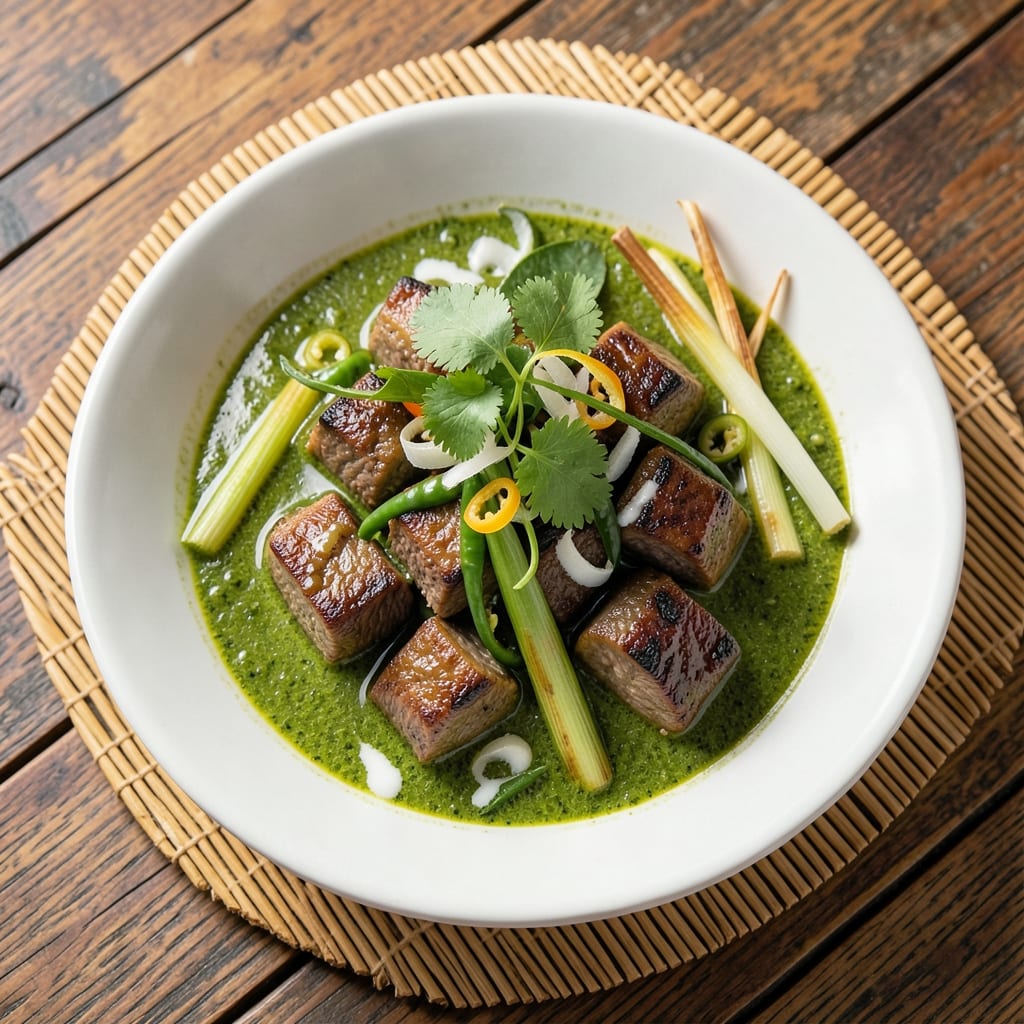
This authentic Thai green beef curry delivers the complex, herbaceous heat that makes street-side Thai food legendary. 🔥 The secret lies in fresh green curry paste—packed with lemongrass, galangal, kaffir lime leaves, and Thai chilies—that transforms tender beef into melt-in-your-mouth bites swimming in a velvety coconut sauce. I’ve perfected this recipe after years of testing, ensuring every spoonful balances sweet, sour, and fiery notes without overpowering the dish.
The magic happens in the slow simmer, where coconut milk reduces into a rich, aromatic sauce that clings to the beef and vegetables. Unlike many Westernized versions, this recipe skips shortcuts like pre-made pastes and focuses on building flavor from scratch—roasting the paste to deepen its complexity and balancing it with tamarind for that signature tang. The result is a curry that’s restaurant-quality, with layers of flavor that develop as it simmers.
By the time you serve it, you’ll have a pot of authentic Thai green curry that’s creamy yet light, spicy yet balanced, and packed with the bright, herbal notes of fresh Thai ingredients. The beef will be fork-tender, the vegetables crisp-tender, and the sauce thick enough to coat every bite without being heavy. Serve it steaming hot over jasmine rice, garnished with fresh cilantro and lime wedges, for the full experience.
This isn’t just a curry—it’s a taste of Thailand’s bustling street food culture, brought to your kitchen with professional techniques and simple, foolproof steps. Whether you’re feeding a crowd or treating yourself to a flavor-packed meal, this recipe delivers the real deal. Let’s get cooking.
Ingredients for authentic thai green beef curry
These aromatic ingredients transform simple beef into a restaurant-worthy Thai green curry.
| Ingredient | Amount | Notes |
|---|---|---|
| Beef Chuck Roast 🥩 | 1 ½ lb | Cut into 1-inch cubes |
| Green Curry Paste 🌶️ | ¼ cup | Fresh or high-quality jarred |
| Lemongrass Stalks 🌿 | 3 whole | White parts only, bruised |
| Galangal Root 🥕 | 3 oz | Peeled, sliced thinly |
| Kaffir Lime Leaves 🍋 | 4 whole | Bruised, veins removed |
| Thai Bird's Eye Chilies 🌶️ | 4 whole | Seeds removed for less heat |
| Coconut Milk 🥥 | 1 can | Full-fat, 13.5 oz can |
| Tamarind Paste 🍯 | 2 tbsp | Adjust for sourness |
| Fish Sauce 🍶 | 1 ½ tbsp | Red Boat preferred |
| Palm Sugar 🍚 | 2 tbsp | Or substitute brown sugar |
| Bamboo Shoots 🌱 | 1 cup | Canned, drained and sliced |
| Bell Peppers 🧅 | 1 whole | Red or green, sliced |
| Garlic Cloves 🧄 | 6 cloves | Minced for depth of flavor |
| Shallots 🧅 | 2 whole | Minced, not sliced |
| Fresh Cilantro 🌿 | ¼ cup | Chopped, for garnish |
| Lime Wedges 🍋 | 2 whole | For serving |
The curry paste is non-negotiable for authenticity. Look for fresh paste at Asian markets—it’s worth the splurge over jarred versions. If you must use jarred, Maesri or Thai Kitchen are solid choices, but add extra galangal and kaffir lime for depth. The beef? Chuck roast is ideal—it stays tender through the long simmer, while sirloin turns tough. Trim excess fat to avoid greasy sauce. For galangal, Asian grocery stores carry it fresh, or use ginger in a pinch (though it won’t be identical). The lemongrass and kaffir lime leaves need bruising—lightly smash them with the flat side of your knife to release oils without turning to mush.
No fish sauce? Soy sauce plus a splash of vinegar mimics the umami, but you’ll lose some complexity. Palm sugar unavailable? Brown sugar works, though it’s less authentic. The bamboo shoots can be swapped for regular canned mushrooms if needed—just drain them well. For heat, reduce Thai chilies to 2-3 if serving kids or sensitive eaters. The coconut milk should be full-fat for that velvety texture; light versions make the curry watery. And if you can’t find kaffir lime leaves, lime zest plus a splash of lime juice is the next best thing, though it won’t replicate the floral notes perfectly.
This curry tastes even better the next day—make extra and freeze portions for up to 3 months. Store leftovers in airtight containers with a layer of plastic wrap pressed directly on the sauce to prevent skin formation. The fresh herbs (cilantro, lime) should be added right before serving, so keep them separate until then. For serving, jasmine rice is a must—it absorbs the sauce beautifully. If you’re prepping ahead, roast the curry paste and aromatics first, then freeze them in a jar. Toss them straight into your pot when you’re ready to cook—saves time and keeps flavors vibrant.
Why You'll Love This Recipe
- Foolproof Simplicity: I swear by this recipe because it’s the kind of dish that forgives mistakes. The beef chuck roast stays tender with just a quick sear and simmer—no fancy knife work, no stressing over timing. Honestly, the hardest part is finding the galangal, and even then, you can sub ginger if needed.
- Umami Bomb: That first bite? Chef’s kiss. The green curry paste brings the heat, but it’s the galangal and kaffir lime leaves that make it sing—earthy, citrusy, with a depth that lingers. The lemongrass adds this bright, herbal kick that cuts through the richness of the beef.
- Weeknight to Dinner Party: Between us, this curry is my secret weapon for lazy nights and impressing guests. Double the batch for meal prep—it reheats like a dream—and serve it over jasmine rice with a side of cucumber salad. (Yes, even on a Tuesday night.)
- Budget-Friendly Luxury: Beef chuck roast is affordable, and a little goes a long way in this dish. The aromatics—lemongrass, galangal—are cheap but transformative, and leftovers taste just as good the next day. I’ll be real: it’s the kind of recipe that makes you feel fancy without breaking the bank.
Step-by-step instructions for authentic Thai green beef curry
Here's how to build this vibrant curry with layers of aromatic herbs and velvety coconut richness.
🔥 Step 1: Build the Herb Base in Smoking Hot Oil
Heat 1 tablespoon neutral oil in a heavy pot over medium-high heat until shimmering. Add the minced shallots and garlic cloves, cooking for 1-2 minutes until fragrant and just beginning to color. This is where the magic starts—don't rush this step or you'll burn the aromatics.
Add the bruised lemongrass stalks, thinly sliced galangal root, and vein-removed kaffir lime leaves. Stir for 30 seconds until the galangal softens slightly—you'll smell that distinctive citrusy, ginger-like aroma that defines Thai cuisine. Here's the thing: these herbs need time to bloom their flavors before the curry paste joins the party.
🍳 Step 2: Develop the Curry Paste and Balance Flavors
Reduce heat to medium and add the 0.25 cup green curry paste, stirring constantly for 2 minutes until it darkens and releases its oils. The paste will smell intensely herbal—like a forest after rain. Add the seeded Thai bird's eye chilies and cook for another 30 seconds to integrate their heat.
Pour in the 1 can coconut milk and scrape up any browned bits from the bottom (that's pure flavor). Stir in the 2 tbsp tamarind paste and 1.5 tbsp fish sauce, then bring to a gentle simmer. This is where the sauce starts to come together—you should see it thicken slightly as the starches in the paste activate.
🥘 Step 3: Cook the Beef Until Fork-Tender
Add the 1.5 lb beef chuck roast cut into 1-inch cubes and stir to coat in the sauce. Increase heat to medium-high and bring to a boil, then immediately reduce to low heat. Cover and simmer for 1 hour, stirring occasionally, until the beef is fork-tender and pulls apart easily. The curry should reduce slightly, coating the beef in a glossy sauce.
Real talk: I check for doneness by pressing a piece with a fork—if it resists slightly but still has a bit of bounce, it needs more time. The sauce should be thick enough to coat the back of a spoon but still pour gently. If it's too thin, uncover and simmer uncovered for 5-10 minutes to reduce.
🍳 Step 4: Finish with Vegetables and Sweet-Sour Balance
Add the sliced bell peppers and bamboo shoots, stirring to distribute evenly. Cook uncovered for 5-7 minutes until the peppers soften slightly but still retain their shape. Stir in the 2 tbsp palm sugar and cook for another 1 minute—this balances the heat with just the right amount of sweetness.
Taste and adjust seasoning: need more heat? Add a pinch of red pepper flakes. Too sour? A touch more palm sugar. The curry should sing with complex flavors—herbal, spicy, sweet, and umami all in harmony. The vegetables should be tender-crisp, not mushy, so don't overcook them.
🍽️ Step 5: Serve with Fresh Garnishes
Remove from heat and stir in the 0.25 cup chopped fresh cilantro. Let the curry sit for 5 minutes—this resting period lets all the flavors meld together. Serve immediately with steamed jasmine rice and the 2 lime wedges on the side for squeezing. The lime brightens each bite with zesty freshness that cuts through the richness.
Here's the moment that matters: the first bite should deliver layers of flavor—herbal galangal, citrusy lemongrass, creamy coconut, and a slow-building heat from the chilies. That's authentic Thai green curry, where every ingredient plays its part in perfect harmony.
Pro Tips For Making Authentic Thai Green Beef Curry
- Bloom the Paste First: I used to toss the green curry paste straight into the hot oil, and it always burned before releasing its flavor. Instead, add 1 tablespoon of oil to the wok first, then stir in the paste on medium-low heat for 30 seconds—just until fragrant but not browned. This step unlocks the aromatic oils without turning it bitter.
- Slice Galangal Thin: Thick chunks of galangal? Forget it. Thinly slice it—about 1/8-inch thick—and you’ll get that bright, citrusy kick without chewing on tough fibers. If you can’t find fresh, frozen works too, but pat it dry first to avoid splattering.
- Low and Slow for Tender Beef: Chuck roast needs patience. After searing, simmer the curry on the lowest heat setting you can tolerate—just above a bare simmer—with the lid slightly ajar. This keeps the sauce rich but prevents the beef from turning into shoe leather. Check at 1.5 hours; it’ll finish in 2.
- Toast Kaffir Lime Leaves: Toss the whole leaves into the pot early, but here’s the upgrade: Give them a quick 10-second dry toast in the wok before adding liquid. This deepens their piney aroma and prevents them from floating like sad, soggy paper. Remove them before serving—no one wants to chew on them.
Best sauces and condiments for this dish
Green Curry Paste
This is the heart of your curry—fresh green curry paste is non-negotiable for authenticity. Look for it at well-stocked Asian markets or specialty stores like H Mart or 99 Ranch. Brands like Maesri or Thai Kitchen work in a pinch, but I recommend making your own if possible. The paste should include lemongrass, galangal, kaffir lime leaves, Thai chilies, shallots, garlic, coriander root, and cumin—each ingredient contributes to the complex herbal profile. 🌿
Tamarind Paste
The tangy backbone of Thai green curry comes from tamarind paste, which balances the richness of coconut milk. Use 2 tbsp of high-quality paste (I love Thai Kitchen brand) for that signature sour note. If you can't find tamarind, a mix of 1 tbsp lime juice + 1 tsp brown sugar works, though it won’t be identical. For extra depth, simmer the paste with the coconut milk for 2-3 minutes before adding other ingredients—this helps dissolve it fully and melds the flavors. 🍯
Fish Sauce
Red Boat fish sauce is the gold standard here—it adds umami depth without overpowering. Use 1.5 tbsp and taste as you go; some brands are saltier than others. If you’re avoiding fish sauce, try 1 tbsp soy sauce + ½ tsp vinegar, but you’ll lose some complexity. Pro tip: Let the fish sauce bloom in the hot oil with the aromatics for 30 seconds before adding coconut milk—this intensifies its flavor. 🍶
Coconut Milk
Full-fat coconut milk (13.5 oz can) is essential for that velvety texture. Brands like Thai Kitchen or Aroy-D are reliable, but avoid light versions—they’ll make your curry watery. For extra richness, use ½ cup cream of coconut (like Chaokoh brand) in addition to the milk. If you’re making this ahead, reduce the coconut milk slightly before storing to prevent separation. 🥥
Palm Sugar
This natural sweetener adds balance to the heat and acidity. 2 tbsp of palm sugar (found in Asian markets) caramelizes beautifully, but light brown sugar works in a pinch. For a deeper flavor, toast the sugar in a dry pan for 1-2 minutes until fragrant before adding it to the curry. This step is crucial—it rounds out the sharpness of the tamarind and chilies. 🍚
Fresh Herbs
Finish with fresh cilantro and lime wedges for brightness. Use ¼ cup chopped cilantro right before serving—it adds a fresh, herbal note that contrasts the creamy sauce. The lime wedges should be served on the side so everyone can squeeze as much or as little as they like. For extra aroma, gently bruise the cilantro stems before chopping and add them to the pot while simmering. 🍋
Nutrition facts
Frequently asked questions
What makes this green curry recipe more authentic than others?
This recipe uses fresh green curry paste (not powdered) with key ingredients like galangal and kaffir lime leaves—essential for that signature herbal depth. The tamarind paste provides authentic sourness, while the slow simmer develops complex flavors that store-bought versions often miss. We also balance heat with palm sugar for that perfect Thai sweet-spicy contrast.
Can I substitute beef with another protein?
Yes! For chicken, use 1.5 lbs boneless thighs (cook 25-30 minutes instead of 1 hour). For shrimp, add them in the last 5 minutes to avoid overcooking. Tofu works too—use firm tofu cut into cubes and simmer for 20 minutes, but add it after the beef is tender to prevent sogginess.
Why does my curry taste too sour or spicy?
Too sour? The tamarind paste may need balancing—add 1 tsp brown sugar or a pinch of salt. Too spicy? Reduce heat by removing some chili seeds or adding 1 tbsp coconut milk to dilute. Pro tip: Taste as you go! The curry should sing with all flavors, not dominate with just one.
How do I make this ahead of time?
Cook the curry up to Step 4 (before adding fresh herbs), then cool completely. Store in airtight containers for 3 days in the fridge or 3 months in the freezer. Reheat gently on low heat, adding a splash of water if needed. Always add fresh cilantro and lime right before serving for maximum brightness.
What's the best way to serve this curry?
Pair it with jasmine rice (the standard!) and add these sides: cucumber salad (for cooling crunch), Thai basil leaves (for garnish), or crispy fried shallots for texture. For extra authenticity, serve with Thai eggplant (pad pak) or steamed bok choy on the side.