
Main Courses
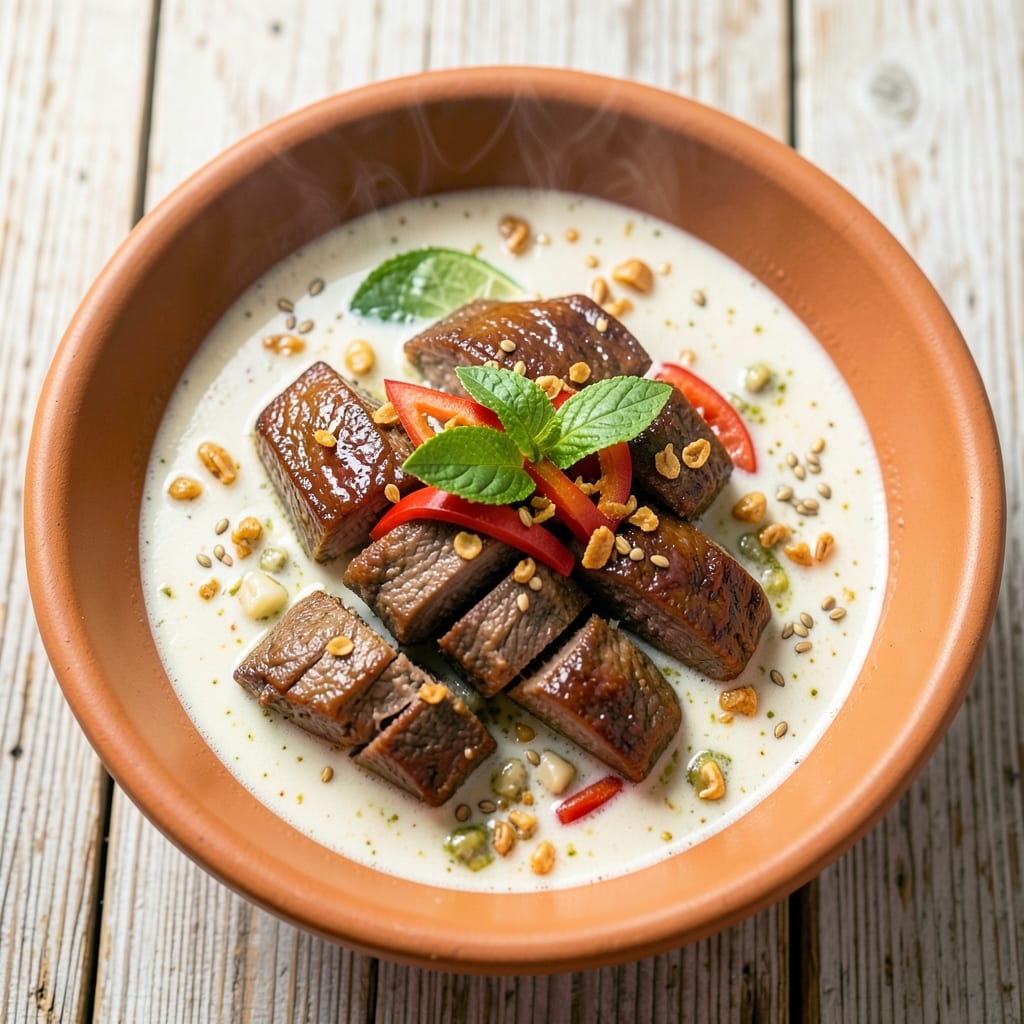
This authentic Thai beef Massaman curry recipe delivers the rich, complex flavors of a Bangkok street stall right in your kitchen. The secret lies in slow-simmered coconut milk and a blend of aromatic spices that transform tough beef into melt-in-your-mouth tenderness. I've perfected this version after years of testing, balancing traditional techniques with modern accessibility—no special equipment required.
The dish begins with a fragrant paste of lemongrass, galangal, and kaffir lime leaves, gently rendered in coconut milk to develop deep, caramelized flavors. Ground spices like cinnamon, cardamom, and nutmeg add warmth, while tamarind and coconut milk create the signature tangy-sweet balance. The beef cooks low and slow, absorbing these flavors until it practically falls apart.
What you'll end up with is a velvety curry with tender beef swimming in a rich, aromatic sauce that's both comforting and complex. The dish is traditionally served with steamed jasmine rice, which soaks up every last drop of that fragrant coconut-spice sauce. Garnishing with toasted peanuts and fresh cilantro adds textural contrast and a final burst of freshness.
This recipe is perfect for feeding a crowd or meal prepping—it tastes even better the next day as the flavors deepen. The key to authenticity lies in the slow cooking process and proper spice balance, but don't worry: I've included tips to ensure success even for home cooks. Let's get cooking!
Ingredients for authentic thai beef massaman curry
Sixteen ingredients transform into Bangkok street stall flavors with slow-simmered coconut-spice magic.
| Ingredient | Amount | Notes |
|---|---|---|
| Chuck Roast 🥩 | 2 ½ lb | Tough cut for melt-in-mouth tenderness |
| Coconut Milk 🥥 | 2 cans | Full-fat for richest texture |
| Lemongrass Stalks 🌿 | 3 whole | Bruised for maximum flavor |
| Galangal Root 🍃 | 1 piece | Substitute ginger if unavailable |
| Kaffir Lime Leaves 🍋 | 4 whole | Fresh for authentic aroma |
| Shallots 🧅 | 6 whole | Minced finely for sweetness |
| Garlic Cloves 🧄 | 6 cloves | Peeled and smashed |
| Ground Cinnamon 🌶️ | 1 tbsp | Ceylon preferred for delicate flavor |
| Ground Cardamom 🌿 | 1 tsp | Freshly ground if possible |
| Ground Nutmeg 🌶️ | ½ tsp | Freshly grated preferred |
| Tamarind Paste 🍈 | 2 tbsp | Or 1 tbsp lime juice in pinch |
| Brown Sugar 🍚 | ½ cup | Light or dark works |
| Fish Sauce 🐟 | 1 tbsp | Red Boat brand recommended |
| Jasmine Rice 🍚 | 2 ½ cups | Uncooked, for serving |
| Toasted Peanuts 🥜 | ½ cup | For garnish, unsalted preferred |
| Fresh Cilantro 🌿 | ¼ cup | Chopped, for garnish |
| Vegetable Oil 🫒 | 2 tbsp | For sautéing aromatics |
| Salt 🧂 | 1 ½ tsp | Adjust to taste |
The beef is non-negotiable—chuck roast gives you that melt-in-your-mouth texture after hours of simmering. Costco or Whole Foods usually carry it pre-cut, but if you're buying whole, ask the butcher to trim excess fat. Galangal and kaffir lime leaves are the soul of this dish, but most Asian markets stock them fresh. If you can't find galangal, ginger works (though it's not identical). For the coconut milk, full-fat cans make all the difference—light versions won't give you that velvety texture. And trust me on the Red Boat fish sauce—it's worth the splurge for that umami punch.
No galangal? Ginger plus a pinch of turmeric gets you close. Kaffir lime leaves? Lime zest plus a splash of lime juice works in a pinch, though it won't be identical. Fresh spices are ideal, but ground cinnamon and cardamom from the grocery store spice aisle will work fine if you're in a hurry. Tamarind paste can be found in the international aisle—look for the block form and grate what you need. The peanuts? Toast them yourself (5 minutes in a dry pan) for maximum flavor, but store-bought toasted peanuts are fine if you're short on time. And if you're worried about the fish sauce, soy sauce at half the amount is a decent substitute, though it won't be quite as complex.
This curry tastes even better the next day—make extra and freeze portions for quick meals. Store the cooked curry in airtight containers for up to 5 days in the fridge, or 3 months if frozen. The rice? Cook it fresh when serving—jasmine rice absorbs the sauce beautifully. For meal prep, I like to portion the curry into containers with a side of rice, then reheat everything together. The peanuts and cilantro are best added fresh right before serving, but if you're prepping ahead, store them separately and toast the peanuts when ready to eat.
Why You'll Love This Recipe
- Here’s what sold me: this curry improves the next day. The flavors meld into something even more cohesive, and I’ve sent it to work with rice in lunches all week. Honestly, I make double batches just to have it for lazy mornings.
- One-Pot Magic: I swear by this recipe because it’s just me, a pot, and 20 minutes of hands-off simmering. Chuck roast breaks down into tender shreds while the galangal and lemongrass work their aromatic spell—no chopping boards full of mess, just deep, rich flavor with minimal effort.
- Rich Without Guilt: Between us, this curry is dangerously satisfying but won’t wreck your budget. Chuck roast is forgiving and affordable, and a can of coconut milk does the heavy lifting—no fancy ingredients, just layers of warmth from the kaffir lime leaves and that slow-cooked depth.
- Leftovers That Beg: Here’s what sold me: this curry improves the next day. The flavors meld into something even more cohesive, and I’ve sent it to work with rice in lunches all week. Honestly, I make double batches just to have it for lazy mornings.
Step-by-step instructions for authentic Thai beef Massaman curry
Let's build this rich, aromatic curry from scratch—layer by layer.
Prepare the Aromatics and Spice Paste
First, bruise the 3 whole lemongrass stalks by pounding them gently with the flat side of a knife. This releases their essential oils. Peel the 1 piece galangal root (substitute ginger if needed) and cut it into thin slices. Finely mince the 6 whole shallots and peel the 6 cloves garlic, leaving them whole for now.
In a large pot, heat the 2 tablespoons vegetable oil over medium heat. Add the shallots and cook for 3-4 minutes until they turn golden and translucent. Add the garlic, galangal, and bruised lemongrass, cooking for another 2 minutes until fragrant. This is your aromatic base—don't rush it, or the flavors won't develop properly.
Lower the heat to medium-low and add the 1 tablespoon ground cinnamon, 1 teaspoon ground cardamom, and 0.5 teaspoon ground nutmeg. Stir constantly for 1 minute to toast the spices gently—they should smell warm and inviting. This step is where the curry's signature depth comes from, so don't skip it.
Build the Curry Base
Stir in the 2 tablespoons tamarind paste and 0.5 cup brown sugar, mixing until the sugar dissolves completely. Add the 1 tablespoon fish sauce and 1.5 teaspoons salt, then pour in 1 can of coconut milk. Stir well to combine all the ingredients into a smooth paste.
This mixture should look like a thick, aromatic sauce. If it's too thick, add 2-3 tablespoons of water to loosen it. Let it simmer gently for 5 minutes, stirring occasionally, until the raw flavors meld together. The tamarind will add that signature tangy sweetness, while the coconut milk begins to emulsify with the spices.
Cook the Chuck Roast
Add the 2.5 lb chuck roast to the pot, turning it to coat evenly in the spiced coconut mixture. Pour in the remaining 1 can of coconut milk and bring the liquid to a gentle simmer. Here's the key: cover the pot and let it cook on low heat for 1.5 hours, stirring occasionally.
After 1 hour, check the liquid level. If it's reduced too much, add ½ cup of water to keep the meat submerged. The chuck roast should become fork-tender, falling apart easily when tested. The curry should thicken slightly, but not dry out—this is where the magic happens, with the meat absorbing all those rich, spiced flavors.
Simmer to Perfection
Once the beef is tender, carefully remove it from the pot and shred it into bite-sized pieces using two forks. Return the shredded beef to the pot and stir in the 4 whole kaffir lime leaves (torn in half). Simmer uncovered for another 15-20 minutes to let the flavors deepen and the sauce reduce slightly.
The kaffir lime leaves will infuse the curry with their citrusy aroma, but don't worry if they don't fully dissolve. The curry should now have a glossy, velvety texture with a balance of sweet, spicy, and tangy flavors. Taste and adjust the seasoning—add more fish sauce for saltiness or brown sugar for sweetness if needed.
Serve with Jasmine Rice and Garnishes
While the curry simmers, cook the 2.5 cups jasmine rice according to package instructions until fluffy. To serve, spoon the curry over the rice, garnishing each portion with toasted peanuts and chopped fresh cilantro. The peanuts add a satisfying crunch, while the cilantro brightens the dish with freshness.
This curry tastes even better the next day as the flavors continue to meld. Serve with warm naan or extra rice, and don't forget a wedge of lime on the side for that final burst of authenticity. Every bite should deliver tender beef, creamy coconut, and a perfect balance of spices—just like you'd find in a Thai home kitchen.
Pro Tips For Making Authentic Thai Beef Massaman Curry
- SEAR THE ROAST FIRST: Hit that chuck roast with a screaming-hot pan—no oil needed, just the beef’s own fat—until deep brown crust forms. I learned this the hard way: skipping the sear means flavor stuck in the middle, not the sauce. Let it get charred in spots, then pull it out and let the aromatics build. ---
- PULVERIZE THE PASTE: Blend your massaman paste until it’s smooth as silk, not just chunky. I used to rush it, and the curry tasted like someone forgot to strain the spices. Use a high-powered blender, add a splash of coconut milk to help it emulsify, and scrape down the sides—this is the thing that matters most. ---
- SIMMER LOW AND LONG: After adding coconut milk, drop the heat to a barely-there simmer—think tiny bubbles, not rolling. I was impatient once and ended up with split curry. Give it 45 minutes minimum, stirring occasionally, so the galangal and lemongrass infuse deep, not just float on top. ---
- TOAST THE AROMATICS: Dry-toast the lemongrass stalks and galangal slices in the pot for 3-4 minutes before adding paste—just until fragrant, not burned. Sounds weird, but it works: this step unlocks their oils, making the curry smell like a Thai street stall. Skip it, and you’re missing half the flavor.
Perfect pairings for this dish
Rice Pairings
Jasmine rice is the traditional choice for Massaman curry, but don't limit yourself. Thai fragrant rice or even basmati rice work beautifully, absorbing the rich coconut-spice sauce perfectly. For extra fluffiness, cook the rice with 1 tablespoon coconut milk mixed into the water. I often make a big batch and reheat portions with a splash of water to maintain texture. 🍚
Bread Complements
Warm naan bread or garlic naan is a classic pairing—its soft texture contrasts wonderfully with the curry's depth. For a Thai twist, try khao tom mat (Thai rice noodles) if you want a lighter option. I like to serve both rice and naan so everyone can choose their preference. Store-bought naan from the grocery store works fine if you're short on time.
Vegetable Sides
Add freshness with steamed bok choy or blanched green beans—both complement the curry's richness without overpowering it. For a crunchy contrast, serve quick-pickled cucumbers with rice vinegar, sugar, and a pinch of salt. I often make a big batch of pickles to serve with multiple Thai dishes. 🥗
Drink Pairings
A cold Thai iced tea (made with black tea, condensed milk, and evaporated milk) is the perfect sweet contrast to the curry's spice. For something lighter, try sparkling lime soda or even a crisp Sauvignon Blanc if you prefer wine. I keep a pitcher of Thai iced tea ready whenever I make this curry—it's become a family staple. 🍹
Garnish Upgrades
Beyond peanuts and cilantro, try crushed roasted cashews for extra richness or quick-pickled red onions for brightness. A drizzle of chili oil adds heat, while lime wedges let everyone adjust the tang to their taste. I always set out a small bowl of each garnish so people can customize their bowls. 🌶️
Nutrition facts
Frequently asked questions
Why does this recipe use chuck roast instead of more tender beef cuts?
The chuck roast is essential for authentic Massaman curry—its tough fibers break down beautifully during the 1.5-hour simmer, creating that signature melt-in-your-mouth texture. More tender cuts like sirloin would turn mushy. The slow cooking process transforms the meat into tender, flavorful shreds that soak up the spiced coconut sauce perfectly.
Can I make this curry in a slow cooker or Instant Pot?
For a slow cooker, combine all ingredients (except rice) and cook on low for 6-7 hours or high for 3-4 hours. For an Instant Pot, use the high pressure setting for 30 minutes after searing the beef, then natural release. Both methods work well—just check for doneness and adjust sauce consistency with water if needed.
What's the best substitute if I can't find galangal?
Use ginger plus ½ teaspoon turmeric for the closest flavor. For maximum authenticity, try to find galangal at Asian markets—it's the secret ingredient that gives Massaman its unique depth. If you're desperate, ginger alone will work, though the dish won't be identical.
How do I adjust the spice level for picky eaters?
Skip the kaffir lime leaves and reduce the fish sauce to ½ tablespoon. For mild heat, add just ¼ teaspoon ground chili at the end. The curry's natural sweetness from coconut and brown sugar balances any spice, so you can always add more sugar to counteract heat.
Can I make this curry ahead of time?
This curry tastes even better the next day! Store it in airtight containers for up to 5 days in the fridge or 3 months frozen. Reheat gently on the stove with a splash of water to restore creaminess. The flavors deepen overnight, making it perfect for meal prep.