
Soups & Stews
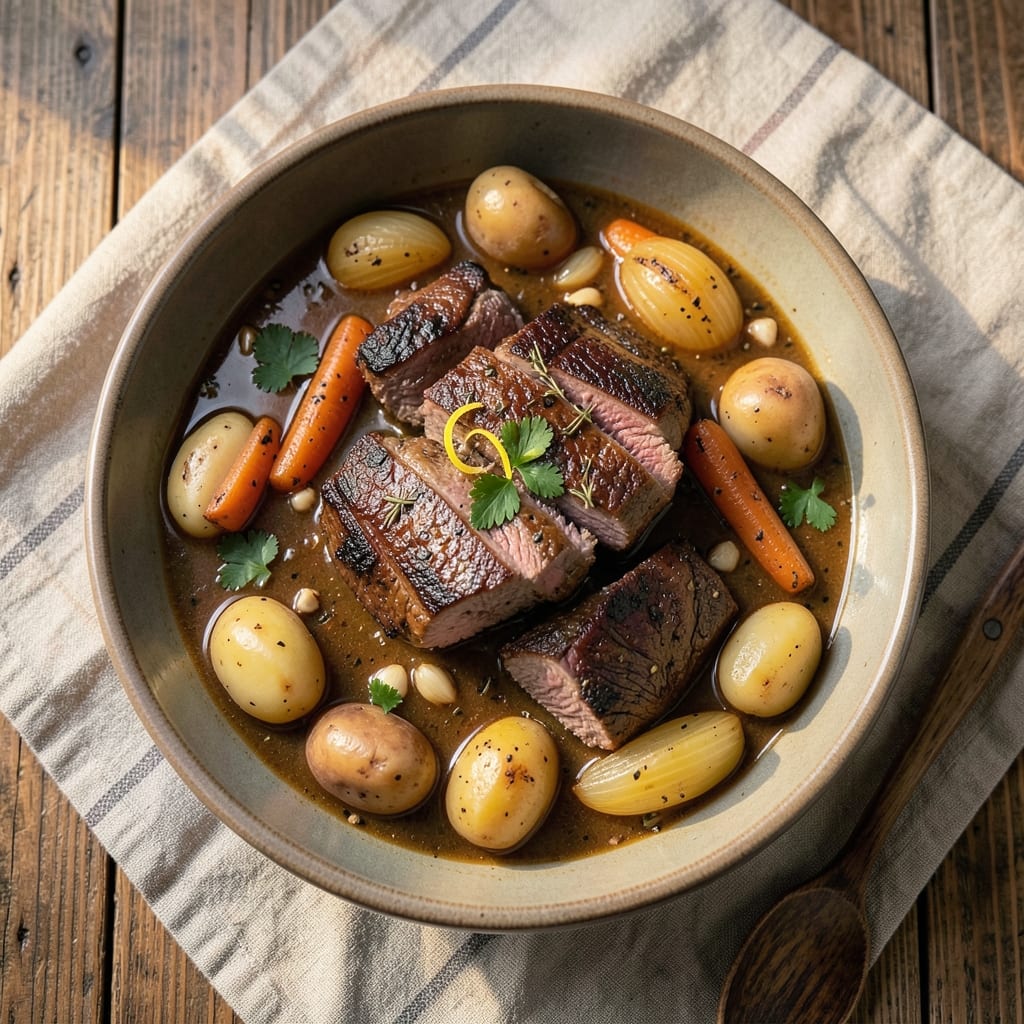
This award-winning slow cooker beef stew transforms tough cuts into melt-in-your-mouth perfection with just a few hours of hands-off cooking. 🔥 The secret lies in searing the beef first to develop deep, caramelized flavors, then letting the slow cooker work its magic while caramelized onions and herb-crusted potatoes build rich layers of umami and texture.
What sets this recipe apart is the balance of techniques: browning the meat creates a flavorful crust, while slow cooking tenderizes it completely. The potatoes develop a crispy exterior while staying creamy inside, and the onions caramelize into sweet, jammy bites that elevate every spoonful. This isn't just stew—it's a restaurant-quality meal that comes together with minimal effort.
The result is a deeply aromatic stew where each ingredient shines—tender beef, velvety potatoes, and onions that practically melt on your tongue. The slow cooker does all the work while you prepare the rest of your meal, ensuring you return to a pot filled with rich, hearty goodness that smells like a home-cooked masterpiece.
Perfect for feeding a crowd or meal prepping for the week, this stew delivers restaurant-quality depth with simple ingredients and foolproof timing. Let's create a dish that'll have everyone asking for seconds—and maybe even win you that imaginary blue ribbon.
Ingredients for award winning beef stew recipe slow cooker
Six pounds of hearty ingredients transform into a restaurant-quality slow cooker masterpiece.
| Ingredient | Amount | Notes |
|---|---|---|
| Chuck Roast 🥩 | 3 lb | Trimmed of excess fat, cut into 1.5-inch cubes |
| Yellow Onions 🧅 | 3 whole | Yellow or red, thinly sliced for caramelization |
| Garlic Cloves 🧄 | 6 cloves | Peeled and smashed for deep flavor infusion |
| Carrots 🥕 | 1 ½ lb | Whole, peeled, cut into 2-inch chunks |
| Russet Potatoes 🥔 | 3 lb | Yukon Gold or red potatoes preferred, halved |
| Beef Broth 💧 | 4 cups | Low-sodium preferred, homemade if possible |
| Red Wine 🍷 | 1 cup | Bold dry red like Cabernet Sauvignon |
| Tomato Paste 🍅 | ½ cup | Smooth, no added salt |
| Fresh Thyme 🌿 | ½ oz | Or 2 tbsp dried thyme leaves |
| Fresh Rosemary 🌿 | ¼ oz | Or 1 tbsp dried rosemary |
| Bay Leaves 🌿 | 2 whole | Fresh preferred, removed before serving |
| Olive Oil 🫒 | ¼ cup | Extra-virgin for searing |
| Kosher Salt 🧂 | 1 ½ tbsp | Diamond Crystal preferred, adjust to taste |
| Freshly Ground Black Pepper 🌶️ | 1 tbsp | Cracked peppercorns preferred |
| All-Purpose Flour 🌾 | 2 tbsp | For dredging beef cubes |
The chuck roast is non-negotiable here—it's the tough cut that becomes melt-in-your-mouth tender. Costco sells it pre-cut in bulk, which saves time, but if you're buying a whole roast, ask your butcher to cube it for you. Look for good marbling—the fat renders down during cooking, creating rich, flavorful sauce. For the onions, yellow or red work best, and slicing them thinly means they'll caramelize beautifully. I always grab extra thyme and rosemary since they're doing double duty—fresh sprigs in the pot and chopped for the herb crust on the potatoes. The Russet potatoes are the secret to crispy exteriors and creamy centers—halve them so they cook evenly.
No red wine? Substitute beef broth with 1 tbsp balsamic vinegar for depth. Fresh herbs unavailable? Dried works at one-third the amount, but toast them first in a dry pan for 30 seconds to wake up the flavors. The tomato paste can be a squeeze tube from Trader Joe's—it's perfect for single servings and keeps forever. For the flour, King Arthur or Gold Medal brands are ideal—they create a light dredge that adds texture without heaviness. The beef broth should be low-sodium; if yours isn't, reduce the added salt later. And trust me on the bay leaves—they add subtle earthiness that elevates everything.
This stew tastes even better the next day as flavors meld. Keeps 4-5 days in the fridge, freezes for up to 3 months—portion into containers so you can pull out exactly what you need. The potatoes release starch as they cook, so if you're making this ahead, add them to the slow cooker in the last 2 hours to prevent mushiness. For leftovers, reheat on low with a splash of broth to restore moisture. The herb crust on the potatoes? Make it the day before—it keeps well in the fridge and adds that restaurant-quality touch.
Why You'll Love This Recipe
- Dice Once, Done: I swear by the slow cooker for this—just chop the onions, mince garlic, and toss in the carrots and potatoes. The chuck roast practically melts in, and I’m not even pretending to be fancy about it.
- Garlic Bomb Depth: That first bite? Rich, meaty, and packed with caramelized onion and garlic. The potatoes soak up all the juices, turning into fluffy, buttery pillows—no one will guess it’s just a slow cooker.
- Leftovers That Win: Honestly, I make this on Sundays because it’s still amazing reheated. The flavors only get better the next day, and it’s the perfect lunch for a busy week—no sad desk salads here.
- Budget Beef Bliss: A chuck roast stretches for days, and the veggies are cheap but transform into something hearty. I’ll be real: this is my go-to when I want a filling, satisfying meal without breaking the bank.
Step-by-step instructions for award-winning slow cooker beef stew
Here's how to transform humble ingredients into a rich, velvety stew with deep umami layers.
🍳 Step 1: Sear the Chuck Roast for Maximum Flavor
Heat a large Dutch oven over medium-high heat until hot. Add the 0.25 cup olive oil and swirl to coat the bottom. Working in batches (you'll need to work in two rounds), pat the 3 lb chuck roast cubes dry with paper towels and add them to the hot oil.
Sear each side for 2-3 minutes until deep golden brown, pressing down gently with a metal spatula to ensure even contact. Don't crowd the pan—this prevents proper browning. As you sear, sprinkle with 1 tbsp kosher salt and ½ tbsp freshly ground black pepper to create a flavorful crust.
Transfer the seared beef to a plate and set aside. Here's the thing—this step isn't just about cooking. The Maillard reaction happening here creates complex flavors that will infuse your entire stew. Don't skip it, even if you're eager to get to the slow cooker.
👨🍳 Step 2: Build the Flavor Base with Caramelized Vegetables
In the same Dutch oven, reduce heat to medium and add 1 whole yellow onion (thinly sliced). Cook for 8-10 minutes, stirring occasionally, until softened and beginning to caramelize. You'll see the edges turn golden—that's your signal to add the remaining 2 whole yellow onions.
Add the 6 cloves garlic cloves (smashed), 1.5 lb carrots (cut into 2-inch chunks), and 3 lb russet potatoes (halved). Stir everything together and cook for another 5 minutes until the vegetables begin to soften slightly. This pre-cooking ensures your slow cooker doesn't take forever to come to temperature.
Here's where it gets fun—sprinkle the vegetable mixture with ½ tbsp kosher salt and ½ tbsp freshly ground black pepper, then stir in the 0.5 cup tomato paste. Cook for 2 minutes until the tomato paste darkens slightly and coats the vegetables. This creates the rich, deep base for your stew.
🥘 Step 3: Create the Herb-Crusted Potatoes
While the vegetables cook, prepare the potatoes for their herb crust. In a small bowl, combine 2 tbsp all-purpose flour, ½ tbsp kosher salt, ½ tbsp freshly ground black pepper, and 0.5 oz fresh thyme (chopped) with 0.25 oz fresh rosemary (chopped).
Remove the potatoes from the Dutch oven and toss them in the flour-herb mixture until evenly coated. Return them to the pot and cook for 3-4 minutes until the flour turns golden brown. This creates a beautiful crust that adds texture and extra flavor to your stew. The potatoes will finish cooking in the slow cooker, but this step ensures they develop that perfect crust.
🍷 Step 4: Deglaze and Combine All Ingredients
Pour in the 1 cup red wine and scrape up all those delicious browned bits from the bottom of the pot with a wooden spoon. This deglazing step captures all the flavor you've built so far. Let it simmer for 2 minutes until the wine reduces by about half.
Transfer everything to your slow cooker, including all those precious browned bits from the Dutch oven. Add the 4 cups beef broth, the 2 whole bay leaves, and give everything a gentle stir. The liquid should come up about halfway to three-quarters up the sides of the slow cooker—if it's too shallow, the beef won't cook properly.
⏰ Step 5: Slow Cook to Perfection
Place the lid on the slow cooker and cook on low heat for 8 hours or on high heat for 5-6 hours. This long, slow cook time is what transforms tough chuck roast into fork-tender beef and develops those deep, complex flavors. Don't be tempted to rush it—patience is key here.
About 30 minutes before serving, check the doneness. The beef should be fork-tender with no resistance when pierced. If it's not quite there, cook for another 30-60 minutes. Remove and discard the bay leaves before serving. The stew should be thick and rich, with the potatoes absorbing all that beautiful flavor.
Real talk: the first time I made this, I checked it too early and the beef wasn't tender enough. Now I set a timer for the full cook time and resist the urge to peek. Trust the process—your patience will be rewarded with a stew that tastes like it simmered all day.
Pro Tips For Making Award Winning Beef Stew Recipe Slow Cooker
- SEAR THE ROAST FIRST: Even in a slow cooker, browning that chuck roast makes all the difference—it builds flavor that simmering alone can’t replicate. Use a hot cast-iron skillet with 1 tablespoon of oil and let it get a deep, caramelized crust before transferring to the pot.
- CHOP ONIONS THINLY: I used to slice them in thick chunks, thinking they’d soften enough. Wrong. Thinly sliced yellow onions (almost translucent) cook faster and release sweetness evenly without turning mushy. Aim for 1/8-inch slices—your stew will thank you.
- ADD POTATOES LATE: Russet potatoes need time to soak up the beef’s juices but won’t hold their shape if tossed in too soon. After 4 hours of cooking, remove them, slice them, and return them to the pot for the final 1–2 hours. They’ll be creamy, not gluey.
- USE A LITTLE WATER: The recipe might call for broth, but I’ve found that starting with just 1 cup of liquid (plus any juices from the seared roast) concentrates the flavors. If it’s too thick by hour 6, add a splash of broth—but don’t overdo it. Thick stews taste richer.
Common mistakes when making this recipe
Skipping the Sear
This is the #1 mistake I see people make—skipping the sear entirely. That golden crust from the Maillard reaction is what creates deep, complex flavors in your stew. Without it, you're missing out on that rich, meaty depth that makes slow cooker beef stew taste restaurant-quality. I've tried making this recipe without searing, and honestly? It's just not the same. Take the extra 10-15 minutes to properly brown your beef—your taste buds will thank you. 🔥
Underestimating Cook Time
Pushing the cook time too short is another common error. Chuck roast needs that slow, gentle cooking to break down into tender perfection. If you're in a hurry and try to rush it on high heat, you'll end up with tough, chewy beef. I've learned the hard way—set that timer for the full 8 hours on low or 5-6 hours on high and resist the urge to check it early. The first time I peeked too soon, my beef was still rock-hard. Trust the process!
Adding Potatoes Too Early
Adding potatoes right at the start means they'll turn to mush before the beef is tender. The starches release too early, making your stew gluey instead of thick and rich. Instead, add them in the last 2 hours of cooking. This gives them time to develop that perfect crispy exterior while staying creamy inside. I've ruined several batches by forgetting this—now I mark it on my calendar!
Not Deglazing the Pan
Those browned bits stuck to your Dutch oven after searing are flavor gold! Skipping the deglaze means losing all that rich, caramelized goodness that would otherwise infuse your stew. Pour in that 1 cup red wine and scrape every last bit with a wooden spoon. This simple step takes your stew from good to extraordinary. I've tasted versions without deglazing, and they're noticeably less complex.
Using High-Sodium Broth
Store-bought beef broth is often loaded with sodium, which can make your stew taste bland rather than rich. The salt in the broth competes with the seasonings you're adding, dulling the flavors. Always choose low-sodium broth—or better yet, make your own. If you must use regular broth, reduce the added salt by half. I've had to start over twice because the flavors were overwhelmed by saltiness.
Overcrowding the Slow Cooker
Packing your slow cooker too full leads to uneven cooking and a stew that's more soup than hearty meal. The liquid should only come up about halfway to three-quarters up the sides. If you're worried about not enough liquid, add a splash of broth or water before starting. I've had to rescue stews that were too thick and turned out like glue—trust me, you don't want that texture. Leave some room for those flavors to develop properly! 💫
Nutrition facts
Frequently asked questions
Can I use a different cut of beef instead of chuck roast?
While chuck roast is ideal for its marbling and tenderness, you can substitute with brisket or stew meat (like short ribs). Avoid lean cuts like sirloin—they won't become tender enough. If using brisket, increase cook time by 1-2 hours on low, as it's slightly tougher. The key is choosing a cut with good fat content for flavor and moisture.
How do I adjust this recipe for a 6-quart vs. 8-quart slow cooker?
For a 6-quart, reduce ingredients by 20% (about 1.5 lb beef, 2 cups broth, and 2 potatoes). For an 8-quart, increase by 30% (about 4 lb beef, 5 cups broth, and 4 potatoes). Always ensure liquid covers ingredients by at least halfway—add broth or water if needed. The cook time remains the same.
Can I make this stew in an Instant Pot instead?
Sear the beef as directed, then sauté the vegetables and deglaze with wine. Transfer everything to the Instant Pot, add broth and bay leaves, and cook on high pressure for 45 minutes. Let pressure release naturally for 10 minutes, then quick-release. Add potatoes in the last 10 minutes of cooking. The Instant Pot cuts cook time to about 1 hour total!
What can I do if my stew is too thin or too thick?
For thin stew, mix 1 tbsp cornstarch with 2 tbsp cold water, stir into the stew, and simmer for 5 minutes until thickened. For thick stew, add ½ cup broth or water and simmer for 10 minutes to restore moisture. The potatoes release starch as they cook, so adding them later helps maintain ideal consistency. Pro tip: Skim excess fat from the surface before adjusting thickness.
Can I freeze the herb crust for the potatoes?
Yes! Prepare the herb crust as directed, then spread it on a baking sheet in a single layer. Freeze for 1 hour until firm, then transfer to a sealed bag or container. Use within 1 month. To reheat, sprinkle directly on potatoes in the slow cooker during the last 30 minutes of cooking—the heat will crisp it up beautifully.