
Main Courses
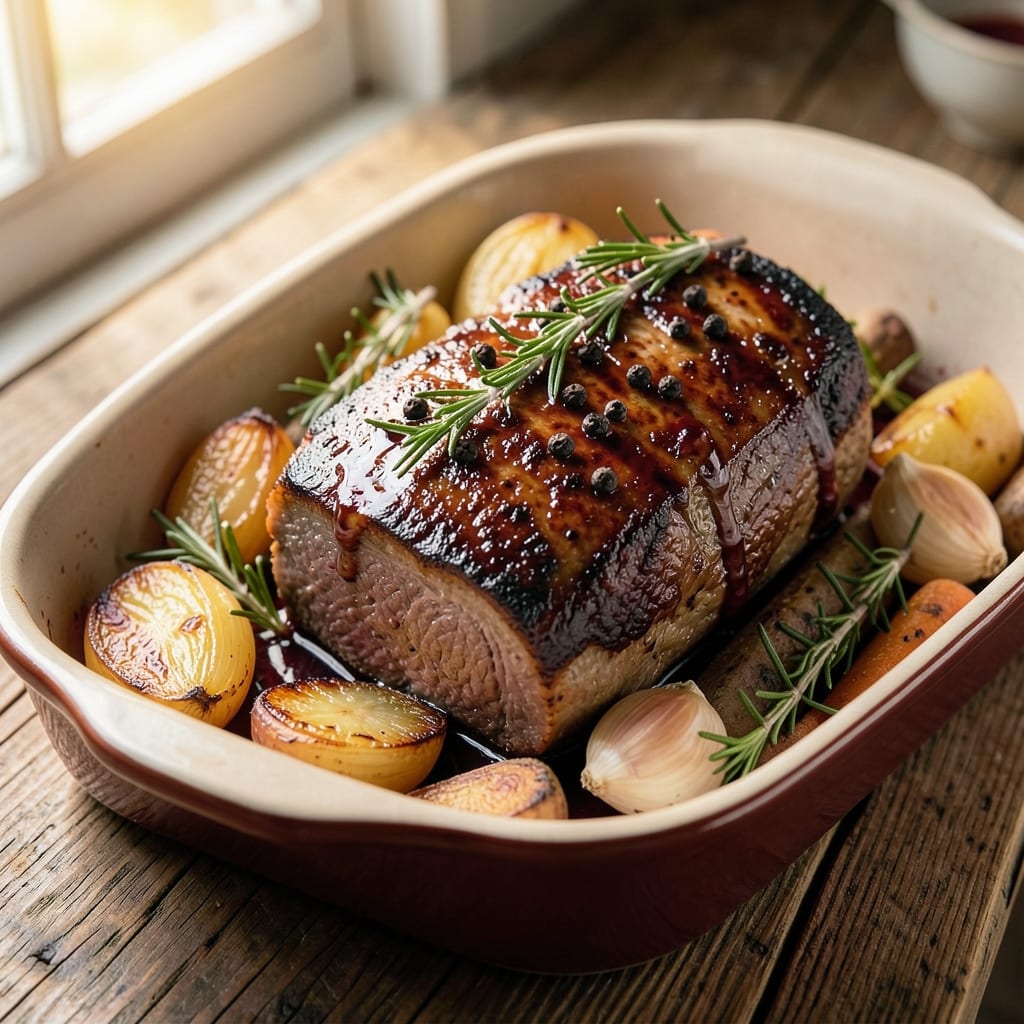
Baked beef chuck roast transforms tough cuts into melt-in-your-mouth perfection with minimal effort—just a few hours in the oven and a simple seasoning blend. The key lies in slow-braising at low heat, which breaks down connective tissue while building deep, savory flavors. This method delivers restaurant-quality results without requiring a Dutch oven or hours of active cooking time.
The secret to success is patience and proper seasoning. A blend of garlic, rosemary, and black pepper creates an aromatic crust, while the slow cook transforms the meat into tender slices that practically fall apart. Unlike quick-cooked roasts, this technique ensures every bite is juicy and flavorful, with a crust that's rich and caramelized.
By the time it's done, you'll have a centerpiece-worthy roast that pairs beautifully with mashed potatoes, roasted vegetables, or crusty bread to soak up the juices. The aroma alone will have everyone gathering at the table, eager for their first taste of this foolproof, tender masterpiece.
Perfect for family dinners, holiday gatherings, or when you want to impress guests without spending hours in the kitchen. The recipe scales easily, so you can adjust the size to fit your needs while maintaining the same incredible results.
Ingredients for baked beef chuck roast
Six ingredients transform tough beef into melt-in-your-mouth perfection with minimal effort.
| Ingredient | Amount | Notes |
|---|---|---|
| Beef Chuck Roast 🥩 | 3 lb | Bone-in preferred for flavor |
| Yellow Onion 🧅 | 1 whole | Medium size, sliced |
| Garlic Cloves 🧄 | 6 cloves | Fresh, peeled and smashed |
| Fresh Rosemary 🌿 | ½ oz | Or 1 tbsp dried rosemary |
| Black Peppercorns 🌶️ | 1 ½ tsp | Freshly cracked |
| Kosher Salt 🧂 | 1 ½ tsp | Diamond Crystal preferred |
| Olive Oil 🫒 | ½ cup | Extra-virgin for richness |
| Beef Broth 💧 | 1 ½ cups | Low-sodium preferred |
| Red Wine 🍷 | ½ cup | Dry variety like Cabernet |
| Tomato Paste 🍅 | 2 tbsp | Squeeze tube works |
| Carrots 🥕 | 3 whole | Baby carrots work too |
| Celery Stalks 🥬 | 3 whole | Trimmed and chopped |
| Fresh Thyme 🌿 | ¼ oz | Or 1 tsp dried thyme |
| Balsamic Vinegar 🍶 | 1 tbsp | For depth of flavor |
The beef is the star—chuck roast with good marbling gives you that melt-in-your-mouth texture. Costco or local butchers often have the best cuts, but any grocery store with a meat counter will carry it. Look for a roast with visible fat marbling—this ensures juiciness. If buying a whole roast, trim excess fat to about a quarter-inch thickness for even cooking. The roast should be room temperature before baking, so take it out of the fridge an hour before starting. For extra flavor, ask your butcher to season it with a light coating of salt and pepper before you take it home.
No red wine? Beef broth with a splash of balsamic vinegar works perfectly—just add an extra tablespoon of vinegar. Fresh thyme and rosemary are ideal, but dried works at one-third the amount. The tomato paste can be substituted with a small can of crushed tomatoes (about 1 cup), but you'll need to reduce it first. For the vegetables, baby carrots and pre-cut celery save time, but whole stalks work just fine if you're chopping them yourself. The olive oil matters here—use extra-virgin for that rich flavor. If you're in a pinch, light olive oil works, but it won't have the same depth.
This roast reheats beautifully—tastes even better the next day as the flavors meld. Store leftovers in an airtight container in the fridge for up to 5 days, or freeze for 3 months. I like to portion mine into individual servings for easy lunches. The broth and vegetables can be prepped ahead and stored separately, then combined just before baking. If you're serving a crowd, double the recipe—just increase the baking time by about 30 minutes. The crust will be even more caramelized, and the meat will stay tender.
Why You'll Love This Recipe
- Foolproof Prep: I swear by this—just sear the roast, toss it with chopped onion, garlic, and rosemary, then let the oven do the work. No fancy techniques, no stress.
- Herb-Packed Magic: That rosemary and peppercorns? They turn tough beef into melt-in-your-mouth perfection. Honestly, the aroma alone makes my kitchen smell like a holiday.
- Weeknight Hero: Throw it in the oven while you chop veggies or set the table. By the time dinner’s ready, you’ve got a hearty, restaurant-quality meal with zero last-minute panic.
- Budget-Friendly Feast: A single chuck roast feeds my family for days—leftovers for sandwiches, reheated slices, or even a quick stir-fry. (Yes, even on a Tuesday night.)
Step-by-step instructions for slow-braised beef chuck roast
Here's how to transform a tough cut into melt-in-your-mouth perfection with simple techniques.
Sear the Roast for Deep Flavor
Heat a Dutch oven over medium-high heat until hot. Add the 3 lb beef chuck roast and sear on all sides until deeply browned, about 5-6 minutes per side. This step develops the Maillard reaction, creating complex flavors that will infuse your braise. Remove the roast and set it aside.
In the same Dutch oven, add the 0.5 cup olive oil and let it heat until shimmering. Add the 1 whole yellow onion sliced into rounds, 3 whole carrots cut into chunks, and 3 whole celery stalks chopped into ½-inch pieces. Sauté for 8-10 minutes until the vegetables soften and begin to caramelize. This builds the aromatic base for your braise.
Build the Aromatic Braising Liquid
Push the vegetables to one side of the Dutch oven and add the 6 cloves garlic cloves (smashed), 0.5 oz fresh rosemary (chopped), and 0.25 oz fresh thyme (leaves stripped). Cook for 1 minute until fragrant—this releases their essential oils that will permeate your roast.
Return the beef to the pot and sprinkle evenly with 1.5 tsp kosher salt and 1.5 tsp black peppercorns (cracked). Stir in the 2 tbsp tomato paste and cook for 2 minutes until it darkens slightly. This creates a rich, concentrated flavor foundation.
Deglaze and Add Braising Liquid
Pour in the 0.5 cup red wine and scrape up any browned bits from the bottom of the pot with a wooden spoon. This deglazing captures all the flavor you've built. Let it simmer for 3-4 minutes until reduced by half, concentrating the wine's depth.
Add the 1.5 cups beef broth and 1 tbsp balsamic vinegar, stirring to combine. The liquid should come about halfway up the sides of the roast. Bring to a gentle simmer, then reduce heat to low to maintain a bare bubble at the surface.
Braise Until Fork-Tender
Cover the Dutch oven and transfer to a 325°F oven. Braise for 3-3.5 hours until the beef is fork-tender. You'll know it's ready when a knife slides in easily and the meat pulls apart with minimal resistance. The vegetables should be completely tender as well.
Here's the thing—don't peek or lift the lid during cooking. Every time you do, you release steam and add 15-20 minutes to your cooking time. Trust the process and let the slow cooking work its magic.
Rest and Serve
Remove the roast from the oven and transfer it to a cutting board. Tent loosely with foil and let it rest for 15-20 minutes before slicing. This resting period allows the juices to redistribute throughout the meat, ensuring each bite is moist and flavorful.
Skim any excess fat from the braising liquid if desired, then ladle the sauce over the sliced beef. The result should be shatter-tender beef with rich, caramelized vegetables and a deeply flavorful sauce. Serve with crusty bread to soak up every last drop of that delicious braising liquid.
Pro Tips For Making Baked Beef Chuck Roast
- SEAR THE ROAST FIRST: I learned this the hard way—skipping the sear means flavor hiding in plain sight. Hit the roast with a hot pan for 3-4 minutes per side until deep brown, then transfer to the oven. That crust locks in juices and makes all the difference when you slice it later.
- CHOP ONIONS COARSELY: Tiny onion pieces turn to mush in the oven. Cut them into ½-inch chunks instead—big enough to taste but small enough to caramelize. (Yes, even if you’re impatient like me, resist the urge to dice them fine.)
- DON’T OVERCROWD THE PAN: If you’re browning onions and garlic in the same pan as the roast, spread them out. Overcrowding steams instead of sears, and you’ll end up with sad, watery aromatics instead of rich, golden flavor. Use two pans if needed.
- USE A MEAT THERMOMETER: Guessing doneness leads to dry meat or undercooked beef. Aim for 135°F (medium-rare) for pull-apart tenderness, then let it rest 15 minutes before slicing. (Your future self will thank you—trust me.)
Health benefits of this dish
Protein Powerhouse
This beef chuck roast delivers a whopping 40 grams of protein per 3-ounce serving—perfect for muscle repair and satiety. The slow-braising process preserves all the biologically complete protein while breaking down tough connective tissue into gelatin, which adds richness to the sauce. I always double-check my protein intake when planning meals, and this roast makes it effortless to hit those daily goals. 💪
Iron for Energy
Each serving provides 3.5 milligrams of iron (about 20% of your daily value), which supports oxygen transport in your blood. The bone-in version (if available) boosts iron content even further. Pair this with vitamin C-rich sides like roasted Brussels sprouts to enhance iron absorption—my go-to combo for post-workout meals. The iron helps combat fatigue, making this a great dish for active lifestyles.
Rich in B Vitamins
The B vitamins in beef—especially B12, B6, and niacin—play crucial roles in energy metabolism and brain function. A single serving covers 40% of your daily B12 needs, which is vital for nerve health and red blood cell production. I notice my energy levels stay steady when I include this roast in my weekly meals, especially during busy workweeks. These nutrients also help convert food into usable energy.
Zinc for Immunity
Beef chuck roast is packed with zinc, a mineral that supports immune function and wound healing. A 3-ounce serving provides 4 milligrams (about 36% of your daily value). Zinc also aids in protein synthesis and DNA repair. During cold season, I rely on this dish to keep my immune system strong—it’s a comforting way to stay healthy without supplements. The slow cooking process actually increases zinc bioavailability.
Healthy Fats
The marbled fat in chuck roast contains monounsaturated and polyunsaturated fats, which support heart health when consumed in moderation. The slow-braising method renders some of this fat, but the remaining fat in the meat provides saturated fat (about 10 grams per serving)—important for hormone production and nutrient absorption. I balance this with plenty of vegetables to create a well-rounded, heart-healthy meal. The fat also makes the meat incredibly tender and flavorful.
Collagen Benefits
Slow cooking breaks down collagen in the connective tissue, creating gelatin that’s rich in glycine and proline—amino acids that support joint health and gut lining integrity. This is why the sauce thickens beautifully and why the meat becomes so tender. I’ve noticed improved joint comfort after regularly including collagen-rich dishes like this in my diet. The gelatin also aids digestion, making this a nourishing meal for overall wellness. ✨
Nutrition facts
Frequently asked questions
Why does this recipe use beef chuck roast instead of other cuts?
The chuck roast is perfect because its marbling and connective tissue break down beautifully during slow cooking, creating melt-in-your-mouth tenderness. Other cuts like ribeye or sirloin are too lean and would dry out at this cooking temperature. The chuck's natural fat keeps it juicy while developing deep, savory flavors.
Can I use a slow cooker instead of an oven? Follow the same steps for searing and building the braising liquid, then transfer everything to a slow cooker on low heat for 8-9 hours. The cooking time will be longer, but the results will be just as tender. Just
How do I know when the beef is fully cooked?
Use a meat thermometer to check for 203°F in the thickest part of the roast. The meat should pull apart easily with two forks and have a fork-tender texture. If you don't have a thermometer, cut into the thickest section - the juices should run clear, not pink. Never rely on color alone for doneness.
What's the best way to reheat leftovers?
Slice the roast and reheat in a skillet with a splash of beef broth over medium-low heat for 5-7 minutes until warmed through. The sauce will thicken beautifully. For larger portions, use a slow cooker on low heat for 2 hours, adding a little extra liquid if needed. Never microwave - it makes the meat dry.
Can I make this ahead of time?
This roast tastes even better the next day! Cook it completely, then store in an airtight container in the fridge for up to 5 days. The flavors deepen as the meat rests. For freezing, portion into individual servings and freeze for up to 3 months. Thaw overnight in the fridge before reheating. The sauce will thicken further when reheated.