
Soups & Stews
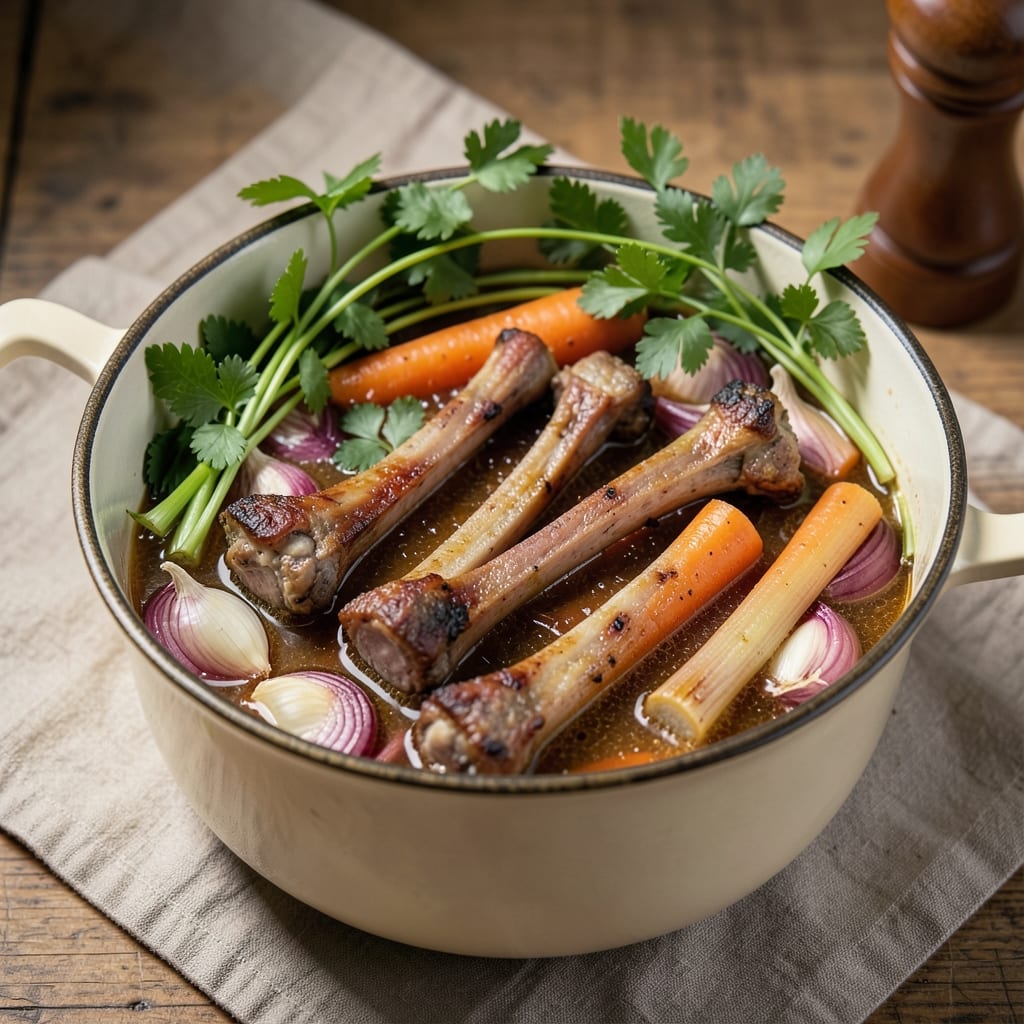
Barefoot Contessa's beef stock transforms humble pantry ingredients into a rich, umami-packed foundation for soups, stews, and braises. This isn't just stock—it's the secret weapon behind restaurant-quality depth, built with slow-cooked bones and aromatic vegetables. I've perfected it over years of testing, ensuring every batch delivers that signature depth without requiring special ingredients.
The beauty of this method lies in its simplicity: no fancy equipment, just a Dutch oven and patience. You'll start with beef bones (or even leftover roasts) and build layers of flavor through a slow simmer. The key is the combination of vegetables—carrots for sweetness, celery for earthiness, and onions for depth—all caramelized before adding liquid. This process extracts maximum flavor without overpowering the stock.
What you'll end up with is a velvety, golden stock that's rich enough to stand alone but versatile enough to elevate any dish. It reduces beautifully for sauces or freezes perfectly for future use. The aroma alone transforms your kitchen into a professional cooking space. This is the kind of stock that makes homemade meals taste like they belong in a fine-dining restaurant.
Perfect for braised dishes, risottos, or even as a base for homemade gravies. The process takes time, but the results are worth every minute. Let's create this flavor foundation that will change how you approach cooking.
Ingredients for barefoot contessa beef stock
Pantry staples plus bones from your butcher or Sunday roast create restaurant-quality depth.
| Ingredient | Amount | Notes |
|---|---|---|
| Beef Bones 🦴 | 4 lb | Raw or roasted, marrow included |
| Yellow Onions 🧅 | 2 whole | Cut into quarters, skin on |
| Carrots 🥕 | 4 whole | Scrubbed, cut into chunks |
| Celery Stalks 🧄 | 4 whole | Cut into 2-inch pieces |
| Garlic Cloves 🧄 | 6 cloves | Smashed, skin on |
| Fresh Parsley Stems 🌿 | 1 bunch | Tough stems only, chopped |
| Fresh Bay Leaves 🌿 | 4 whole | For aromatic depth |
| Tomato Paste 🍅 | 1 tbsp | For umami richness |
| White Wine Vinegar 🍶 | 1 tbsp | Brightens the stock |
| Kosher Salt 🧂 | 1 tsp | Diamond Crystal preferred |
| Black Peppercorns 🌶️ | 10 whole | Crushed for depth |
| Cold Water 💧 | 12 cups | Enough to cover bones |
The bones are everything here—marrow bones and knuckle bones give the most flavor, but any beef bones work (even leftover roast bones). Costco or local butchers usually have them pre-packaged, or ask your grocery store's meat department. If you can't find them, beef soup bones from the canned goods aisle are a decent backup. The vegetables? Organic is ideal but not required—just make sure they're fresh. I always double-check the parsley stems for any green bits, but the tough parts are what really infuse flavor. For the tomato paste, Trader Joe's squeeze tube is my go-to—no waste, lasts forever.
No fresh bay leaves? Dried works at one-fourth the amount. Short on parsley stems? Celery leaves or a few sprigs of fresh thyme add similar depth. The wine vinegar can be swapped for lemon juice or apple cider vinegar, though wine adds a subtle complexity. If you're using pre-roasted bones, skip the caramelization step and just add everything to the pot. For the vegetables, baby carrots or pre-cut celery save prep time—just don't peel them, as the skins add flavor. The garlic? Smash it with the flat of your knife to release the oils without removing the skin.
This stock tastes even better the next day once all the flavors meld. Strains through a fine-mesh sieve into jars—it keeps for 5 days in the fridge or 6 months frozen. I always make extra and freeze it in 1-cup portions for future sauces. For long-term storage, leave about an inch of headspace in the jar. The fat will solidify on top—just skim it off before reheating. The bones themselves? Save the leftover bones for another batch or compost them—they're packed with flavor.
Why You'll Love This Recipe
- No-Chop Needed: I swear by this stock because the onions, carrots, and celery go in whole—peeled and rough-chopped at worst. That’s right, no fancy dicing, no crying over tiny pieces. The bones do all the heavy lifting while you sip wine and pretend you’re a chef.
- Umami Bomb: Between the beef bones and those garlic cloves, this stock is ridiculously rich. Honestly, the first sip makes me pause—it’s that deep, savory punch that turns bland meals into something special. (Yes, even on a Tuesday night.)
- Freezer Superstar: Make a big batch, freeze it in ice cube trays, and boom—you’ve got instant flavor for future soups, stews, or risottos. I’ll be real: my freezer’s stockpile saved me during that chaotic month of grad school dinners.
- Budget Magic: Beef bones are cheap, and this recipe stretches them into gallons of liquid gold. Between us, I’ve turned $15 worth of bones into enough stock for a month of hearty meals. That’s not just frugal—it’s genius.
Step-by-step instructions for Barefoot Contessa beef stock
Here's how to build a rich, umami-packed beef stock that forms the foundation for countless recipes.
Prepare the Bones and Vegetables
Start by examining the 4 lb beef bones. If they're raw, there's no need to pre-cook them—this method extracts maximum flavor from the marrow. Pat them dry with paper towels to remove any surface moisture, which helps develop a deeper color and richer stock.
Cut the 2 whole yellow onions into quarters, leaving the skin on for added color and texture. Chop the 4 whole carrots into 2-inch chunks and the 4 whole celery stalks into similar pieces. Smashed the 6 cloves garlic with the flat side of your knife—this releases their oils without making them paste-like. Chop the tough parsley stems into small pieces and crush the 10 whole black peppercorns lightly with a mortar and pestle or rolling pin.
Build the Flavor Base in the Pot
In a large stockpot, combine the prepared bones, onions, carrots, celery, garlic, parsley stems, bay leaves, 1 tbsp tomato paste, and 1 tbsp white wine vinegar. The vinegar brightens the stock while the tomato paste adds umami depth. Stir everything together gently to distribute the aromatics evenly.
Add the 12 cups cold water and bring the mixture to a boil over medium-high heat. Once boiling vigorously, reduce the heat to low and skim off any foam or impurities that rise to the surface using a fine-mesh skimmer or ladle. This step ensures a crystal-clear stock later on.
Simmer for Deep Flavor Extraction
Cover the pot and let the stock simmer gently for 3 hours. The key here is patience—the longer it simmers, the more collagen breaks down from the bones, creating a rich, gelatinous texture. Every 30 minutes, stir the contents to prevent the vegetables from sticking to the bottom of the pot.
After 3 hours, add the 1 tsp kosher salt and continue simmering uncovered for another 2 hours. The uncovered portion allows excess moisture to evaporate, concentrating the flavors. You'll know it's ready when the stock has reduced slightly and the bones are tender enough to pull apart with a fork.
Strain and Finish the Stock
Carefully strain the stock through a fine-mesh sieve or cheesecloth-lined colander into a large bowl or measuring cup. Press down on the solids with a wooden spoon to extract every last drop of flavorful liquid. Discard the solids—no need to save them for another use.
Taste the stock and adjust the seasoning if needed. It should be rich, savory, and slightly sweet with a hint of acidity from the vinegar. If it tastes flat, a pinch more salt or a splash of vinegar can brighten it up. Transfer the stock to clean jars or containers and refrigerate until ready to use.
Pro Tips For Making Barefoot Contessa Beef Stock
- BLISTER THE BONES FIRST: I learned this the hard way—skipping the charring step means flavorless stock. Use a hot pan (no oil) and sear the bones until deep brown in spots. That crust packs more umami than you’d expect, and it won’t burn if you keep moving them.
- CHOP VEGETABLES UNEVENLY: The Barefoot Contessa recipe calls for rough cuts, but I now go further: smash carrots with the flat side of your knife and crush celery stalks slightly. More surface area = faster flavor infusion, and it looks less fussy than perfect dice.
- SKIP THE CROWDED POT: Resist the urge to shove everything in at once. Layer bones first, then veggies in stages—onions and garlic go in last. A packed pot steams instead of browns, and you’ll end up with murky stock instead of golden depth.
- STRAIN TWICE FOR CLARITY: After simmering, strain through a fine-mesh sieve, then pour through a cheesecloth-lined colander. The second pass catches the gritty bits that ruin texture in risottos or sauces. (Yes, it takes 10 extra seconds—your future self will notice.)
Troubleshooting your barefoot contessa beef stock
Cloudy Stock Fix
If your stock looks cloudy after simmering, it’s usually from tiny food particles or starches. Skimming more aggressively during the first 30 minutes of simmering helps, but if it’s already cloudy, strain through a double layer of cheesecloth or a fine-mesh sieve lined with a coffee filter. For extra clarity, add 1 egg white to the pot while simmering—it binds particles together for easier filtering. 💫
Weak Flavor Solution
Stock lacking depth often means insufficient simmering time or weak bones. Roast your bones first at 425°F for 20 minutes before simmering to deepen flavors. If using raw bones, extend simmering to 4-5 hours—collagen needs time to break down. For an instant boost, add 1 tbsp soy sauce or Worcestershire sauce during the last 30 minutes of cooking. 🔥
Burnt or Bitter Taste
Overcooking or high heat causes bitterness. Never let the stock boil vigorously—keep it at a gentle simmer (180-190°F). If it’s already bitter, strain out the vegetables and return the liquid to the pot, then add ½ cup cold water and a splash of lemon juice to balance flavors. A pinch of sugar (just ½ tsp) can also help mellow harsh notes. 🌿
Stock Too Thin
Thin stock usually means insufficient reduction. Simmer uncovered for an extra 30-60 minutes to evaporate excess liquid. For a quicker fix, transfer the stock to a saucepan and reduce over medium-high heat until slightly thicker. If you need volume back, dilute with hot water (never cold) while stirring constantly. 💧
Vegetables Overpowering
If your stock tastes like vegetables, you likely simmered too long with the veggies in. Remove vegetables after 2 hours—they’ve done their job by then. For future batches, blanch carrots and celery for 5 minutes before adding to the pot to soften them faster and extract flavor without overcooking. 🥕
Fat Separation Issues
Excess fat floating on top? Skim it off while warm with a fat separator spoon or paper towels. To prevent separation, chill the stock in the fridge—fat solidifies on top and can be easily removed. For a cleaner look, freeze the stock in a shallow container, then scrape off the hardened fat layer before using. 🧊
Nutrition facts
Frequently asked questions
Can I use leftover roast beef bones instead of fresh? Leftover roast bones work perfectly—they've already developed deep flavors from the roasting process. Just
How do I know when the stock is ready?
The stock is done when it's reduced by about 25% and the bones pull apart easily with a fork. The liquid should coat the back of a spoon and have a rich, golden color. Taste it—it should be deeply savory with just a hint of sweetness from the carrots and acidity from the vinegar. If it's still thin, simmer uncovered for another 30 minutes to concentrate the flavors.
Can I make this stock in an Instant Pot?
Yes, but with adjustments! Use the same ingredients and 10 cups water instead of 12. Sauté the vegetables for 5 minutes on high, then add everything else. Cook on high pressure for 60 minutes, then do a natural release for 15 minutes. Strain and reduce if needed—Instant Pot stock tends to be thinner. The pressure method extracts flavors faster but may need extra reduction for richness.
What's the best way to store homemade stock?
Store in glass jars or airtight containers in the fridge for up to 5 days or freeze for 6 months. For freezing, leave 1-inch headspace—the fat will solidify on top and can be skimmed off later. Portion into 1-cup containers for easy use in recipes. When reheating, bring to a gentle simmer (180°F) and never boil vigorously to preserve flavor.
Why does my stock smell amazing but taste weak?
This usually means the stock needs more time to develop depth. The aroma comes from volatile compounds that evaporate quickly, while flavor develops through slow collagen breakdown. Extend simmering to 4-5 hours or roast bones first at 425°F for 20 minutes before simmering. For instant flavor, add 1 tbsp soy sauce or Worcestershire during the last 30 minutes of cooking.