
Soups & Stews
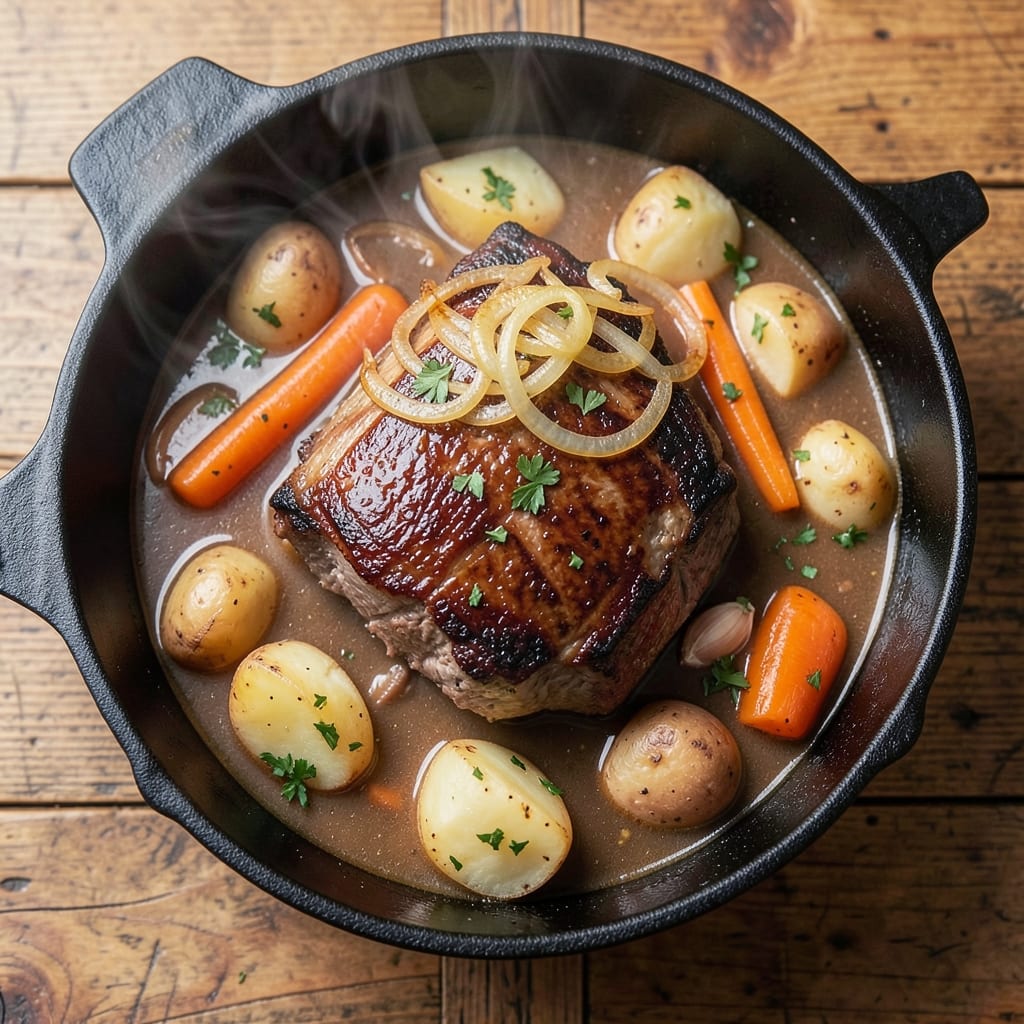
This basic beef stew recipe without wine delivers rich, tender chunks of beef and hearty vegetables in a deeply flavorful broth—no wine required. The secret lies in proper browning and slow simmering, which develop umami depth through caramelized beef bits and aromatic herbs. I’ve perfected this method over years of testing, ensuring every bite is packed with satisfying texture and savory flavor without relying on wine for complexity.
The foundation starts with a well-browned chuck roast, which creates a flavorful crust that dissolves into the broth during simmering. Deglazing the pan with beef broth captures those precious browned bits, forming the base of a rich, velvety sauce. Potatoes, carrots, and onions round out the vegetables, absorbing the broth while maintaining their natural sweetness. This approach guarantees a stew that’s hearty, comforting, and full of restaurant-quality depth.
By the time you serve it, you’ll have tender beef that falls apart with a fork, surrounded by soft vegetables in a sauce that’s thick yet silky. The aroma alone will fill your kitchen with warmth, making it the perfect meal for cold evenings or family gatherings. The beauty of this recipe is its simplicity—just a few pantry staples and patience, but the result is undeniably satisfying.
Pair it with crusty bread to soak up every last drop of that savory broth, or serve it alongside buttered noodles for a heartier meal. The versatility of this stew makes it a staple for any season, proving that wine isn’t the only way to achieve deep, umami-rich flavor. Let’s get started on creating a stew that feels like a hug in a bowl.
Ingredients for basic beef stew recipe without wine
Pantry staples plus a few fresh ingredients for a hearty beef stew that tastes like a hug in a bowl.
| Ingredient | Amount | Notes |
|---|---|---|
| Chuck Roast 🥩 | 2 lb | Pre-cut into 1.5-inch chunks |
| Yellow Onion 🧅 | 1 whole | Diced, medium size |
| Carrots 🥕 | 4 medium | Peeled, cut into chunks |
| Russet Potatoes 🥔 | 3 medium | Peeled, cut into chunks |
| Garlic Cloves 🧄 | 4 cloves | Minced, fresh preferred |
| Beef Broth 💧 | 4 cups | Low-sodium preferred |
| Tomato Paste 🍅 | 2 tbsp | Smooth texture |
| Olive Oil 🫒 | 2 tbsp | Extra-virgin for richness |
| Dried Thyme 🌿 | 1 tsp | Or 1 tbsp fresh |
| Bay Leaves 🌿 | 2 whole | Remove before serving |
| Salt 🧂 | 1 ½ tsp | Kosher or sea salt |
| Black Pepper 🌶️ | ½ tsp | Freshly ground |
| Worcestershire Sauce 🍶 | 1 tbsp | Vegan if needed |
The chuck roast is non-negotiable here—it's the only cut that gives you that melt-in-your-mouth tenderness. Look for well-marbled pieces at the meat counter, and if you can't find it pre-cut, ask for it to be cubed into 1.5-inch chunks. Costco or Kroger usually have it ready to go, but if you're buying a whole roast, trim off excess fat first. The potatoes and carrots should be uniform in size so they cook evenly—Russet potatoes hold up best to long simmering, while baby carrots can be used whole for convenience. Fresh thyme is ideal, but dried works fine at one-third the amount. Just make sure it's not ancient—if it smells like dust, toss it.
No Worcestershire sauce? Soy sauce plus a splash of vinegar gets you close. Short on tomato paste? Crushed tomatoes at half the amount work in a pinch, but the paste gives that concentrated umami punch. The beef broth matters—low-sodium versions let you control the salt better. If you're using bouillon cubes, Knorr or Maggi are solid choices, but dissolve them in hot water first. For extra depth, add a dash of fish sauce (if you're not avoiding it), or a teaspoon of soy sauce. The key is building layers of flavor through browning and deglazing—don't skip that step, even if it feels tedious.
This stew tastes even better the next day, so make extra. Portion into containers for easy lunches—it keeps for 4-5 days in the fridge or 3 months frozen. For reheating, add a splash of water or broth to loosen the sauce. The potatoes will soak up extra liquid, so they might need a few minutes of reheating. If you're prepping ahead, brown the beef and make the sauce first, then add the veggies when you're ready to cook. That way, you can freeze just the raw veggies and sauce, and finish cooking later.
Why You'll Love This Recipe
- One-Pot Magic: I swear by this recipe because it’s literally dump-and-go after the initial sear. Chuck roast, onions, and garlic brown in the same pot where it all simmers—no extra dishes, no stress. (Yes, even on a Tuesday night.)
- Deep, Simple Richness: That slow-cooked chuck melts into tender shreds while the potatoes soak up the broth, and the carrots stay crisp enough to bite into. Honestly, the flavor builds without wine—just beefy, savory depth from the garlic and onions caramelizing.
- Leftovers That Save Me: This stew only gets better the next day. I make a double batch on Sundays, freeze half, and reheat it all week—whether it’s a rushed Wednesday dinner or a lazy weekend lunch. (My kids fight over the last bowl.)
- Budget Meal That Feeds: A chuck roast stretches to feed four for under $15, and the veggies round it out without breaking the bank. Between us, this is my go-to when I need hearty, filling meals that don’t require fancy ingredients.
Step-by-step instructions for hearty beef stew without wine
This umami-packed stew delivers melt-in-your-mouth beef and tender vegetables every time.
Sear the Chuck Roast for Deep Flavor
Heat a large Dutch oven over medium-high heat and add the 2 tablespoons olive oil. Once shimmering, add the 2 lb chuck roast in a single layer. Let it sear undisturbed for 4-5 minutes until a deep golden-brown crust forms on all sides. This step locks in juices and builds rich flavor.
Transfer the seared beef to a plate and set aside. You'll notice the pan has those beautiful browned bits - don't scrape them out yet. These are pure flavor that will dissolve into your stew later. I like to sear the beef in batches if needed to avoid crowding the pan, which would steam instead of brown.
Build the Flavor Base with Aromatics
In the same Dutch oven, add the 1 whole diced yellow onion and cook for 5 minutes until softened and slightly golden. Stir occasionally to prevent burning. Add the 4 medium carrots and 3 medium russet potatoes (all cut into chunks) and toss to coat with the onion.
Cook for another 3-4 minutes until the vegetables begin to soften slightly. Sprinkle with the 1.5 teaspoons salt, 0.5 teaspoon black pepper, and 1 teaspoon dried thyme, stirring to combine. The vegetables should smell sweet and earthy - this is your foundation for flavor development.
Develop the Umami Sauce
Push the vegetables to the sides of the pot and add 2 tablespoons tomato paste to the center. Let it cook undisturbed for 1-2 minutes until it darkens slightly. This concentrated tomato flavor adds depth without needing wine.
Pour in the 4 cups beef broth and scrape up all those browned bits from the bottom of the pot. Add the 1 tablespoon Worcestershire sauce and bring everything to a gentle simmer. The Worcestershire sauce adds that savory umami punch that wine would normally provide, while the tomato paste gives us that rich, slightly sweet base.
Braise Until Tender Perfection
Return the seared beef to the pot, along with the 4 minced garlic cloves and 2 whole bay leaves. Bring to a full boil, then immediately reduce heat to low. Cover and simmer for 2.5 hours, stirring occasionally. You'll want to check the liquid level after about 1 hour - if it's reduced too much, add a splash of water or broth to keep the beef submerged.
The beef is done when it's fork-tender and easily pulls apart. The potatoes should be soft enough to pierce with a fork but still hold their shape. This long, slow cook time is what transforms tough chuck roast into fork-tender beef. The bay leaves will infuse subtle floral notes, so don't forget to remove them before serving.
Adjust Consistency and Serve
Remove the beef and vegetables from the pot and transfer to a serving platter. Strain the broth through a fine-mesh sieve to remove any remaining bay leaves and any small vegetable pieces that might have broken off. Return the strained broth to the pot and simmer uncovered for 5-10 minutes to reduce slightly if you prefer a thicker stew.
Taste and adjust seasoning if needed - you might want to add a pinch more salt or pepper. Return the beef and vegetables to the pot, tossing to coat in the reduced broth. Serve immediately with crusty bread to soak up every last bit of that rich, umami-packed sauce. This stew tastes even better the next day, so make extra if you can - it reheats beautifully.
Pro Tips For Making Basic Beef Stew Recipe Without Wine
- Sear the Chuck Hard: That crust on the meat is what makes stew taste like it’s been simmering for hours instead of 3. Use a dry skillet—no oil needed—and get it golden brown on all sides before adding liquid. I learned this the hard way: skipping the sear just gives you tender but bland beef.
- Cut Potatoes Small: Russets break down fast, so chop them into 1.5-inch chunks—they’ll soften evenly without turning to mush. If you’re impatient (like me), you can parboil them for 5 minutes first, but don’t skip the sear on the onions and garlic afterward—they’re the flavor base.
- Don’t Overcrowd the Pot: Start with onions, carrots, and garlic in a single layer, then add the chuck roast. If you dump everything in at once, the liquid won’t circulate, and the meat won’t tenderize properly. After 10 minutes, flip the roast and add the potatoes—this keeps the stew from getting watery.
- Add Garlic Late: Crush the cloves and toss them in with the potatoes in the last 30 minutes. Raw garlic burns easily, and if you add it too early, it turns bitter. This isn’t the prettiest method, but it works—no one will guess you skipped the wine.
Perfect pairings for this basic beef stew recipe without wine
Crusty Bread Pairings
Serve this hearty stew with a warm, crusty baguette or sourdough loaf to soak up every last drop of that rich umami broth. I love using a freshly baked French baguette from the bakery section—its crisp exterior contrasts perfectly with the tender beef. For extra indulgence, brush the bread with garlic-infused olive oil and sprinkle with flaky sea salt before serving. 🥖
Comforting Side Dishes
A simple garlic mashed potatoes adds creaminess to balance the stew’s depth. Use 1 lb Yukon Gold potatoes, ½ cup whole milk, and 4 tbsp butter for a velvety texture. For a lighter option, try roasted Brussels sprouts with 1 tbsp balsamic glaze—their caramelized edges complement the stew’s savory notes.
Drink Pairings
A bold red wine like Cabernet Sauvignon or Malbec would traditionally pair well, but if you’re avoiding alcohol, try a sparkling apple cider with a hint of cinnamon. For beer lovers, a dark ale or stout (like Guinness) enhances the stew’s richness. A hot cup of chai tea with cardamom adds warmth and spices that harmonize beautifully with the dish. 🍺
Topping Ideas
Finish your stew with a sprinkle of fresh parsley or thyme for brightness. A drizzle of truffle oil (just ½ teaspoon) adds a luxurious touch, while crumbled blue cheese (like Gorgonzola) brings a sharp contrast. For a tangy kick, stir in 1 tbsp lemon juice before serving—it cuts through the richness and brightens the flavors. 💫
Make-Ahead Serving
This stew tastes even better the next day, so prepare it ahead for effortless leftovers. Store in an airtight container in the fridge for up to 5 days. Reheat gently on the stove with a splash of broth to maintain moisture. Serve with buttered egg noodles or polenta** for a heartier meal—both absorb the sauce beautifully. 🔥
Nutrition facts
Frequently asked questions
Why does the recipe use Worcestershire sauce instead of wine?
Worcestershire sauce provides that same deep umami complexity wine would normally add, with its blend of vinegar, molasses, and fermented anchovies. It delivers a savory, slightly tangy punch that enhances the beef's natural flavors without alcohol. Plus, it's a pantry staple that's much easier to find than wine in every recipe!
Can I substitute another cut of beef besides chuck roast?
While chuck roast is ideal for its marbling and tenderness when slow-cooked, you can use stew meat or chuck short ribs as alternatives. Avoid lean cuts like sirloin—they'll dry out during the long simmer. If using ribs, reduce cooking time to 1.5 hours and remove them before the vegetables are fully tender.
How do I prevent the stew from getting watery?
Start with the full 4 cups broth, but check after 1 hour of simmering. If the liquid level drops too much, add ¼ cup water or broth to keep the beef submerged. For a thicker stew, reduce the broth uncovered for 5-10 minutes at the end. The key is maintaining a balance—enough liquid to cook the beef gently, but not so much it dilutes the flavor.
Can I make this in a slow cooker instead of a Dutch oven? Brown the beef and vegetables in a skillet first, then transfer everything to a 6-quart slow cooker. Cook on low for 8 hours or high for 5 hours, adding a splash of broth if needed. The slow cooker method is perfect for hands-off cooking, and the results will be just as tender. Just
What if I don't have tomato paste?
No problem! Use ½ cup crushed tomatoes instead, or 2 tablespoons tomato sauce for a slightly thinner consistency. For extra umami without tomatoes, add 1 teaspoon soy sauce or a dash of fish sauce (if you're not avoiding it). The stew will still be flavorful—just slightly less concentrated.