Main Courses
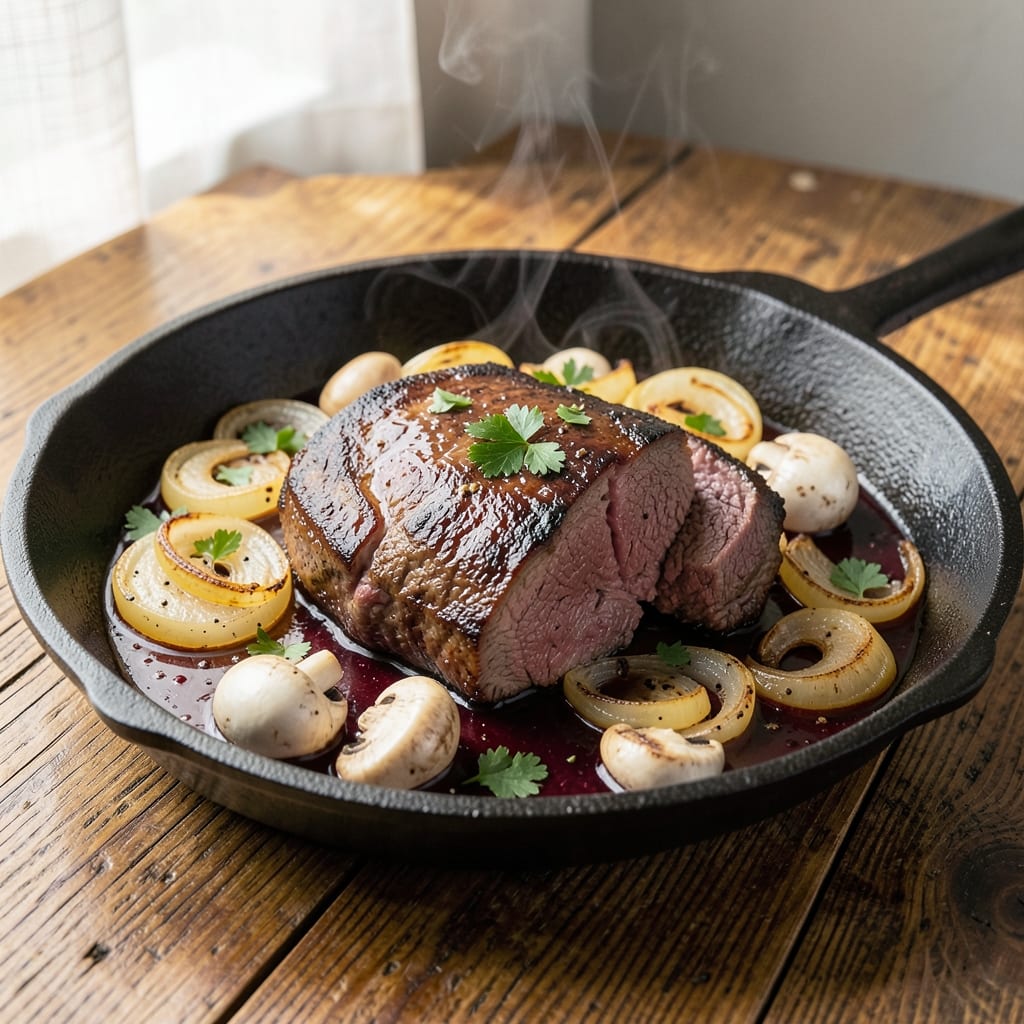
This Bavarian beef recipe transforms tough beef chuck into melt-in-your-mouth tenderness through slow simmering with caramelized onions, mushrooms, and a rich paprika-infused tomato sauce. The secret lies in patience—hours of gentle cooking develop deep, complex flavors that turn a simple weeknight dinner into a hearty, restaurant-worthy meal. Every bite delivers layers of savory, slightly sweet, and earthy notes that make this dish a weeknight staple.
The foundation of authentic Bavarian beef is the sauce—a velvety blend of tomatoes, onions, and paprika that coats the beef in a glossy, flavorful glaze. While traditional recipes call for braising, this simplified method achieves the same results using a Dutch oven or heavy pot. The key is maintaining a gentle simmer, allowing the beef to break down gradually while the vegetables soften and meld into the sauce. This approach ensures tender meat without the need for a pressure cooker or specialized equipment.
By the time you serve this dish, you'll have perfectly tender beef swimming in a rich, aromatic sauce with caramelized onions and earthy mushrooms. The slow cooking process transforms tough cuts into fork-tender pieces that practically fall apart at the touch of a fork. Serve it alongside buttered egg noodles or crusty bread to soak up every last drop of that flavorful sauce.
This recipe delivers a complete meal that's perfect for family dinners or gathering friends. The rich flavors and satisfying texture make it a standout dish that feels special without requiring hours of prep. Let's create this hearty Bavarian classic that brings comfort and warmth to your table.
Ingredients for bavarian beef
Pantry staples meet hearty comfort—this Bavarian beef builds rich flavor through slow cooking and simple ingredients.
| Ingredient | Amount | Notes |
|---|---|---|
| Beef Chuck Roast 🥩 | 3 lb | Pre-cut into 1.5-inch cubes |
| Yellow Onions 🧅 | 3 whole | Medium size, sliced thin |
| White Mushrooms 🍄 | 16 oz | Sliced into quarters |
| Garlic Cloves 🧄 | 6 cloves | Minced for depth |
| Tomato Paste 🍅 | ½ cup | High quality, no sugar added |
| Dry Red Wine 🍷 | 1 cup | Bold variety like Cabernet |
| Beef Broth 💧 | 2 cups | Low sodium preferred |
| Paprika 🌶️ | 2 tsp | Sweet or smoked |
| Thyme 🌿 | 1 tsp | Fresh preferred, dried ok |
| Bay Leaves 🌿 | 2 whole | Remove before serving |
| Salt 🧂 | 1 ½ tsp | Diamond Crystal kosher |
| Black Pepper 🌶️ | 1 tsp | Freshly ground |
| Unsalted Butter 🧈 | 2 tbsp | For finishing sauce |
| All-Purpose Flour 🌾 | 1 tbsp | For thickening sauce |
The beef chuck is non-negotiable here—it's the tough cut that transforms into tender perfection. Costco or Walmart usually carry pre-cubed chuck, which saves time, but if you're buying whole, ask the butcher to cut it into 1.5-inch pieces. For onions, yellows with sweetness work best—avoid reds, which can turn bitter when caramelized. Mushrooms should be fresh and firm, not slimy or bruised. I always grab the pre-sliced button mushrooms from Trader Joe's—they're consistent and save chopping time. The tomato paste? San Marzano is ideal, but any quality paste with no added sugar will do.
No red wine? Beef broth with a splash of balsamic works in a pinch, though the acidity won't be identical. Fresh thyme is ideal, but dried at one-third the amount gets you close. The flour is just for thickening at the end—all-purpose works fine, but if you've got arrowroot powder, it blends better. For the paprika, smoked adds depth while sweet keeps it classic. And if your butter's salted, reduce the added salt by half a teaspoon—this sauce is rich enough without extra sodium. The bay leaves? Remove them before serving—they're for flavor, not eating.
This dish tastes even better the next day—3-4 days in the fridge with the sauce thickened slightly more. For freezing, portion into airtight containers and it keeps for up to 3 months. I always make a double batch—one for dinner, one to freeze for lazy Mondays. The sauce thickens as it cools, so add a splash of broth if it's too stiff when reheating. Serve with egg noodles or crusty bread to soak up every last drop of that caramelized goodness.
Why You'll Love This Recipe
- One-Pot Magic: I swear by this—just toss the beef, onions, mushrooms, and garlic into one pot, let it simmer, and walk away. No chopping boards full of scraps, no extra dishes. The tomato paste thickens everything beautifully, so you’re left with a rich, saucy mess that’s actually worth the cleanup.
- Deep, Savory Love: That beef chuck roast? It gets so tender it practically falls apart, while the mushrooms soak up all the garlic and onion flavors like a sponge. Honestly, the first bite makes me forget I was ever going to eat something "healthy"—it’s just pure, satisfying beefy goodness.
- Budget Stretch: A chuck roast is one of the most affordable cuts that still delivers serious flavor, and the mushrooms and onions bulk it up without breaking the bank. Between us, this is how I feed my family for under $15 per meal—no fancy ingredients, just smart choices.
Step-by-step instructions for slow-simmered Bavarian beef
Here's how to transform tough chuck roast into melt-in-your-mouth perfection with deep, caramelized flavors.
Sear the Beef Chuck Roast for Maximum Flavor
Heat a heavy Dutch oven over medium-high heat until very hot. Add the 3 lb beef chuck roast in a single layer, working in batches if needed, and sear for 4-5 minutes per side until deeply browned. This initial sear builds a flavorful crust that'll dissolve into the sauce later.
Don't rush this step - you're creating the foundation of your dish. The beef should develop a rich, caramelized exterior while remaining slightly pink in the center. Once seared, remove the beef and set it aside on a plate.
Build Rich Layers with Caramelized Onions and Mushrooms
In the same Dutch oven, add 2 tbsp unsalted butter and let it melt completely. Add 3 whole yellow onions sliced thin and cook over medium heat for 10-12 minutes, stirring occasionally, until deeply golden and caramelized. This process should take patience - you want them to develop that sweet, jammy texture.
Push the onions to one side of the pot and add 16 oz white mushrooms sliced into quarters. Cook for 5-6 minutes until the mushrooms release their moisture and begin to brown. Stir occasionally to ensure even cooking. The mushrooms should be tender yet still hold their shape slightly.
Develop Depth with Aromatics and Wine Reduction
Add 6 cloves minced garlic, 2 tsp paprika, 1 tsp thyme, and 2 whole bay leaves to the Dutch oven. Stir for 30 seconds until fragrant - you should smell that aromatic punch of garlic and spices. This is where the magic happens.
Pour in 1 cup dry red wine and scrape up all those browned bits from the bottom of the pot. Let the wine simmer for 3-4 minutes until reduced by half. The alcohol will cook off, leaving behind concentrated wine flavor. This reduction is crucial for building the sauce's complexity.
Simmer the Beef with Tomato and Broth
Return the seared beef to the Dutch oven. Stir in 0.5 cup tomato paste and 2 cups beef broth, then add 1.5 tsp salt and 1 tsp black pepper. Bring to a gentle simmer, then reduce heat to low and cover partially. Let it cook for 2.5-3 hours until the beef is fork-tender.
Here's the thing - don't peek or stir during this time. The beef needs to develop its own juices and flavors undisturbed. You'll know it's ready when a fork slides in and out with minimal resistance. The sauce should be rich and slightly thickened from the beef's natural juices.
Finish with Butter and Flour for Perfect Sauce
Remove the beef from the pot and set it aside. In the same pot, whisk together 1 tbsp all-purpose flour and 2 tbsp unsalted butter to create a simple beurre manié. This will help thicken the sauce beautifully without making it grainy.
Return the beef to the pot and simmer for 5-7 minutes until the sauce reaches your desired consistency. It should coat the back of a spoon but still be silky smooth. Remove the bay leaves before serving, as they're not meant to be eaten. The final result should be a rich, velvety sauce that clings perfectly to each tender bite of beef.
Pro Tips For Making Bavarian Beef
- Sear the Chuck Hard: I learned this the hard way—skipping the deep sear means flavor gets lost in the sauce. Use a heavy pot or Dutch oven, crank the heat to medium-high, and let that chuck develop a crust for 5-7 minutes per side before touching it with anything else. (Yes, even if you’re impatient like me.)
- Slice Onions Thinly: Thick onion rings won’t caramelize right in the braising liquid. Grab a sharp knife, hold the onion steady, and cut into paper-thin slices—about 1/8-inch thick. This ensures they soften perfectly without turning to mush. (Your future self will notice the difference.)
- Deglaze with Beer: That browned beef fond on the bottom? Don’t waste it. Splash in 1 cup of dark beer (like a Munich Dunkel) right after searing—it lifts all the stuck-on bits and adds depth. Skip the water or broth; this is where the Bavarian flavor starts.
- Check Internal Temp Early: Chuck roast is forgiving, but pulling it at 195°F guarantees tenderness. Use a meat thermometer—probe the thickest part, and if it’s not there yet, cover and let it ride. (No, you can’t eyeball this one.)
Essential equipment for bavarian beef
Dutch Oven Essentials
A heavy Dutch oven is the backbone of this recipe—it distributes heat evenly and retains moisture during the long simmer. I swear by the Lodge 5.5-quart cast iron Dutch oven ($49.95 at Williams Sonoma) for its durability and heat retention. If you don’t have one, a Le Creuset stoneware Dutch oven ($199.95) offers elegant heat control. Avoid non-stick pans—they can’t handle the high heat needed for caramelization. 🔥
Measuring Tools
Precision matters for this dish, especially with the 1.5-inch beef cubes and thinly sliced onions. A West Bend 12-inch chef’s knife ($25 at Amazon) with a sharp whetstone ($15) ensures clean cuts. For measuring liquids, a pyrex measuring cup (set) works better than plastic—it won’t warp under heat. I also recommend a digital kitchen scale ($20) for accurate 3 lb beef portions. ✨
Thermometer for Perfect Doneness
While the recipe relies on time, a meat thermometer guarantees tender beef. The ThermoWorks Smoke ($49.95) is my go-to—its probe stays accurate through the 2.5-3 hour simmer. Insert it into the thickest part of the beef; it should read 195-203°F for fork-tender results. No thermometer? Test with a fork—it should slide in and out easily. 🌡️
Wooden Spoon and Slotted Spoon
A heat-resistant wooden spoon (like OXO Good Grips, $12) prevents scratching your Dutch oven while stirring onions and mushrooms. For removing bay leaves or seared beef, a slotted spoon (set of 2 for $15) keeps your fingers safe. Pro tip: Soak wooden utensils in hot, soapy water after use to prevent warping. 💪
Optional: Instant Pot for Hands-Off Cooking
Short on time? An Instant Pot Duo 6-quart ($89.95) cuts cook time to 90 minutes on the "Meat/Stew" setting. Sear the beef in the pot first, then add all ingredients and pressure cook. Release naturally for 10 minutes before opening. The sauce will be slightly thinner—simmer uncovered for 5 minutes to thicken. Just don’t skip the butter-flour finish for that restaurant-quality gloss. ⏰
Serving Gear
Presentation elevates this dish! Serve the beef on a wooden cutting board ($25 at Sur La Table) with buttered egg noodles piled high. Garnish with fresh parsley ($3 at Trader Joe’s) and a drizzle of extra virgin olive oil. For a rustic touch, use stoneware bowls ($12 each) to let the sauce pool beautifully. Don’t forget a carving fork ($8) to slice through the tender beef effortlessly. 🍽️
Nutrition facts
Frequently asked questions
Can I use a different cut of beef instead of chuck roast?
While chuck roast is ideal for its fat content and flavor, you can substitute with brisket or short ribs for similar results. Avoid lean cuts like sirloin—they'll dry out during the long simmer. If using brisket, cut it into 1.5-inch cubes just like the recipe calls for.
How do I make this recipe faster without an Instant Pot?
For a quicker version, use 2-inch beef cubes instead of 1.5-inch and reduce simmering time to 2 hours. Also, skip the caramelizing onions for 5 minutes instead of 10-12. The beef will still be tender, though slightly less fall-apart. Just don't skip the wine reduction—it's key for flavor!
What's the best way to reheat leftover Bavarian beef?
Reheat gently in a skillet with 1-2 tbsp beef broth over low heat for 10-15 minutes until warmed through. Never microwave—it makes the sauce watery. For extra richness, stir in 1 tbsp butter while reheating. The sauce will thicken as it cools, so add a splash of broth if needed.
Can I make this dish in a slow cooker? Brown the beef first, then transfer everything to a 6-quart slow cooker and cook on low for 8 hours or high for 5 hours. The sauce might be thinner—simmer uncovered for 10 minutes on the stove to thicken it properly. Just
Why does my sauce turn out too thin?
Thin sauce usually means insufficient reduction time. Always simmer uncovered for the last 10-15 minutes to thicken naturally. For immediate fixes, mix 1 tbsp cornstarch with 2 tbsp cold water, stir into the sauce, and simmer for 2 minutes. The butter-flour finish in the recipe should prevent this if followed correctly.