
Soups & Stews
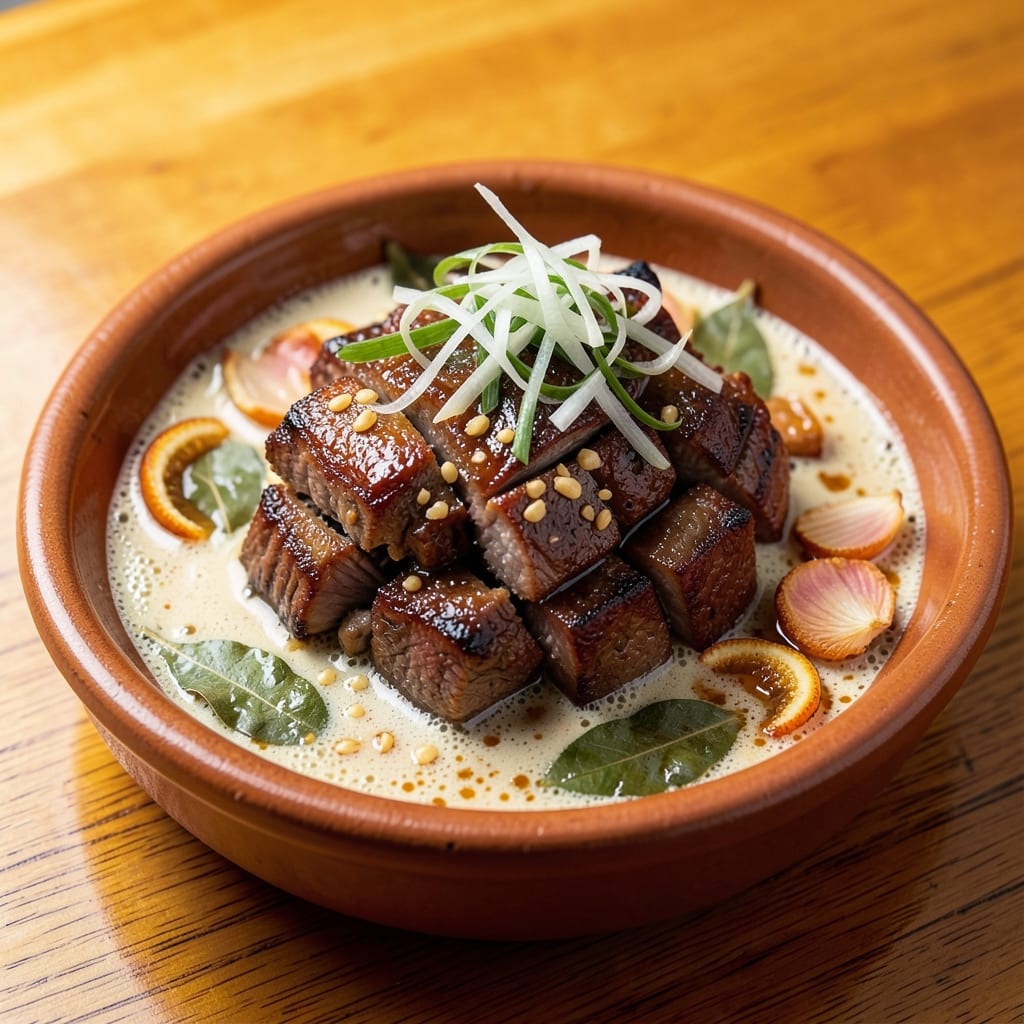
This beef adobo sa gata recipe transforms classic Filipino comfort into a luxurious, velvety stew where tender beef swims in a rich blend of vinegar, coconut cream, and aromatic spices. The secret lies in slow-braising the beef until it's fork-tender, then finishing with coconut milk that creates a silky, caramelized sauce with deep umami notes. I developed this version after years of perfecting the balance between tangy adobo and creamy coconut—it's the kind of dish that tastes like home, even when made from scratch.
The process starts with marinating beef in vinegar and soy sauce to tenderize, then browning it for flavor before simmering in a fragrant broth of garlic, ginger, and bay leaves. What sets this apart is the sa gata technique—adding coconut milk at the end to create that signature velvety texture while letting the flavors meld into perfect harmony. The result? A dish that's rich yet balanced, with layers of caramelized depth that make every bite unforgettable.
By the time you serve it, you'll have perfectly tender beef in a glossy, coconut-infused sauce that clings to each bite. The aroma alone will have everyone gathering at the table, and the texture—tender beef with a sauce that's both creamy and slightly sticky—is what makes this recipe truly special. Serve it over steamed rice with pickled vegetables for the full Filipino experience.
This method works beautifully in a Dutch oven on the stovetop or even a slow cooker for hands-off cooking. The key is patience—the longer it simmers, the deeper the flavors develop. Whether you're cooking for family or impressing guests, this beef adobo sa gata delivers restaurant-quality results with minimal effort. Let's get started!
Ingredients for beef adobo sa gata
Sixteen ingredients for a dish that balances tangy adobo with creamy coconut richness.
| Ingredient | Amount | Notes |
|---|---|---|
| Beef Chuck Roast 🥩 | 3 lb | Cut into 2-inch cubes, marbled for tenderness |
| Cane Vinegar 🍶 | 1 ½ cups | White vinegar substitute if unavailable |
| Soy Sauce 🥄 | ½ cup | Use light soy for balance |
| Garlic Cloves 🧄 | 8 cloves | Minced for aromatic depth |
| Fresh Ginger 🌿 | 2 tbsp | Grated, peeled, for zesty kick |
| Bay Leaves 🍃 | 4 whole | Dried, for aromatic base |
| Coconut Milk 🥥 | 1 can | Full-fat canned, 13.5 oz |
| Olive Oil 🫒 | ¼ cup | Extra-virgin for browning |
| Brown Sugar 🍯 | ¼ cup | Packed, for caramelized depth |
| Black Peppercorns 🌶️ | 1 tsp | Coarsely ground for texture |
| Salt 🧂 | 1 ½ tsp | Kosher, adjust to taste |
| Onion 🧅 | 1 whole | Yellow, sliced, for base |
| Green Bell Pepper 🌶️ | 1 whole | Sliced, for color contrast |
| Tomatoes 🍅 | 2 whole | Roma, quartered, for acidity |
The beef is the foundation—chuck roast with good marbling breaks down beautifully during slow cooking. Look for pre-cut cubes at Asian markets or butcher shops for convenience, but a whole roast lets you trim excess fat. The vinegar should be cane vinegar (like Silver Swan) for authentic flavor, though white vinegar works in a pinch. Fresh ginger and garlic are non-negotiable here; frozen won't deliver the same punch. Filipino markets often sell pre-minced garlic and ginger in jars, saving prep time.
No cane vinegar? Apple cider vinegar adds subtle sweetness, while balsamic brings depth. Swap soy sauce for coconut aminos for a gluten-free option, though the umami won't be identical. The coconut milk can be light or full-fat, but full-fat delivers that signature velvety texture. For the bell pepper and tomatoes, frozen works in a pinch—just thaw and drain excess liquid. The brown sugar caramelizes beautifully, but maple syrup adds moisture if you prefer less crystallized texture. Pre-grated ginger? Toast it first—it adds a warm, almost citrusy note.
This sauce thickens as it cooks, so simmer uncovered to reduce and develop caramelized flavors. Store in an airtight container for up to 5 days in the fridge, or freeze for 3 months. The longer it sits, the deeper the flavors—double the batch if you can, because leftovers reheat even better. For serving, keep a splash of the cooking liquid to deglaze the pot and add to the sauce—that's where the magic happens.
Why You'll Love This Recipe
- One-Pan Magic: I swear by this—just sear the beef, toss in the vinegar, soy, and ginger, then let it simmer. No chopping boards, no extra pots. The chuck roast practically melts into tender perfection while you sip your coffee.
- Tangy-Sweet Balance: That cane vinegar and soy sauce combo? It’s like a flavor explosion—sharp, rich, and just enough sweetness from the slow caramelization. Honestly, the first bite makes me forget about takeout menus forever.
- Leftovers That Shine: This dish tastes better the next day. I make a double batch on Sundays, and by Wednesday, it’s still the star of my lunch. Freeze half if you’re feeling extra—microwave magic in minutes.
- Budget-Friendly Feast: A chuck roast stretches for days, and the rest of the ingredients? Pantry staples. Between us, this feeds four for under $15 and still feels like a restaurant-worthy meal. My wallet and taste buds thank me every time.
Step-by-step instructions for beef adobo sa gata
This method delivers rich, velvety coconut cream with deep caramelized flavors and tender beef every time.
Sear the Beef Chuck Roast
Heat the 0.25 cup olive oil in a large Dutch oven over medium-high heat until shimmering. Working in batches to avoid crowding, add the 3 lb beef chuck roast cut into 2-inch cubes and sear for 3-4 minutes per side until deeply browned. The beef should develop a rich crust that locks in moisture during cooking.
As you sear, press down gently on each piece with a spoon to ensure even browning. Remove the beef and set aside—this step builds the foundational flavor that carries through the entire dish. Don't skip it; those browned bits are pure umami gold.
Build the Adobo Base
In the same Dutch oven, reduce heat to medium and add the sliced 1 whole onion and 1 whole green bell pepper. Cook for 5-6 minutes until softened and slightly caramelized. Add the 8 cloves minced garlic and 2 tbsp grated fresh ginger, cooking for another 1 minute until fragrant.
Pour in the 1.5 cups cane vinegar and 0.5 cup soy sauce, scraping up any browned bits from the bottom. Add the 0.25 cup packed brown sugar, 1.5 tsp salt, and 1 tsp coarsely ground black peppercorns. Stir well and bring to a gentle simmer for 5 minutes to meld the flavors.
Simmer the Beef in Adobo
Return the browned beef to the pot along with the 2 quartered Roma tomatoes and 4 whole bay leaves. Pour in just enough water to barely cover the beef—about 2 cups. Bring to a boil, then reduce heat to low and cover partially. Simmer for 1.5 hours until the beef is fork-tender and the sauce has thickened slightly.
Check occasionally and add water if needed to keep the beef submerged. The sauce should reduce to a glossy consistency with a balance of tangy and savory notes. This slow cooking transforms the tough chuck roast into melt-in-your-mouth tenderness.
Finish with Coconut Cream
Open the can of 1 can full-fat coconut milk and pour half of it into the pot, stirring gently to combine. The coconut cream will immediately begin to thicken the sauce. Return to a gentle simmer for 10-15 minutes until the sauce reaches a velvety consistency.
Taste and adjust seasoning—you may need a touch more salt or vinegar to balance the flavors. The sauce should coat the back of a spoon with a luxurious texture. Remove the bay leaves before serving, as they can be slightly bitter when overcooked.
Rest and Serve
Let the beef adobo sa gata rest for 10 minutes before serving. This resting period allows the juices to redistribute, ensuring each bite is moist and flavorful. Serve the beef and sauce over steamed rice, allowing diners to spoon up the rich coconut cream with every mouthful.
The finished dish should feature tender beef cubes swimming in a glossy sauce that balances the tang of vinegar with the creaminess of coconut milk. The caramelized depth from the brown sugar and seared beef creates a complex flavor profile that makes this dish unforgettable.
Pro Tips For Making Beef Adobo Sa Gata
- Sear the Beef First: High heat. Seriously, crank it up until the chuck roast turns deep brown—this isn’t just for looks. The Maillard reaction here locks in flavor before the vinegar and soy sauce take over, and I’ve learned the hard way that skipping this step leaves the dish tasting flat, no matter how long you simmer.
- Use Aged Soy Sauce: The cheap stuff makes your adobo taste like it’s missing something. Aged soy sauce (like Japanese or Filipino-style) adds depth—its caramelized notes balance the vinegar’s sharpness without overpowering. I used to cut corners here; now I treat it like the secret weapon it is.
- Simmer Low and Slow: Once the beef is tender (about 2.5–3 hours), resist the urge to rush. A gentle simmer at 180°F (82°C) lets the collagen melt into the sauce, giving it that signature richness. I’ve burned batches trying to speed it up—don’t make my mistake.
- Strain the Sauce: Does it look weird? Yes. Does it work? Every single time. After simmering, strain the sauce through a fine-mesh sieve to remove garlic and ginger bits—this keeps the texture silky, not chunky. I skip this when I’m lazy, but the dish is noticeably better when I don’t.
Wine and beer pairings for this beef adobo sa gata
Filipino White Wine
For this rich, coconut-infused dish, a crisp Filipino white wine like Petron White or Lambrusco (a sparkling red from Italy) cuts through the creaminess beautifully. The slight sweetness and acidity in these wines mirror the sauce's tangy-sweet balance. I always reach for a bottle of Petron—it's affordable and widely available at Asian markets, with just enough fruitiness to complement the caramelized depth. 🍷
Light Red Wine
A light-bodied red like Pinot Noir or Gamay works wonderfully with the beef's umami richness. The Pinot Noir from California or Oregon adds subtle earthiness that pairs perfectly with the coconut milk's creaminess. For something more local, try a Filipino red blend—brands like Lambrusco or Araneta offer approachable options that won't overpower the dish. Serve slightly chilled to enhance the wine's freshness against the warm stew.
Coconut-Inspired Beer
If you prefer beer, a coconut beer like Singha Coconut or Thai Coconut Beer is a playful match that echoes the dish's star ingredient. The creamy, slightly sweet profile enhances the adobo's coconut notes without competing. For a non-coconut option, a light lager such as San Miguel or Heineken provides a clean, crisp contrast that lets the beef and sauce shine. Avoid heavy stouts—they can muddle the delicate balance of flavors.
Non-Alcoholic Pairings
For a refreshing non-alcoholic option, coconut water straight from the shell adds a light, hydrating contrast to the rich stew. Alternatively, a sparkling lime soda like Sprite or 7Up with a squeeze of lime cleanses the palate between bites. I also love serving hibiscus tea (sampalok)—its tart, floral notes complement the dish's depth. Chill the tea to balance the warm, velvety sauce.
Finishing Touches
Garnish the dish with fresh cilantro or green onions right before serving to add a bright, herbaceous note that cuts through the richness. A drizzle of chili oil (about 1 teaspoon) adds a subtle kick for those who enjoy heat. For an extra touch of elegance, sprinkle toasted coconut flakes over the top—this not only enhances the coconut flavor but also adds a delightful crunch. 🌿
Nutrition facts
Frequently asked questions
Why does the recipe call for searing the beef before simmering?
Searing creates a flavorful crust called the Maillard reaction, which adds deep umami notes to the dish. This step locks in juices during cooking, ensuring tender beef with maximum flavor. Skipping it results in bland, watery adobo sa gata.
Can I use chicken or pork instead of beef?
For chicken, use bone-in thighs (simmer for 30 minutes) or breasts (simmer for 25 minutes). Pork works well too—try pork shoulder (simmer for 2 hours) or ribs (simmer for 1.5 hours). Adjust cooking times based on meat thickness and tenderness.
What if my sauce is too thin after adding coconut milk?
Simmer uncovered for 5-10 extra minutes to reduce the sauce naturally. If it's still too thin, mix 1 teaspoon cornstarch with 2 tablespoons water, stir into the sauce, and simmer until thickened. Never use flour—it can make the sauce cloudy.
How can I make this recipe in a slow cooker?
Sear the beef as directed, then transfer everything (including browned bits) to a 6-quart slow cooker. Add 1 cup water and cook on low for 6-7 hours or high for 3-4 hours. Stir in coconut milk during the last 30 minutes of cooking. The sauce will thicken naturally from the slow reduction.
What's the best way to reheat leftovers?
Gently reheat on the stovetop over low heat with 2 tablespoons water to prevent drying. Avoid microwaving—it can make the sauce watery. For extra richness, add a splash of coconut milk when reheating. Store leftovers in an airtight container for up to 5 days.