
Soups & Stews
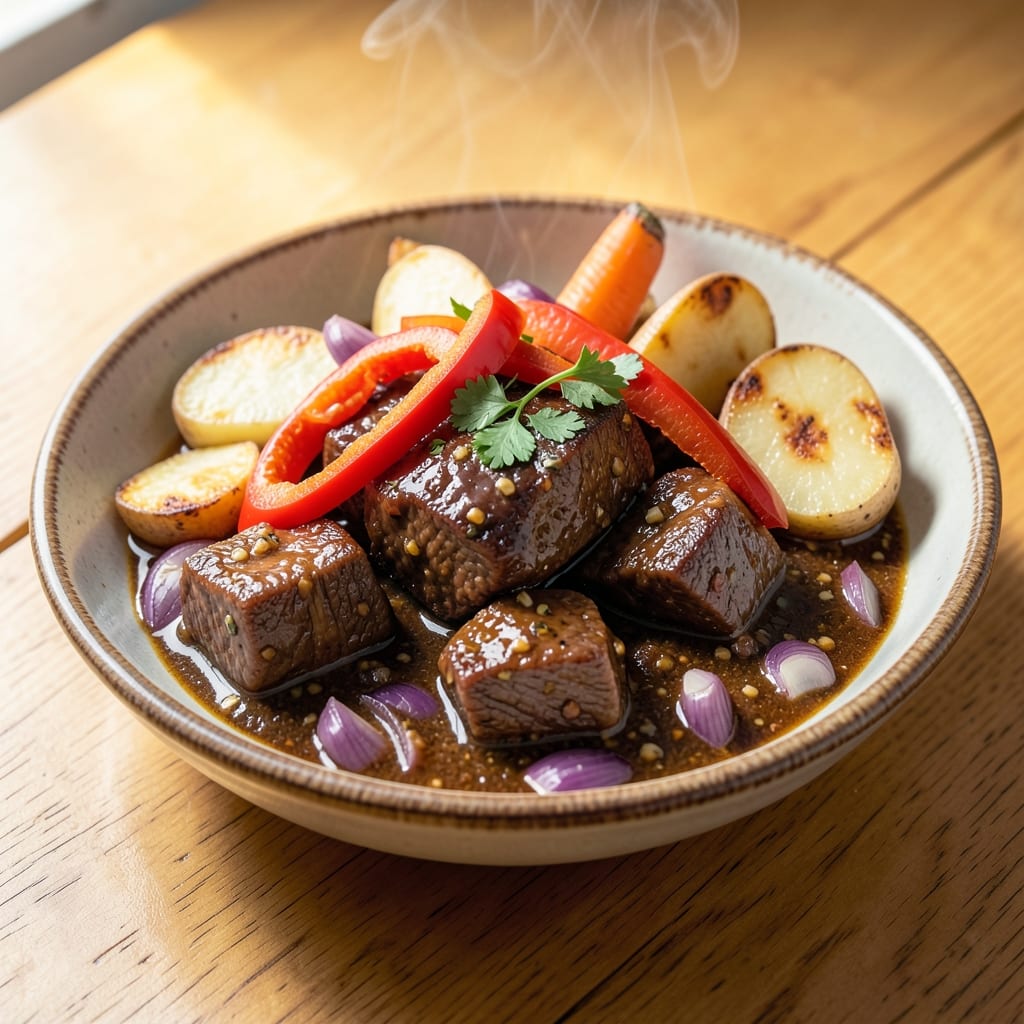
Mama Sita's beef afritada recipe transforms simple ingredients into a rich, tangy stew that tastes like home. This one-pot wonder combines tender beef, vibrant vegetables, and a signature tomato-vinegar sauce that simmers into velvety perfection. I've perfected this recipe to capture the essence of Filipino comfort food—bold flavors, tender meat, and a sauce that clings to every bite.
The magic lies in the slow cooking process, where beef becomes fork-tender while absorbing the aromatic blend of garlic, onions, and bay leaf. Potatoes, carrots, and bell peppers soften just enough to soak up the sauce, creating a hearty dish that's both satisfying and easy to prepare. Mama Sita's technique ensures the sauce remains thick and flavorful, never watery or bland.
What makes this recipe special is its versatility—serve it over steamed rice for a complete meal or enjoy it as-is with crusty bread. The tangy-sweet balance of the sauce elevates simple ingredients into something extraordinary. This is the kind of dish that feeds a crowd, warms the soul, and brings a taste of home to any table.
The best part? It all comes together in one pot, making cleanup a breeze while delivering restaurant-quality results. Let's get cooking—your taste buds will thank you.
Ingredients for beef afritada recipe mama sita
Six servings of Filipino comfort food magic in one pot.
| Ingredient | Amount | Notes |
|---|---|---|
| Chuck Roast 🥩 | 2 lb | Cut into 1-inch cubes |
| Yellow Onions 🧅 | 2 whole | Sliced into wedges |
| Garlic Cloves 🧄 | 8 cloves | Minced for aromatic base |
| Russet Potatoes 🥔 | 2 lb | Cut into 2-inch chunks |
| Carrots 🥕 | 1 ½ lb | Cut into 1-inch slices |
| Green Bell Peppers 🌶️ | 2 whole | Sliced into strips |
| Canned Tomato Sauce 🍅 | 2 cups | San Marzano preferred |
| White Vinegar 💧 | ½ cup | For tangy depth |
| Bay Leaves 🌿 | 2 whole | For aromatic infusion |
| Salt 🧂 | 1 ½ tsp | Diamond Crystal preferred |
| Black Peppercorns 🌶️ | 1 tsp | Freshly cracked |
| Olive Oil 🫒 | ¼ cup | Extra-virgin for richness |
| Sugar 🍚 | 1 tbsp | Balances acidity |
| Hardwood Smoked Paprika 🌶️ | 1 tsp | For subtle smokiness |
The chuck roast is non-negotiable here—it's the star of this dish. Ask your butcher to cube it if you're buying whole, or grab the pre-cubed version from Costco or Walmart for convenience. Look for good marbling to ensure tenderness. The potatoes and carrots should be firm and free of soft spots—local farmers markets often have the freshest produce. Bell peppers? Green is traditional, but red or yellow will work too. For the tomato sauce, San Marzano cans from Trader Joe's or Whole Foods give the best flavor, but any quality canned sauce will do in a pinch.
No white vinegar? Apple cider vinegar works just as well. Fresh bay leaves are ideal, but dried at half the amount will suffice. The smoked paprika adds depth—Penzeys or Gourmet Garage carry excellent varieties. Short on sugar? Honey or maple syrup can substitute at the same amount. The olive oil matters here—use something with good fruity notes, not the cheap stuff. And if you're wondering about the vinegar-to-tomato ratio, trust me, it's perfect as written—that tang is what makes this dish sing.
This stew tastes even better the next day as flavors meld. Store in an airtight container in the fridge for up to 5 days. For longer storage, freeze portions for up to 3 months. I like to make a double batch and freeze half—perfect for lazy weeknights. The sauce thickens as it cools, so you can always add a splash of water or broth if it seems too thick when reheating. Serve over steamed rice to soak up every last bit of that delicious sauce.
Why You'll Love This Recipe
- One-Pot Magic: I swear by this recipe because it’s all in one pot—no fussing with multiple pans or dishes. Chuck roast turns tender on its own while the potatoes and carrots soak up that rich, garlicky sauce. Honestly, I can walk away and let it simmer while I handle the kids or catch up on my show.
- Deep Umami Bomb: That slow-cooked chuck roast? It melts in your mouth, but the real star is the sauce—tangy, slightly sweet, and packed with garlic and onions caramelized just right. Between us, the first bite makes me forget about takeout menus forever.
- Weeknight Workhorse: This dish is my go-to for lazy Sundays or when unexpected guests show up. Serve it over rice for a hearty meal, or pile it onto toast with a fried egg for breakfast the next day. I’ll be real: it’s the only recipe I make that actually improves with leftovers.
- Budget-Friendly Feast: A big cut of chuck roast and simple veggies stretch into four or five servings without breaking the bank. I’ve fed my whole family plus a few neighbors with what costs less than a single restaurant entree. Plus, the flavors get richer the longer it sits—so it’s basically free money in a pot.
Step-by-step instructions for beef afritada recipe Mama Sita
A rich, tangy one-pot stew that captures Mama Sita's legendary technique—deep flavors built through patience and layering.
Sear the Chuck Roast for Deep Flavor
Heat the 0.25 cup Olive Oil in a large Dutch oven over medium-high heat until shimmering. Working in batches to avoid crowding, add the 2 lb Chuck Roast cut into 1-inch cubes and sear for 3-4 minutes per side until deeply browned. This step develops the Maillard reaction, creating that fundamental umami foundation.
Remove the beef from the pot and set aside. If the oil isn't golden by now, add another 1 tablespoon of oil—you want enough to properly sear the onions next. Don't rush this; properly seared beef will stay tender through the long cooking process. I press down gently on the beef cubes during searing to prevent curling, which ensures even browning.
Build the Aromatic Base
In the same Dutch oven, add the 2 whole Yellow Onions sliced into wedges and cook for 5-6 minutes until softened and lightly golden. Add the 8 cloves Garlic Cloves minced and the 1 tsp Hardwood Smoked Paprika, stirring constantly for 30 seconds until fragrant. This aromatic trio forms the flavor backbone of the stew.
Add the 2 whole Green Bell Peppers sliced into strips and cook for another 3-4 minutes until they begin to soften. The peppers should release their natural juices and mingle with the onions. If the vegetables stick to the bottom, add 2 tablespoons of water to deglaze, scraping up all those flavorful browned bits that contain concentrated beef essence.
Simmer the Vegetables and Season
Add the 2 lb Russet Potatoes cut into 2-inch chunks, 1.5 lb Carrots cut into 1-inch slices, 2 cups Canned Tomato Sauce, 0.5 cup White Vinegar, 1 tbsp Sugar, 1.5 tsp Salt, 1 tsp Black Peppercorns (crushed between your palms), and the 2 whole Bay Leaves. Stir gently to combine, making sure the potatoes and carrots are well-coated with the sauce.
Return the seared beef to the pot, along with any accumulated juices. The liquid should come about halfway up the vegetables. Bring to a gentle boil, then immediately reduce heat to low and cover partially. Let it simmer for 45 minutes, stirring occasionally to prevent sticking. You're looking for the vegetables to soften but not disintegrate—this is where patience pays off.
Develop the Stew's Signature Tang
After the initial 45 minutes, uncover the pot and increase heat to medium-low. Let the stew reduce by about 25% over the next 30 minutes, stirring occasionally. This reduction concentrates the flavors and creates that signature Mama Sita tang. You'll notice the sauce thicken slightly and develop a glossy sheen.
Taste and adjust seasoning—you might need a touch more salt or a splash of vinegar to balance the acidity. The stew should be rich but not overly heavy, with the vinegar cutting through the meaty flavors. If the vegetables are tender but the beef still needs more time, cover and return to low heat for another 15-20 minutes. The beef is done when it easily pulls apart with a fork and the sauce coats the back of a spoon.
Rest and Serve with Confidence
Remove the 2 whole Bay Leaves before serving. Let the stew rest for 10 minutes off the heat—this allows the flavors to meld completely and the juices to redistribute. Serve immediately with steamed rice or crusty bread to soak up that glorious sauce.
Each spoonful should deliver layers of flavor: the deep umami from the seared beef, the sweetness of the carrots and potatoes, the tangy brightness from the vinegar, and the subtle smokiness from the paprika. The one-pot magic of this recipe lies in its simplicity—just a few ingredients combined with proper technique to create something truly special.
Pro Tips For Making Beef Afritada Recipe Mama Sita
- SEAR THE ROAST FIRST: I learned this the hard way—skipping the initial sear means flavorless beef. Brown that chuck roast in batches over medium-high heat for 3-4 minutes per side before adding anything else. The crust locks in juices and builds depth that simmering alone won’t match.
- CHOP ONIONS UNIFORM: No one likes mushy chunks in their afritada. Cut those yellow onions into ½-inch dice—consistent size means even cooking. If they’re too big, they’ll turn to mush; too small, they’ll burn before the beef tenderizes.
- DON’T RUSH THE SIMMER: Low and slow is the only way. After browning, reduce heat to a bare simmer (tiny bubbles, not a rolling boil) and cover partially. I used to crank it up, and the sauce would split or the potatoes turn gluey. Patience here makes all the difference.
- ADD POTATOES LAST: I was skeptical until I tried it—tossing them in early turns them to mush. Instead, let the beef and veggies simmer uncovered for 20 minutes first, then add sliced potatoes and carrots. They’ll absorb flavor without falling apart. (Yes, even if you’re impatient like me.)
Perfect pairings for this recipe
Filipino Rice Pairing
This stew is designed to be served with steamed white rice—traditionally, Filipinos use jasmine or long-grain rice to soak up the rich, tangy sauce. I recommend cooking about 2 cups uncooked rice for every 4 servings of afritada, as the rice will absorb the flavors beautifully. For extra authenticity, try garlic fried rice on the side—sauté 2 cups cooked rice with 3 minced garlic cloves, 1 tbsp soy sauce, and 1 tbsp butter until crispy. 🍚
Crusty Bread Magic
No Filipino meal is complete without crusty bread to mop up the sauce. I love using pan de sal (Filipino bread rolls) or a baguette-style loaf from Trader Joe's. Toast slices lightly with 1 tbsp butter and sprinkle with flaky sea salt before serving. The bread's texture contrasts perfectly with the tender beef and soft vegetables, creating an ideal balance. 🥖
Side Salad Refresh
A simple green mango salad cuts through the richness of the stew. Thinly slice 1 ripe mango and 1 cucumber, then toss with 2 tbsp rice vinegar, 1 tbsp sugar, and a pinch of salt. Add ½ cup sliced red onion for a sharp bite. The sweet-tangy contrast makes every bite of afritada even more satisfying. 🥭
Drink Pairings
For a traditional pairing, serve with calamansi juice—this citrusy Filipino drink balances the stew's richness. Mix 1 cup fresh calamansi juice with ½ cup water and 1 tbsp sugar, then chill. Alternatively, a light lager like San Miguel or Singha complements the dish's tangy-sweet profile without overpowering it. 🍹
Spicy Kick Option
Add 1 tbsp sliced siling labuyo (Filipino bird's eye chili) or ½ tsp cayenne pepper to the stew for heat lovers. The chili's sharpness enhances the sauce's depth, making each bite more vibrant. For a milder option, serve sambal oelek on the side for those who want to adjust their spice level. 🌶️
Leftovers Reinvented
Transform leftover afritada into afritada pancit—a noodle stir-fry. Cook 8 oz rice noodles, then stir-fry with leftover beef, veggies, and 1 tbsp soy sauce. Top with fried garlic and crushed peanuts for crunch. This creative twist turns leftovers into a new meal with minimal effort. 🍜
Nutrition facts
Frequently asked questions
Can I use a different cut of beef for this recipe?
While chuck roast is ideal for its tenderness and flavor, you can substitute with brisket or stew meat cut into 1-inch cubes. Avoid lean cuts like sirloin—they won't become tender during the long cooking process. For best results, choose a cut with good marbling to ensure juiciness.
How do I know when the beef is fully cooked?
The beef is perfectly cooked when it easily pulls apart with a fork and reaches an internal temperature of 195°F. This happens during the 45-60 minute simmering time. The sauce should coat the back of a spoon and cling to the beef, indicating it's absorbed all the flavors.
What if my sauce becomes too thin?
If the sauce seems too thin, uncover the pot and simmer uncovered for 10-15 minutes to reduce it naturally. For an instant fix, mix 1 tablespoon cornstarch with 2 tablespoons water, stir into the sauce, and cook for 2-3 minutes until thickened. Never use flour alone—it can make the sauce cloudy.
Can I make this recipe in a slow cooker?
Brown the beef first in a skillet, then transfer everything to the slow cooker. Cook on low for 6-7 hours or high for 3-4 hours. The slow cooker's gentle heat ensures the beef stays tender while the flavors meld beautifully. Just add the bay leaves and reduce the vinegar slightly (¼ cup) since slow cooking concentrates flavors.
Why does Mama Sita's version taste different from others?
Mama Sita's signature touch lies in the proper balance of vinegar and the long, slow simmering process. Many recipes skimp on vinegar or rush the cooking time, resulting in a thinner sauce. Her method ensures the beef becomes fork-tender while the sauce develops a rich, tangy depth that's unmistakably her style.