
Main Courses
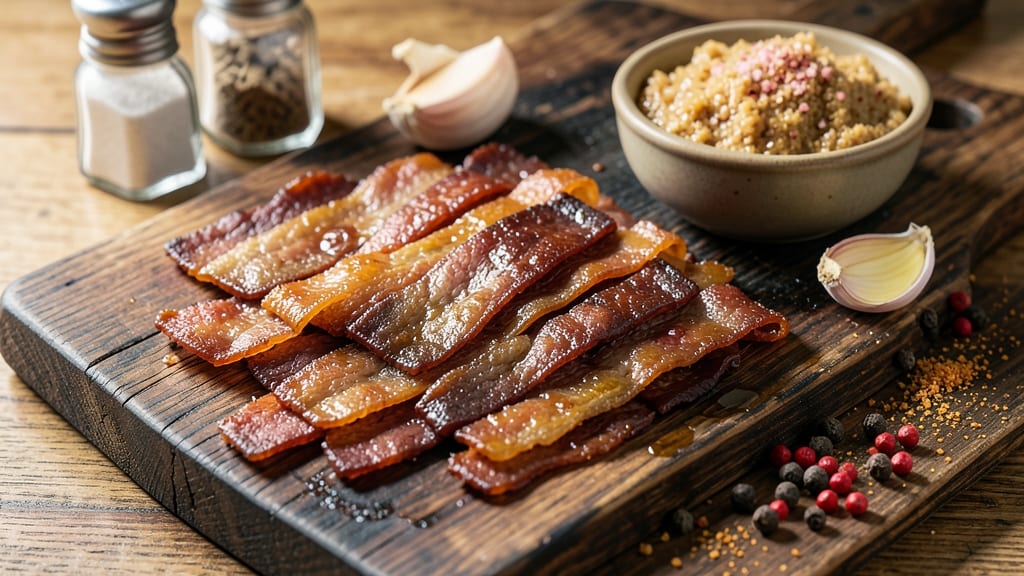
Creating beef brisket jerky transforms tough cuts into smoky, spice-infused bites that pack serious flavor punch—perfect for meal prep or trail snacks. 🔥 My family’s backyard cookouts taught me how slow-smoked brisket could become jerky, and this method preserves that deep, meaty satisfaction while keeping it portable.
The key? A precise balance of salt, sugar, and spices that tenderizes the meat while ensuring safe curing.
This recipe delivers restaurant-quality jerky in just 24 hours using simple pantry staples and a dehydrator or oven. We’ll cure the brisket with a bold rub of smoked paprika, garlic powder, and black pepper, then slice it thin for even drying.
The result? Chewy, flavorful strips with a perfect snap—no tough, leathery jerky here. Safety first: proper salt content and drying times prevent spoilage while locking in that smoky goodness.
By the end, you’ll have a batch of jerky that’s ideal for hiking trips, office lunches, or late-night cravings—all while keeping your kitchen safe and efficient. Whether you’re a pitmaster or a beginner, this method guarantees foolproof results. Let’s get started!
For those who love customization, swap spices for a sweeter or hotter profile, or try different cuts like beef chuck. The possibilities are endless, but the foundation stays the same: smoky, spice-packed jerky that tastes like a backyard cookout in every bite.
Ingredients for beef brisket jerky
Nine key ingredients transform tough brisket into smoky, chewy jerky bites—perfect for meal prep or trail snacks.
| Ingredient | Amount | Notes |
|---|---|---|
| Beef Brisket 🥩 | 2 lb | Flat-cut, trimmed of fat |
| Cure #1 (Prague Powder #1) 🧂 | ⅛ lb | For safe curing (or equivalent) |
| Granulated Sugar 🍚 | ¼ cup | Light brown preferred |
| Smoked Paprika 🌶️ | 0.05 cup | High-quality for smokiness |
| Garlic Powder 🧄 | 1 tbsp | Freshly ground preferred |
| Black Pepper 🌶️ | 1 tbsp | Freshly cracked for heat |
| Ground Coriander 🌿 | 1 tsp | Adds citrusy depth |
| Onion Powder 🧅 | 1 tsp | For subtle sweetness |
| Mustard Powder 🍯 | 1 tsp | Enhances flavor complexity |
| Extra-Virgin Olive Oil 🫒 | 1 tbsp | For moisture and binding |
| Apple Cider Vinegar 🍎 | 1 tbsp | Balances sweetness |
| Water 💧 | ¼ cup | For curing brine |
The brisket is non-negotiable here—flat-cut gives you the best texture. Look for well-marbled meat at Whole Foods or your local butcher shop; the marbling keeps it juicy. If you can't find flat-cut, point-cut brisket works too, but trim the fat aggressively. Costco often has pre-cut brisket at a great price, but check the sell-by date—freshness matters for jerky. For the cure, Prague Powder #1 is the gold standard, but any reputable curing salt blend with 93.75% salt and 6.25% sodium nitrite (or celery powder for nitrate-free) will work. The sugar is crucial—light brown sugar adds subtle caramel notes, but white granulated is fine in a pinch.
No smoked paprika? Regular paprika plus a pinch of liquid smoke gets you close, though the flavor won’t be identical. Short on garlic powder? Fresh garlic minced and dried overnight works wonders—just use half the amount. The coriander and mustard powder might be hard to find, but Trader Joe’s carries them in bulk. For a sweeter profile, bump the sugar to 1/3 cup and reduce the vinegar by half. The olive oil and vinegar combo is what binds the rub to the meat, so don’t skip either—even if you’re in a hurry. If you’re using a dehydrator, pre-slicing the brisket thin (about 1/4-inch) ensures even drying, but if you’re oven-drying, thicker slices (1/2-inch) work better for chewiness.
Once cured, the brisket needs 24 hours of drying—no cutting corners here. Use a dehydrator at 160°F for perfect results, or a low oven (140°F) with the door propped open. Store in an airtight container with a paper towel to absorb moisture—keeps for 2 weeks in the fridge or 6 months frozen. Pro tip: Vacuum-seal for longer shelf life. The jerky reheats beautifully—toss strips in a 350°F oven for 5 minutes to revive that smoky aroma. Leftovers? Toss them into tacos, salads, or snack straight from the bag.
Why You'll Love This Recipe
- No-Fuss Prep: I swear, this jerky takes less effort than microwaving leftovers. Thin slices of brisket + a quick rub of Prague Powder #1 and smoked paprika—no marinating, no fuss. Honestly, I’ve made it while scrolling through my phone.
- Smoky-Sweet Magic: That first bite? Crispy edges with a tender center, kissed by garlic and just enough sugar to balance the smokiness. The Cure #1 does all the heavy lifting—no weird aftertaste, just deep, satisfying beef flavor that sticks with you.
- Snack Attack Ready: Between us, this jerky is my secret weapon for road trips, gym bags, or when I’m too lazy to cook. It keeps for weeks in the fridge, so I always have a protein-packed backup. (Yes, even on a Tuesday night.)
- Budget Meal Hack: Brisket is cheaper than steak, and a pound of it stretches into so much jerky. I make a big batch, portion it out, and suddenly I’ve got emergency snacks, lunchbox fillers, or a quick charcuterie board upgrade—all without breaking the bank.
Step-by-step instructions for beef brisket jerky
Here's how to transform tough brisket into tender, smoky jerky bites—no fancy equipment needed.
👨🍳 Step 1: Prep and Cure the Brisket
Trim the 2 lb beef brisket of excess fat, leaving a thin layer for moisture. Cut against the grain into ¼-inch thick slices—this ensures chewy texture. Place slices in a non-reactive bowl and set aside.
In a separate bowl, mix the 0.125 lb Cure #1 (Prague Powder #1), 0.25 cup granulated sugar, 0.05 cup smoked paprika, 1 tbsp garlic powder, 1 tbsp black pepper, 1 tsp ground coriander, 1 tsp onion powder, and 1 tsp mustard powder. Add the 1 tbsp extra-virgin olive oil and 1 tbsp apple cider vinegar, then whisk until fully combined. This blend creates the perfect balance of smoky, spicy, and slightly sweet flavors.
Pour the 0.25 cup water over the dry mixture and stir until it forms a thick paste. Coat each brisket slice thoroughly, pressing the mixture into the meat. Transfer to a vacuum-seal bag or airtight container, ensuring all slices are submerged in the cure. Refrigerate for 12-24 hours, flipping halfway through—this ensures even curing and maximum flavor penetration.
🔥 Step 2: Dry the Jerky for Perfect Texture
After curing, remove the brisket slices and pat them dry with paper towels. Arrange them on a wire rack set over a baking sheet lined with parchment paper, ensuring slices aren't touching. This setup allows air to circulate evenly, preventing sogginess.
Preheat your oven to 175°F—this low temperature gently dries the jerky without cooking it. Place the rack on the middle oven shelf and prop the oven door open 2 inches with a wooden spoon. This creates a gentle airflow that speeds up drying while preventing overcooking. Bake for 4-6 hours, checking periodically. The jerky is ready when it's firm to the touch and no longer tacky—press a slice between your fingers; it should feel dry and leathery.
Real talk: If your oven runs hot, reduce the temperature to 160°F and extend drying time to 6-8 hours. The goal is moisture removal, not cooking. Overcooking turns jerky tough and brittle.
⏰ Step 3: Finish and Store for Maximum Freshness
Once the jerky is fully dried, let it cool completely on the rack. This step is crucial—cooling prevents condensation, which can make the jerky soggy. Transfer the dried slices to an airtight container or resealable bag, separating layers with parchment paper to prevent sticking.
Store in the refrigerator for up to 2 weeks or freeze for 3 months. For best flavor, consume within 10 days. The jerky should have a deep, smoky aroma and a firm, chewy bite. If it feels too soft, return it to the oven at 175°F for 30-60 minutes to finish drying.
Here's the thing—properly dried jerky keeps well because the low moisture content inhibits bacterial growth. That's why the drying step is non-negotiable. Enjoy your smoky, spice-infused bites as a snack, trail mix addition, or protein boost!
Pro Tips For Making Beef Brisket Jerky
- Trim Against the Grain: Slice your brisket thin—about ¼-inch thick—and always cut perpendicular to the muscle fibers. I used to fight this step, but thicker slices chew like boot leather, no matter how long you dry them.
- Cure for 12 Hours: Don’t rush the Prague Powder #1. Let the meat sit in the cure with sugar and spices for a full 12 hours in the fridge. I learned this the hard way—skipping it leaves the flavor flat, like a jerky that forgot to show up.
- Pat Dry Like You Mean It: After curing, press the brisket between paper towels until it’s bone-dry. Moisture is the enemy of crisp jerky, and I’ve ruined batches by leaving even a hint of dampness. Use your hands—no half-measures.
- Smoke at 165°F: Keep the dehydrator or smoker at a steady 165°F (74°C). Anything hotter and you’ll burn the edges before the center dries. I was skeptical until I tried it—now my jerky never sticks to the tray like a sad, gummy mess.
Flavor customization for this recipe
Smoky Heat Profile
For a bold, smoky kick, boost the smoked paprika to ¼ cup and add ½ tsp cayenne pepper to the cure. I like to include 1 tsp liquid smoke in the brine for an extra layer of campfire flavor.
Pair this with 1 tsp ground chipotle powder for a slow-building heat that lingers. 🌶️
Sweet & Tangy Twist
Swap half the sugar for brown sugar and add 1 tbsp honey or maple syrup to the cure. A splash of orange juice (instead of vinegar) brightens the flavor profile while keeping it balanced.
This version tastes like a cross between jerky and a sweet-and-sour snack—perfect for those who love caramelized notes.
Herb-Forward Variation
Replace the coriander and mustard powder with 2 tbsp fresh rosemary and 1 tbsp dried thyme. Add 1 tbsp Worcestershire sauce to the brine for umami depth.
This Mediterranean-inspired twist works beautifully with a lemon zest finish. I often use this version for charcuterie boards—it’s elegant but still packed with flavor.
Spicy Coffee Rub
For a unique twist, mix 1 tbsp instant coffee powder into the cure alongside the spices. The coffee enhances the smokiness and adds a subtle bitterness that balances the sweetness.
Add ½ tsp cinnamon for warmth and ¼ tsp cloves for depth. This version tastes like a cross between jerky and a dark chocolate snack—trust me, it’s addictive.
Garlic & Onion Bomb
Double the garlic and onion powders to 2 tbsp each and add 1 tbsp granulated onion to the cure. For extra punch, include 1 tbsp minced fresh garlic (dried overnight) in the brine.
This variation is perfect for those who love a strong, savory flavor—think of it as a meaty onion ring in jerky form. 🧄
Sweet & Spicy Fusion
Combine the sweet and spicy profiles by using ¼ cup brown sugar, ½ tsp cayenne, and 1 tbsp honey. Add 1 tsp ground ginger for a hint of warmth.
This version is a crowd-pleaser—sweet enough to satisfy a dessert craving but spicy enough to keep things exciting. It’s my go-to for gift baskets because it’s always a hit.
Nutrition facts
Frequently asked questions
Can I use beef chuck instead of brisket for jerky?
Beef chuck works beautifully—it's more flavorful and slightly more forgiving when sliced thin. Just trim all visible fat first, as it can make the jerky greasy. The curing process will tenderize it just like brisket, but expect a slightly more robust beefy taste. For best results, marinate chuck for an extra 4-6 hours before curing to break down the fibers.
How do I know when the jerky is fully dried?
Press a slice between your fingers—it should feel firm and leathery, with no moisture or stickiness. The jerky should also snap slightly when bent. If it's still tacky after 6 hours in the oven, keep drying at 160°F until completely dry. Over-drying won't hurt, but under-drying risks spoilage. Store properly dried jerky in an airtight container with parchment paper between layers to prevent sogginess.
What's the safest way to store homemade jerky?
For short-term storage (2 weeks), keep jerky in an airtight container in the fridge with a paper towel to absorb moisture. For longer storage, vacuum-seal and freeze for up to 3 months. Never store jerky in the original drying container—it can trap moisture. If you notice any soft spots or off smells, discard immediately. Proper drying and storage prevent bacterial growth, ensuring safe, flavorful jerky every time.
Can I make jerky without a dehydrator?
Yes! Use your oven at 160°F with the door propped open 2 inches for airflow. Line a baking sheet with parchment, arrange slices on a wire rack, and dry for 4-8 hours until firm. For even drying, rotate the rack halfway through. A slow cooker on "warm" setting also works—just place slices on the rack and leave the lid slightly open. The key is low heat and good airflow.
Why did my jerky turn out too tough?
Over-drying or slicing too thin are the most common culprits. Always slice against the grain for tenderness, and aim for ¼-inch thick slices. If your oven runs hot, lower the temp to 150°F and extend drying time. For extra chewiness, try thicker ½-inch slices and dry for 6-8 hours. Soaking the meat in cold water for 1 hour before curing can also help break down fibers for a more tender result.