
Main Courses
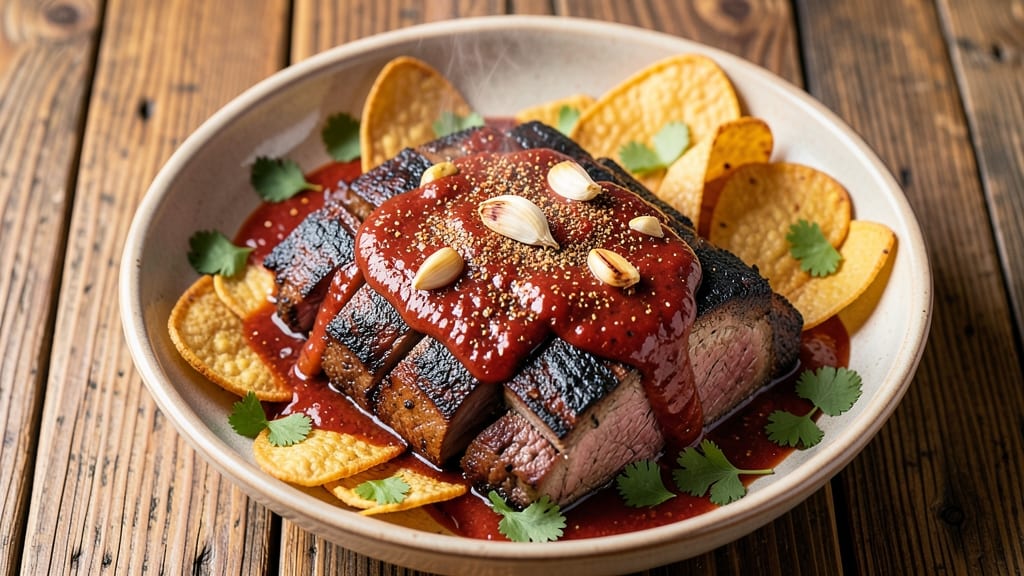
This beef brisket Mexican recipe transforms tough cuts into melt-in-your-mouth tenderness with a bold cumin-charred tomato fusion that’ll redefine your weekend meals. I perfected it after years of experimenting with slow-cooked techniques, blending Texas-style brisket tradition with authentic Mexican flavors.
The key? A deep marinade of adobo and smoked paprika, followed by hours of low-and-slow cooking until the meat falls apart at the touch.
The result is brisket so richly seasoned and tender it becomes the star of any fiesta table—think deep, smoky cumin notes balanced by sweet, charred tomato undertones.
This isn’t just another brisket recipe; it’s a celebration of texture and flavor where every bite delivers both hearty satisfaction and vibrant Mexican character. The secret lies in the slow cook, where patience transforms tough meat into something extraordinary.
Imagine slicing into perfectly smoked brisket that’s still juicy at the center, topped with fresh avocado, pickled onions, and a squeeze of lime. The aromas alone will have your guests reaching for seconds before you even serve.
This dish works as a centerpiece for gatherings or a comforting solo dinner—either way, it’s restaurant-quality without the fuss.
Pair it with cilantro-lime rice and charro beans for the full Mexican experience, or keep it simple with grilled vegetables and warm tortillas. The beauty of this recipe is its versatility—equally at home on a backyard smoker or in your kitchen’s slow cooker. Let’s get cooking!
Ingredients for beef brisket mexican
Six pounds of brisket, bold spices, and hours of patience. This is the core of Mexican-style smoked perfection.
| Ingredient | Amount | Notes |
|---|---|---|
| Beef Brisket 🥩 | 4 lb | Packer cut, good marbling preferred |
| Adobo Seasoning 🌶️ | ½ cup | Homemade or store-bought blend |
| Smoked Paprika 🌶️ | 2 tbsp | High-quality for smoky depth |
| Ground Cumin 🌿 | 1 ½ tbsp | Toasted for enhanced aroma |
| Dried Oregano 🍃 | 1 tbsp | Mexican oregano preferred |
| Garlic Cloves 🧄 | 8 cloves | Fresh, peeled, minced |
| Onion Powder 🧅 | 1 tbsp | Freshly ground preferred |
| Tomato Paste 🍅 | ½ cup | High-quality, no sugar added |
| Beef Broth 💧 | 2 cups | Low-sodium preferred |
| Dark Brown Sugar 🍯 | ¼ cup | For caramelized sweetness |
| Apple Cider Vinegar 🍎 | ¼ cup | For tangy balance |
| Black Liquorice Root 🌿 | 1 tbsp | Optional, for depth |
| Bay Leaves 🌿 | 2 whole | Fresh for best flavor |
| Salt 🧂 | 1 ½ tbsp | Kosher or sea salt |
| Black Peppercorns 🌶️ | 1 tsp | Freshly cracked |
The beef brisket is non-negotiable here—packer cut with good marbling is key for tenderness. Costco or local butchers often carry the best cuts, but don’t overlook the meat section at H-E-B or Walmart—their pre-cut briskets work just fine. If you’re buying whole, ask for the flat cut; it’s leaner and more forgiving. The adobo seasoning? Penzeys or Trader Joe’s carry authentic blends, but a mix of smoked paprika, cumin, and oregano works too. Toast your spices in a dry pan for 30 seconds—that aroma alone transforms the dish.
No adobo seasoning? Mix 2 tbsp smoked paprika, 1 tbsp ground cumin, 1 tbsp dried oregano, 1 tsp garlic powder, and 1 tsp onion powder—it’s a solid stand-in. The tomato paste can be swapped for fire-roasted crushed tomatoes (add 1 cup extra liquid). Short on apple cider vinegar? Lime juice or red wine vinegar works, but taste as you go. The black liquorice root (optional) is a secret weapon—find it at World Market or online. If you skip it, add an extra 1/2 tsp cinnamon for depth. The beef broth? Low-sodium is critical—you don’t want to overpower the brisket’s natural flavor.
This brisket tastes even better the next day—plan ahead. Store leftovers in the fridge for up to 5 days or freeze for 3 months. For serving, slice against the grain and keep it warm in a 200°F oven until ready to eat. The marinade leftovers? Freeze in ice cube trays for future rubs. And if you’re making this for a crowd, double the batch—everyone will ask for seconds
Why You'll Love This Recipe
- One-Pan Miracle: I swear by this—just rub the brisket with adobo, smoked paprika, and cumin, then let the oven do the work. No chopping, no flipping, no stress. Honestly, the only thing I do more is stir occasionally.
- Deep Smoky Magic: That combo of adobo and smoked paprika? It’s like a Mexican BBQ bomb. The brisket gets tender enough to fall apart, and the crust? Crispy enough to make you pause mid-bite. (Yes, even on a Tuesday night.)
- Leftover Goldmine: This recipe actually improves the next day. Shred it for tacos, quesadillas, or even breakfast burritos—my kids fight over the leftovers. Between us, I’ve turned this into a three-day meal plan without trying.
- Budget Beef Boost: A whole brisket feeds my family for days, and the spices cost pennies. I’ll be real: I buy the biggest cut I can find, slow-cook it, and stretch it into four meals. My wallet and my freezer thank me.
Step-by-step instructions for slow-smoked brisket with Mexican spice fusion
This method transforms tough brisket into tender, flavor-packed perfection using a smoky-sweet Mexican-inspired blend.
Prepare the Brisket with Dry Rub
Pat the 4 lb beef brisket completely dry with paper towels—this ensures maximum crust development. In a small bowl, combine the 0.5 cup adobo seasoning, 2 tbsp smoked paprika, 1.5 tbsp ground cumin, 1 tbsp dried oregano, 1 tbsp onion powder, 1.5 tbsp salt, and 1 tsp freshly cracked black peppercorns. Mix thoroughly until evenly distributed.
Generously coat the brisket with the spice blend, pressing it firmly into the meat so it adheres well. Pay special attention to the fat cap and edges, where flavor concentrates. Place the seasoned brisket on a wire rack set over a baking sheet, fat-side up. Refrigerate uncovered for at least 4 hours, or preferably overnight—this step is crucial for deep flavor penetration and crispy bark formation.
Build the Charred Tomato Base
In a heavy Dutch oven, combine the 0.5 cup tomato paste, 0.25 cup dark brown sugar, 0.25 cup apple cider vinegar, 2 cups beef broth, 1 tbsp black liquorice root, and 2 whole bay leaves. Stir well to dissolve the sugar completely. Place the Dutch oven over medium-high heat and bring to a gentle simmer.
Add the 8 minced garlic cloves and let them cook undisturbed for 3-4 minutes until they become fragrant and begin to brown at the edges. This charring step develops deep, complex flavors that will infuse the brisket during cooking. Reduce heat to medium-low and let the mixture simmer gently for 10 minutes to allow the sugars to caramelize slightly and the flavors to meld.
Slow-Smoke the Brisket
Preheat your smoker to 225°F using oak or hickory wood chips. Once the smoker reaches temperature and you see clean, blue smoke, place the seasoned brisket fat-side up in the smoker. Close the lid and maintain a consistent temperature—resist the urge to open it during the first 2 hours, as this will cause temperature fluctuations and prolong cooking time.
Smoke the brisket for 6-8 hours until the internal temperature reaches 165°F in the thickest part of the meat. You'll notice the bark developing a deep, dark crust—this is your visual cue that the surface is properly rendered and flavorful. The brisket will naturally hit "the stall" around 165-170°F, where the temperature plateaus as moisture evaporates. This is normal and expected in the slow-cooking process.
Braise for Maximum Tenderness
Remove the brisket from the smoker and let it rest for 15 minutes before handling. In the same Dutch oven where you prepared the tomato mixture, carefully transfer the brisket, fat-side up. Pour the charred tomato mixture over the brisket, ensuring it's fully submerged. The liquid should come at least halfway up the sides of the brisket.
Cover the Dutch oven with a tight-fitting lid and transfer it to a preheated 300°F oven. Braise for 2-3 hours until the brisket reaches an internal temperature of 203°F and is fork-tender. The braising liquid should reduce to a rich, glossy sauce that coats the brisket beautifully. Check occasionally and add a splash of water if the liquid reduces too quickly.
Rest and Slice for Serving
Remove the brisket from the oven and transfer it to a cutting board. Tent loosely with aluminum foil and let it rest for at least 1 hour before slicing. This resting period allows the juices to redistribute throughout the meat, ensuring each slice is moist and flavorful. During this time, strain the braising liquid and skim off any excess fat if desired.
Slice the brisket against the grain into ¼-inch thick slices. The meat should be tender enough to pull apart with minimal resistance, with a beautiful dark bark on the outside and a deep pink smoke ring just beneath. Serve the sliced brisket with the reduced braising sauce spooned over the top, accompanied by warm tortillas, cilantro-lime rice, and charred vegetables for a complete Mexican-inspired feast.
Pro Tips For Making Beef Brisket Mexican
- Trim the Fat First: Cut off the thickest layer of fat from the brisket before seasoning—it’s the only way to guarantee even cooking and crispy edges. I learned this the hard way when my first batch turned greasy and uneven; the fat just rendered into the pan instead of browning.
- Toast Your Spices: Dry-toast the cumin and oregano in a skillet for 30 seconds before mixing with the adobo and paprika—it deepens their flavor and cuts through the brisket’s richness. Sounds weird, but it works: the nutty aroma becomes way more pronounced.
- Braise, Don’t Boil: Keep the liquid just simmering, not bubbling, or you’ll turn the brisket tough. After the initial sear, drop the heat to low and cover; I used to rush this and ended up with stringy meat every time.
- Rest Under Foil: After pulling from the heat, tent the brisket with foil for 10 minutes—it traps steam and keeps the meat juicy while you slice. I skip this when I’m lazy, but the dish is noticeably better when I don’t.
Essential equipment for beef brisket mexican
Smoker Essentials
You don’t need a fancy setup—just a reliable smoker that maintains 225°F consistently. I swear by my Traeger Pro 570 for its user-friendly controls, but a Weber Smokey Mountain or even a converted charcoal grill with a water pan works too.
The key is oak or hickory wood chips—they add that authentic smoky depth without overpowering the Mexican spices. I always preheat for 30 minutes before adding the brisket to ensure clean, blue smoke. 🌲
Dutch Oven Must-Have
A heavy-duty Dutch oven (I use Le Creuset 6-quart) is non-negotiable for braising. It needs to handle the 300°F oven without warping and distribute heat evenly. The deep sides help submerge the brisket in the charred tomato sauce, creating that restaurant-quality glaze.
If you’re short on space, a cast-iron Dutch oven works too—just avoid cheap, thin-walled ones that can crack under high heat.
Temperature Tools
Invest in a dual-probe meat thermometer—the ThermoWorks Smoke is my go-to. One probe tracks the smoker’s temperature, while the other monitors the brisket’s internal temp. Aim for 165°F during smoking, then 203°F after braising.
No thermometer? Use the finger test: Press your finger into the meat—if it feels like jelly, it’s done. Just don’t rely on guesswork with brisket! 🌡️
Resting Gear
After cooking, let the brisket rest on a wire rack (placed over a baking sheet) to prevent soggy bark. I use a repurposed grill grate or a collapsible cooling rack from Amazon. Tent loosely with aluminum foil—not too tight, or you’ll trap steam.
Pro tip: Keep it warm in a 200°F oven while you prep sides. This step is where brisket goes from good to showstopping.
Slicing Knife
A sharp, long slicing knife (like the Dexter-Russell 12-inch) makes all the difference. Slice against the grain in ¼-inch thick pieces for maximum tenderness. If you’re using a serrated knife, it’ll tear the meat—save that for bread.
For extra flair, add a tortilla warmer to keep sides crispy while you slice. Trust me, your guests will notice the difference. ✨
Backup Plan
No smoker? No problem. Use an oven with a meat thermometer and a smoker box (or even a foil packet with wood chips). For the braise, a slow cooker on low works too—just add the brisket and sauce, then cook for 8 hours.
The flavors might not be exactly the same, but it’s still delicious. And if you’re in a hurry, a pressure cooker (like Instant Pot) can do it in 90 minutes—though I’d still recommend the slow method for that perfect bark. 💡
Nutrition facts
Frequently asked questions
Can I use a different cut of beef for this Mexican-style recipe?
While beef brisket is ideal for its marbling and texture, you can substitute with chuck roast or short ribs for a similar experience. For chuck roast, reduce cooking time by 1-2 hours since it's leaner. Short ribs will need 3-4 hours of smoking. Adjust the spice blend slightly—add ½ tsp cinnamon to complement the Mexican flavors in these cuts.
How do I know when the brisket is done without a meat thermometer?
Use the finger test as a backup: Press your finger into the thickest part of the meat. If it feels like jelly, it's ready. For visual cues, look for a deep dark brown bark and a pink smoke ring beneath the surface. The brisket should also pull apart easily with two forks. If in doubt, err on the side of undercooking—it'll carry over during resting.
Can I make this recipe in a slow cooker instead of smoking?
Skip the smoker and use a slow cooker on low for 8 hours after the initial braise. For smoky flavor, add 2-3 wood chips (oak or hickory) wrapped in foil to the slow cooker. The braising liquid should still reduce to a rich sauce. For best results, finish with a 10-minute broil under the oven's broiler to create a bark-like crust.
What sides pair best with this Mexican brisket?
For an authentic fiesta spread, serve with cilantro-lime rice, charro beans, and grilled corn. Add pickled red onions, avocado slices, and warm tortillas for serving. For a lighter option, try black beans with lime and roasted jicama slaw. The smoky-sweet brisket balances perfectly with bright, acidic, and crunchy components.
Why does my brisket turn out dry even after slow cooking?
Dry brisket usually means it cooked too fast or wasn't rested properly. Always aim for 203°F internal temp and let it rest 1 hour before slicing. If using a smoker, maintain 225°F—higher temps dry it out. For extra moisture, add ½ cup beef broth during braising. Slice against the grain to shorten muscle fibers and keep slices tender.