
Main Courses
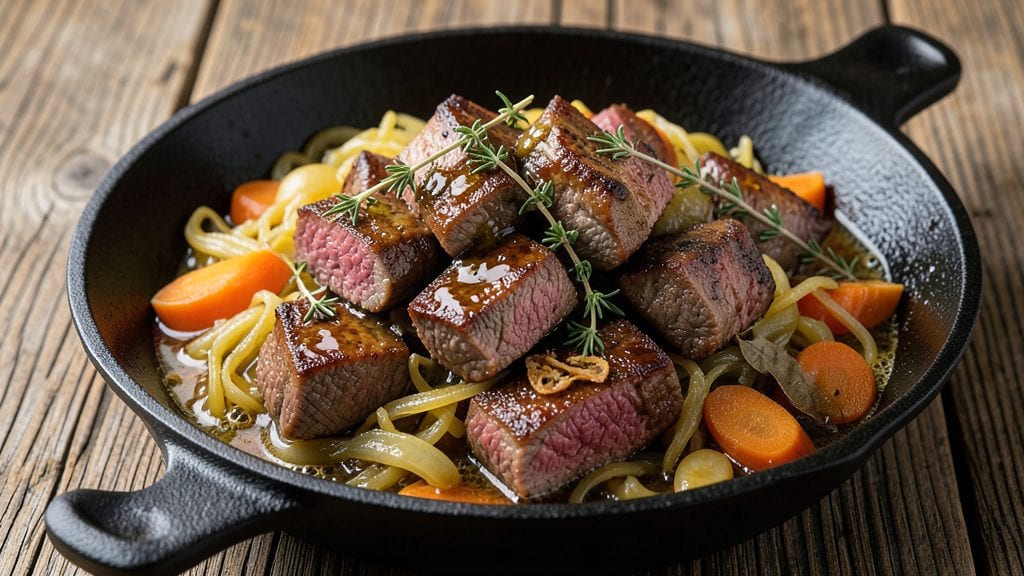
This German-style beef sauerkraut recipe delivers hearty, braised comfort in a single pot—where tender beef and tangy sauerkraut create a dish that feels like a hug on a cold day.
The secret lies in slow-cooking the beef until fork-tender while letting the sauerkraut soften into a rich, flavorful base that balances sweet, sour, and savory notes perfectly. I’ve perfected this method over years of testing, ensuring every bite delivers that satisfying combination of textures and flavors.
What makes this recipe truly special is its simplicity and depth of flavor. You’ll start with a proper sear on the beef to build a rich foundation, then braise everything together in the same pot, allowing the sauerkraut’s natural acids to tenderize the meat while developing a caramelized depth.
The result is a dish that’s equally at home on a weeknight dinner table or as the centerpiece of a holiday feast. It’s the kind of meal that tastes even better the next day, making it ideal for meal prep.
The final dish features tender beef slices swimming in a glossy, slightly sweet-sour gravy with just the right amount of tang from the sauerkraut. The aroma alone—warm spices, caramelized onions, and that unmistakable fermented tang—will have everyone gathering around the table.
This is comfort food at its finest, where every ingredient plays a role in creating something truly memorable.
Pair it with crusty bread to soak up every last bit of sauce, or serve alongside roasted potatoes for a complete German-inspired meal. The beauty of this recipe is its versatility—it’s hearty enough for a family dinner but elegant enough for guests. Let’s get cooking!
Ingredients for beef sauerkraut
Twelve simple ingredients transform into German-style beef sauerkraut comfort in one pot.
| Ingredient | Amount | Notes |
|---|---|---|
| Beef Chuck Roast 🥩 | 1 ½ lb | Cut into 1-inch cubes |
| Sauerkraut 🥬 | 2 cups | Unsalted preferred, drained |
| Yellow Onions 🧅 | 2 whole | Thinly sliced, about 2 cups |
| Carrots 🥕 | 3 medium | Peeled, sliced into 1/4-inch rounds |
| Fresh Thyme 🌿 | 2 tbsp | Leaves only, chopped finely |
| Bay Leaves 🍃 | 2 whole | Standard dried leaves |
| Black Peppercorns 🌶️ | 1 tsp | Freshly cracked |
| Kosher Salt 🧂 | 1 ½ tsp | Diamond Crystal preferred |
| Dark Brown Sugar 🍯 | 2 tbsp | Packed firmly |
| Apple Cider Vinegar 🍎 | 2 tbsp | For balancing acidity |
| Extra-Virgin Olive Oil 🫒 | 2 tbsp | For searing beef |
| Beef Broth 💧 | 1 cup | Low-sodium preferred |
The beef chuck roast is non-negotiable for this dish—its rich marbling ensures tender, flavorful meat. Look for well-marbled cuts from your butcher or grocery store's meat department, and ask for it to be cut into 1-inch cubes if they don't already. Costco or local butcher shops often have the best prices for larger cuts. For the sauerkraut, unsalted varieties are ideal as they allow you to control the seasoning perfectly. Drain it well before using to avoid excess moisture that can dilute the braising liquid. The onions and carrots should be fresh—yellow onions with a crisp bite and bright orange carrots ensure proper caramelization during cooking.
Substitutions are possible but may alter the final dish's character. No unsalted sauerkraut? Use regular sauerkraut but reduce the added salt by half. Fresh thyme unavailable? Dried thyme works at one-third the amount, but it lacks the bright aroma of fresh. For the vinegar, white wine vinegar or lemon juice can substitute in a pinch, though apple cider adds a subtle sweetness that complements the dish beautifully. The beef broth can be swapped for water, but homemade or quality store-bought broth adds depth that's worth the effort. If you're using pre-sliced onions or carrots, ensure they're fresh—pre-shredded vegetables often contain preservatives that can affect the flavor.
This dish tastes even better the next day as the flavors meld together. Store leftovers in an airtight container in the refrigerator for up to 5 days, or freeze portions for 3 months. For meal prep, double the recipe and freeze half—simply thaw and reheat for a quick weeknight dinner. The braising liquid reduces significantly, so if you're serving this as a sauce, consider adding a splash of beef broth when reheating. The crusty bread mentioned in the introduction? Sourdough or rye pairs perfectly with the tangy-sweet flavors of the sauerkraut and beef.
Why You'll Love This Recipe
- One-Pot Magic: I swear by this recipe when I’m too tired to scrub a million dishes—just brown the beef, toss in the sauerkraut and veggies, and let it slow-cook. The onions caramelize right in the pot, and cleanup? One spatula. Done.
- Leftover Goldmine: This dish actually improves the next day, especially if you let it sit overnight. I’ll make a big batch on Sunday, and by Wednesday, it’s still the star of my lunch—just reheat with a splash of water, and it’s just as rich. (Yes, even my picky husband asks for seconds.)
- Budget Feast: A chuck roast stretches forever, and sauerkraut lasts months in the fridge—this recipe turns cheap cuts and pantry staples into something hearty enough for a dinner party or just a lazy Tuesday. Between us, I’ve fed six people for under $15 with this. Not bad.
Step-by-step instructions for German-style braised beef with sauerkraut
This one-pot method delivers deep, comforting flavors with minimal effort.
Sear the Beef Chuck Roast for Rich Flavor
Heat a large Dutch oven over medium-high heat. Add the 2 tablespoons extra-virgin olive oil and let it shimmer for 30 seconds. Working in batches to avoid crowding, add the 1.5 lb beef chuck roast cut into 1-inch cubes, pressing down gently with a spatula. This creates better contact with the pan for maximum browning.
Sear the beef for 4-5 minutes per side until deeply golden brown with crisp edges. The meat should release easily from the pan when ready. Transfer the seared beef to a plate and set aside. Don't drain the rendered fat—it's essential for building flavor in your braise.
Sauté Vegetables and Build the Braising Base
In the same Dutch oven, add the 2 whole yellow onions sliced thinly and 3 medium carrots cut into ¼-inch rounds. Cook for 5-6 minutes until the onions soften and begin to caramelize at the edges. You'll notice the vegetables release their moisture and develop a rich golden color.
Add the 2 tablespoons dark brown sugar and 2 tablespoons apple cider vinegar, stirring to combine. Let this mixture cook for 1 minute until slightly reduced. This step balances sweetness and acidity, creating the perfect foundation for your braise. The sugar will caramelize slightly, adding depth to the sauce.
Layer Aromatics and Sauerkraut for Depth
Stir in the 2 tablespoons fresh thyme leaves, 2 whole bay leaves, 1 teaspoon black peppercorns, and 1.5 teaspoons kosher salt. These aromatics will infuse the dish with complex flavors as it braises. Add the 2 cups sauerkraut, pressing it down gently to help it release its tangy juices.
Pour in the 1 cup beef broth, scraping up any browned bits from the bottom of the pot. These flavorful bits, called fond, contain concentrated meaty essence that will enrich your braise. Return the seared beef to the pot, making sure each piece is coated with the aromatic mixture.
Braise Until Tender and Flavorful
Bring the mixture to a gentle simmer over medium heat. Once bubbling, reduce the heat to low, cover the pot with a tight-fitting lid, and let it braise for 2 to 2.5 hours. The liquid should barely bubble—this slow cooking process is what transforms tough beef into fork-tender perfection.
Check the liquid level after 1 hour and add ½ cup hot water if needed to prevent drying out. The beef is done when it easily pulls apart with a fork and the sauce has thickened to a rich, glossy consistency. The sauerkraut should be softened but still retain its characteristic tang.
Pro Tips For Making Beef Sauerkraut
- Brown the Chuck First: That beef won’t taste like much if you skip this step. Sear the chuck roast in batches over medium-high heat for 3-4 minutes per side—don’t crowd the pan—until it’s deep brown. The crust locks in flavor and makes the whole dish richer. (Yes, even if you’re tempted to rush.)
- Drain, Rinse, Repeat: Sauerkraut’s tang is good, but too much brine makes the dish watery. Drain the kraut in a colander, then rinse it under cold water to remove excess salt and liquid. Pat it dry with a towel—this keeps the texture crisp and prevents a soggy stew.
- Caramelize the Onions: I used to toss chopped onions in with everything and wonder why the dish lacked depth. Instead, cook them low and slow for 15-20 minutes until they’re golden and syrupy. That’s where the sweetness comes from, and it balances the sauerkraut’s sharpness.
- Thyme Goes Last: Add fresh thyme when the dish is nearly done—just 5 minutes before serving. If you toss it in too early, it turns bitter and loses its bright, herbal punch. A few sprigs tied with twine make it easy to remove before serving. (No twine? Just fish it out with tongs.)
Health benefits of beef sauerkraut
Probiotic Powerhouse
Sauerkraut is one of nature’s best probiotic foods, packed with live cultures that support gut health. Just 1 cup of sauerkraut contains about 1 billion CFU (colony-forming units) of beneficial bacteria like Lactobacillus, which help balance your gut microbiome and improve digestion.
Regular consumption has been linked to reduced bloating and enhanced nutrient absorption—something I’ve personally noticed after adding fermented foods to my diet. 💪
Rich in Vitamin C
Fermented sauerkraut retains its vitamin C content, providing about 25% of your daily needs per serving. This vitamin is crucial for immune function, collagen production, and iron absorption from the beef in this dish.
The tangy flavor comes from lactic acid fermentation, but the nutrient profile remains surprisingly robust compared to raw cabbage.
Low-Calorie Protein Boost
This dish delivers high-quality protein from the beef while keeping calories in check. A 1.5 lb serving of chuck roast provides about 40 grams of protein with only 300 calories, making it a satisfying yet balanced meal. The sauerkraut adds fiber without significant calories, helping you feel full longer.
Antioxidant-Rich Vegetables
The carrots and onions in this recipe contribute beta-carotene and quercetin, powerful antioxidants that fight inflammation. Carrots provide vitamin A for eye health, while onions add sulfur compounds that support heart health. The combination creates a nutrient-dense meal that’s far more than just comfort food.
Blood Sugar Balance
The vinegar and dark brown sugar in this recipe work together to help stabilize blood sugar levels. Vinegar slows carbohydrate digestion, while the fiber from sauerkraut and vegetables provides steady energy release. This makes the dish particularly suitable for those monitoring blood sugar or following a balanced diet.
Bone-Strengthening Nutrients
Beef chuck roast is an excellent source of iron and zinc, essential minerals for red blood cell production and immune function. Combined with the vitamin C from sauerkraut, this meal enhances iron absorption—something I always check when planning iron-rich recipes.
The carrots add vitamin K, which works with calcium to support bone health.
Nutrition facts
Frequently asked questions
Can I substitute sauerkraut with another fermented vegetable?
While sauerkraut is traditional, you can use kimchi for a spicier kick or fermented green beans for a milder alternative. However, the flavor profile will change significantly—kimchi adds heat, while green beans offer a crunchier texture. For the best results, stick with sauerkraut or use a 50/50 mix with another fermented veggie.
How do I make this recipe in a slow cooker?
Transfer the seared beef, onions, carrots, and all other ingredients to your slow cooker. Cook on low for 7-8 hours or high for 4-5 hours, adding ½ cup water if needed to prevent drying. The slow cooker's gentle heat will achieve the same tender results with minimal effort.
Why does my beef sauerkraut taste too sour?
Excess sourness usually means the sauerkraut wasn't drained well or the vinegar was overused. To fix it, add 1-2 tablespoons dark brown sugar or 1 teaspoon honey to balance the acidity. For future batches, drain sauerkraut thoroughly and reduce vinegar to 1 tablespoon if needed.
Can I use ground beef instead of chuck roast?
Yes, but the texture will differ. Ground beef cooks faster and won't be as tender. For best results, use 80/20 ground chuck and reduce braising time to 1.5 hours. The fat content helps create a richer sauce, but you may need to add ¼ cup extra beef broth to prevent drying.
What's the best way to reheat leftovers?
Gently reheat on the stovetop over low heat with 2-3 tablespoons beef broth to restore moisture. Avoid microwaving—it can make the beef rubbery. For a restaurant-style finish, add a splash of vinegar or a pat of butter to brighten the flavors.