
Main Courses
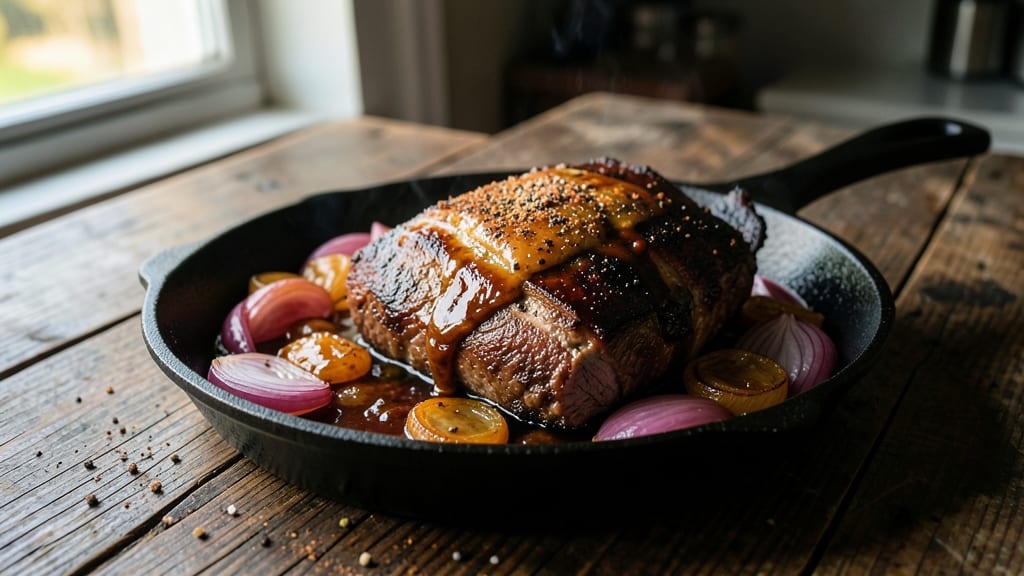
Mastering a beef shoulder smoked recipe transforms tough cuts into melt-in-your-mouth perfection through patience and precision. This low-and-slow method—what I perfected teaching my first grilling class—rewards you with meat so tender it practically falls apart at the touch.
The secret lies in balancing time, temperature, and wood choice to unlock deep, smoky flavors without overpowering the natural richness of the beef.
What makes this recipe work is the science behind it: a 250°F smoke for 6-8 hours breaks down collagen into gelatin, creating that signature pull-apart texture. I use a simple dry rub—salt, pepper, garlic powder, and smoked paprika—to let the smoke shine while adding just enough complexity.
The key is never rushing; slow cooking builds layers of flavor that store-bought rubs can't match.
By the time you pull that beef from the smoker, you'll have a shoulder that's fork-tender, glossy with rendered fat, and infused with aromatic smoke. The crust will be dark and crackly, while the interior remains juicy and rich—proof that low-and-slow isn't just a method, but an art.
Serve it sliced thin over mashed potatoes or piled high on buns for sandwiches that taste like they came from a pitmaster's dream.
This recipe scales beautifully for crowds, and leftovers reheat perfectly for sandwiches or tacos the next day. The beauty of smoking beef shoulder is its versatility—once you nail the technique, you can experiment with different woods or sauces without fear of failure. Let's get started on your first perfect batch.
Ingredients for beef shoulder smoked
Six pounds of beef shoulder and a handful of pantry staples transform into melt-in-your-mouth perfection.
| Ingredient | Amount | Notes |
|---|---|---|
| Beef Shoulder (Boston Butt) 🥩 | 6 lb | Bone-in, well-marbled preferred |
| Kosher Salt 🧂 | 2 tbsp | Diamond Crystal preferred |
| Freshly Ground Black Pepper 🌶️ | 1 ½ tbsp | Coarse grind for texture |
| Garlic Powder 🧄 | 1 tbsp | Freshly ground preferred |
| Smoked Paprika 🌶️ | 1 tbsp | High-quality for authentic smoke |
| Yellow Onion 🧅 | 1 whole | Quartered, skin on for color |
| Fresh Rosemary 🌿 | ½ cup | Chopped, stems removed |
| Fresh Thyme 🌿 | ¼ cup | Leaves only, stems discarded |
| Apple Cider Vinegar 🍎 | ½ cup | For tenderizing soak |
| Wood Chips (Hickory or Oak) 🌳 | 2 cups | Soaked for 1 hour minimum |
| Beef Broth 🍲 | ½ cup | Low-sodium preferred |
| Brown Sugar 🍚 | 1 tbsp | Lightly coat meat before smoking |
| Mustard (Dijon) 🍯 | 1 tbsp | Optional for extra depth |
The beef shoulder is your star—look for a well-marbled, bone-in cut at Costco or your local butcher. The marbling ensures juiciness, while the bone adds extra flavor. If buying pre-cut, check for a 2-4 inch fat cap—this is your moisture insurance during smoking. I always ask the butcher to trim excess fat from the top but leave it on the sides for flavor. For the best results, buy it 1-2 days ahead and let it sit uncovered in the fridge—this helps the rub adhere better later. Whole Foods or specialty butchers often carry higher-quality cuts if you're willing to pay a premium.
No smoked paprika? Regular paprika plus a pinch of liquid smoke works in a pinch, but the flavor won't be as authentic. Fresh rosemary and thyme are ideal, but dried at one-third the amount gets you close—just make sure they're labeled culinary-grade. The apple cider vinegar soak is non-negotiable for tenderness (trust me on this). For the wood chips, hickory dominates the flavor while oak adds a more balanced smoke. Mixing both? Perfect for crowds. The brown sugar coating creates that beautiful bark while keeping the interior moist—don't skip this step, even if you're in a hurry.
This meat is best made a day ahead—flavors deepen as it rests. Store wrapped in butcher paper (not foil) in the fridge for 3-4 days or freeze for up to 3 months. For serving, slice against the grain into 1/4-inch thick slices. Leftovers reheat beautifully—wrap tightly and warm in the oven at 275°F for 20-30 minutes. I always make extra because it disappears faster than you'd think, especially when piled high on sandwiches or tacos.
Why You'll Love This Recipe
- I’ll be real: I make this on Sunday because the pulled beef sandwiches on Wednesday are chef’s kiss. The meat stays tender, the flavor only gets better, and I’m not stuck reheating sad takeout—just reheat, shred, and serve.
- Foolproof Seasoning: Between us, that dry rub of garlic powder and smoked paprika? It’s that good. I swear, the first time I rubbed it on the beef shoulder, I knew it’d be a winner—no fancy techniques, just salt, pepper, and a little patience letting the smoky magic work its way in.
- One-Pan Magic: Honestly, this is my lazy-day hero. Toss the beef shoulder on a tray, sprinkle the spices, and let the smoker do the rest. No chopping, no flipping, no stress—just that perfect crust forming while you sip your coffee or scroll through your phone.
- Leftovers That Shine: I’ll be real: I make this on Sunday because the pulled beef sandwiches on Wednesday are chef’s kiss. The meat stays tender, the flavor only gets better, and I’m not stuck reheating sad takeout—just reheat, shred, and serve.
Step-by-step instructions for smoked beef shoulder
Here's the foolproof method to transform tough beef shoulder into melt-in-your-mouth perfection.
Prepare the Beef Shoulder with Vinegar Soak
Begin by placing the 6 lb beef shoulder (Boston Butt) in a large resealable bag. Add the 0.5 cup apple cider vinegar and gently massage it into the meat, coating all surfaces. The acidity helps tenderize the fibers while adding subtle tang. Seal the bag and refrigerate for 12-24 hours, turning occasionally. This step is non-negotiable for achieving that signature pull-apart tenderness.
After soaking, remove the beef and pat it completely dry with paper towels. This drying step is crucial—it creates a better bark during smoking. In a small bowl, combine the 2 tbsp kosher salt, 1.5 tbsp freshly ground black pepper, 1 tbsp garlic powder, and 1 tbsp smoked paprika. Rub this mixture generously over the entire surface of the beef, pressing it into the crevices. The coarse pepper will add texture, while the paprika provides that authentic smoky depth.
Build the Smoking Setup
While the beef rests, prepare your smoker. Soak the 2 cups wood chips (hickory or oak) in water for at least 1 hour to prevent flare-ups. Preheat your smoker to 225°F, using the soaked wood chips as your fuel source. The goal is to maintain a steady temperature—this low-and-slow approach breaks down collagen into gelatin, creating that irresistible tenderness.
Once the smoker reaches temperature and you see clean, blue smoke (not thick white steam), it's ready. Place the beef shoulder fat-side up on the smoker grate. The fat will render slowly, basting the meat and contributing to that rich, caramelized bark. Avoid the temptation to open the smoker during the first 2 hours—each time you peek, you lose heat and moisture, extending cook time.
Smoke Until Probe-Tender
Smoke the beef shoulder undisturbed for 8-10 hours, or until the internal temperature reaches 165°F. This is where the magic happens—the "stall" occurs around 160°F, where moisture evaporates and the temperature plateaus. Don't panic; this is normal. The bark should be deep mahogany and beginning to crisp.
Here's the critical moment: when the internal temperature hits 165°F, remove the beef from the smoker and wrap it tightly in butcher paper (not aluminum foil). Return it to the smoker and continue cooking until the internal temperature reaches 203°F—this ensures maximum tenderness. The wrap traps steam, helping the meat overcome the stall while preserving that beautiful bark. Total cook time should be 10-12 hours for a perfect result.
Rest and Slice for Maximum Juiciness
Once the beef reaches 203°F, remove it from the smoker and transfer it to a cutting board. Tent loosely with foil and let it rest for 1-2 hours. This resting period is essential—it allows the juices to redistribute throughout the meat. If you slice too soon, those precious juices will escape, leaving you with dry, tough meat.
After resting, discard the butcher paper and locate the grain direction—you'll see lines running through the meat. Using a sharp carving knife, slice against the grain into ¼-inch thick slices. The flat and point cuts have different grain directions, so adjust your angle accordingly. Each slice should be fork-tender, pulling apart easily with minimal resistance. Serve immediately with the 0.5 cup beef broth reduced into a glossy sauce, or toss the slices with a simple mix of 1 tbsp brown sugar and 1 tbsp mustard (Dijon) for extra depth.
Pro Tips For Making Beef Shoulder Smoked
- Trim the Fat Cap: That thick layer of fat on the Boston butt isn’t just for show—it renders down into flavor gold. Use a sharp knife to trim it down to about ¼-inch thick before smoking. I learned this the hard way after my first smoke session left me with a greasy mess instead of crispy bark.
- Salt the Night Before: Skip the last-minute salting rush—apply your kosher salt and black pepper mix at least 12 hours ahead. This lets the seasoning penetrate deep and gives the surface time to dry out, which is non-negotiable for that perfect crust. (Yes, even if you’re impatient like me.)
- Watch the Stall Zone: Around 150–160°F, your smoker will hit the stall, and the temp will plateau for hours. This is where patience pays off—resist the urge to crank the heat. A spray of apple juice or water (not too much) can help push it through. I used to panic and overcook the meat because of this.
- Crush the Garlic: Ditch the powdered garlic—it’s weak sauce. Use 4–5 fresh cloves, crushed or smashed, mixed into your rub. The raw aroma and moisture make a real difference in the final flavor. (I know, I know, but trust the process.)
Wine and beer pairings for this recipe
Bold Red Wines
For this rich, smoky beef shoulder, I always reach for a bold red wine that can stand up to the deep flavors. A Cabernet Sauvignon from Napa Valley—like Opus One or Caymus Vineyards—is my go-to.
Its dark fruit notes and firm tannins mirror the beef's smokiness while adding layers of blackberry and cedar. Serve it slightly chilled (60-65°F) to let the wine's acidity cut through the fat. 🍷
Malbec Magic
If you prefer something smoother but still robust, a Malbec from Argentina—like Catena Zapata or Trapiche—works beautifully. Malbec's velvety texture and plum flavors complement the beef's tenderness without overpowering it.
The wine's natural sweetness balances the smokiness, making each bite feel luxurious. I like to decant mine for 30-45 minutes to open up its aromas.
Beer Pairings
A smoked porter is my top beer recommendation—brands like Founders Kentucky Breakfast Stout or Goose Island Bourbon County Stout add a malty depth that echoes the beef's caramelized crust. The coffee and chocolate notes in these beers create a perfect contrast to the smoky, meaty richness.
For something lighter, a Belgian-style witbier with its citrusy brightness cleanses the palate between bites. 🍺
Unexpected Pairings
Don't overlook sparkling wines like a Brut Rosé Champagne from France. The bubbles and crisp acidity make the beef feel lighter, while the berry notes enhance the smokiness. I also love pairing this dish with a dry Riesling from Germany—its mineral finish balances the richness perfectly.
For beer lovers, a smoked ale with notes of vanilla and caramel adds a unique twist.
Pro Tips for Pairing
Let your wine or beer breathe alongside the beef—at least 15-20 minutes before serving. This allows the aromas to fully develop and harmonize with the smoky flavors. If you're serving a crowd, chill your red wine slightly (60-65°F) to enhance its fruitiness.
For beer, serve at 45-50°F to preserve its carbonation and flavor. 💡
Nutrition facts
Frequently asked questions
How do I know if my beef shoulder is cooked properly?
Use a meat thermometer to check the internal temperature—it should reach 203°F for maximum tenderness. The bark should be deep mahogany and crispy, while the meat should pull apart easily with two forks. Never rely on time alone; temperature is your best guide!
Can I use a different wood for smoking?
While hickory and oak are classic choices, fruitwoods like cherry or apple add subtle sweetness. Avoid pine—it can taste bitter. For bold flavor, try pecan or mesquite (use sparingly). The key is consistency: stick to one type for the best results.
Why is my smoked beef shoulder dry?
Overcooking or skipping the rest period are common culprits. Always wrap the beef in butcher paper at 165°F and let it rest 1-2 hours before slicing. Slice against the grain and avoid cutting too soon—juices need time to redistribute!
How far ahead can I prepare this recipe?
This dish actually tastes better the next day! Store wrapped in butcher paper in the fridge for 3-4 days or freeze for up to 3 months. Reheat slices in a 275°F oven for 20-30 minutes wrapped in foil. The flavors deepen with time!
What's the best way to serve smoked beef shoulder?
Slice thin against the grain and serve on sandwiches with coleslaw, pile high on buns with pickles, or shred for tacos. The reduced beef broth sauce from the recipe adds extra flavor. For a hearty meal, pair with mashed potatoes or roasted vegetables.