
Main Courses
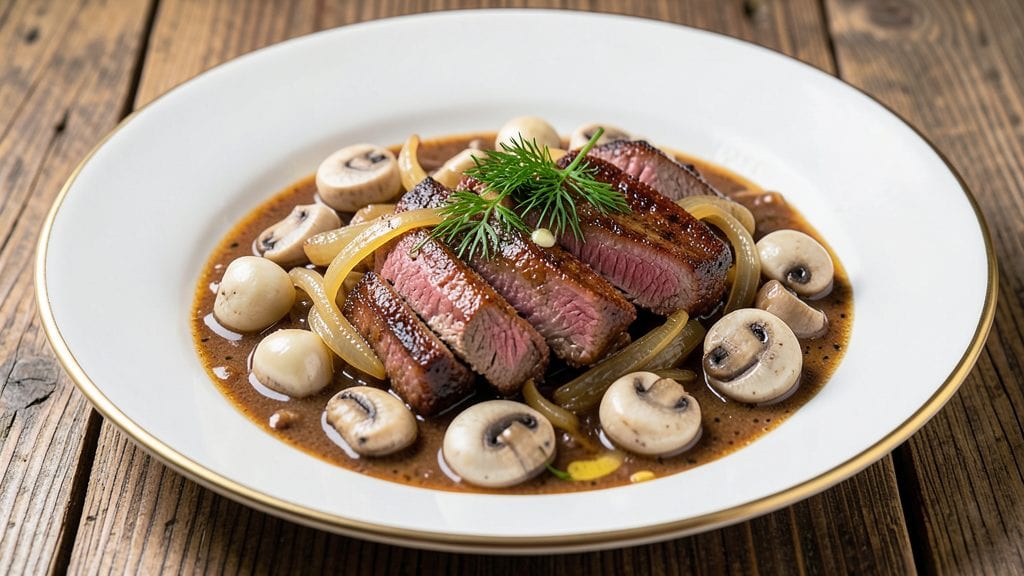
The original Russian beef stroganoff recipe delivers tender beef chunks in a rich, velvety sour cream sauce that tastes like a 19th-century aristocrat's secret.
This dish traces back to St. Petersburg's high society, where Count Stroganoff's chef perfected the technique of searing thin beef strips and blending them with a luxurious béchamel-sour cream sauce.
The key lies in proper protein prep—thinly sliced beef that cooks quickly over high heat—paired with a roux that forms the foundation of the sauce.
What sets this recipe apart is its authentic balance of flavors: the tangy brightness of sour cream, the subtle heat of mustard, and the deep richness of butter-infused onions.
Unlike modern adaptations that rely on wine or heavy cream, this version stays true to its roots using beef broth and a traditional béchamel base. The result is a sauce that's silky yet structured, clinging perfectly to each tender piece of beef without overpowering its natural flavor.
By the time you plate this dish, you'll have golden-brown beef strips swimming in a glossy, velvety sauce that's both comforting and elegant. The tender texture of the beef—achieved through precise slicing and quick cooking—combines with the sauce's luxurious mouthfeel for a restaurant-quality meal that feels genuinely historic.
Serve it over buttered egg noodles or steamed rice to complete the experience, just as it was intended in the grand ballrooms of imperial Russia.
This recipe isn't just about technique—it's about recreating a piece of culinary history in your own kitchen. The aroma alone, with its warm butter and tangy sour cream notes, will transport you to St. Petersburg's elite dining rooms.
Whether you're preparing it for a special occasion or a cozy weeknight dinner, the tender beef and velvety sauce will leave everyone asking for seconds.
Ingredients for beef stroganoff original russian
Authentic Russian beef stroganoff relies on precise ingredients to deliver velvety sauce and tender beef chunks.
| Ingredient | Amount | Notes |
|---|---|---|
| Beef Tenderloin 🥩 | 1 ¼ lb | Thinly sliced against the grain |
| Unsalted Butter 🧈 | ½ cup | European-style preferred for flavor |
| Yellow Onion 🧅 | 1 whole | Thinly sliced, sweet variety |
| Fresh Mushrooms 🍄 | 8 oz | Button or cremini, sliced |
| All-Purpose Flour 🌾 | ¼ cup | For roux, sifted preferred |
| Beef Broth 💧 | 1 ½ cups | Homemade or high-quality store-bought |
| Sour Cream 🥛 | 1 cup | Full-fat, room temperature |
| Dijon Mustard 🍯 | 1 tbsp | For authentic tang |
| Fresh Dill 🌿 | ¼ cup | Chopped, stems removed |
| Salt 🧂 | 1 tsp | Diamond Crystal kosher |
| Black Pepper 🌶️ | ½ tsp | Freshly cracked |
| Egg Noodles 🍜 | 8 oz | Fresh or dried, wide egg noodles |
| Fresh Lemon 🍋 | 1 whole | Zest only, for finishing |
The beef selection is critical. Tenderloin ensures the perfect texture—thinly sliced against the grain for maximum tenderness. Opt for USDA Prime or Choice from a trusted butcher, as the marbling enhances flavor during the quick sear. For authenticity, source European-style butter (like Plugrá or President) from specialty grocers, as its higher fat content creates a richer roux. The yellow onion should be sweet (like Vidalia) and thinly sliced to caramelize properly without browning. Fresh mushrooms add depth, so cremini or button varieties from the refrigerated section work best. Avoid pre-sliced mushrooms—they oxidize quickly and lose texture.
Substitutions must respect the dish's delicate balance. Sirloin or ribeye can replace tenderloin, but slice them thinner and pound gently to mimic tenderness. For butter, ghee or clarified butter works in a pinch, though the flavor will differ slightly. If Dijon mustard is unavailable, whole-grain mustard thinned with water provides similar tang. The sour cream must be full-fat—Greek-style or Russian-style from Trader Joe's or Whole Foods delivers the creamy texture essential to the sauce. Fresh dill is non-negotiable for authenticity, but dried dill at one-third the amount can substitute if needed. The egg noodles should be wide and rich—Barilla or De Cecco brands are ideal, though fresh pasta works beautifully if available.
Proper storage ensures peak flavor. Slice the beef and refrigerate in an airtight container for up to 24 hours before cooking to allow the meat to relax. The roux and sauce components can be prepped ahead and refrigerated for 2 days, then reheated gently on low heat. The finished stroganoff reheats beautifully—simmer on low for 5-7 minutes with a splash of beef broth to restore its velvety consistency. For longer storage, freeze the sauce separately from the beef in airtight containers for up to 3 months. When reheating from frozen, thaw overnight in the fridge before gentle reheating.
Why You'll Love This Recipe
- Here’s what sold me: tenderloin feels fancy, but it stretches further than you’d think when sliced thin. The mushrooms add heartiness without breaking the bank, and a single stick of butter makes the whole dish taste indulgent. I’ll be real—it’s not the cheapest cut, but it’s the kind of meal that makes you feel like you splurged, even when you didn’t.
- One-Pot Magic: I swear by this recipe because it’s literally one pan—no extra dishes, no stress. The beef tenderloin practically melts into the butter and onions while the mushrooms soak up all the rich sauce. Honestly, I’ve made stroganoff before, but this is the first time I didn’t dread cleanup.
- Rich Without Effort: That first bite of tender beef in a velvety, buttery sauce? It’s ridiculously good, and the secret’s in the flour roux. You don’t even need fancy techniques—just toast the flour in butter until golden, and boom, instant depth. The onions caramelize while you cook, adding this sweet, savory backbone that makes it taste like a restaurant dish.
- Weeknight to Dinner Party: Between us, this is my go-to for lazy nights and when I have guests over. Serve it over buttery egg noodles for a casual meal, or plate it with crusty bread and a simple salad for something that feels special. The leftovers? Even better reheated the next day—just add a splash of cream to keep it luscious.
Step-by-step instructions for beef stroganoff original Russian recipe
Here's the authentic method for velvety, restaurant-quality stroganoff with perfectly tender beef chunks.
Prepare the Beef and Sauté the Aromatics
Slice the 1.25 lb beef tenderloin thinly against the grain into ¼-inch strips. Pat dry with paper towels to ensure a proper sear. In a large skillet, melt 2 tablespoons of the 0.5 cup unsalted butter over medium-high heat until foaming. Add the beef in a single layer and sear for 2-3 minutes until browned on both sides. Remove and set aside.
In the same skillet, add the remaining 3 tablespoons unsalted butter and the 1 whole yellow onion. Cook for 5-6 minutes until the onions soften and begin to caramelize. Add the 8 oz fresh mushrooms and cook for another 5 minutes until they release their moisture and brown slightly. Season with the 1 tsp salt and 0.5 tsp black pepper.
Create the Roux and Deglaze
Lower the heat to medium and sprinkle the 0.25 cup all-purpose flour evenly over the mushrooms and onions. Stir constantly for 1-2 minutes to cook out the raw flour taste and create a light roux. This will thicken the sauce beautifully and give it that authentic texture.
Gradually pour in the 1.5 cups beef broth while stirring continuously to prevent lumps. Add the 1 tbsp Dijon mustard and bring the mixture to a gentle simmer. Let it cook for 5 minutes until the sauce thickens slightly and coats the back of a spoon. The beef should be tender but still holding its shape at this point.
Finish with Sour Cream and Dill
Return the seared beef to the skillet and stir to combine with the sauce. Reduce heat to low and gently stir in the 1 cup sour cream. Here's where it gets crucial: let the mixture simmer for exactly 3 minutes—no more, no less. Overcooking will curdle the sour cream and ruin the delicate texture.
Remove from heat and stir in the 0.25 cup chopped fresh dill and the zest from the 1 whole fresh lemon. The lemon zest adds a bright, authentic Russian touch that balances the richness. Taste and adjust seasoning if needed, though the sauce should already be perfectly balanced.
Cook the Noodles and Combine
While the stroganoff rests, cook the 8 oz egg noodles according to package instructions until al dente. Drain and set aside. The key here is to not overcook the noodles—they'll finish cooking in the sauce.
To serve, combine the cooked noodles with the beef stroganoff in a large bowl. Stir gently to distribute the sauce evenly. The final dish should have tender beef chunks swimming in a velvety, slightly tangy sauce with bright dill and lemon notes. Serve immediately with additional fresh dill and lemon wedges if desired.
Pro Tips For Making Beef Stroganoff Original Russian
- Sear the Beef First: Hit that tenderloin with a screaming-hot pan—no butter yet—until it’s deep brown in spots. I learned this the hard way: skipping the sear means flavorless beef that just melts into the sauce instead of standing up to it.
- Sweat the Onions Slow: Low heat only, and cover the pan for the first 5 minutes. High heat turns onions bitter, and you want them soft enough to disappear into the sauce without tasting like they were charred in a hurry.
- Don’t Overcrowd the Mushrooms: Cook them in batches if needed—crowding steams them instead of browning. Golden edges on mushrooms make the dish; soggy ones make it forgettable.
- Whisk the Butter-Flour Slurry: Melt the butter first, then whisk in the flour all at once before adding liquid. Lumpy roux ruins the sauce, and nobody has time for that—especially when you’re hungry.
Troubleshooting your beef stroganoff original russian
Sauce Too Thin?
If your sauce ends up too thin after combining with sour cream, don’t panic—simmer it uncovered for 2-3 minutes to reduce excess liquid. For an instant fix, mix 1 tsp cornstarch with 1 tbsp cold water, stir into the sauce, and cook for 1 more minute until thickened.
I’ve also found that adding 1 extra tbsp butter at the end helps emulsify the sauce naturally. 💡
Beef Overcooked?
Thinly sliced beef should cook in 2-3 minutes—any longer risks toughness. If yours turns rubbery, slice it even thinner next time (aim for ⅛-inch thickness) and sear in batches to avoid crowding the pan.
For extra tenderness, marinate the beef for 30 minutes in 1 tbsp lemon juice and 1 tsp honey before cooking. 🥩
Sour Cream Curdling?
This happens when heat exceeds 180°F—the sour cream’s protein breaks down. To fix it, immediately remove from heat and whisk in 1 tbsp cold butter or 1 tbsp heavy cream to stabilize the sauce.
For prevention, stir constantly and keep the heat at low-medium when adding sour cream. I also recommend using Russian-style sour cream (like Ryazenka)—it’s more heat-stable than Greek varieties. 🥛
Dull Flavor Profile?
If your stroganoff tastes flat, boost brightness with 1 extra tbsp lemon juice or 1 tsp white wine vinegar at the end. For depth, add ½ tsp smoked paprika or 1 sprig fresh thyme during the onion cooking step.
I’ve also found that a pinch of ground nutmeg (⅛ tsp) enhances the sauce’s complexity without overpowering. 🌿
Noodles Too Dry?
Stroganoff sauce should cling to noodles, not pool at the bottom. If yours separates, toss the noodles with 1 tbsp melted butter before combining with the sauce. For extra moisture, stir in 2 tbsp beef broth when plating.
I prefer serving stroganoff with wide egg noodles (like Barilla)—they absorb sauce better than thin spaghetti. 🍜
Equipment Failures?
A heavy-bottomed skillet (like All-Clad) prevents scorching, but if yours lacks one, use a cast-iron pan or stainless steel instead. For roux troubles, whisk vigorously to avoid lumps—if they form, strain the sauce through a fine-mesh sieve.
I’ve also had success using an immersion blender to smooth out thickened sauces without overcooking. 🔥
Nutrition facts
Frequently asked questions
Why does the original Russian recipe use beef broth instead of wine?
The classic Russian stroganoff relies on beef broth to maintain its rich, velvety texture without overpowering the delicate beef flavor. Wine-based versions emerged later as a Western adaptation. The broth's deep umami notes complement the sour cream's tang, creating the authentic balance that defines this aristocratic dish from 19th-century St. Petersburg.
Can I substitute chicken or pork for the beef?
While traditional stroganoff uses beef, you can adapt it to chicken or pork—but expect different textures. Chicken should be sliced ¼-inch thick and cooked for 3-4 minutes per side to avoid dryness. Pork (like tenderloin) works best when sliced thin and seared quickly. The sauce technique remains identical, though pork may require 1 extra minute of simmering to fully tenderize.
How do I prevent the sauce from curdling when adding sour cream?
Curdling happens when heat exceeds 180°F. To avoid it, reduce heat to low-medium before adding sour cream and stir constantly for 3 minutes max. For extra insurance, whisk in 1 tbsp cold butter immediately after removing from heat. Russian-style sour cream (like Ryazenka) is more heat-stable than Greek varieties.
What's the best way to reheat leftovers without ruining the texture?
Reheat stroganoff gently on low heat with a splash of beef broth to restore moisture. For best results, cover the pan and simmer for 5-7 minutes, stirring occasionally. Microwave reheating works too—use 50% power for 1-2 minutes, then stir in 1 tbsp butter to re-emulsify the sauce. Avoid boiling to prevent separation.
Can I make this gluten-free?
Yes! Replace the all-purpose flour with ¼ cup gluten-free flour blend, thickened with 1 tbsp cornstarch. For the roux, cook the gluten-free flour with butter for 2 minutes to remove any raw taste. The sauce will still achieve that velvety consistency, though the texture may be slightly lighter. Pair with gluten-free egg noodles for a fully compliant dish.