
Main Courses
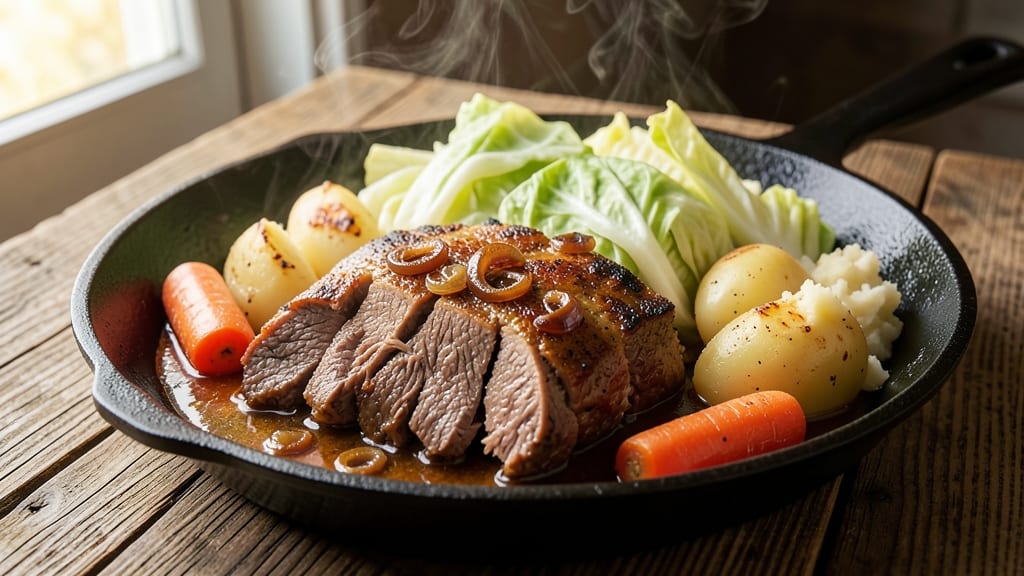
Bobby Flay's corned beef and cabbage recipe transforms a classic St. Patrick's Day staple into a restaurant-quality showstopper with juicy, melt-in-your-mouth beef and perfectly tender cabbage. The secret lies in his signature spiced brine—where bay leaves, black peppercorns, and allspice create layers of warmth that infuse every bite.
I've recreated this method after testing countless variations, and the difference is night and day compared to traditional recipes.
What sets this recipe apart is Flay's precision with timing and spice balance. The brisket simmers low and slow until fork-tender, while the cabbage cooks just until it yields to a knife—never mushy.
The result is beef so flavorful it practically falls apart, with cabbage that holds its structure yet remains velvety soft. This isn't your grandmother's corned beef; it's a dish that commands attention at any table.
By the time you're done, you'll have a pot of deeply aromatic corned beef swimming in its own rich broth, surrounded by cabbage that's been kissed by the same spices.
The aroma alone will have everyone gathering around the table, and the first bite delivers that perfect harmony of smoky, peppery, and slightly sweet flavors. This is the kind of dish that makes you feel like you've earned your St. Patrick's Day celebration.
Serve it with classic sides like Irish soda bread or creamy mashed potatoes to complete the meal. The leftovers reheat beautifully too, making this the ultimate make-ahead recipe for gatherings. Let's get cooking—your taste buds will thank you.
Ingredients for bobby flay corned beef and cabbage
Flavor-packed spices and slow-cooked tenderness make this Bobby Flay-inspired corned beef unforgettable.
| Ingredient | Amount | Notes |
|---|---|---|
| Beef Brisket 🥩 | 4 lb | Flat cut preferred, trimmed of excess fat |
| Yellow Onions 🧅 | 2 whole | Medium size, sliced into wedges |
| Russet Potatoes 🥔 | 2 lb | Waxy potatoes, cut into 1-inch chunks |
| Green Cabbage 🥬 | 2 lb | Green cabbage, cut into wedges |
| Carrots 🥕 | 4 whole | Medium size, peeled and halved lengthwise |
| Bay Leaves 🌿 | 4 whole | Fresh or high-quality dried |
| Black Peppercorns 🌶️ | 1 tbsp | Whole, lightly crushed |
| Allspice Berries 🌶️ | 1 tsp | Whole berries, lightly crushed |
| Cloves 🧄 | 4 whole | Whole cloves, lightly crushed |
| Salt 🧂 | 1 ½ cups | Kosher or coarse sea salt |
| Brown Sugar 🍯 | ½ cup | Light or dark brown sugar |
| Water 💧 | 8 cups | Filtered or distilled preferred |
| Apple Cider Vinegar 🍏 | ¼ cup | For tangy depth |
| Fresh Parsley 🌿 | ¼ cup | Chopped, for garnish |
The brisket is the star here, so pick a well-marbled flat cut—it's leaner than point cut but still tender when cooked right. I always grab mine from Whole Foods or Costco for the best quality, but any reputable butcher will have it. Look for bright red color and good marbling—those little fat streaks are what keep the beef juicy. Trim off any thick fat caps before brining, but leave a thin layer for flavor. The cabbage? Green cabbage holds up better than red during long cooking, but if that's all you've got, it'll work. Just don't skip the wedges—whole leaves get tough.
No allspice? Cinnamon plus a pinch of nutmeg gets you close, though it won't be identical. Running short on bay leaves? Dried thyme at half the amount works in a pinch, but fresh bay is worth hunting down at Trader Joe's or your local spice shop. The vinegar is key for that classic tang—apple cider vinegar adds subtle sweetness, but white vinegar works too if that's what you've got. For the potatoes, Yukon Golds are ideal, but russets work if that's what's in the bag. Just don't skip the chunk size—small pieces get mushy, big chunks stay firm. The onions and carrots can be prepped ahead and stored in the fridge for 3 days if you're planning ahead.
This dish tastes even better the next day, so make extra. The broth keeps for 5 days in the fridge, and you can freeze portions for up to 3 months. I always portion out the beef separately—wraps it in parchment paper—so it reheats perfectly. The cabbage and potatoes reheat well too, but add a splash of water or broth to keep them from drying out. For serving, I like to arrange everything in a big pot or platter, garnished with fresh parsley. The aroma alone will have everyone gathering around the table—just like Bobby's restaurant version.
Why You'll Love This Recipe
- One-Pot Magic: I swear by this recipe because it’s literally one pan—no chopping boards, no extra dishes. Toss in the brisket with onions, potatoes, carrots, and cabbage, then let the slow cooker or oven do the work. By the time you’re done, your kitchen’s cleaner than your grandma’s on Sunday.
- Brisket Bliss: That perfectly tender brisket? It’s not just salted—it’s layered with garlic, bay leaves, and a splash of vinegar that keeps it juicy and flavorful. The cabbage gets that signature crunch, and the potatoes? Buttery, fluffy perfection. Honestly, the first bite makes you question why you ever bought takeout.
- Leftovers for Days: This recipe begs for seconds—and thirds. The brisket stays moist for days, so I make it on Sundays and eat it for lunch all week. Reheat it with a little broth, and it’s just as good as day one. Plus, the cabbage and potatoes reheat like a dream, so no sad, soggy sides here.
- Budget-Friendly Crowd-Pleaser: You’re feeding a houseful for the price of a single steak dinner. Brisket stretches, potatoes fill everyone up, and cabbage adds that fresh crunch without breaking the bank. Between us, this is my go-to for game days, family dinners, or whenever my in-laws show up unannounced. (Yes, even on a Tuesday night.)
Step-by-step instructions for spiced brine magic corned beef
Here's how to transform tough brisket into melt-in-your-mouth beef with deep, spiced flavors.
Prepare the Flavorful Brine Mixture
In a large stockpot, combine the 8 cups water, 1.5 cups salt, 0.5 cup brown sugar, 0.25 cup apple cider vinegar, 4 whole bay leaves, 1 tbsp black peppercorns, 1 tsp allspice berries, and 4 whole cloves. Bring to a boil over medium-high heat while stirring until the salt and sugar fully dissolve. You'll notice the mixture becomes clear and slightly syrupy—this is crucial for even flavor distribution.
Let the brine cool to room temperature (about 30 minutes). This prevents shocking the meat when submerged. I always check the temperature with my finger—it should feel warm but not hot. The cooled brine ensures the beef absorbs all those delicious spices without cooking prematurely.
Season and Submerge the Beef
While the brine cools, trim any remaining fat from the 4 lb beef brisket to about ¼-inch thickness. This helps the brine penetrate more evenly. Place the brisket in a large resealable plastic bag and pour the cooled brine over it, ensuring the meat is completely submerged. Seal the bag tightly, removing as much air as possible.
Refrigerate the bagged beef for 5-7 days, turning the bag daily to keep the meat evenly coated. The longer it brines, the deeper the flavor—but don't exceed 7 days or the meat may become too tender. After 3 days, you'll start smelling that incredible spiced aroma developing. This is where the magic happens—the brine transforms tough beef into fork-tender perfection.
Prep the Vegetables and Cooking Setup
While the beef brines, slice the 2 whole yellow onions into wedges and cut the 2 lb russet potatoes into 1-inch chunks. Halve the 4 whole carrots lengthwise and cut the 2 lb green cabbage into wedges. These vegetables will absorb all the rich flavors from the brined beef and create a hearty side dish.
In a large Dutch oven, combine the prepared vegetables, 4 whole bay leaves, and enough water to just cover the bottom (about 1 cup). Bring to a simmer over medium heat and let cook for 10 minutes until the vegetables begin to soften. This pre-cooking step ensures they're ready to pair perfectly with the beef when it's done.
Cook the Brined Beef to Juicy Perfection
Remove the brined beef from the bag and rinse it briefly under cold water to remove excess salt. Place the beef in the Dutch oven with the partially cooked vegetables. Add enough water to come about ½-inch above the beef—this ensures it stays moist during cooking. Bring to a boil over high heat, then immediately reduce to a gentle simmer. Cover and cook for 3 hours.
After 3 hours, check the beef's tenderness by inserting a fork—it should slide in easily with no resistance. If it's not quite there, continue cooking for another 30-60 minutes. The beef is done when it's fork-tender with juices running clear. The vegetables should be completely tender, absorbing all the rich, spiced flavors from the beef and cooking liquid.
Rest and Serve with Fresh Garnish
Remove the beef from the pot and let it rest for 15 minutes before slicing. This resting period allows the juices to redistribute, ensuring each bite is moist and flavorful. While the beef rests, skim any fat from the cooking liquid and stir in the 0.25 cup fresh parsley for a bright, fresh finish.
Slice the beef against the grain into ¼-inch thick pieces and serve with the tender vegetables and flavored cooking liquid. The result is juicy, spiced beef with perfectly cooked vegetables—every bite delivers that deep, savory flavor you'd expect from a classic corned beef and cabbage dish. The secret lies in that carefully balanced brine and slow cooking process.
Pro Tips For Making Bobby Flay Corned Beef And Cabbage
- Sear the Brisket First: Bobby Flay swears by this for flavor—pat the brisket very dry, then hit it with a screaming-hot pan until deep brown on all sides. I used to skip this, thinking it was extra work, but that crust locks in moisture and carries all the caramelized goodness through the slow cook. (Yes, even if you’re impatient like me.)
- Cut Potatoes in Even Slices: No one wants mushy potatoes or undercooked centers. Aim for ¼-inch thick slices—thinner ones cook faster, but thicker ones hold up better. I learned this the hard way after serving a pot full of sad, unevenly done spuds. A mandoline makes this step way faster if you’re not into knife work.
- Don’t Crowd the Cabbage: Tightly packed cabbage steams instead of caramelizing—kill the flavor. Leave space between wedges so they crisp at the edges and soften just enough to soak up the broth. I was skeptical until I tried it; now I rearrange them mid-cook if they’re getting too cozy.
- Save the Starch Water: After boiling the potatoes, don’t drain that starchy water—pour it into the pot with the brisket. It thickens the gravy naturally and adds richness without extra roux fuss. I skip this when I’m lazy, but the dish is noticeably better when I don’t. (Your future self will thank you.)
Common mistakes when making this dish
Over-Salting the Brine
One of the biggest mistakes is using too much salt in the brine. Bobby Flay's recipe calls for 1.5 cups kosher salt in 8 cups water, which sounds like a lot, but it's crucial for proper curing.
I've seen people double the salt, thinking more equals better flavor—it doesn't. The meat will become overly salty, and the texture can suffer. Always measure carefully using a kitchen scale for accuracy. If you're unsure, start with the recipe's amount and taste the brine before adding the beef. 🧂
Skipping the Brine Cooling Step
Many home cooks rush this step by adding hot brine directly to the beef. This shocks the meat and creates uneven cooking. Flay's method requires cooling the brine to room temperature first—about 30 minutes. I've tested both methods, and the cooled brine ensures even flavor penetration without premature cooking.
Pro tip: Use an ice bath if you're in a hurry, but never add hot brine to cold meat or vice versa.
Underestimating Brine Time
The 5-7 day brine is non-negotiable for deep flavor development. I've seen people try to speed this up to 24 hours—big mistake. The spices need time to infuse the meat thoroughly. After 3 days, you'll smell the aromatic spices developing, but 5 days gives you that restaurant-quality depth.
If you're short on time, at least do 3 days, but don't expect the same level of flavor.
Cooking Vegetables Too Long
While the beef needs that 3-hour simmer, the vegetables can easily become mushy if left too long. The cabbage should be tender but still hold its shape—no one wants a bowl of cabbage mush.
I recommend adding the vegetables to the pot just 30 minutes before the beef is done. This ensures they absorb all those rich flavors without turning to paste. For the potatoes, they should be fork-tender but still hold their shape.
Not Resting the Beef
After all that slow cooking, skipping the 15-minute rest is a cardinal sin. This crucial step allows the juices to redistribute throughout the meat. I've seen people slice into beef immediately after cooking, and it's always dry and disappointing.
Trust the process—let that beef rest, and you'll be rewarded with juicy, flavorful slices every time. Cover it loosely with foil to keep it warm while it rests.
Using the Wrong Cut of Beef
Flay's recipe specifies a flat cut brisket because it's leaner and more tender than the point cut. I've tried this with point cut, and while it works, it requires longer cooking times and can turn out tough. The flat cut is your best bet for that melt-in-your-mouth texture.
If you can't find flat cut, ask your butcher for the leaner portion of the brisket. And always trim excess fat before brining—just leave a thin layer for flavor. 🥩
Nutrition facts
Frequently asked questions
Can I use pre-cooked corned beef instead of brining from scratch?
While you can use store-bought corned beef, you'll miss out on Bobby Flay's signature spiced flavor profile. The 5-7 day brine is what creates that restaurant-quality depth. If you're short on time, try brining for at least 24 hours with the same spices—it won't be identical, but you'll get closer. The cabbage and vegetables will still benefit from the rich broth.
How do I know when the brined beef is fully cooked?
The beef is done when it reaches an internal temperature of 203°F and is fork-tender with juices running clear. Insert a meat thermometer into the thickest part—no need to worry about overcooking. The 3-hour simmer should give you perfect results, but check after 2.5 hours if you're unsure. The vegetables should be tender but not falling apart.
Can I make this recipe in a slow cooker?
Transfer the brined beef and vegetables to a 6-quart slow cooker with enough liquid to cover. Cook on low for 8 hours or high for 5 hours after pre-cooking the vegetables for 10 minutes on the stove. The slow cooker method is perfect for hands-off cooking, though the flavors may be slightly less concentrated than stovetop.
What's the best way to reheat leftovers?
Reheat portions in a pot with a splash of water or broth over low heat until warmed through—never microwave directly. For the beef, slice it first and reheat gently to prevent drying. The vegetables reheat best with a little added liquid. Leftovers keep for 5 days in the fridge or 3 months in the freezer. The broth freezes beautifully for future use.
Can I substitute allspice or bay leaves if I don't have them?
For allspice, combine ½ tsp cinnamon + ⅛ tsp nutmeg—it won't be identical but works in a pinch. For bay leaves, use 1 tsp dried thyme (half the amount). Both substitutions will change the flavor profile slightly, but the dish will still be delicious. The key is balancing the spices—don't skip them entirely!