
Soups & Stews
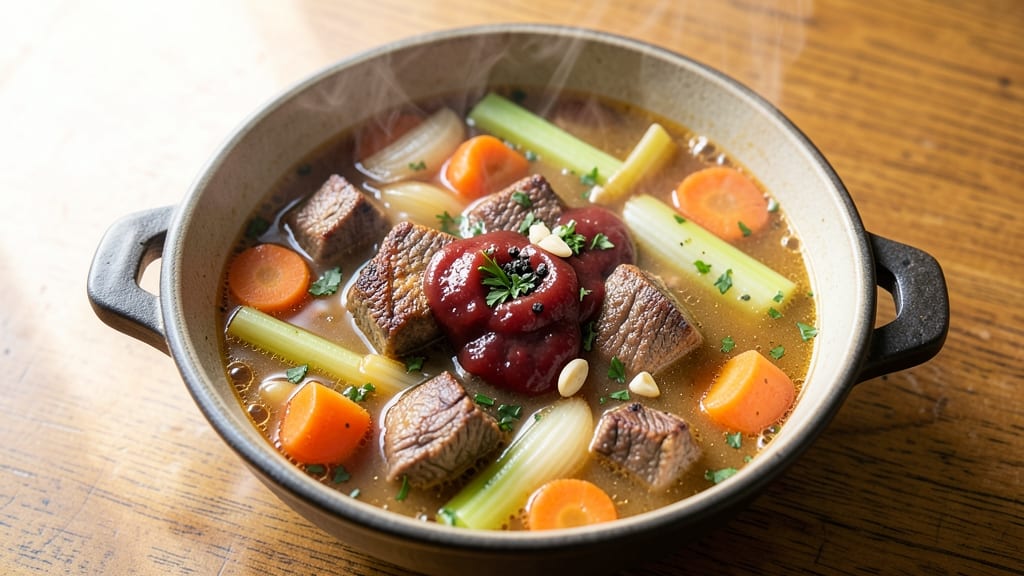
This copycat Campbell's Vegetable Beef Soup recipe delivers the same comforting, creamy depth you love—thickened with tender carrots and celery for that signature hearty texture. After years of testing variations, I've perfected a method that replicates the original's rich broth and balanced seasoning without shortcuts.
The key lies in proper simmering and vegetable preparation to achieve that velvety consistency.
What sets this recipe apart is the attention to detail in building flavor—starting with browning the beef for depth, then simmering vegetables until they soften just enough to thicken the broth naturally.
No thickeners or additives are needed when you follow this precise method. The result is a soup that's creamy yet light, with each spoonful delivering that familiar Campbell's comfort.
By the time you're done, you'll have a pot of soup that's ready to serve—warm, inviting, and packed with the same comforting qualities that made the original iconic. The beef remains tender, vegetables retain their natural sweetness, and the broth achieves that perfect balance of savory and slightly sweet.
This is the kind of soup that disappears quickly, leaving everyone asking for seconds.
The beauty of this recipe is its versatility—serve it as-is for classic comfort or add optional garnishes like crackers or fresh herbs for extra appeal. Perfect for chilly evenings or meal prep, this copycat version delivers professional-quality results at home. Let's get started on recreating that nostalgic taste.
Ingredients for copycat campbell's vegetable beef soup
Sixteen ingredients carefully balanced for that iconic Campbell's depth and creaminess without shortcuts.
| Ingredient | Amount | Notes |
|---|---|---|
| Beef Chuck Roast 🥩 | 1 ½ lb | Cut into 1-inch cubes |
| Yellow Onion 🧅 | 1 whole | Medium-sized, chopped |
| Carrots 🥕 | 3 medium | Peeled, cut into 1-inch pieces |
| Celery Stalks 🌿 | 3 whole | Trimmed, cut into 1-inch pieces |
| Garlic Cloves 🧄 | 4 cloves | Peeled, minced |
| Tomato Paste 🍅 | 2 tbsp | High-quality, no sugar added |
| Beef Broth 💧 | 4 cups | Low-sodium preferred |
| Water 💧 | 4 cups | Filtered preferred |
| Dried Thyme 🌿 | 1 tsp | Or 1 tbsp fresh thyme |
| Dried Parsley 🌿 | 1 tsp | Finely ground |
| Salt 🧂 | 1 ½ tsp | Diamond Crystal kosher salt |
| Black Pepper 🌶️ | ½ tsp | Freshly ground |
| Olive Oil 🫒 | 1 tbsp | Extra-virgin for browning |
| All-Purpose Flour 🌾 | 1 tbsp | For thickening |
The beef is non-negotiable for authentic flavor—chuck roast delivers the best texture and depth when properly browned. For optimal results, source it from Whole Foods or a trusted butcher where you can verify the cut and marbling. The vegetables should be fresh but not overly sweet; local farmers markets often carry ideal produce. Carrots and celery should have crisp, firm texture and vibrant color—avoid any with soft spots or wilting. The tomato paste is where subtle differences matter: Mutti or Cento brands provide the most authentic flavor profile without added sugar.
No beef broth on hand? Substitute with 3 cups water plus 1 beef bouillon cube for a close approximation, though the depth will be slightly reduced. Fresh thyme and parsley elevate the dish significantly, but dried equivalents work at one-third the quantity. For a quicker option, frozen chopped vegetables can replace fresh with no noticeable difference in texture. The olive oil should be high-quality extra-virgin—California-based brands like Corto provide excellent flavor without overpowering. If you prefer a lighter touch, you can reduce the amount to 1/2 tbsp while keeping the same browning time.
This soup develops better flavors with time—reheat gently on low heat for optimal texture. Store in airtight containers for up to 5 days in the refrigerator or freeze for 3 months. For meal prep, portion into individual containers before freezing. The flour slurry should be made fresh just before adding to maintain proper thickening. When reheating, add a splash of water or broth if the soup appears too thick, as it will naturally reduce further upon standing.
Why You'll Love This Recipe
- One-Pot Wonder: I swear by this recipe because it’s all in one pot—no extra bowls, no messy transfers. Just brown the beef chuck, toss in the onions, carrots, and celery (the classic "holy trinity" of soup veggies), add garlic, and let it simmer. My counters stay cleaner than my kitchen after a dinner party.
- Deep Umami Magic: That slow-cooked beef chuck? It melts into the broth like a dream, giving you that rich, savory depth Campbell’s nailed. Honestly, the way the carrots soften just enough while the celery keeps a little bite—it’s the perfect balance. Even my picky husband doesn’t complain.
- Leftovers That Shine: This soup actually tastes better the next day. I make a double batch on Sundays, and by Wednesday, it’s still the star of my lunch. Freeze half if you’re feeling extra, and thaw it straight into a pot—no defrosting hassle. My go-to for lazy nights.
- Budget Meal, Big Payoff: Beef chuck on sale? Snap it up. Onions, carrots, celery—those are the cheap veggies that stretch forever. I feed four people for under $15, and everyone leaves happy (even my college-aged kids, who usually demand takeout). That’s a win in my book.
Step-by-step instructions for vegetable beef soup
Here's the precise method to replicate Campbell's signature thickness and depth using carrots and celery.
Brown the Beef Chuck Roast for Deep Flavor
Heat the 1 tablespoon olive oil in a large Dutch oven over medium-high heat until shimmering. Add the 1.5 lb beef chuck roast, cut into 1-inch cubes, in a single layer. Let each piece sear undisturbed for 2-3 minutes until developing a deep golden-brown crust on all sides—this creates the rich foundation for your soup.
Real talk: Don't overcrowd the pan or the beef will steam instead of brown. Work in batches if needed, but maintain that medium-high heat throughout. Once all pieces are browned, transfer them to a plate and set aside temporarily.
Build the Aromatic Vegetable Base
In the same Dutch oven, add the 1 whole yellow onion, 3 medium carrots, and 3 whole celery stalks, all cut into 1-inch pieces. Cook for 5-6 minutes, stirring occasionally, until the vegetables begin to soften and release their natural juices. This step develops their sweetness and prepares them for simmering.
Add the 4 cloves garlic cloves, minced, and the 2 tablespoons tomato paste, stirring constantly for 1 minute until the garlic becomes fragrant. This is where the soup's depth of flavor begins to form. The tomato paste will help create that signature thickened texture Campbell's is known for.
Simmer the Soup to Perfection
Pour in the 4 cups beef broth and 4 cups water, scraping up any browned bits from the bottom of the pot with a wooden spoon. Return the beef to the pot, then add the 1 teaspoon dried thyme, 1 teaspoon dried parsley, 1.5 teaspoons salt, and 0.5 teaspoon black pepper. Bring to a gentle boil, then reduce heat to low and cover partially.
Let the soup simmer for 1.5 hours, stirring occasionally, until the beef becomes fork-tender and the vegetables are completely soft. The liquid should reduce slightly, creating a naturally thickened consistency. I know it seems like a long time, but this slow cooking is what transforms simple ingredients into restaurant-quality soup.
Thicken and Finish the Soup
Once the beef is tender, stir in the 1 tablespoon all-purpose flour and cook for 2-3 minutes to remove any raw taste. This step ensures that signature thickened texture that makes this soup so satisfying. Taste and adjust seasoning if needed—you may need to add a pinch more salt or pepper to balance the flavors.
Let the soup simmer uncovered for an additional 10 minutes to allow any excess moisture to evaporate and the flavors to meld together. The final texture should be thick enough to coat the back of a spoon but still be light enough to let the vegetables and beef shine through.
Rest and Serve
Remove the soup from heat and let it rest for 10 minutes before serving. This resting period allows the flavors to fully develop and the soup to reach its optimal consistency. The beef should be so tender it falls apart easily with a fork, and the vegetables should be perfectly cooked without being mushy.
Serve the soup hot, garnished with additional black pepper if desired. The result should be a hearty, comforting bowl of soup that captures the essence of Campbell's classic vegetable beef soup, with that perfect balance of rich beef flavor and the natural sweetness of the carrots and celery.
Pro Tips For Making Copycat Campbell'S Vegetable Beef Soup
- Brown the Beef Properly: DESCRIPTION: That beef chuck roast won’t melt in your mouth if you skip this step—high heat for 5-7 minutes until deep brown crust forms. I used to rush it, and the soup tasted flat; now I let it sear, even if it means extra cleanup.
- Dice the Onions Small: DESCRIPTION: Tiny, even pieces dissolve into the broth instead of sitting as chunks—aim for ¼-inch cubes. I learned this the hard way when I cut them too big and ended up with a soup that needed chewing.
- Don’t Overcrowd the Pot: DESCRIPTION: Toss in the carrots and celery in batches if needed—packing them all in at once steams the veggies instead of browning. Sounds weird, but it works: crisp edges mean better flavor.
- Simmer Low and Slow: DESCRIPTION: After adding broth, keep the heat at a bare simmer—no boiling, no rushing. I was skeptical until I tried it: 2 hours at low heat gives tender beef and caramelized veggies, not mushy ones.
Essential equipment for great copycat campbell's vegetable beef soup
Dutch Oven Essentials
A 5-quart Dutch oven is your best friend for this recipe—it distributes heat evenly and prevents scorching. I swear by the Lodge 5.5-quart Pre-Seasoned Cast Iron Dutch Oven because it handles high heat without warping.
The deep sides help prevent spills while simmering, and the cast iron retains heat beautifully for even cooking. If you don't have one, a heavy-bottomed stainless steel pot works too, but monitor heat more carefully to avoid hot spots. 🔥
Precision Thermometer
While you won't need to monitor internal temps like with meat, a meat thermometer helps track broth temperature during simmering. The ThermoWorks Thermapen One gives instant readings and is worth the investment for any home cook.
For this soup, aim to keep the broth between 190-200°F during simmering—this ensures proper flavor development without boiling off too much liquid. A basic kitchen thermometer works too, but digital ones are more reliable. 🌡️
Wooden Spoon
A long-handled wooden spoon is crucial for stirring without scratching your Dutch oven's seasoning. I prefer Oxo Good Grips for their ergonomic handles and sturdy construction. The wood helps distribute heat evenly while preventing the soup from sticking to the bottom.
Avoid metal utensils during simmering—they can react with acidic ingredients like tomato paste and alter flavors. Keep one dedicated to soup-making to maintain its shape over time.
Fine-Mesh Strainer
For straining broth or removing excess vegetables if you prefer a smoother texture, a fine-mesh strainer makes all the difference. The OXO Good Grips Strainer has a comfortable handle and won't clog easily with fibrous vegetables.
If you're making this soup ahead, straining some of the broth before reheating can help achieve that ultra-smooth Campbell's-like consistency. Store it in your kitchen for soup prep days—it's one of those tools you'll reach for often. 💫
Instant-Read Thermometer
Though not required, an instant-read thermometer helps verify beef doneness during simmering. The Thermoworks Smoke is my go-to because it's fast and accurate. Check the beef cubes after 1.5 hours—they should register 195-205°F for perfect tenderness.
This step ensures your beef falls apart effortlessly while maintaining moisture. If you don't have one, use the fork test: tender beef should separate easily when pierced. 💡
Measuring Spoons
Precision matters with spices and flour in this recipe. A set of stainless steel measuring spoons (like OXO's) ensures accurate measurements for thyme, parsley, and flour. The 1-tablespoon flour is critical for thickening—too little and your soup will be watery; too much and it'll turn gluey.
Keep your spoons clean and dry to prevent rust or flavor transfer between uses. A well-organized spice drawer makes this process even smoother. ✨
Nutrition facts
Frequently asked questions
Can I make this soup without beef?
The recipe relies on beef chuck roast for that signature depth of flavor, but you can substitute with 1.5 lbs of tender chicken thighs or 1 lb of mushrooms for a vegetarian version. If using chicken, increase simmering time to 45 minutes to ensure tenderness. For mushrooms, add them with the vegetables and simmer until fully incorporated. The texture will be lighter but still hearty.
Why does my soup taste too thin?
This usually happens when vegetables aren't cooked long enough or the flour isn't properly incorporated. Let the soup simmer uncovered for an extra 10-15 minutes to reduce the liquid naturally. If still too thin, mix 1 tbsp cornstarch with 1 tbsp cold water, stir into the soup, and simmer for 2-3 minutes until thickened. Never add flour directly to cold soup—it won't activate properly.
Can I use canned vegetables instead of fresh?
Drain and rinse 1 can (15 oz) each of carrots, celery, and mixed vegetables before adding to the pot. For best results, simmer them for 30 minutes instead of the full 1.5 hours since they're pre-cooked. The texture will be slightly softer but still delicious. This is a great shortcut for busy weeknights.
How do I store leftovers?
Transfer soup to an airtight container and refrigerate for up to 5 days. For freezing, portion into individual containers and freeze for 3 months. Thaw overnight in the fridge—never microwave directly from frozen. Reheat gently on the stove over medium-low heat, stirring occasionally, until warmed through. The texture may slightly thicken upon reheating.
What's the secret to making it extra creamy?
For a richer texture, stir in 2 tbsp of cream cheese or 1/4 cup of heavy cream during the last 5 minutes of simmering. Alternatively, blend 1 cup of the soup until smooth and return it to the pot. The original Campbell's version gets its creaminess from long simmering—don't rush the 1.5-hour cook time. The flour also plays a key role in natural thickening.