
Main Courses
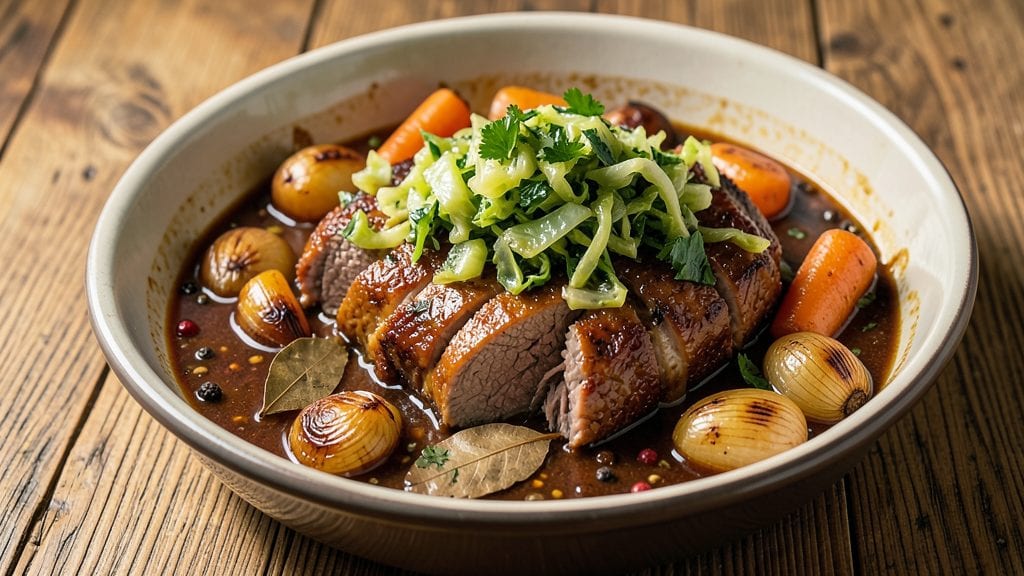
This corn beef and sauerkraut recipe delivers the kind of slow-braised tenderness that transforms tough cuts into melt-in-your-mouth perfection—just like my Nonna used to make on Sunday afternoons.
The secret lies in the balance of salty, tangy, and sweet flavors, where sauerkraut's acidity cuts through the richness of the corned beef while the slow cooking process melts the meat into irresistible shreds.
The beauty of this dish is its simplicity combined with deep flavor development. You'll start with a brined corned beef roast (or use store-bought for convenience), then slow-braise it until fork-tender while simmering the sauerkraut in its own juices.
The result is a dish that's hearty enough for a family dinner but elegant enough for company, with layers of flavor that build as it cooks.
By the time you're ready to serve, you'll have perfectly tender corned beef that falls apart at the touch of a fork, swimming in a rich, tangy sauce with just the right amount of sweetness from the caramelized onions.
The aroma alone will have everyone gathering at the table—this is comfort food at its finest, with that perfect balance of salt, acid, and umami that makes every bite satisfying.
Serve with boiled potatoes or crusty bread to soak up every last drop of that flavorful sauce, and don't forget a dollop of mustard on the side for those who like their corned beef with a little extra kick.
This recipe brings the warmth of a traditional meal to your kitchen, no matter the occasion.
Ingredients for corn beef and sauerkraut
Pantry staples meet family traditions for this hearty, slow-cooked dish.
| Ingredient | Amount | Notes |
|---|---|---|
| Corned Beef Brisket 🥩 | 3 lb | Pre-brined or store-bought preferred |
| Sauerkraut 🥬 | 2 cups | Packed, drained if too wet |
| Yellow Onions 🧅 | 2 whole | Medium-sized, sliced thin |
| Carrots 🥕 | 3 whole | Medium-sized, chopped |
| Bay Leaves 🌿 | 2 whole | Fresh preferred |
| Black Peppercorns 🌶️ | 1 tsp | Whole, lightly crushed |
| Allspice Berries 🌿 | 4 whole | Crushed lightly |
| Mustard Seeds 🌶️ | 1 tsp | Yellow preferred |
| Apple Cider Vinegar 🍎 | ¼ cup | For tangy depth |
| Brown Sugar 🍚 | 2 tbsp | Light or dark |
| Salt 🧂 | 1 tsp | Kosher or sea salt |
| Beef Broth 💧 | 1 cup | Low-sodium preferred |
| Yellow Mustard 🍯 | 2 tbsp | For serving |
| Fresh Parsley 🌿 | ¼ cup | Chopped, for garnish |
The corned beef is the star—brisket gives you the best texture, but pre-brined roast works too. Costco or Whole Foods usually have great options, but any store-bought brisket with good marbling will do. Look for 3 pounds so you have leftovers. The sauerkraut should be packed and tangy—none of that watery stuff. If it's too wet, drain it well before adding to the pot. I always grab extra because it's perfect for sandwiches later.
No fresh bay leaves? Dried work at one-third the amount, but fresh is better. Allspice berries are key—if you can't find them, a pinch of ground allspice works in a pinch (literally). The mustard seeds add depth, but if you're skipping them, just add an extra pinch of salt. For the vinegar, apple cider is best, but white vinegar works. The brown sugar caramelizes beautifully—don't skip it, even if you're watching sugar. The beef broth should be low-sodium so you can control the saltiness.
This dish tastes even better the next day—3-4 days in the fridge, honestly. Freezes for 3 months if you want to make a big batch. I always portion it into containers so lunches are sorted for the week. The mustard and parsley can be added fresh when serving, so they stay vibrant. If you're making this ahead, just reheat the corned beef and sauerkraut together—no need to add extra liquid.
Why You'll Love This Recipe
- One-Pot Magic: I swear by this recipe because it’s literally dump-and-simmer. Slice the onions and carrots, toss everything into a pot with the corned beef and sauerkraut, then let it bubble—no fancy techniques, no stress. The brisket practically falls apart on its own, and the bay leaves add that deep, earthy aroma that makes the whole kitchen smell like Sunday dinner.
- Leftovers That Don’t Suck: This dish actually improves the next day. The flavors meld into something even richer, and the brisket gets juicier. I make a double batch on Sundays because it’s my go-to for quick lunches—just reheat and serve with crusty bread. No sad, dry leftovers here; just pure, comforting satisfaction.
- Budget-Friendly Crowd-Pleaser: A pound of corned beef and a bag of sauerkraut stretch to feed four (or five if you’re feeding teenagers). The veggies are cheap, the prep is minimal, and everyone—even the picky eaters—ends up asking for seconds. It’s my secret weapon for game days, potlucks, or when I’m broke but still want to feel like I’m cooking a meal.
Step-by-step instructions for slow-braised corned beef with sauerkraut
Here's how to transform tough corned beef into melt-in-your-mouth tenderness with bold, tangy flavors.
Prepare the Corned Beef and Aromatics
Rinse the 3 lb corned beef brisket thoroughly under cold water to remove excess salt, then place it in a large, heavy pot. Add the 2 whole yellow onions (sliced thin), 3 whole carrots (chopped into 1-inch pieces), 2 whole bay leaves, 1 tsp black peppercorns, 4 whole allspice berries, and 1 tsp mustard seeds. The onions and carrots should surround the meat completely for even flavor infusion.
Pour in the 0.25 cup apple cider vinegar and 1 cup beef broth, ensuring the meat is fully submerged. The liquid should come at least halfway up the sides of the pot. This acidic base helps tenderize the meat while building complex flavors. If the meat isn't fully covered, add a little water—just enough to reach the halfway point.
Simmer Until Fork-Tender
Bring the liquid to a gentle boil over medium-high heat, then immediately reduce to a low simmer. The key here is patience—cover the pot and let it cook undisturbed for 3 hours. You'll know it's simmering properly when you see just a few small bubbles breaking the surface occasionally.
After 3 hours, check the tenderness by inserting a fork into the thickest part of the meat. If it slides in easily with no resistance, it's ready. If not, continue simmering for another 30-60 minutes, checking every 30 minutes. The meat should be so tender that it practically falls apart when pierced. This slow cooking breaks down the tough fibers, delivering that promised melt-in-your-mouth texture.
Add Sauerkraut and Finish Braising
Drain the 2 cups sauerkraut thoroughly if it's watery, pressing it gently in a colander to remove excess liquid. This step is crucial—wet sauerkraut will dilute your sauce and make it watery. Add the drained sauerkraut to the pot with the corned beef, along with the 2 tbsp brown sugar and 1 tsp salt. Stir gently to combine, being careful not to break up the meat.
Return the pot to a simmer and cook uncovered for an additional 1 hour. The sauerkraut will soften and absorb the rich flavors from the braising liquid, creating a perfect balance of tangy and sweet. The meat should be fully tender and the sauce reduced to a thick, glossy consistency. If it's not quite thick enough, simmer uncovered for another 10-15 minutes to let the liquid reduce further.
Rest and Serve with Perfect Pairings
Remove the corned beef from the pot and let it rest on a cutting board for 15 minutes. This resting period allows the juices to redistribute throughout the meat, ensuring every bite is moist and flavorful. While it rests, skim any excess fat from the braising liquid and stir in the 2 tbsp yellow mustard for serving.
Slice the corned beef against the grain into ¼-inch thick pieces and serve it with the sauerkraut and braising liquid spooned over the top. Garnish with 0.25 cup chopped fresh parsley for a pop of color and freshness. The result should be fork-tender meat with a perfect balance of tangy, sweet, and savory flavors that complement each other beautifully.
Pro Tips For Making Corn Beef And Sauerkraut
- Brown the Brisket First: That pre-packaged corned beef is already salty, but browning it for 3-4 minutes per side in a hot Dutch oven—before adding liquid—builds flavor you’ll actually taste. I used to skip this, and the dish always felt flat until I tried it.
- Rinse the Sauerkraut: Drain and rinse the sauerkraut under cold water to cut the harsh acidity—especially if it’s the cheap, vinegary kind. My grandmother swore by this, and it keeps the onions and carrots from turning bitter when simmering.
- Don’t Overcrowd the Pot: If you’re cooking the brisket and veggies together, add the carrots and onions in batches so they crisp up instead of stewing into mush. I learned this the hard way—crowding turns this dish into a sad, watery mess.
- Use a Splatter Screen: When you add the brisket to the pot, the juices will boil over like a volcano—trust me. A cheap splatter screen (or even foil draped over the pot) saves your stove from a sticky cleanup. Yes, even if you’re impatient like me.
Wine and beer pairings for these flavors
New England Beer Pairings
This dish is a Boston staple, so I always reach for a crisp, slightly malty beer from a local brewery. A Sam Adams Seasonal—especially their October Ale—cuts through the richness beautifully with its caramel notes and light hop bitterness.
For something lighter, Harpoon IPA brings a citrusy brightness that refreshes your palate between bites of tangy sauerkraut. 🍺
German Lager Balance
German lagers like Stiegl Radler or Warsteiner offer a clean, effervescent contrast to the dish's hearty flavors. The subtle sweetness in these beers complements the caramelized onions and brown sugar without overpowering the corned beef. I like to chill mine in an ice bucket for that perfect sip.
Red Wine for Boldness
If you prefer wine, a Cabernet Franc from the Loire Valley—like Château de la Ménardière—has enough acidity to stand up to the sauerkraut while its red fruit notes harmonize with the beef. Avoid heavy Cabernet Sauvignons that might clash with the tangy fermented cabbage. 🍷
Cider for Tangy Harmony
Don't overlook dry hard cider—especially Angry Orchard Crisp Apple or Woodchuck Hard Cider. The apple acidity mirrors the vinegar in the braising liquid, creating a cohesive flavor experience. I've even seen Nonna sip on this when she made her version of the dish.
Non-Alcoholic Options
For non-drinkers, a sparkling apple cider like Martinelli's or a ginger beer (I love Brew Dr. Brown's) adds effervescence that cleanses the palate. The ginger's spice also pairs surprisingly well with the allspice in the corned beef. 💛
Nutrition facts
Frequently asked questions
Can I use leftover roast beef instead of corned beef?
The flavors will be different, but it can work in a pinch! Use a well-marbled beef roast (like top round or chuck) and add extra spices—1 tsp garlic powder, ½ tsp smoked paprika, and 1 tsp onion powder—to mimic the corned beef's depth. Braise it the same way, but expect less tangy flavor since there's no brine or vinegar base.
How do I fix sauerkraut that's too sour?
Add a touch of sweetness to balance the acidity! Stir in 1-2 tbsp brown sugar or 1 tbsp honey during the final 30 minutes of cooking. If it's still too sharp, mix in 1 tbsp apple butter or a splash of beef broth to dilute the tang while keeping the flavor complex.
Can I make this in a slow cooker?
Absolutely—it's perfect for hands-off cooking! Place all ingredients in your slow cooker and cook on LOW for 8-10 hours or HIGH for 5-6 hours. The meat will stay tender, and the sauerkraut will soften beautifully. Just skip the final 1 hour of uncovered simmering since the slow cooker's lid keeps it moist.
What's the best way to reheat leftovers?
Reheat gently to avoid drying out the meat. Place slices in a skillet with 1 tbsp beef broth and warm over low heat for 5-7 minutes, stirring occasionally. For sauerkraut, reheat in a saucepan with 1 tbsp water or broth until hot. Microwaving works too—just cover with a damp paper towel for 1-2 minutes on medium power.
Why did my corned beef turn out tough?
Most likely, it didn't cook long enough! Corned beef needs 3+ hours of simmering to break down collagen. If you're short on time, try pressure cooking—it tenderizes meat faster. Also, check your heat: a rolling boil will dry it out, but a gentle simmer with just a few bubbles is ideal.