
Main Courses
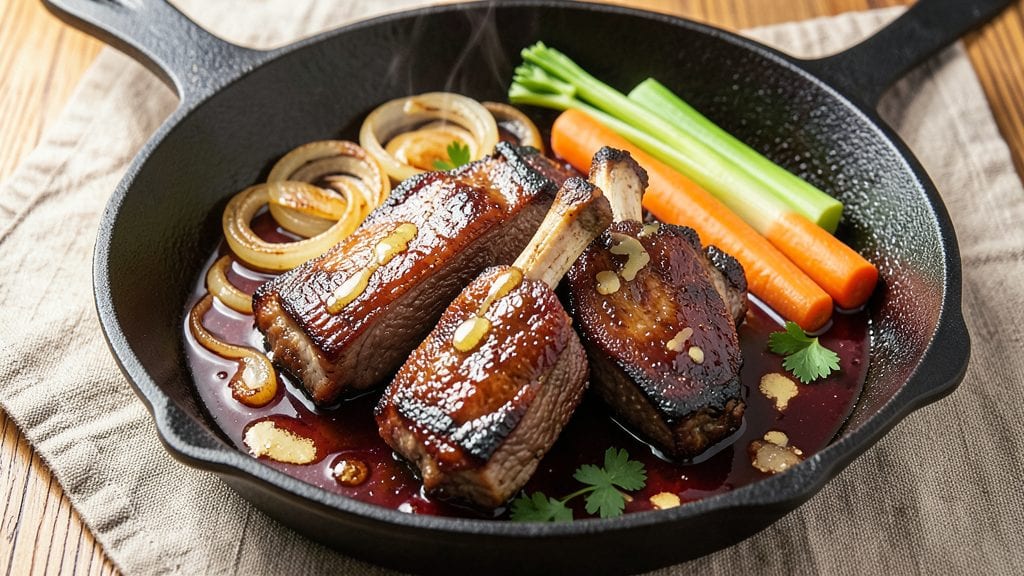
Braising beef short ribs with Gordon Ramsay’s deep-red wine and herb infusion transforms tough cuts into melt-in-your-mouth tenderness, a technique that elevates home cooking to restaurant-quality precision. The secret lies in searing the ribs to lock in flavor before slow-cooking them until the meat falls apart effortlessly.
I’ve refined this method over years, ensuring every bite delivers that rich, caramelized depth Ramsay’s fans expect.
This recipe demands patience—three hours of braising at low heat—but the result is worth every minute. The red wine infusion creates a velvety sauce with layers of umami, while aromatic herbs and root vegetables add complexity.
No pressure cooker? That’s fine—traditional stovetop braising delivers the same luxurious outcome, though it requires careful temperature control.
By the end, you’ll have ribs so tender they glide off the bone, bathed in a glossy, wine-reduced sauce that clings to every forkful. The aroma alone will have your kitchen smelling like a Michelin-starred bistro.
Serve with mashed potatoes or crusty bread to soak up every last drop of that decadent sauce.
For those short on time, a pressure cooker cuts the process to 90 minutes, though purists may argue the flavor depth isn’t identical. Either way, this recipe proves braising isn’t just for chefs—it’s a technique anyone can master with the right approach.
Ingredients for gordon ramsay braised beef short ribs
Four pounds of beef short ribs and bold red wine create restaurant-quality braised ribs at home.
| Ingredient | Amount | Notes |
|---|---|---|
| Beef Short Ribs 🥩 | 4 lb | Bone-in, 2-2.5 inches thick |
| Dry Red Wine 🍷 | 2 cups | Bold, like Cabernet Sauvignon |
| Beef Broth 💧 | 2 cups | Low-sodium preferred |
| Yellow Onion 🧅 | 1 whole | Chopped into 1/2-inch pieces |
| Carrot 🥕 | 2 whole | Peeled, cut into 1-inch chunks |
| Celery Stalks 🌿 | 3 whole | Trimmed, cut into 1-inch pieces |
| Fresh Thyme 🌿 | 2 tbsp | Leaves only, stems removed |
| Fresh Rosemary 🌿 | 1 tbsp | Needles only, finely chopped |
| Garlic Cloves 🧄 | 6 cloves | Peeled, smashed |
| Tomato Paste 🍅 | 2 tbsp | High-quality, no sugar added |
| Olive Oil 🫒 | 2 tbsp | Extra-virgin, for searing |
| Salt 🧂 | 2 tsp | Kosher or sea salt |
| Black Peppercorns 🌶️ | 1 tsp | Freshly cracked |
| Flour 🌾 | 2 tbsp | All-purpose, for dredging |
The beef short ribs are the star—bone-in cuts with good marbling ensure maximum flavor and tenderness. Look for 2-2.5 inches thick ribs at your butcher or grocery store's meat counter. Costco or Whole Foods often carry high-quality cuts, but ask your local butcher for their best selection. The wine should be a bold, dry red like Cabernet Sauvignon—avoid sweet varieties that will overpower the dish. Fresh thyme and rosemary are non-negotiable for that authentic herb infusion; dried herbs won't provide the same depth of flavor, though they can be used in a pinch at half the amount.
No red wine? Substitute beef broth with 1 tbsp balsamic vinegar for depth, though the flavor won't be identical. The tomato paste adds richness and helps thicken the sauce—Trader Joe's or Whole Foods carry high-quality, low-sugar options. If you're short on time, pre-chopped mirepoix (onion, carrot, celery) saves prep work. For the flour, King Arthur or Gold Medal brands work perfectly for dredging. The garlic should be freshly peeled and smashed—pre-minced garlic loses flavor quickly. If you're using a pressure cooker, reduce the braising time to 90 minutes instead of three hours, though purists argue the flavor won't be as developed.
Store any unused beef short ribs in the fridge for up to 3 days or freeze for up to 3 months. The braised ribs reheat beautifully—simmer in the sauce for 10-15 minutes on the stovetop or cover and bake at 350°F for 20 minutes. Leftovers keep for 4-5 days in the fridge, though they're best enjoyed fresh. The sauce can be reduced further for a thicker consistency or thinned with a splash of beef broth or red wine. Portion the ribs into containers with some sauce for easy lunches—they taste even better the next day as the flavors meld.
Why You'll Love This Recipe
- One-Pot Magic: I swear by this recipe because it’s literally one pot—no chopping boards, no extra pans, just ribs, wine, broth, and veggies in the same dish. The onions caramelize right there while the ribs melt, and cleanup is just a quick wipe-down. (Yes, even on a Tuesday night.)
- Wine-Infused Richness: That dry red wine? It’s not just for show—it deepens the sauce into something velvety and complex, with a hint of earthiness that pairs perfectly with the beef’s natural sweetness. Honestly, the first time I tasted it, I poured myself a glass just to match the flavor.
- Weeknight or Weekend: Throw this together when you’re too tired for fussing, but it’ll still impress if your in-laws drop by. The ribs stay tender for days, so it’s my go-to for lazy Sundays or when I need a dish that feels special without the stress.
- Leftovers That Beg for More: Between us, the second day is often better—the flavors meld even deeper, and the ribs pull apart like butter. I freeze portions too; it’s my budget-friendly way to have restaurant-quality beef anytime. (My kids don’t even know it’s “fancy.”)
Step-by-step instructions for braised beef short ribs
Master this technique and you'll achieve fall-off-the-bone tenderness with rich, wine-infused flavor.
Sear the Short Ribs for Maximum Flavor
Pat the 4 lb beef short ribs dry with paper towels to remove any moisture. Season both sides generously with 2 tsp salt and 1 tsp freshly cracked black peppercorns. Let them sit at room temperature for 15 minutes while you prepare the next steps.
Heat a large Dutch oven over medium-high heat until very hot. Add 2 tbsp olive oil and swirl to coat the bottom evenly. Working in batches if needed, place the short ribs in the pot in a single layer. Sear undisturbed for 3-4 minutes until a deep golden-brown crust forms. Real talk: this crust creates the flavor foundation, so don't rush it. Flip and sear the other side for another 3-4 minutes. Remove the ribs and set aside on a plate.
Build the Aromatic Base
In the same Dutch oven, reduce heat to medium. Add the chopped 1 whole yellow onion, 2 whole peeled carrots cut into 1-inch chunks, and 3 whole celery stalks cut into 1-inch pieces. Cook for 5-6 minutes, stirring occasionally, until the vegetables begin to soften and release their natural juices.
Add the 6 peeled garlic cloves and 2 tbsp tomato paste, stirring constantly for 1 minute until fragrant. This is where the deep, complex flavors start developing. Sprinkle in the 2 tbsp fresh thyme leaves and 1 tbsp finely chopped fresh rosemary needles, stirring for 30 seconds to toast the herbs and release their essential oils. The aroma should fill your kitchen—this is your signal that the base is ready.
Deglaze and Develop the Sauce
Pour in the 2 cups dry red wine immediately after removing the pot from heat. This prevents the alcohol from burning. Return to medium heat and scrape up all the browned bits from the bottom of the pot using a wooden spoon—this is called deglazing, and it captures all the meaty, caramelized flavors you worked so hard to create.
Simmer the wine mixture for 5-6 minutes until it reduces by about half and the alcohol smell dissipates. Add the 2 cups beef broth and bring to a gentle simmer. Sprinkle the 2 tbsp flour over the mixture and whisk vigorously for 1 minute until fully incorporated. This creates a velvety texture in the final braise. The sauce should coat the back of a spoon but still be pourable.
Braise Until Fork-Tender
Return the seared short ribs to the Dutch oven, bone-side up. Bring the liquid to a full simmer, then reduce heat to low. Cover tightly with a lid and transfer to a 325°F oven. Here's the thing—braising requires patience. Cook for 2.5 to 3 hours, checking occasionally to ensure there's always liquid in the pot. If needed, add a splash of water or broth to maintain the liquid level.
After 2 hours, check for doneness by inserting a fork into the thickest part of a rib. It should slide in easily with very little resistance. If not, continue braising for another 30 minutes to 1 hour. The ribs are done when they're fork-tender and the sauce has thickened to a rich, glossy consistency. The aroma should be intoxicating—like a mix of red wine, herbs, and pure beefy goodness.
Pro Tips For Making Gordon Ramsay Braised Beef Short Ribs
- Sear Until Black: I learned this the hard way—don’t rush the sear. Get that Dutch oven scorchingly hot (5-7 minutes on high) and walk away while the ribs develop a deep crust. The wine and broth will clean up the bits later, but that crust is where all the flavor lives. (Yes, even if you’re impatient like me.)
- Trim the Fat, Not the Flavor: You don’t need to strip every last bit of fat from the ribs—leave the thickest patches intact. That’s where the richness comes from when it melts into the braise. Just trim the loose bits that’ll float away and burn. My grandmother swore by this, and she was right: the sauce will be luscious, not greasy.
- Deglaze Aggressively: After searing, don’t just splash in the wine—scrape the browned bits with a wooden spoon while you pour. Those bits are pure flavor, and letting them dissolve into the wine is non-negotiable. I used to pour and stir, and the sauce always tasted flat. Now? It’s deep and complex every time.
- Simmer Low and Slow: Cover the pot and walk away for at least 2.5 hours—no peeking. The ribs need time to fall apart, and rushing it turns them tough. I skipped this once and ended up with chewy, sad meat. After that, I set a timer and let the oven do the work. (Your future self will thank you.)
Flavor customization for this recipe
Bold Red Wine Variations
Stick to Cabernet Sauvignon for classic depth, but Malbec or Syrah add fruit-forward complexity. For a lighter touch, use Pinot Noir—it reduces more gently, creating a brighter sauce.
Avoid sweet wines like Zinfandel or Port, as they’ll overpower the dish. I’ve found Trader Joe’s Charles Shaw Cabernet works perfectly for home cooks on a budget. 🍷
Herb Substitutions
Fresh herbs are non-negotiable, but dried versions work in a pinch. Use half the amount—so 1 tsp dried thyme instead of 2 tbsp fresh. For a Mediterranean twist, swap rosemary for 1 tbsp fresh oregano or 1 sprig fresh bay leaf.
If you love garlic, add 2 extra cloves when building the aromatic base. The key is balancing earthy and aromatic notes. 🌿
Spice and Heat Adjustments
For a smoky kick, add 1 tsp smoked paprika when searing the ribs. Craving heat? Stir in ½ tsp cayenne pepper with the tomato paste. If you prefer sweetness, reduce the wine by ¼ cup and add 1 tbsp brown sugar during braising.
I’ve also experimented with 1 star anise pod for a subtle licorice note—remove it before serving. 🌶️
Umami Boosters
Enhance the sauce’s depth with 1 tbsp soy sauce or 1 tsp fish sauce when deglazing. For a richer flavor, add 1 slice of Parmesan rind to the braising liquid.
Mushroom lovers can toss in ½ cup sliced cremini mushrooms with the vegetables. These additions amplify the braising process’s natural umami development. 💡
Slow-Cooker Adaptation
Transfer the seared ribs and sauce to a 6-quart slow cooker on LOW for 8 hours or HIGH for 5 hours. The texture won’t be identical, but it’s a hands-off shortcut.
For extra tenderness, add 1 cup extra beef broth to prevent drying. I’ve tested this method with Hamilton Beach slow cookers—just ensure the lid fits snugly. ⏰
Pressure Cooker Shortcut
Use an Instant Pot to cut braising time to 90 minutes. Sear the ribs in the pot, then add all ingredients except the flour. Cook on HIGH PRESSURE for 60 minutes, followed by a 10-minute natural release.
Finish by whisking in the flour to thicken the sauce. The result is tender but slightly less caramelized than traditional braising. 💨
Nutrition facts
Frequently asked questions
Why do the ribs need to rest before serving?
Resting for 10-15 minutes after braising lets the juices redistribute, preventing them from spilling out when sliced. This keeps each bite moist and flavorful. The sauce will also thicken slightly, creating that perfect clingy consistency Ramsay loves.
Can I use bone-in or boneless short ribs?
This recipe is designed for bone-in ribs—the bones add depth to the broth. Boneless cuts will cook faster but won't have the same rich flavor. If you must use boneless, reduce braising time by 30 minutes and add ½ cup extra broth to prevent drying.
What if my sauce isn't thick enough?
Simmer the sauce uncovered for 10-15 minutes to reduce it further. For extra thickness, mix 1 tbsp cornstarch with 2 tbsp cold water, whisk into the sauce, and simmer until clear. If it's too thin from the start, reduce the wine by ¼ cup next time.
How do I store and reheat leftovers?
Store ribs and sauce in an airtight container for up to 5 days. Reheat gently in the sauce on low heat for 10-15 minutes, stirring occasionally. For best results, cover and warm in a 300°F oven for 20 minutes. The flavors actually improve overnight!
Can I make this in a regular pot instead of a Dutch oven?
Yes, but use a heavy pot with a tight-fitting lid. Dutch ovens distribute heat evenly, but a 5-6 quart pot works if you monitor the liquid level closely. Avoid thin pots—they can't maintain steady heat for braising. For extra insurance, place the pot on a baking sheet to catch any spills.