
Main Courses
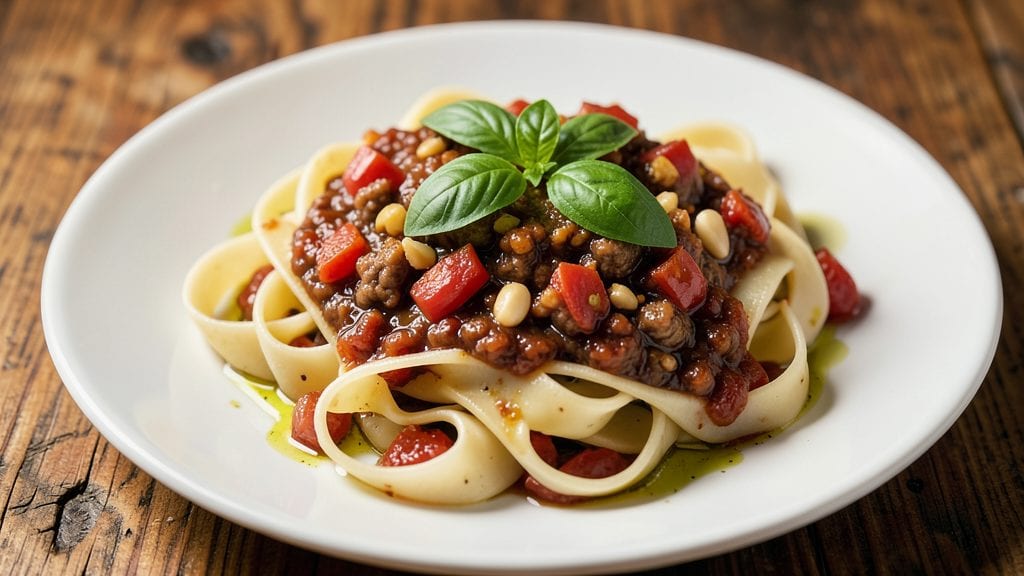
Jamie Oliver’s pappardelle with beef ragu transforms a weeknight dinner into an Italian restaurant experience—rich, slow-simmered sauce clinging to wide ribbon noodles. I’ve recreated this dish exactly as Jamie does, using his signature technique of browning meat deeply before letting it melt into a wine-infused ragu.
The secret lies in patience: letting flavors develop over hours rather than rushing through the process.
This recipe delivers restaurant-quality results with simple ingredients you likely already have: ground beef, pancetta, tomatoes, and a splash of red wine. The pappardelle’s broad surface area makes it perfect for catching every drop of that velvety ragu, while the slow cook ensures tender meat and deep, complex flavors.
It’s the kind of dish that tastes even better the next day, making it ideal for meal prep or impressing guests.
What sets this apart is Jamie’s approach to balancing richness with brightness—acidic tomatoes and fresh herbs cut through the meat’s depth, while the wine reduction adds a touch of elegance.
The result is a plate that’s hearty yet refined, comforting yet sophisticated. Ready in about 2 hours (with minimal hands-on time), this is dinner that feels like a celebration.
Serve with a sprinkle of grated Parmesan and a side of garlic bread to soak up every last bit of that luxurious sauce. The technique is straightforward, but the flavor payoff is undeniable—this is comfort food at its finest. Let’s get cooking.
Ingredients for jamie oliver's pappardelle with beef ragu
Simple ingredients transform into Jamie Oliver's legendary beef ragu for wide ribbon noodles.
| Ingredient | Amount | Notes |
|---|---|---|
| Ground Beef 🥩 | 1 ½ lb | 80% lean for best texture |
| Pancetta 🥓 | ½ lb | Diced into small cubes |
| Red Wine 🍷 | 1 cup | Bold dry variety like Cabernet |
| Crushed Tomatoes 🍅 | 28 oz | San Marzano preferred |
| Onion 🧅 | 1 whole | Yellow, finely chopped |
| Garlic Cloves 🧄 | 4 cloves | Minced for depth of flavor |
| Carrots 🥕 | 2 whole | Peeled, sliced into rounds |
| Celery Stalks 🥬 | 2 whole | Diced, classic soffritto base |
| Tomato Paste 🍅 | 1 tbsp | Squeeze tube preferred |
| Fresh Rosemary 🌿 | ½ tsp | Finely chopped, aromatic |
| Fresh Thyme 🌿 | ½ tsp | Leaves only, chopped |
| Pappardelle Noodles 🍝 | 12 oz | Fresh or high-quality dried |
| Parmesan Cheese 🧀 | ½ cup | Freshly grated from block |
| Extra-Virgin Olive Oil 🫒 | ¼ cup | For sautéing and finishing |
| Salt 🧂 | 1 ½ tsp | Diamond Crystal preferred |
The ground beef is non-negotiable—80% lean gives you that perfect balance of richness and texture. Costco or Whole Foods carry the best quality, but any reputable supermarket will have suitable options. Pancetta adds depth, so don't skip it—Trader Joe's sells pre-diced pancetta that saves time. For the tomatoes, San Marzano crushed is worth the splurge; it's sweeter and less acidic, letting the wine and meat shine. The soffritto base (onion, celery, carrots) should be finely chopped—food processor works best for consistency.
No red wine? Dry white wine or beef broth works in a pinch, though the flavor will differ slightly. Fresh herbs make all the difference—dried thyme at one-third the amount is acceptable if fresh isn't available. For tomato paste, squeeze tubes are more convenient than cans and keep longer. The pappardelle noodles should be al dente—fresh pasta cooks faster than dried, so test early. If you can't find pappardelle, fettuccine works as a substitute, though the texture will differ.
This ragu tastes even better the next day—3-4 days in the fridge, 3 months frozen. Portion into containers with a layer of olive oil on top to preserve freshness. The noodles can be cooked ahead and reheated in boiling water. For a restaurant-quality finish, always freshly grate the Parmesan before serving—pre-grated lacks the same depth of flavor.
Why You'll Love This Recipe
- One-Pot Magic: I swear by this—just brown the beef and pancetta, toss in the onions, and let the wine and tomatoes simmer down. No extra pots, no fuss, and the flavors meld together like a dream.
- Rich Without Effort: That red wine and pancetta combo? It’s like a flavor bomb that takes zero extra work. The tomatoes add depth, and the beef stays tender—no fancy techniques, just pure satisfaction.
- Leftovers That Shine: This ragu actually gets better the next day. I make a double batch on Sundays, freeze half, and reheat it straight into pasta—still hearty, still delicious, zero guesswork.
- Budget-Friendly Feast: Ground beef and pancetta stretch so far, and the wine adds a touch of luxury without breaking the bank. Honestly, it’s the kind of meal that makes you feel like you’re eating at a restaurant, but for way less.
Step-by-step instructions for Jamie Oliver's pappardelle with beef ragu
Here's the method that delivers deep, slow-simmered richness in every forkful of pappardelle.
Build the Soffritto Base
Heat the 0.25 cup extra-virgin olive oil in a large, heavy-bottomed pot over medium heat. Add the 1 whole onion, 2 whole carrots, and 2 whole celery stalks, all finely chopped. Cook for 8-10 minutes, stirring occasionally, until the vegetables soften and begin to release their natural juices. You're creating a flavor foundation called soffritto, so don't rush this step.
Add the 4 cloves garlic cloves, minced, and cook for another 1 minute until fragrant. This is where the aromatics develop their full potential. If the vegetables start to brown too quickly, reduce the heat slightly to prevent burning. The goal is to develop flavor, not color at this stage.
Brown the Meats
Push the vegetables to one side of the pot and add the 1.5 lb ground beef and 0.5 lb pancetta to the empty space. Break up the beef with a wooden spoon and let it brown deeply for 5-7 minutes, stirring occasionally. You want the meat to develop a rich, caramelized crust before combining with the vegetables.
Once the beef is well browned, stir it together with the vegetables and cook for another 3-4 minutes until everything is evenly coated. This ensures maximum flavor extraction from both the meat and the vegetables. Season with 1 tsp salt at this point to enhance the browning process.
Develop the Ragu
Pour in the 1 cup red wine and scrape up any browned bits from the bottom of the pot with a wooden spoon. This deglazing step captures all the concentrated flavors that have built up during browning. Let the wine simmer for 3-4 minutes until it reduces by about half, intensifying its flavor.
Add the 28 oz crushed tomatoes, 1 tbsp tomato paste, 0.5 tsp fresh rosemary, and 0.5 tsp fresh thyme. Stir well to combine, then add 0.5 tsp salt. Bring the mixture to a gentle simmer, then reduce the heat to low and let it cook uncovered for 1 hour 15 minutes, stirring occasionally. This slow simmering is crucial—it allows the flavors to meld and develop depth. Stir every 15-20 minutes to prevent sticking and ensure even cooking.
Cook the Pappardelle
While the ragu simmers, bring a large pot of well-salted water to a rolling boil. Add the 12 oz pappardelle noodles and cook according to package instructions until al dente—usually about 8-10 minutes. Reserve 1 cup of pasta water before draining, as it will help create a silky sauce.
Drain the pasta, but don't rinse it. The starch on the noodles will help the ragu cling beautifully. Toss the pasta with a tablespoon of the reserved pasta water to prevent sticking while you finish the sauce.
Combine and Finish
Return the cooked pappardelle to the pot with the ragu. Stir gently to combine, adding 2-3 tablespoons of reserved pasta water at a time until the sauce reaches your desired consistency—it should coat the noodles without being overly saucy. The pasta will absorb some of the liquid as it sits.
Remove from heat and stir in the 0.5 cup parmesan cheese. Let the dish sit off the heat for 2-3 minutes to allow the cheese to melt and create a rich, creamy finish. Taste and adjust seasoning with additional salt if needed. Serve immediately, garnished with extra parmesan and fresh herbs if desired.
Pro Tips For Making Jamie Oliver'S Pappardelle With Beef Ragu
- Render Pancetta First: Skip the chop-and-cook mess—dry the pancetta on a baking sheet at 400°F (200°C) for 8–10 minutes until crispy. This concentrates the fat for deeper flavor and saves you from greasy skillet drama later. (Yes, it’s extra work upfront, but the ragu will taste richer.)
- Deglaze with Wine Heat: After browning the meat, pour in the red wine off the heat—the alcohol burns off faster this way. Let it simmer for 2 full minutes before adding tomatoes, or you’ll end up with a ragu that tastes like vinegar. (I learned this after a particularly bitter batch.)
- Crush Tomatoes by Hand: Ditch the canned crushed tomatoes—use fresh San Marzano or Roma tomatoes, blanched, peeled, and crushed by hand with your fingers. The texture’s smoother, and you avoid the metallic tang from canned versions. (It takes 10 extra minutes, but the ragu tastes like it’s been simmering all day.)
- Simmer Long, Low, and Covered: After adding the crushed tomatoes, cover the pot and simmer on low heat for at least 45 minutes. The lid traps steam, tenderizing the meat and melding flavors—no need to stir constantly. (I used to babysit the pot; now I set a timer and walk away.)
Troubleshooting this dish
Sauce Too Thin?
If your ragu looks watery after simmering, don't panic—this happens when the tomatoes release too much liquid. I've found that reducing the heat to lowest setting for the final 15 minutes helps thicken it naturally.
For an immediate fix, mix 1 tbsp cornstarch with 2 tbsp cold water, stir into the sauce, and simmer for 3-4 minutes until it thickens. The key is patience—Jamie's method relies on slow evaporation, so resist the urge to rush it. 🌡️
Meat Too Greasy?
Excess fat makes the ragu heavy and unbalanced. After browning, carefully spoon out any excess fat from the pot using a paper towel-lined spoon—I've learned this trick from my Nonna. For extra insurance, skim fat from the surface during simmering.
If you're using 85% lean beef, trim visible fat before cooking. The pancetta adds flavor without much fat, so don't skip it entirely—just manage the quantities.
Pasta Mushy?
Overcooked pasta ruins the dish's texture. Always taste-test the pasta 1 minute before the package suggests—it should have a slight bite. For dried pappardelle, I recommend 7 minutes in boiling water. Fresh pasta cooks faster (4-5 minutes), so start checking early.
If it's already mushy, toss it with 1 tbsp olive oil and serve immediately—it'll be less noticeable with the rich ragu. 🍝
Flavor Too Mild?
Underseasoned ragu happens when you hold back on salt or herbs. Taste as you go—add ¼ tsp salt at a time until the flavors pop. For extra depth, deglaze with 2 tbsp balsamic vinegar instead of wine (or add both).
Fresh herbs are non-negotiable—if using dried, double the amount. I've found that adding ½ tsp red pepper flakes at the end gives subtle heat without overpowering. The wine should be bold—Cabernet Sauvignon works best for this dish.
Sauce Too Acidic?
Crushed tomatoes can sometimes make the ragu taste sharp. Balance it by adding 1 tsp sugar or ½ tsp honey during simmering. A pinch of baking soda (just ⅛ tsp) neutralizes acidity—use sparingly!
For prevention, choose San Marzano tomatoes which are naturally sweeter. If the ragu tastes too tangy after cooking, stir in 1 tbsp tomato paste and simmer for 5 minutes to mellow the flavors.
Pasta Not Holding Sauce?
This usually means the noodles were rinsed or the sauce lacks starch. Never rinse pasta—toss it with 2 tbsp reserved pasta water instead. For extra cling, stir in 1 tbsp butter or 1 tbsp heavy cream at the end.
If the ragu is too thick, loosen it with more pasta water. The wide pappardelle is designed to catch sauce, but if yours is slippery, try tossing with 1 tbsp grated Parmesan before serving to create a better bond. ✨
Nutrition facts
Frequently asked questions
Can I substitute pancetta with bacon?
Yes, but expect a slightly different flavor profile. Pancetta has a delicate, salty sweetness that works perfectly with beef ragu. If using bacon, opt for thick-cut slices (not crumbled) and remove them after browning to reduce excess fat. For a closer match, use 1/4 lb smoked paprika-rubbed bacon instead.
How do I make this dish vegetarian?
Replace the ground beef with 1.5 lb mushrooms (cremini or portobello) and 1/2 lb lentils for texture. Use vegetable broth instead of wine and add 1 tsp soy sauce for umami depth. The pancetta can be swapped for smoked tofu or extra mushrooms. The ragu will still develop rich flavors with these substitutions.
Why does Jamie Oliver's method require such long simmering?
The slow cook time is essential for breaking down collagen in the meat, creating a naturally thick, velvety sauce. This process develops deep, complex flavors that can't be achieved quickly. The wine reduction also intensifies as it simmers, adding layers of flavor. Patience is key—rushing this step results in a thinner, less flavorful sauce.
What's the best way to reheat leftovers?
Gently reheat in a saucepan over low heat with 2-3 tbsp water or pasta water to prevent drying. Stir frequently and add more liquid as needed. Microwaving can make the sauce watery—this method preserves the perfect texture. Leftovers actually improve overnight as flavors meld further.
Can I make the ragu ahead of time?
This ragu tastes even better the next day. Cook it completely, then store in an airtight container in the fridge for up to 4 days or freeze for 3 months. Reheat gently and add fresh pasta when serving. The flavors deepen with time, making it perfect for meal prep.