
Main Courses
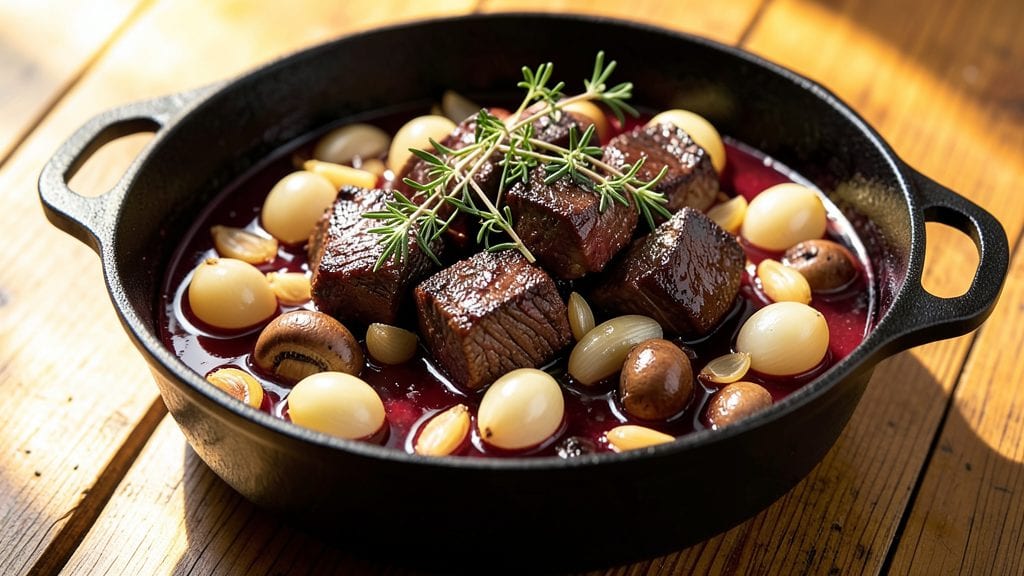
Julia Child’s original beef bourguignon recipe delivers the rich, velvety depth of classic French country cooking in every bite. This iconic dish transforms tough beef into melt-in-your-mouth tenderness through slow braising in red wine, creating a sauce so complex it tastes like a restaurant masterpiece.
The key lies in proper searing, wine reduction, and patient simmering—techniques Julia perfected in her kitchen.
What sets this recipe apart is its authenticity, rooted in Julia’s original method of browning beef in batches to develop deep flavor, then deglazing with wine to capture every caramelized bit.
The slow cook transforms simple ingredients into a dish where the wine’s acidity balances the beef’s richness, creating a sauce that clings to each forkful. This is comfort food elevated to an art form.
The result is a hearty stew with tender beef chunks swimming in a glossy, wine-infused sauce that’s both robust and refined. Serve it with crusty bread to soak up every last drop, or alongside buttery potatoes for a complete French feast.
The aroma alone will transport you to a Parisian bistro.
Modern adaptations like pressure cooker methods can speed up the process without sacrificing flavor, but the original technique remains unmatched for its depth. Whether you’re cooking for a special occasion or a weeknight dinner, this recipe delivers the timeless elegance Julia made famous.
Ingredients for julia child's beef bourguignon original
Sixteen essential ingredients transform simple beef into Julia Child's iconic French masterpiece.
| Ingredient | Amount | Notes |
|---|---|---|
| Beef Chuck Roast 🥩 | 3 lb | Cut into 1.5-inch cubes |
| Red Wine 🍷 | 2 cups | Dry, bold variety like Cabernet Sauvignon |
| Beef Broth 💧 | 2 cups | Homemade or high-quality store-bought |
| Shallots 🧅 | 2 whole | Minced, about 0.5 cup total |
| Garlic Cloves 🧄 | 6 cloves | Minced, peeled |
| Fresh Thyme 🌿 | 2 tbsp | Leaves only, chopped |
| Tomato Paste 🍅 | 2 tbsp | Smooth, no sugar added |
| Pearl Onions 🧅 | 1 lb | Peeled, halved lengthwise |
| Carrots 🥕 | 4 whole | Cut into 1-inch chunks |
| Butter 🧈 | 4 tbsp | Unsalted, for browning |
| Flour 🌾 | 2 tbsp | All-purpose, for dredging |
| Salt 🧂 | 1 ½ tsp | Kosher or sea salt |
| Black Pepper 🌶️ | 1 tsp | Freshly ground |
| Bay Leaves 🍃 | 2 whole | Dried, standard size |
| Olive Oil 🫒 | 2 tbsp | For initial searing |
The beef is non-negotiable—chuck roast with good marbling ensures tender results. Whole Foods or local butchers often carry the best cuts, but any well-stocked supermarket has it pre-cubed. Julia insisted on proper searing, so Trader Joe's or Costco for high-quality olive oil and butter is worth the investment. The red wine should be dry and bold—Cabernet Sauvignon or Merlot work perfectly, but whatever you drink is fine. Fresh thyme and bay leaves add aromatic depth; Penzeys or bulk bins at natural markets offer the best quality. For the pearl onions, Trader Joe's sells them pre-peeled and halved, saving precious prep time.
No red wine? Beef broth with 1 tbsp balsamic vinegar mimics the acidity, though purists may balk. Fresh thyme unavailable? Dried thyme at one-third the amount works in a pinch, but the flavor won't be identical. Tomato paste can be swapped for 1 cup crushed tomatoes, though the sauce will be slightly less concentrated. The shallots and garlic are critical—don't use onion powder or garlic salt. For a quicker version, pressure cook for 1.5 hours instead of 3, though Julia's method demands patience. The butter and flour create a classic roux to thicken the sauce; European-style butter adds extra richness if you're splurging.
This stew improves with time—reheat gently for 10 minutes on the stove to restore its velvety texture. Keeps for 5 days refrigerated or 3 months frozen. Portion into containers with sauce to reheat evenly. Julia often made double batches; the leftovers taste even better the next day as flavors meld. For serving, crusty baguette is ideal, but any bread will do. The aroma alone makes this dish worth the effort—worth every minute of slow cooking.
Why You'll Love This Recipe
- One-Pan Magic: Between us, this dish is basically hands-off after the initial sear. Toss the chuck roast in the Dutch oven, let it brown, then pour in the wine and walk away—it’ll simmer into perfection while you finish dinner or even watch a show. That’s not lazy; that’s smart.
- Wine-Infused Richness: The red wine doesn’t just flavor the sauce—it transforms it. After hours of slow braising, those shallots and garlic melt into the beef broth, creating a sauce so deep and velvety it tastes like a hug from Julia herself. (Yes, even on a Tuesday night.)
- Leftovers That Shine: This isn’t one of those dishes where leftovers taste sad. The flavors actually get better the next day—ideal for meal prep or feeding a crowd. I’ll be real: I’ve reheated this for lunch three times and never once regretted it.
- Budget-Friendly Luxury: A beef chuck roast is affordable, and a bottle of red wine? That’s the kind of splurge that makes you feel fancy without breaking the bank. Honestly, it’s the closest thing to a restaurant-worthy meal without the restaurant price tag.
Step-by-step instructions for Julia Child's beef bourguignon original recipe
Here's the authentic method that delivers rich, tender beef in a velvety wine reduction.
Prepare and Brown the Beef Chuck Roast
Pat the 3 lb Beef Chuck Roast dry with paper towels and cut it into 1.5-inch cubes. Season generously with 1.5 tsp Salt and 1 tsp Black Pepper on all sides. Let the seasoned beef sit at room temperature for 15 minutes while you prepare the pan.
Heat 2 tbsp Olive Oil in a large Dutch oven or heavy pot over medium-high heat. Working in batches, add the beef cubes in a single layer without overcrowding. Let each piece sear undisturbed for 3-4 minutes until deeply browned on all sides. This browning creates the deep, caramelized foundation for your sauce. Transfer the browned beef to a plate as you work.
Build the Flavor Base with Vegetables and Aromatics
In the same Dutch oven, reduce the heat to medium and add 4 tbsp Butter. Toss in the 1 lb Pearl Onions (halved lengthwise) and 4 whole Carrots (cut into 1-inch chunks). Cook for 5-6 minutes until the onions soften slightly and begin to caramelize. Add the 2 whole Shallots (minced) and 6 cloves Garlic Cloves (minced), cooking for another 2 minutes until fragrant.
Sprinkle the 2 tbsp Tomato Paste over the vegetables and stir to coat, allowing it to cook for 1 minute until it darkens slightly. This step deepens the sauce's complexity. Add the 2 tbsp Fresh Thyme (chopped) and 2 whole Bay Leaves, stirring briefly to combine. Remove the vegetables from the pot and set aside, leaving all the browned bits in the pan—these are packed with flavor.
Deglaze and Develop the Wine Reduction
Pour in the 2 cups Red Wine, scraping the bottom of the pot vigorously with a wooden spoon to release all the browned bits. Let the wine simmer over medium heat for 5-6 minutes until it reduces by half and the alcohol aroma dissipates. This reduction process concentrates the wine's flavor and forms the rich base of your sauce.
Stir in the 2 tbsp Flour and cook for 1 minute to remove the raw flour taste. Slowly pour in the 2 cups Beef Broth, whisking constantly to prevent lumps. Bring the mixture to a gentle simmer, then return the browned beef and vegetables to the pot. Add enough liquid to just cover the beef—about 3 cups total—and bring to a gentle boil.
Simmer Until Tender
Reduce the heat to low and cover the pot. Let the beef simmer gently for 2.5 to 3 hours, turning the beef occasionally, until it is fork-tender. The beef should pull apart easily when pierced with a fork, and the sauce should have thickened into a glossy, velvety consistency. If the liquid reduces too quickly, add a splash of water or broth to maintain the proper level.
Here's the thing—this is where patience pays off. The longer the beef simmers, the more tender and flavorful it becomes. The sauce should coat the back of a spoon and cling beautifully to the beef. Taste and adjust seasoning if needed, adding a pinch more salt or pepper if desired.
Finish and Serve
Once the beef is tender, remove the 2 whole Bay Leaves from the pot. Taste the sauce and adjust the seasoning one final time. The dish should be rich, slightly tangy from the wine, and well-balanced with the savory beef and sweet vegetables.
Serve the beef bourguignon hot, ladling the sauce over each portion. Traditionally, it's accompanied by mashed potatoes, buttered egg noodles, or crusty French bread to soak up the delicious sauce. The dish tastes even better the next day as the flavors continue to meld, so consider making it ahead if possible.
Pro Tips For Making Julia Child'S Beef Bourguignon Original
- Brown the Beef Slowly: Julia’s recipe relies on a deep, rich crust from caramelized meat—don’t rush this. Cook the chuck roast in batches over medium heat for 8-10 minutes per side, letting the fond build without burning. I used to flip it too fast, and the sauce ended up thin and pale. Patience here makes the difference.
- Sweat Shallots Properly: Finely minced shallots burn faster than you think. Cook them in butter over low heat for 5-6 minutes until completely soft and translucent—no color yet. After burning three batches, I finally realized: low and slow is non-negotiable for this step.
- Deglaze with Wine Immediately: As soon as you remove the beef, pour in the red wine right away while the pan is still hot. The residual heat helps lift those browned bits into the sauce, giving it depth. Skipping this step means a duller, weaker flavor—don’t let the pan cool before deglazing.
- Simmer, Don’t Boil: The beef needs to cook gently in the liquid for 2.5–3 hours, but many recipes overlook the gentle part. Keep the heat at a bare simmer—tiny bubbles, not rolling—to prevent tough meat and a cloudy sauce. I learned this the hard way after serving rubbery beef to guests. Low and steady wins every time.
Pro cooking tips for this recipe
Master the Sear
Julia Child’s secret to deep flavor starts with proper browning—don’t rush this step. Use a heavy Dutch oven (I love Le Creuset) and work in batches to avoid overcrowding.
Let each beef cube sear undisturbed for 3-4 minutes until deeply golden. This creates the Maillard reaction, forming the flavor base for your sauce. 🔥
Wine Reduction Magic
After deglazing with wine, let it reduce by half—this concentrates the flavor and removes alcohol sharpness. I use Cabernet Sauvignon for its boldness, but any dry red works. The key is medium heat—boiling drives off flavor too quickly.
Stir occasionally to prevent scorching, and you’ll end up with a glossy, velvety sauce that coats the beef perfectly.
Flour Trick for Thickening
Julia’s method calls for 2 tbsp flour to remove raw taste before adding broth. Cook it for exactly 1 minute—too long and it burns, too short and it won’t thicken properly.
Whisk constantly when adding broth to avoid lumps. This step transforms the sauce from thin to rich and clinging after simmering. 💫
Simmer Low and Slow
Patience is everything here. Cover the pot and simmer on low heat for 2.5-3 hours, turning beef occasionally. The beef should be fork-tender—if it’s not, add ½ cup water and cook another 30 minutes.
A meat thermometer ensures accuracy—aim for 203°F for melt-in-your-mouth texture. Skim excess fat if needed, but leave enough to keep the sauce luscious.
Deglaze Like a Pro
After browning, scrape every bit from the pot with a wooden spoon—this is where 90% of the flavor hides. Use the same wine you’ll drink (Julia’s rule!) and let it bubble until reduced.
The deeper the color, the richer the sauce. If you’re nervous about alcohol, simmer uncovered for 5 minutes to burn it off safely. 🍷
Modern Shortcuts
Short on time? Use a pressure cooker—sear the beef first, then pressure cook on high for 45 minutes. The sauce will still develop depth, though it won’t be as concentrated.
For a quicker stovetop version, simmer uncovered for 2 hours, stirring occasionally. Just don’t skip the searing—it’s non-negotiable for flavor! ⚡
Nutrition facts
Frequently asked questions
Why does Julia Child's original recipe call for browning beef in batches?
Browning in batches ensures each piece develops a deep, golden crust through the Maillard reaction, creating maximum flavor. Overcrowding steams the beef instead of searing it, resulting in a bland sauce. This step is non-negotiable for authentic taste—Julia insisted on it!
Can I substitute red wine with something else if I don't drink alcohol?
Yes! Use 2 cups beef broth + 1 tbsp balsamic vinegar to mimic the wine's acidity and depth. For a non-alcoholic wine alternative, look for alcohol-free red wine (available at specialty stores). The key is maintaining the same liquid volume and acidity level for proper sauce development.
How do I know when the beef is fully tender?
The beef should be fork-tender—pierce a piece with a fork and it should slide in with minimal resistance. For extra precision, use a meat thermometer and aim for 203°F internal temperature. If it's still tough after 3 hours, add ½ cup water and cook another 30 minutes covered.
What's the best way to reheat leftovers without drying out the sauce?
Reheat gently on the stove over low heat for 10-15 minutes, adding a splash of beef broth if the sauce thickens too much. Never microwave—it turns the sauce rubbery. For best results, store in an airtight container with sauce covering the beef to prevent drying. Leftovers taste even better the next day!
Can I make this in a slow cooker, and if so, what adjustments?
Yes! Brown the beef first, then transfer everything to a 6-quart slow cooker. Cook on low for 8 hours or high for 5 hours. The sauce may be thinner—reduce it on the stove afterward by simmering uncovered for 10 minutes. The slow cooker method works but lacks the deep caramelization of stovetop cooking.