
Soups & Stews
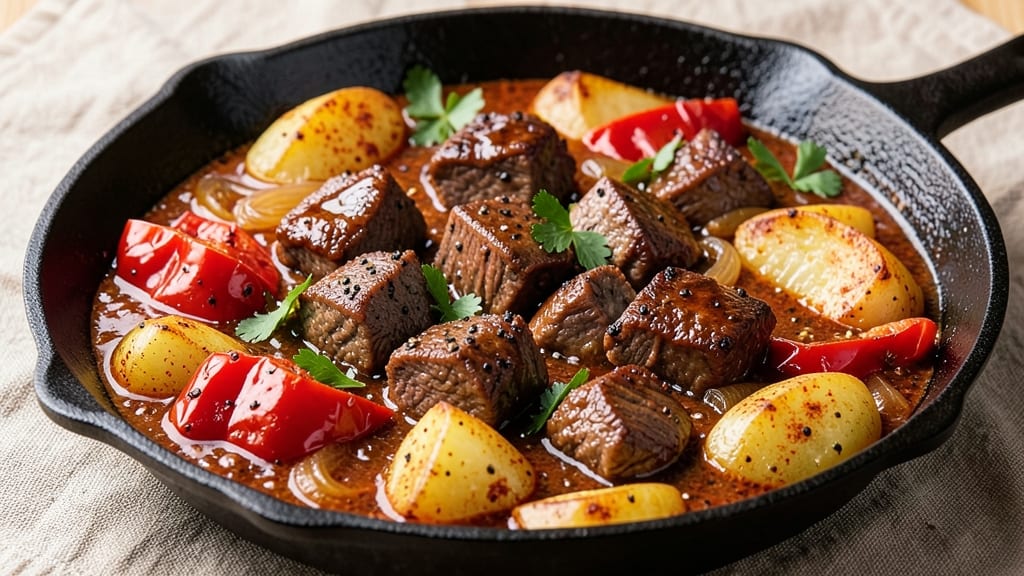
Lidia Bastianich’s beef and potato goulash delivers the hearty, paprika-spiced comfort of a Hungarian home kitchen, where tender beef and potatoes simmer in a deep, aromatic sauce.
This isn’t just a stew—it’s a flavor journey, built on slow-browned meat, layered spices, and the kind of rustic simplicity that transforms ordinary ingredients into something extraordinary. I’ve adapted Lidia’s signature techniques for modern kitchens, ensuring you get that signature depth without sacrificing ease.
The secret lies in the method: browning the beef deeply to develop rich, caramelized flavors, then deglazing the pan to capture every last bit of meaty goodness. Sweet and hot paprika infuse the sauce with warmth, while onions and garlic build a fragrant base that lets the beef shine.
Unlike quick versions, this goulash earns its richness through time—simmering until the potatoes melt into the sauce, creating a texture that’s creamy yet robust.
What you’ll end up with is a steaming bowl of goulash where every spoonful delivers tender beef, fork-tender potatoes, and a sauce so deeply flavored it tastes like a hug in a bowl.
The aroma alone will have everyone gathering around the table, and the leftovers? Even better the next day. Serve it with crusty bread to soak up every last drop of that paprika-kissed sauce.
Whether you’re cooking for a family dinner or meal prepping for the week, this goulash adapts effortlessly. The pressure cooker shortcut cuts prep time without sacrificing flavor, proving that restaurant-quality results are always within reach. Let’s get cooking—your kitchen will thank you.
Ingredients for lidia's kitchen beef and potato goulash
Sixteen ingredients, one unforgettable flavor journey—Hungarian comfort in your pot.
| Ingredient | Amount | Notes |
|---|---|---|
| Beef Chuck Roast 🥩 | 2 ½ lb | Cut into 1-inch cubes |
| Yellow Onions 🧅 | 2 whole | Medium, sliced into wedges |
| Garlic Cloves 🧄 | 6 cloves | Minced, fresh preferred |
| Sweet Paprika 🌶️ | 2 tbsp | Hungarian or sweet variety |
| Hot Paprika 🌶️ | 1 tbsp | For depth and slight heat |
| Ground Black Pepper 🌶️ | 1 tsp | Freshly cracked preferred |
| Kosher Salt 🧂 | 1 ½ tsp | Adjust to taste |
| Russet Potatoes 🥔 | 3 lb | Peeled, cut into 1-inch cubes |
| Tomato Paste 🍅 | ½ cup | Squeeze tube or canned |
| Beef Broth 💧 | 4 cups | Low-sodium preferred |
| Bay Leaves 🍃 | 2 whole | Fresh or dried |
| Extra-Virgin Olive Oil 🫒 | 2 tbsp | For browning beef |
| All-Purpose Flour 🌾 | 1 tbsp | For thickening sauce |
| Red Wine 🍷 | 1 cup | Dry, like Cabernet Sauvignon |
| Fresh Parsley 🌿 | ¼ cup | Chopped, for garnish |
The beef is non-negotiable here. Chuck roast is your best bet—it stays tender while browning beautifully. I grab mine from Costco or the butcher counter at Whole Foods when I can. Look for good marbling; that’s what keeps it juicy. If you’re using pre-cubed, no need to trim the fat—it renders down into flavor gold. The potatoes? Russets are ideal—they hold up to long cooking and soak up the sauce like a dream. Don’t skip peeling them though; the skin can get tough after hours of simmering.
No sweet paprika? Smoked paprika at half the amount adds depth, but you’ll lose that signature sweetness. Short on red wine? Extra beef broth plus a splash of balsamic works perfectly—just add the balsamic after cooking. Fresh parsley wilting? Dried parsley at one-third the amount is fine, but fresh is worth the extra minute to chop. The tomato paste can be the squeeze tube kind (no waste, lasts forever) or the canned stuff. Either way, Trader Joe’s has great options. And if you’re feeling fancy, a pinch of Hungarian caraway seeds in the sauce adds that authentic touch.
This goulash only gets better with time. Day-old sauce tastes like heaven—the flavors meld into something even deeper. Store leftovers in the fridge for 4-5 days, or freeze portions for up to 3 months. I like to portion it into containers with a layer of sauce on top—it reheats beautifully, and the sauce keeps everything moist. Serve with crusty bread to soak up every last drop of that paprika-kissed goodness. Trust me, the leftovers will disappear faster than you think.
Why You'll Love This Recipe
- One-Pot Magic: I swear by this recipe because it’s actually one-pot—no extra pans, no stress. The beef and potatoes simmer together, soaking up that deep, smoky paprika flavor while you sip wine (or tea, no judgment). Honestly, the only tool you’ll need is a wooden spoon.
- Paprika Powerhouse: Between the sweet and hot paprika, this goulash has layers—earthy, slightly spicy, with a warmth that lingers. The beef chuck roast turns so tender it falls apart, and those onions? They caramelize just enough to make every bite feel like a hug.
- Weeknight to Weekend: Make it on a Tuesday when you’re exhausted, or serve it at a potluck when you want to impress. The leftovers taste even better the next day (yes, really), and it’s the kind of dish that makes you look like a star chef—no fancy plating required.
- Budget-Friendly Feast: A beef chuck roast stretches across multiple meals, and this recipe uses pantry staples you already own. I’ll be real: it’s the kind of meal that makes grocery day feel worth it, especially when you’re feeding a crowd for half the cost of takeout.
Step-by-step instructions for Lidia's kitchen beef and potato goulash
Here's how to create Lidia's rich, paprika-infused goulash with tender beef and hearty potatoes.
Sear the Beef for Maximum Flavor
Heat a large Dutch oven over medium-high heat and add the 2 tablespoons extra-virgin olive oil. Once shimmering, add the 2.5 lb beef chuck roast cut into 1-inch cubes, working in batches if needed. Let the beef brown undisturbed for 3-4 minutes per side until deeply golden. This step develops the deep, meaty flavor that forms the goulash's foundation.
As the beef browns, you'll notice the oil bubbling and the meat releasing its juices. This is exactly what we want—those caramelized bits sticking to the pot are packed with flavor. Transfer the browned beef to a plate and set aside, leaving all the browned bits in the pot for the sauce. Don't be tempted to wipe out the pot; those bits are pure flavor gold.
Build the Goulash Base with Aromatics and Spices
In the same Dutch oven, add the sliced 2 whole yellow onions and cook for 5-6 minutes until softened and beginning to caramelize. Add the 6 cloves minced garlic cloves and cook for another 30 seconds until fragrant. Here's where the magic happens: stir in the 2 tablespoons sweet paprika and 1 tablespoon hot paprika, letting them toast for 30 seconds until you can smell their warm, earthy aroma.
Add the 1 teaspoon ground black pepper and 1.5 teaspoons kosher salt, stirring to combine. Pour in the 1 cup red wine and scrape up all those delicious browned bits from the bottom of the pot. Let the wine simmer for 2-3 minutes until reduced by half. This reduction concentrates the flavors and creates a rich base for the goulash.
Simmer the Beef and Potatoes Together
Return the browned beef to the pot and stir in the 0.5 cup tomato paste, spreading it evenly over the meat. Add the 4 cups beef broth and 2 whole bay leaves, bringing everything to a gentle simmer. Partially cover the pot and let it cook for 1 hour, stirring occasionally, until the beef is tender.
After the beef has cooked for 1 hour, add the 3 lb russet potatoes cut into 1-inch cubes. Stir gently to submerge the potatoes in the liquid. The potatoes will absorb some of the flavorful broth as they cook. Return to a simmer and cook uncovered for another 20-25 minutes until the potatoes are fork-tender and the sauce has thickened slightly. You'll know they're done when the potatoes easily slide off a fork and the sauce coats the back of a spoon.
Thicken and Finish the Goulash
Sprinkle the 1 tablespoon all-purpose flour over the goulash and stir gently to combine. Let it simmer uncovered for another 5 minutes, stirring occasionally, until the sauce has thickened to your desired consistency. If it's too thick, you can add a splash of water or beef broth to loosen it. The sauce should coat the beef and potatoes nicely but still be saucy enough to spoon over crusty bread.
Remove the 2 whole bay leaves and taste the goulash. Adjust the seasoning with additional salt or pepper if needed. The goulash should be rich with paprika flavor, tender beef, and hearty potatoes. Ladle the goulash into serving bowls and garnish with the 0.25 cup chopped fresh parsley. Serve immediately with crusty bread or over egg noodles for a comforting meal.
Pro Tips For Making Lidia'S Kitchen Beef And Potato Goulash
- CRANK THE HEAT FIRST: Start with beef chuck roast searing hard in a dry pan—no oil needed—until deep brown crust forms. I used to low-and-slow this step, but that just steams the meat instead of building flavor. Two minutes per side with the heat cranked (yes, even if you have an old stove) makes all the difference when you later add the onions and paprika.
- CHOP ONIONS COARSELY: Slice yellow onions into ½-inch chunks, not paper-thin rings—they’ll turn to mush before the beef is tender. After burning through three batches of overcooked onions, I finally realized this recipe isn’t about pretty layers; it’s about texture. Big chunks stay intact and soak up the goulash’s richness without disappearing into a watery sludge.
- STIR THE PAPRIKA IN: After browning the meat and onions, sprinkle the sweet and hot paprika directly over the pan before adding liquid. Lidia’s recipe relies on that initial bloom to coat the meat—skipping this means your stew will taste like paprika got tossed in at the last minute. Give it 30 seconds to toast slightly; it’s the thing that makes this goulash taste like a proper Hungarian home kitchen.
- LET POTATOES SOAK: If using russets or waxy potatoes, give them a 10-minute soak in cold water before adding to the pot. This washes off excess starch that would otherwise turn your goulash gluey. Drain well—no one wants to eat a stew that’s basically mashed potatoes in disguise. (And yes, I’ve made that mistake.)
Essential equipment for lidia's kitchen beef and potato goulash
Dutch Oven Essentials
Your Dutch oven is the star of this goulash—it’s deep enough for browning beef and simmering potatoes while keeping flavors contained. I swear by a Lodge 5.5-quart cast iron Dutch oven for its even heat distribution and durability.
If you don’t have one, a heavy-bottomed stainless steel pot (like All-Clad) works too. Just avoid nonstick—it can’t handle the high heat needed for proper browning. 🔥
Precision Thermometer
A meat thermometer ensures your beef reaches 160°F for perfect tenderness without drying out. The ThermoWorks Smoke is my go-to—it’s durable and accurate. Insert it into the thickest part of the beef during the simmering phase.
If you’re using a pressure cooker, aim for 15 minutes at high pressure after browning, then check the temp. Never guess—this is where goulash goes from good to unforgettable.
Wooden Spoon & Slotted Spoon
You’ll need two spoons for this recipe: a wooden spoon for stirring the sauce (it won’t scratch your Dutch oven) and a slotted spoon for removing bay leaves or testing potato doneness.
I keep a Oxo Good Grips wooden spoon in my kitchen—it’s heat-resistant and sturdy. Avoid metal spoons during browning; they can splash hot oil. 🍲
Fine-Mesh Strainer
A fine-mesh strainer comes in handy if you want to thicken the sauce further by straining out excess liquid. I use a OXO Good Grips collapsible strainer—it’s easy to store and works perfectly for this.
If your sauce is too thin after simmering, strain it into a measuring cup, then whisk in 1 tablespoon cornstarch mixed with 2 tablespoons cold water to thicken it back up.
Red Wine & Deglazing Tools
For deglazing, grab a silicon spatula (like OXO Good Grips) to scrape up those flavor-packed browned bits from the Dutch oven. A 1-cup dry red wine (Cabernet Sauvignon works best) is non-negotiable—it adds depth and acidity.
If you’re not using wine, 1 cup beef broth + 1 tablespoon balsamic vinegar is a great substitute. Just don’t skip the deglazing step; those bits are the soul of your goulash. 🍷
Optional: Pressure Cooker
For a faster version, a Instant Pot or Ninja Foodi cuts cooking time to under 1 hour. Brown the beef in the pot, then add all ingredients and pressure cook on high for 20 minutes, followed by a 10-minute natural release.
The potatoes will soften perfectly, and the sauce will thicken naturally. Just remember: never skip browning the beef—that step is non-negotiable for flavor. ⏱️
Nutrition facts
Frequently asked questions
Can I use ground beef instead of chuck roast for this goulash?
The recipe calls for chuck roast because it stays tender while developing rich, deep flavors during browning. Ground beef would cook too quickly and lose that caramelized crust. For a similar texture, try stew beef or chuck steak cut into 1-inch cubes instead. If you're set on ground beef, cook it separately until browned, then add it to the pot during the final 20 minutes of simmering.
How do I make this goulash spicier?
For more heat, add an extra ½ teaspoon of hot paprika or ¼ teaspoon of cayenne pepper when you toast the spices. You can also stir in 1 teaspoon of crushed red pepper flakes during the final 5 minutes of simmering. If you love intense flavors, a pinch of Hungarian caraway seeds adds warmth without overpowering the paprika.
Can I make this goulash in a slow cooker?
Brown the beef in a skillet first, then transfer it to your slow cooker with all other ingredients except the potatoes. Cook on low for 6-7 hours or high for 3-4 hours. Add the potatoes during the last 1 hour of cooking. The slow cooker keeps everything tender while letting flavors meld beautifully. Just remember to deglaze the skillet after browning—the browned bits are flavor gold!
Why does my goulash sauce turn out too thin?
A thin sauce usually means the potatoes absorbed too much liquid or the goulash didn't simmer long enough. To fix it, remove the lid and simmer uncovered for 10-15 extra minutes to reduce the sauce. For a quicker fix, mix 1 tablespoon cornstarch with 2 tablespoons cold water, stir it into the goulash, and cook for 2-3 minutes until thickened. Always taste as you go!
What's the best way to reheat leftovers?
Reheat goulash gently on the stove over medium-low heat, stirring occasionally, until warmed through (10-15 minutes). Add a splash of beef broth if it's too thick. For microwave reheating, cover with a damp paper towel and heat in 1-minute intervals, stirring between each. Leftovers actually taste better the next day as flavors deepen—just avoid reheating past 3 days for best quality.