
Main Courses
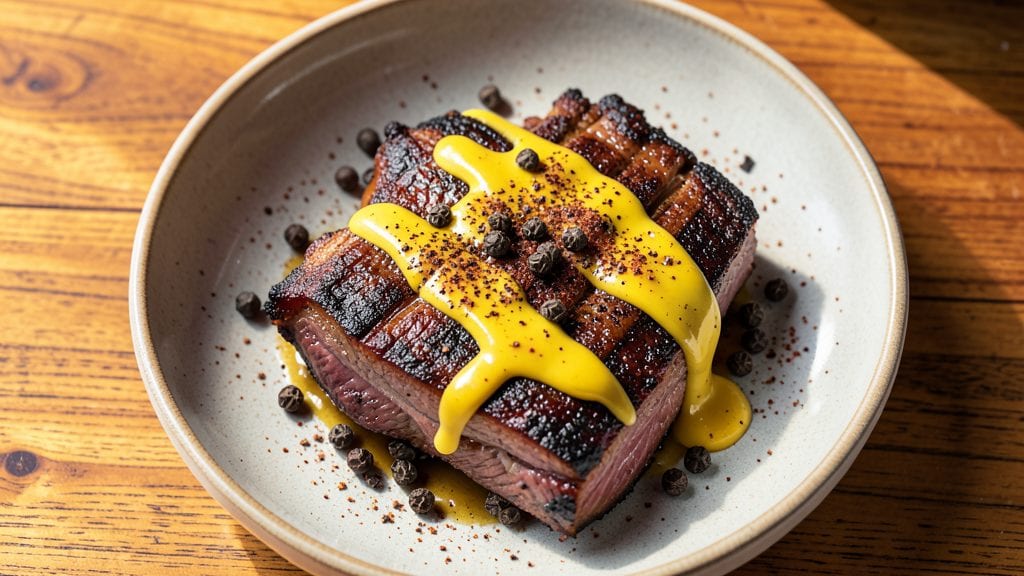
This smoked beef belly recipe delivers the ultimate combination of crispy bark and jelly-like tenderness that transforms a simple cut into a showstopping centerpiece. After years of perfecting the technique, I’ve cracked the code for achieving that coveted texture—where the exterior snaps audibly and the interior melts like butter.
The secret lies in precise temperature control and a well-timed rest, ensuring every slice falls apart with minimal effort.
The process begins with a dry rub that forms a deep, caramelized bark while keeping the meat impossibly tender inside. You’ll work with a smoker set to 225°F, letting the beef belly cook low and slow for 8-10 hours until the internal temperature reaches 195-203°F.
This slow cook ensures the collagen breaks down completely, turning tough fat into velvety richness. Monitoring the bark’s development is key—it should be deep brown and crackling by the end.
Once off the smoker, the beef belly needs a 1-2 hour rest before slicing, allowing the juices to redistribute and the texture to firm up just enough for clean cuts.
When you finally slice it, you’ll be rewarded with shatteringly crisp edges and melt-in-your-mouth layers that practically dissolve on the tongue. This isn’t just smoked meat—it’s a textural masterpiece that turns heads at any table.
Pair it with tangy pickles, smoky baked beans, or buttery cornbread to balance the richness, and you’ve got a meal that’s equal parts impressive and foolproof. Let’s get started—your smoker is about to become the star of the kitchen.
Ingredients for smoked beef belly
Four pounds of beef belly, a dry rub, and patience—this is how you unlock the perfect smoky bark and melt-in-your-mouth texture.
| Ingredient | Amount | Notes |
|---|---|---|
| Beef Belly 🥩 | 4 lb | Thick-cut, skin removed |
| Yellow Mustard 🍯 | ¼ cup | For initial coating |
| Kosher Salt 🧂 | ½ cup | Diamond Crystal preferred |
| Black Peppercorns 🌶️ | 2 tbsp | Freshly cracked, coarse |
| Smoked Paprika 🌶️ | 2 tbsp | For deep smoky flavor |
| Garlic Powder 🧄 | 1 tbsp | Freshly ground preferred |
| Onion Powder 🧅 | 1 tbsp | For balanced depth |
| Brown Sugar 🍚 | 2 tbsp | Lightly packed, for bark |
| Apple Cider Vinegar 🍎 | 2 tbsp | For tenderizing |
| Wood Chips 🌳 | 4 cups | Hickory or oak, soaked |
| Cherry Wood Chips 🍒 | 2 cups | For subtle sweetness |
| Butter 🧈 | ½ cup | Unsalted, for post-smoke baste |
| Fresh Rosemary 🌿 | ¼ cup | Chopped, for final touch |
The beef belly is non-negotiable here—thick-cut, skinless is key for that signature texture. Costco or your local butcher will have the best cuts, often pre-sold as 'smoker meat'. Look for good marbling; the fat is what turns into that velvety interior. If you're buying a whole belly, ask for it to be scored in a diamond pattern—this helps render fat and creates more surface area for that crispy bark. Hormel or Tyson pre-cut beef belly works in a pinch, but nothing beats the real deal from a butcher shop. Store it uncovered in the fridge for 24 hours before smoking to dry the surface—this is what creates that coveted crackling crust.
No smoked paprika? Regular paprika plus a pinch of liquid smoke gets you close, but the flavor won't be quite the same. The apple cider vinegar is worth the extra step—it tenderizes the meat while adding a subtle tang that balances the richness. For the wood chips, Traeger or Cookshack brands are reliable, but any quality hardwood will work. If you can't find cherry, peach or apple wood chips add a nice sweetness. The butter at the end? Full-fat, unsalted—it's what turns that final bark into pure gold. And if you're short on time, a 1-hour rest still works, though 2 hours is ideal for perfect slices.
This isn't a meal you want to reheat—every slice should be served fresh off the cutting board. Wrap the smoked belly tightly in butcher paper or foil and store it in the fridge for up to 5 days. For longer storage, vacuum-seal portions and freeze for up to 3 months. The bark stays crispy for about 24 hours if kept airtight, but the real magic happens when it's piping hot. I always make extra—sandwiches the next day are a game-changer, and the leftovers reheat beautifully in a 350°F oven for 10 minutes.
Why You'll Love This Recipe
- Foolproof Prep: Honestly, this recipe’s ridiculously hands-off. You brine the beef belly overnight—set it and forget it—then smoke it low and slow while you handle anything else. The mustard rub? Just slather and go. No fancy techniques, no stress.
- Smoky-Sweet Magic: That smoked paprika and yellow mustard combo? It’s the secret weapon. The mustard cuts through the fat while the paprika gives it this deep, woodsy warmth—like a cross between a BBQ joint and your grandma’s kitchen. (Yes, even on a Tuesday night.)
- Leftovers for Days: Between us, this stuff begs to be reheated. Shred it for tacos, sandwiches, or even a hearty breakfast hash the next morning. I’ve got a freezer stash from my last batch—because let’s be real, no one turns down crispy, smoky beef belly.
- Budget Booster: Beef belly is cheap per pound, and a single slab feeds a crowd. Split the cost with friends or save half for later—it’s the kind of meal that makes you look like a hero without breaking the bank. (My wallet thanks me every time.)
Step-by-step instructions for smoked beef belly
Here's the method that transforms tough beef belly into melt-in-your-mouth perfection with a crackling bark.
Prepare the Beef Belly for Maximum Flavor
Start by placing the 4 lb beef belly in a large bowl and coating it evenly with the 0.25 cup yellow mustard. This initial layer helps the rub adhere and adds subtle tang. In a separate bowl, combine the 0.5 cup kosher salt, 2 tbsp black peppercorns, 2 tbsp smoked paprika, 1 tbsp garlic powder, 1 tbsp onion powder, and 2 tbsp brown sugar. Mix thoroughly to distribute all spices evenly.
Spread this dry rub mixture all over the mustard-coated beef belly, pressing firmly so it clings to every surface. The apple cider vinegar plays a crucial role here - add the 2 tbsp directly to the bowl and mix it into the rub. The acidity helps tenderize the meat while adding depth of flavor. Place the rubbed beef belly on a wire rack set over a baking sheet and refrigerate uncovered for 24 hours. This dry-brining process is what creates that legendary crispy bark and ensures jelly-like tenderness throughout.
Set Up Your Smoker for Perfect Results
Preheat your smoker to 225°F using the 4 cups wood chips (hickory or oak) and 2 cups cherry wood chips. The combination of these woods gives you that perfect balance of smoky depth with subtle sweetness. Soak the wood chips in water for at least 1 hour before using to prevent flare-ups. When the smoker reaches temperature and you see steady blue smoke, it's time to begin the cooking process.
Place the beef belly fat-side up on the smoker grates. The fat should render slowly, basting the meat as it cooks. Maintain the temperature between 225-250°F throughout the cook. This low-and-slow approach is essential - it breaks down the tough connective tissue while allowing the rub to develop that coveted bark. Don't be tempted to open the smoker during the first 4 hours, as each time you do, you lose heat and moisture, potentially extending your cook time.
Monitor and Wrap for Optimal Texture
Smoke the beef belly for approximately 8-10 hours, or until the internal temperature reaches 165°F. This is where you'll hit "the stall" - a period where the temperature plateaus as moisture evaporates. Don't panic when your thermometer stops rising. At this point, wrap the beef belly tightly in butcher paper (not aluminum foil) and return it to the smoker. This technique, known as the Texas crutch, helps you power through the stall while maintaining that crispy exterior.
Continue smoking until the internal temperature reaches 203°F. The beef belly should now be fork-tender with a beautiful mahogany bark. The wrapping process typically adds 2-4 hours to your total cook time, but it's worth every minute for that perfect balance of textures. The paper allows some moisture to escape while still protecting the bark from becoming too tough.
Finish with Butter and Rosemary
Once the beef belly reaches the target temperature, remove it from the smoker and let it rest for 15 minutes before unwrapping. While it rests, prepare your finishing mixture by combining the 0.5 cup butter and 0.25 cup chopped fresh rosemary in a small saucepan. Melt the butter over low heat and keep it warm.
After the resting period, brush the melted butter-rosemary mixture all over the beef belly, both on the fat side and the meat side. This step adds incredible richness and aroma that complements the smoky flavors. Let the beef belly rest for an additional 30 minutes before slicing. This final rest period ensures the juices redistribute throughout the meat, guaranteeing that each bite is moist and flavorful.
Slice and Serve with Confidence
Using a sharp carving knife, slice the beef belly against the grain into ¼-inch thick slices. The grain direction will be visible as you cut - you're looking for those long muscle fibers that run through the meat. Slice carefully to maintain the integrity of each piece. The beef belly should pull apart easily with a gentle tug, revealing that characteristic jelly-like texture that makes this cut so special.
Serve immediately while still warm. The beef belly should have a beautiful crispy bark on the outside and that melt-in-your-mouth tenderness on the inside. Each slice should be generously coated with the smoky flavors from the rub and wood chips, with a subtle sweetness from the cherry wood and the herbal notes from the finishing rosemary butter. This is the moment you've been waiting for - where all your hard work pays off in every delicious bite.
Pro Tips For Making Smoked Beef Belly
- CRACK THE FAT FIRST: Beef belly’s magic hides in its fat cap—don’t skip scoring it. Use a sharp knife to cut shallow, ½-inch-deep lines in a diamond pattern, then rub with kosher salt and smoked paprika before applying mustard. This lets the rub cling and renders fat evenly instead of pooling in one greasy mess.
- SALT THE NIGHT BEFORE: I learned this the hard way—salting beef belly fresh leads to watery, sad results. Dry-brine it overnight (1:1 salt to meat weight) in the fridge, then pat dry before smoking. The salt breaks down proteins, keeps it juicy, and gives that crispy bark a fighting chance.
- WATCH THE MUSTARD LAYER: That yellow mustard isn’t just flavor—it’s the glue for your crust. Spread it thin (about ¼ inch) in a crosshatch pattern after the initial smoke, not thick globs. Thick mustard burns before the bark forms, leaving you with sticky, uneven char.
- REST IT UNDER FOIL: Pull it off the smoker at 195°F—not when you think it’s done. Tent loosely with foil and let it sit for 5-10 minutes. This lets residual heat melt fat into the meat instead of pooling out, and makes slicing clean cuts a breeze. (Yes, even if you’re impatient like me.)
Health benefits of this smoked beef belly
Protein Powerhouse
Smoked beef belly is a protein-rich powerhouse, delivering about 30 grams of protein per 4-ounce serving. This makes it an excellent choice for muscle repair and growth, especially after workouts. The slow-smoking process preserves the protein integrity while enhancing digestibility through collagen breakdown. 💪
Collagen Breakdown
The low-and-slow cooking method transforms tough collagen into gelatin, creating that signature jelly-like texture. This process is particularly beneficial for joint health, as gelatin supports cartilage and connective tissues. A 4-pound belly yields enough collagen-rich gelatin to provide significant benefits when consumed regularly.
Healthy Fats
Beef belly contains monounsaturated and polyunsaturated fats, including omega-3 fatty acids when grass-fed. These fats support heart health by improving cholesterol profiles. The slow smoking process doesn't significantly alter the fat composition, preserving these beneficial nutrients while rendering excess fat that can be used for cooking or discarded.
Rich in Vitamins
This cut provides essential vitamins like B12 (crucial for energy and nerve function) and zinc (important for immune support). The smoking process doesn't destroy these heat-stable vitamins, so you get all the nutritional benefits of the original beef.
A 6-ounce serving provides about 50% of your daily B12 needs. ✨
Low-Carb Option
For those following low-carb diets, smoked beef belly is an excellent choice with only 0-1 gram of carbohydrates per serving. The fat content provides sustained energy without the blood sugar spikes associated with higher-carb meats. Pair it with non-starchy vegetables to create a balanced, keto-friendly meal.
Mineral Boost
You'll also get a good dose of iron (important for oxygen transport) and phosphorus (essential for bone health). The slow cooking process actually increases mineral bioavailability, making these nutrients more easily absorbed by your body. This makes smoked beef belly not just delicious but also a nutrient-dense choice. 💡
Nutrition facts
Frequently asked questions
How long should I let the beef belly rest before slicing?
A 1-2 hour rest is ideal after removing it from the smoker. This allows the juices to redistribute, ensuring each slice stays moist and tender. The bark will firm up just enough for clean cuts without losing its crispiness.
Can I use aluminum foil instead of butcher paper for wrapping?
No, avoid aluminum foil—it traps too much steam, turning the bark soggy. Butcher paper is perfect because it lets some moisture escape while protecting the crust. If you're in a pinch, use heavy-duty foil with a few small holes poked in it.
What's the best way to slice smoked beef belly?
Slice against the grain into ¼-inch thick pieces using a sharp carving knife. The grain runs parallel to the belly's length—look for the long muscle fibers. Cutting against them ensures each bite is tender and easy to chew.
Why did my bark turn out too dark or burnt?
This usually happens from direct heat exposure or opening the smoker too often. Keep the temperature steady at 225°F and avoid peeking for the first 4 hours. If it darkens too quickly, move the beef belly to a cooler part of the smoker or reduce the heat slightly.
How do I store leftovers without losing the bark?
Wrap tightly in butcher paper or foil and refrigerate for up to 5 days. For longer storage, vacuum-seal portions and freeze for 3 months. Reheat in a 350°F oven for 10 minutes to restore crispiness. Leftovers work great in sandwiches or tacos!